Birding by ear can feel impossible at first because the soundscape arrives all at once. One bird repeats from a treetop. Another chips from a shrub. A third sings somewhere behind you. Wind moves leaves, a dog barks, a car passes, and an app offers five confident suggestions that do not quite match what you heard. It is tempting to decide you are simply not a sound person.
The better truth is that birding by ear is not one talent. It is a set of small habits. You learn the common voices of one place. You notice rhythm before names. You connect sound to habitat and behavior. You repeat short listening sessions. You let the easy birds become anchors. Over time, the wall of sound separates into layers.
Start with place, not every bird
The fastest way to get discouraged is to open a regional bird app and try to learn everything. A park, yard, block, pond edge, or morning route is a better classroom. The birds you hear there repeatedly will teach you faster than a giant library of recordings. Familiarity matters because the same species will call from the same kinds of places at similar times of day.
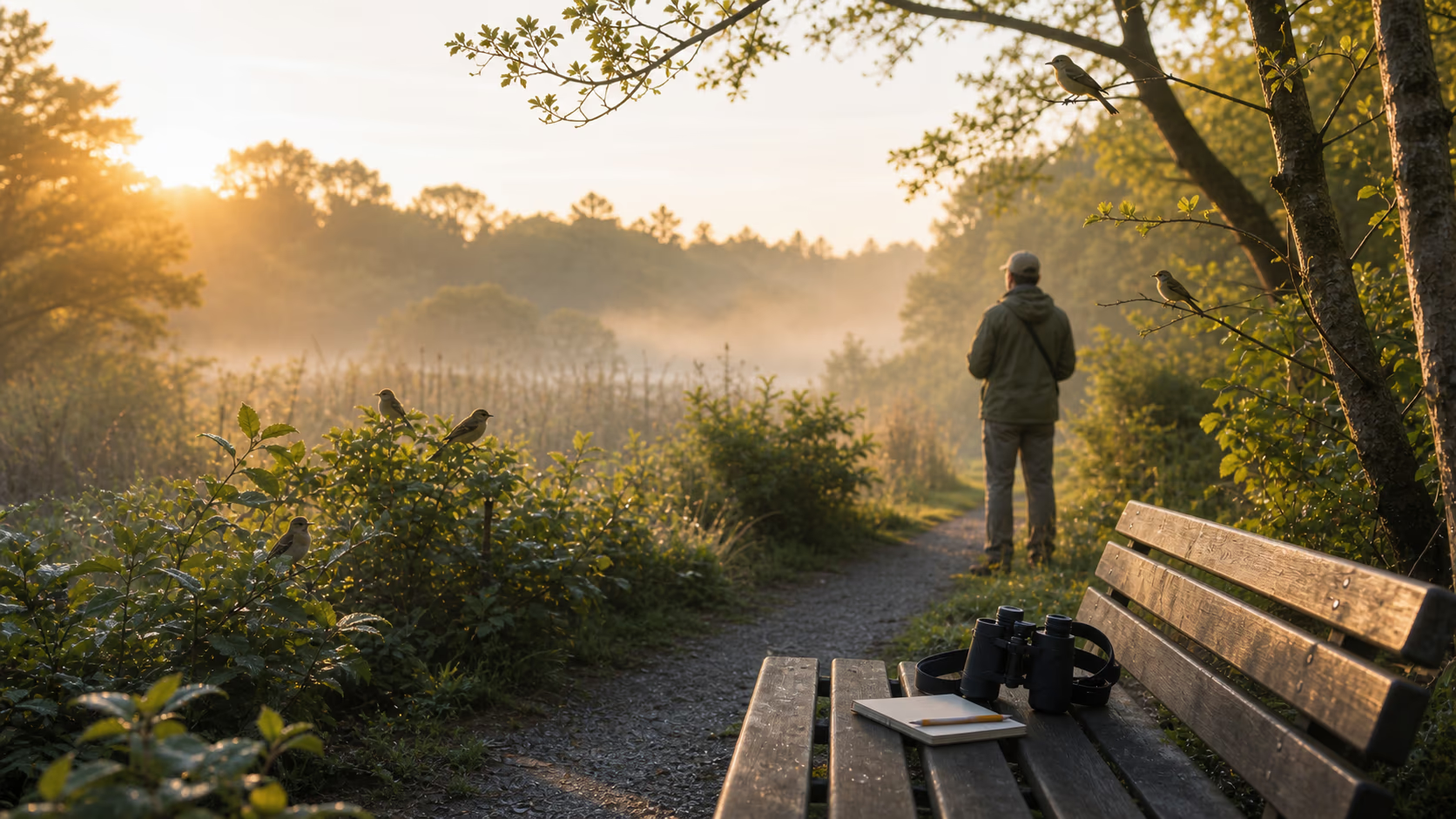
Choose one listening patch and visit it several times. Early morning is often best because birds are active and human noise is lower, but any repeatable time can work. Stand still for a minute before identifying anything. Notice where sounds come from. High canopy, low shrub, open lawn, water edge, building roof, power line, or dense reeds all suggest different possibilities. Sound is not separate from place. A call coming from cattails belongs to a different mental shelf than a similar call from a maple tree.
This place-first habit makes the work smaller. You are not learning all birds. You are learning the voices that use this place.
Listen for shape before name
Beginners often jump straight from sound to species. That is understandable, but it skips the useful middle. Before naming the bird, describe the sound’s shape. Is it a whistle, buzz, trill, chatter, chip, squeak, rattle, laugh, or clear phrase? Does it rise, fall, repeat, accelerate, pause, or bounce? Is it thin, rich, nasal, metallic, sweet, harsh, or dry? Does it sound close and small, or far and carrying?
These descriptions may feel childish, but they are practical. A field mark for the ear is still a field mark. “Fast dry trill from low brush” is a better clue than “some bird.” “Two clear whistles from high canopy, repeated every few seconds” is a better clue than “pretty song.” The name can come later. First, give your memory something to hold.
You can also borrow phrases, but do not depend on them too much. Mnemonics help when they stick and hurt when they do not. Some people remember a song through words. Others remember rhythm, pitch, or mood. Use whatever makes the sound recognizable on your next walk.
Make a sound map
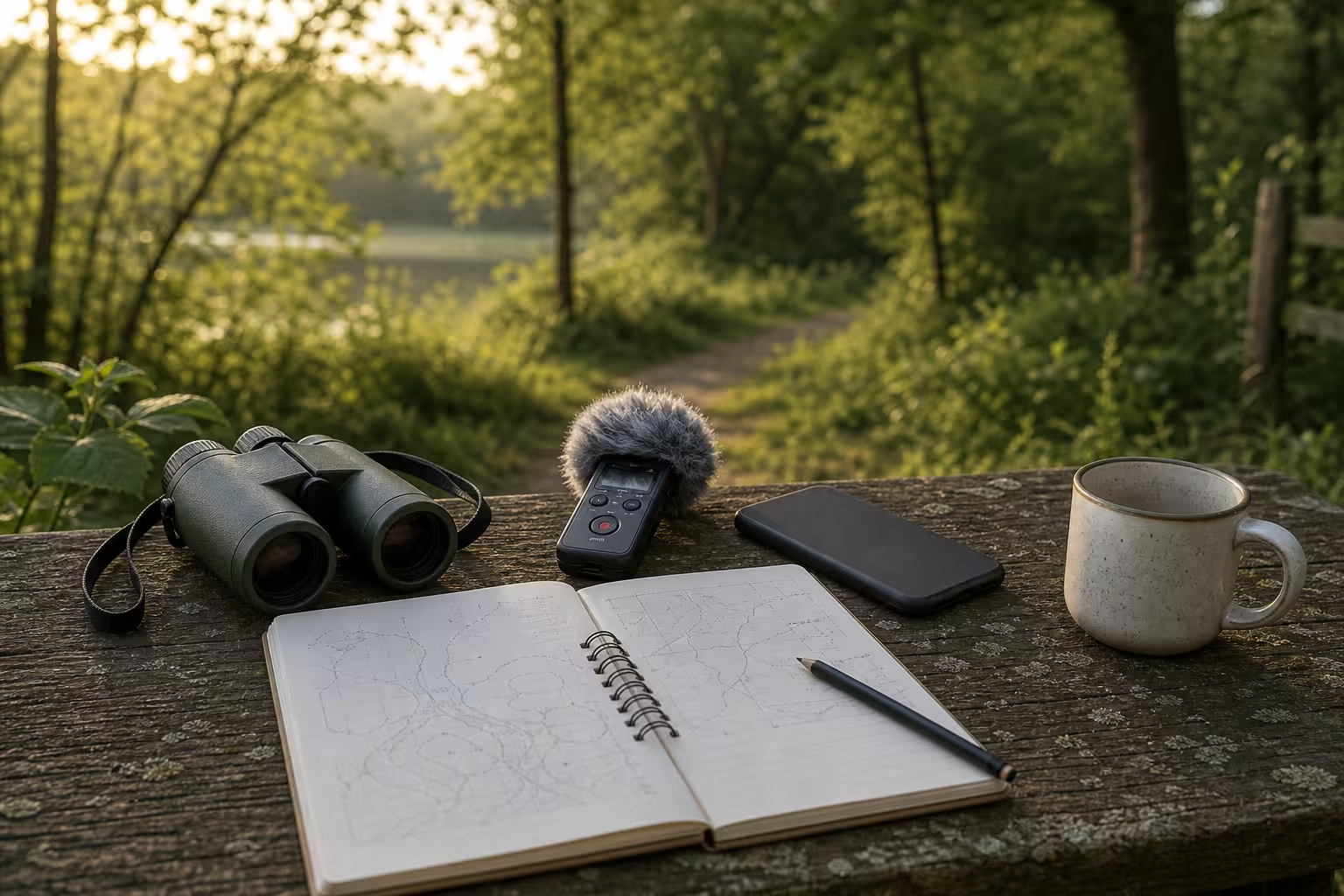
A sound map is a simple field note that shows where sounds were heard. Draw a rough path, bench, pond, tree line, or yard. Mark where you stood. Then place little marks where sounds came from. The marks do not need names. They can say “chip,” “trill,” “crow,” “low buzz,” or “same song again.” This turns listening into a spatial exercise instead of a memory test.
The sound map does two useful things. First, it slows you down. You stop chasing every call and start noticing patterns. Second, it helps you connect sound to behavior. If the same dry chip comes from the hedge every morning, you may eventually see the bird and attach the voice to the body. If a song always starts from the tallest bare branch, that perch becomes part of the identification.
Keep the phone face down for a few minutes before using it. Recording and identification apps can be helpful, but they can also steal attention. Let your ears make a first pass. Then use the app as a check, not as the whole experience.
Learn anchor birds first
Every place has anchor birds: common species whose voices become reference points. Crows, doves, robins, chickadees, cardinals, sparrows, blackbirds, gulls, jays, wrens, or local equivalents may become your first sound landmarks. Once you know them, everything else has context. A new sound becomes “not the robin,” “higher than the chickadee,” “more metallic than the blackbird,” or “coming from the same reeds as last week’s mystery.”
This is why common birds are not boring. They are the grammar of the local soundscape. Learn their calls in different moods. Alarm calls may sound nothing like songs. Contact calls may be quieter than territorial singing. Juvenile begging calls can confuse everyone. A species is not one sound file. It is a small vocabulary.
Do not rush past the obvious birds. If you can identify five common species by ear with confidence, your walks will change more than if you half-remember thirty recordings.
Record carefully and ethically
Recording can help, especially when you want to review a mystery at home. Keep recordings short and note the habitat, time, and behavior. A recording with no context is less useful than a rough note that says where the bird was and what it was doing. If you share recordings, avoid posting sensitive nesting locations or drawing crowds to vulnerable birds.
Playback is different from recording. Playing bird songs to attract birds can disturb them, especially during breeding season or around rare species. Beginners do not need playback to learn by ear. Stand still, listen, and let the birds continue their day. The goal is understanding, not pulling a bird out of cover for a better look.
If an app gives an identification, treat it as a suggestion. Apps can be excellent, but they can also be fooled by overlapping songs, background noise, distant calls, and regional variation. Confirm with your own observation when possible. Did the suggested bird belong in that habitat? Is it expected in that season? Did the rhythm match what you heard? Did you see movement where the sound came from? The app is a tool, not a witness.
Repeat short sessions
Birding by ear improves through repetition more than marathon study. Ten attentive minutes in the same place can teach more than an hour of distracted walking. Pick one or two sounds each session and follow them. Where do they come from? Do they repeat? Do they move? Do they match a bird you can see? What changes when the sun rises, wind picks up, or people arrive?
At home, listen to recordings of only the likely birds from your patch. Too many recordings blur together. Compare two similar species, not twenty. Then go back outside and listen for them in the real soundscape, where distance, echoes, leaves, and overlapping calls make everything less clean.
The first reward is not naming every bird. The first reward is noticing that the morning has structure. The same singer starts from the same corner. The same chips mark the hedge. The loud obvious bird is not the only one present. The quiet notes between songs begin to matter.
Birding by ear should make walks richer, not heavier. Start with one place. Listen for shape. Map the sounds. Learn the anchor birds. Use recordings gently. Let repetition do most of the work. Eventually, you will hear a familiar phrase before you lift the binoculars, and the bird will already be partly known.