Blackbirds, orioles, grackles, cowbirds, meadowlark-like birds, and their relatives can feel too familiar to study carefully. Some are common around parking lots, fields, wetlands, orchards, feeders, pastures, and city trees. Some gather in noisy flocks. Some shine with color only when the light hits just right. Others look dark, brown, streaked, or plain until voice and posture make them come alive.
The group is broader than many beginners expect, and local species vary widely. The practical field lesson is not to memorize a family tree on the first walk. It is to read habitat, shape, voice, flock behavior, and season. A dark bird on a wire over a field is not the same problem as a glossy bird striding on pavement, a yellow-breasted bird singing from grass, or an orange-and-black bird moving through a flowering tree. The more carefully you read the setting, the less “blackbird” becomes a blur.
Habitat Separates Similar Shapes
Start with where the bird is working. Reeds and cattails suggest one set of habits. Open pasture and fence lines suggest another. Orchard edges, flowering trees, and tall shade trees may point your attention toward orioles or other canopy-feeding birds. Short grass, wet lawns, muddy fields, livestock areas, and parking lots can draw different blackbird-like birds. Marsh edges connect this guide naturally to Marsh Birding , while open fields connect it to Grassland Birding .
Habitat does not identify the bird by itself, but it makes your questions better. A singing bird clinging to a reed deserves a different look from a long-tailed glossy bird walking through a picnic area. A flock in a stubble field may include several species and sexes. A bright oriole-like bird high in a tree may be feeding on insects, fruit, nectar, or flowers rather than acting like the birds on the ground below.
Notice the vertical layer. Some birds feed low, some display from exposed stems, some walk on open ground, and some move through the canopy. When a beginner says “dark bird,” the most useful follow-up may be “dark bird doing what, where?”
Shape and Posture Beat Gloss
Light can make these birds difficult. A glossy bird may look black from one angle and bronze, blue, purple, green, or brown from another. A red or yellow patch may disappear when the bird turns. A female, immature bird, or worn bird may look much plainer than the bright image in a guide. Molt and Seasonal Plumage is useful here because age, wear, and season can change the first impression.
Shape stays more dependable. Look for tail length, bill length, body bulk, leg length, and posture. Some grackle-like birds look long-tailed and rangy, with a direct stare and ground-walking confidence. Some blackbirds look more compact or marsh-tied. Cowbird-like birds may show a different head and bill proportion from the birds they stand beside. Oriole-like birds often look sleeker, with a more tree-focused way of moving. Meadowlark-like birds may hold a more horizontal posture in open grass and reveal flashes of outer tail or bright underparts when they fly.
These descriptions are not substitutes for local field marks. They are the way into them. Once you have the structure, color can become evidence instead of a trap.
Voice Turns the Scene Into a Map
This group is often loud, and voice can tell you where to look before the binoculars come up. A marsh may hold harsh calls, liquid notes, repeated songs, or display sounds from hidden perches. An oriole-like bird may sing from high leaves while staying partly concealed. A flock of blackbirds can create a moving cloud of chips, squeaks, whistles, and wing noise. A meadowlark-like song can carry across open land from a post or grassland rise.
Use the listening habits from Birding by Ear . Do not rush straight to a name. Ask where the sound is coming from, whether it repeats, whether it belongs to one bird or many, and what habitat layer holds it. If a bird sings from a reedbed, watch the reed tops and exposed stems. If the sound comes from a flowering tree, scan the outer branches and gaps. If a flock passes overhead, listen for whether the calls continue after the birds land.
Voice also helps you avoid dismissing common birds. A familiar parking-lot grackle can still teach pitch, rhythm, posture, and social spacing. The point is not rarity. The point is attention.
Flocks Can Be Mixed and Restless
Blackbird flocks are one of the best ways to learn comparison. A group feeding in a field may contain males, females, young birds, and more than one species. Some birds walk with long strides. Some hop. Some hold tails differently. Some stay at the flock edge. Some rise first when disturbed. Some return quickly, while others move on.
The hard part is that flocks move. A beginner may try to identify one bird, lose it, and then assume the next bird is the same. Slow down. Choose one visible bird and follow it for a few seconds. Then compare it with a neighbor. Look at bill size, tail, body shape, and how it feeds. If the flock flushes, watch the shape of the whole group. Does it rise in a tight wave, scatter to trees, or move low across the field?
Mixed Flocks Birding is helpful because a blackbird flock can hide variety in plain sight. Do not expect every dark bird to be the same simply because the flock is moving together. Food, cover, and safety can draw different birds into the same temporary crowd.
Open Perches Are Often Announcements
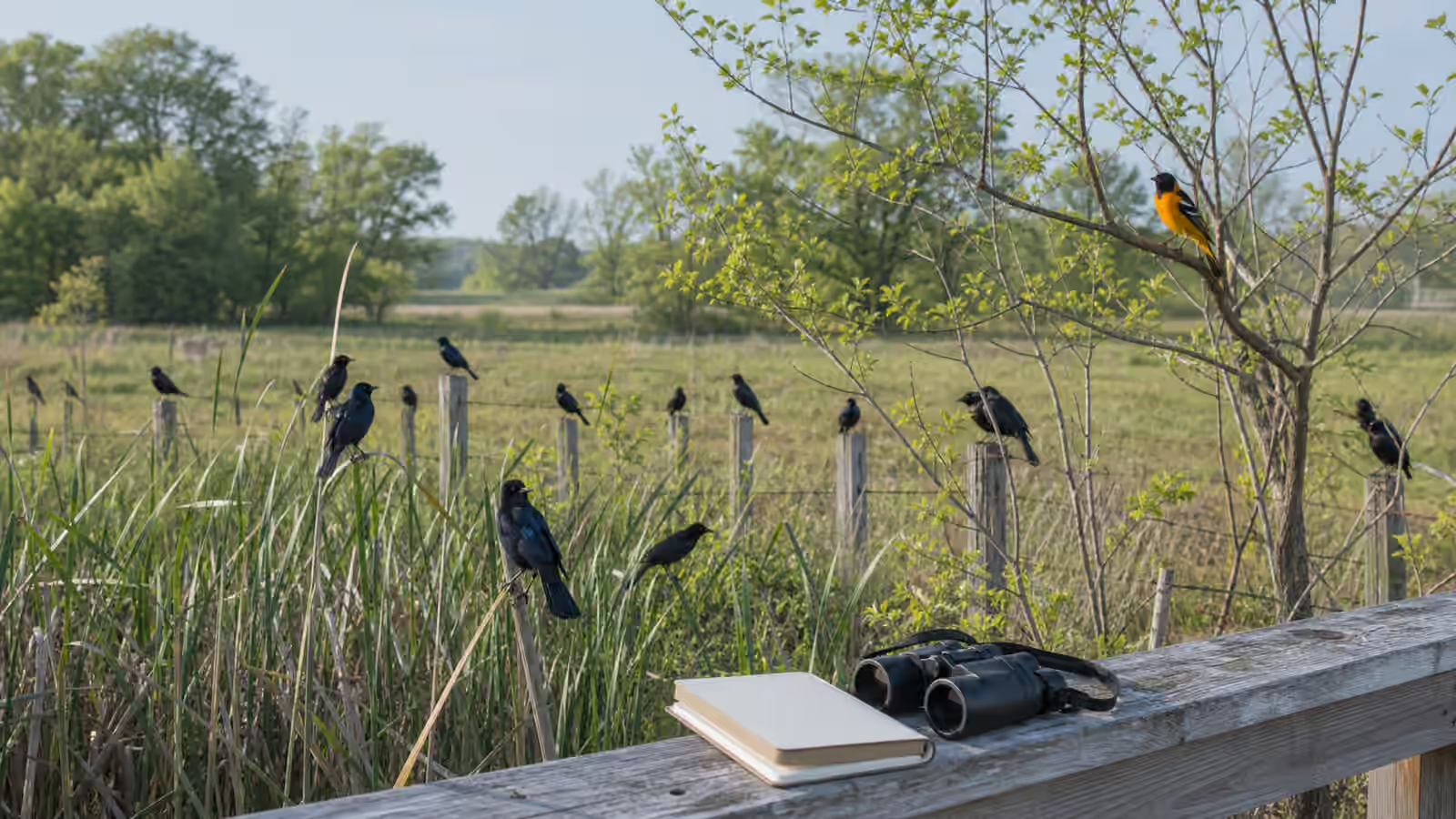
Many blackbird relatives use exposed perches to sing, display, or watch. Fence posts, reed tops, utility wires, shrubs, dead branches, pasture posts, and tall grass stems can all become stages. A bird on an open perch gives you time to study posture. Does it lean forward when singing? Spread the tail? Lift the wings? Flash shoulder color? Hold the bill up? Return to the same perch after feeding?
These details matter during breeding season, but they also require distance. A bird using a repeated song perch may be defending territory or attracting a mate. A bird carrying food may be tied to young. Nest Season Birding applies even when the nest is invisible. If your presence changes the bird’s route or causes repeated alarm, step back.
Orioles and similar canopy birds may use open perches briefly between leafy feeding bouts. Watch flowering or fruiting trees with patience. A bright bird may be obvious for one second and hidden for the next minute. Finding Birds by Food Sources gives a good method: read the plant first, then wait for movement.
Common Places Are Worth Careful Notes
Because some of these birds live close to people, beginners may undervalue them. A bird on a grocery-store sign, a flock in a school athletic field, a grackle walking under picnic tables, or a blackbird calling from a drainage ditch can seem too ordinary for notes. That is a missed opportunity. Common birds let you practice without the pressure of scarcity.
Write the setting and behavior. “Glossy long-tailed birds walking on wet lawn after rain.” “Several dark birds singing from cattails, red or yellow shoulder flashes seen when they leaned forward.” “Orange-and-black bird feeding high in flowering tree, moved slowly among outer branches.” “Mixed flock in pasture, some smaller brown birds among larger dark males.” These notes are not elegant, but they are field evidence.
Season adds texture. Flocks may grow outside breeding season. Males may display more visibly in spring. Young birds and duller plumages can complicate late summer. Migration may bring birds through in numbers, especially at wet fields, coastal edges, or agricultural land. Weather Window Birding can help explain why a field suddenly fills after rain or why birds use sheltered edges on windy days.
Let Familiar Birds Become Teachers
Blackbirds, orioles, and grackles reward repeated watching because they are expressive. They sing from obvious places, hide in reeds, shine and dull with angle, gather in flocks, argue over food, and move between wild and human-shaped habitats. They are not filler between more exciting birds. They are a working lesson in posture, social behavior, habitat, and sound.
The next time a dark bird lands on a wire, give it more than a glance. Look at the tail. Listen to the call. Notice the field below it, the water nearby, the flock it came from, or the tree it keeps visiting. The name will matter, but the better habit is learning how the bird belongs to the scene. Once you do that, even the most familiar blackbird can make an ordinary place more legible.