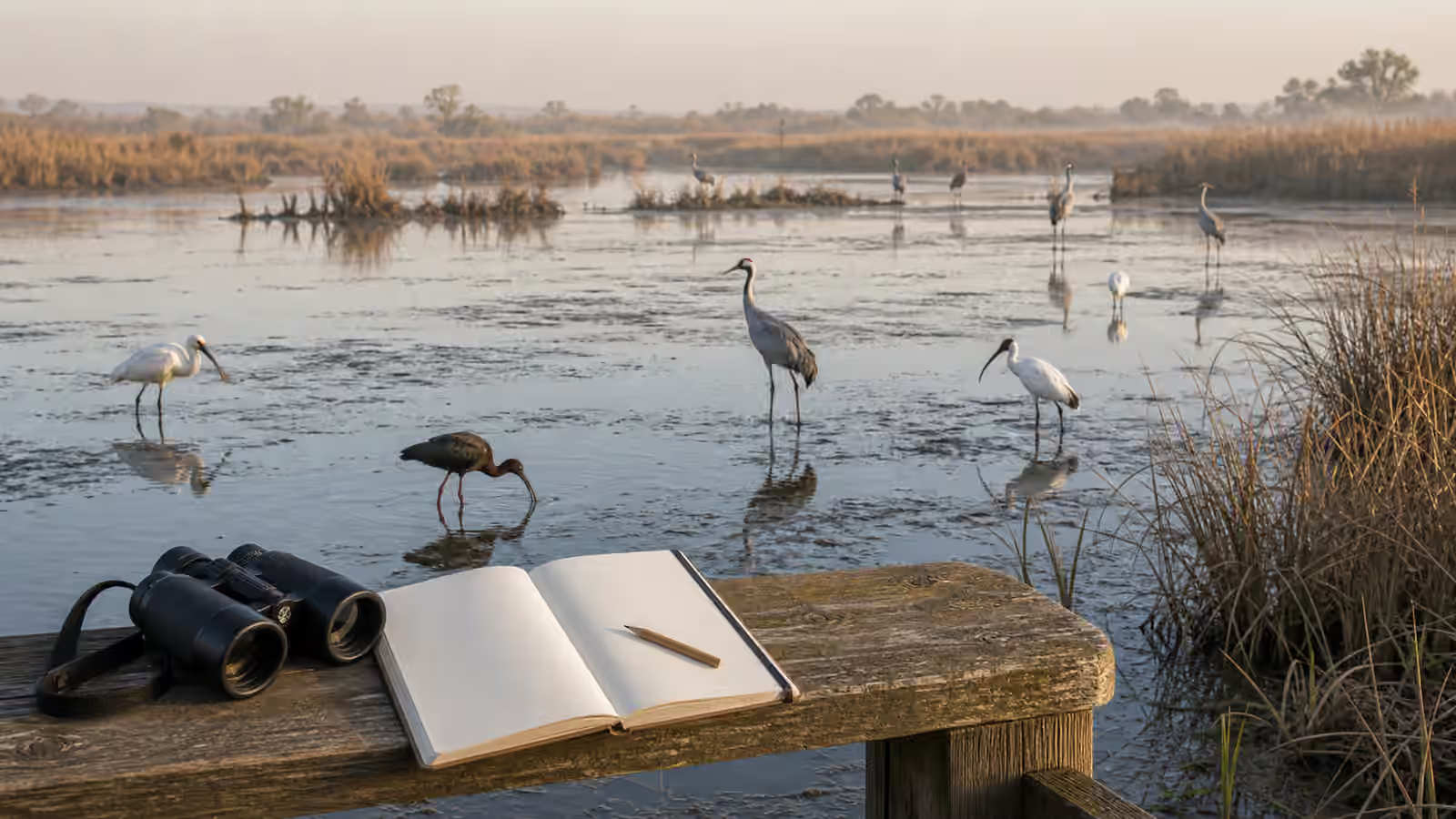
Large wetland birds can look simple at first because they are visible from far away. A tall bird stands in shallow water. A long bill sweeps through mud. A flock crosses the sky with slow wingbeats. A pale bird feeds near reeds. Then the details start to matter: straight bill, curved bill, spoon-shaped bill, long neck, short neck, trailing legs, outstretched neck, hunched posture, measured walk, probing, sweeping, stalking, or dancing display.
This guide fills the space beside Herons, Egrets, and Wading Birds and Rails, Bitterns, and Secretive Marsh Birds . It is not a global species list. Local cranes, ibis, spoonbills, stork-like birds, and related-looking wetland birds vary by region. The beginner skill is to read structure and behavior before reaching for a name.
Bill Shape Is a Field Mark You Can Read at Distance
The bill is often the first useful clue. An ibis-like bird may have a long downcurved bill used for probing mud or shallow water. A spoonbill-like bird may swing a flattened bill side to side through water. A crane-like bird may show a straighter bill, long legs, and a body posture that feels different from a heron. A stork-like bird may appear heavier, with a large bill and strong flight. These impressions need local checking, but they give your attention a place to start.
Do not make the bill do all the work. Distance, light, and angle can distort shape. A bird facing you may hide the curve. A bird partly submerged may look shorter-billed than it is. Heat shimmer can soften the outline. Use the method from Silhouette Birding : bill, neck, body, legs, and movement should agree before you feel confident.
If the bill shape is unclear, watch feeding behavior. The way a bird uses the bill can be more revealing than a still view.
Feeding Style Separates Similar White Birds
Wetlands often hold several large pale birds at once. Color alone can be a trap. A white heron-like bird, a spoonbill-like bird, a stork-like bird, and a pale ibis-like bird may share shallow water but feed differently. One stalks slowly and spears or grabs. One sweeps the bill side to side. One probes mud. One walks steadily through deeper water. One stands and waits. Another feeds in a loose group that advances together.
This behavior is readable through binoculars or a scope even when the birds are far away. Watch one individual for a full minute. Does it pause before striking? Does it keep the bill submerged? Does it swing the head in an arc? Does it jab repeatedly into mud? Does it walk with the body level or upright? Does it feed alone, in pairs, or in a flock?
Reading Bird Behavior for Beginners is useful here because behavior is not extra decoration. It is evidence. Large wetland birds often reveal their identity group through the physical problem they are solving: catching fish, probing soft mud, sweeping small prey, picking through vegetation, or moving across open shallows.
Neck and Leg Posture Matter
Large wetland birds carry their bodies in distinctive ways. Herons often create angular poses, with a patient hunting posture and sometimes a folded neck in flight. Cranes tend to look long-necked and long-legged, often with a more open, elegant carriage. Ibis may look curved and purposeful when feeding, with neck and bill working downward. Spoonbill-like birds can look front-heavy when sweeping. Stork-like birds may seem broad-winged and substantial.
These are broad impressions, not shortcuts. Local species and individual behavior can complicate them. Still, posture helps you avoid treating every tall bird as the same problem. A bird walking through a shallow marsh with a lowered head and sweeping bill is not behaving like a heron waiting at the edge. A flock flying with necks and legs extended gives a different shape from ducks, geese, cormorants, or gulls.
For flight views, Bird Flight Style and Wingbeats pairs well with this guide. Note whether the bird flies with steady deep wingbeats, glides, circles, travels in a line, forms a loose flock, or uses rising air. Large birds give time, but only if you watch the whole shape instead of staring at one mark.
Wetland Structure Explains Where They Stand
A wetland is not one uniform sheet of water. Depth, mud, vegetation, open pools, channels, islands, reed edges, exposed flats, and roosting bars all shape which birds use which part. Spoonbill-like birds and ibis-like birds may favor shallow feeding zones. Crane-like birds may use open flats, wet meadows, or marshy edges depending on the species and season. Stork-like birds may use drying pools, mud, or open water margins. Herons may wait along edges where prey passes.
Read the wetland before you identify the bird. Where is the water shallow enough for walking? Where is mud exposed? Where are birds resting instead of feeding? Which direction are they moving? Are they following a receding waterline, a channel, a grassy edge, or a disturbed patch? Marsh Birding and Water’s Edge Birding both teach the same habit at different scales.
The landscape also helps you keep distance. A viewing platform, levee, boardwalk, or public road may give a better view than walking toward the birds. Large wetland birds often look unbothered until they are not. If heads lift, feeding stops, or birds walk away from you, you are already part of the scene in the wrong way.
Flocks Tell a Social Story
Some large wetland birds are solitary. Others feed in loose groups, commute in lines, gather at roosts, or migrate in flocks. A flock can help with identification because similar birds show repeated shapes at different angles. It can also complicate the view because species may mix. A shallow wetland may hold herons, egrets, ibis, spoonbills, cranes, ducks, shorebirds, gulls, and cormorants in one wide frame.
Work across the flock slowly. Compare height, bill shape, feeding style, and spacing. Are the long-billed birds all feeding the same way? Is one bird taller, grayer, heavier, or more upright? Are some birds resting while others actively probe? Do the birds flush together or respond differently to a raptor overhead?
Mixed Flocks Birding is useful even though many examples involve songbirds. The discipline is the same: do not let a group become a blur. Choose one bird, read it carefully, then compare it with its neighbors.
Season, Molt, and Young Birds Add Subtlety
Large wetland birds can change through the year. Breeding colors may intensify. Bare skin, plumes, head color, or bill color may become more obvious in some species. Young birds may look duller, browner, shorter-billed, or less crisp than adults. Worn feathers and nonbreeding plumage can soften the field-guide image you expected.
Molt and Seasonal Plumage helps with this problem. Do not assume the bird is wrong because it is not dressed like the brightest illustration. Instead, collect structural evidence: bill shape, body size, posture, feeding method, flock association, and habitat. Those features remain useful when plumage is quiet.
Season also changes wetland use. Drying conditions can concentrate birds. Flooding can spread them out. Migration may bring birds that are absent at other times. Breeding season may make distance especially important. Roosting areas may gather birds at certain times of day. Your notes should include water level and behavior, not only names.
Let Distance Be Part of the Practice
Large birds tempt people to push closer because the birds remain visible. Resist that impulse. Wetland birds often need feeding time, roosting space, and open sightlines. A distant but relaxed bird gives better information than a closer bird that has stopped feeding because of you. Use binoculars, a scope if you have one, and patient comparison.
If the view remains uncertain, write an uncertain note. “Large long-legged bird, downcurved bill, probing shallow mud with several similar birds” is useful. “Tall crane-like birds crossing wet meadow at dawn, necks and legs extended” is useful. “Spoonbill-like feeding sweep seen, color not reliable in glare” is useful. These records keep your attention tied to evidence.
Watching cranes, ibis, spoonbills, and their wetland neighbors is a lesson in large shapes doing specific work. The birds are not just tall and distant. They are built for particular ways of feeding, moving, flocking, and using water. Once you see that, the shallow wetland becomes less like a postcard and more like a living field guide.