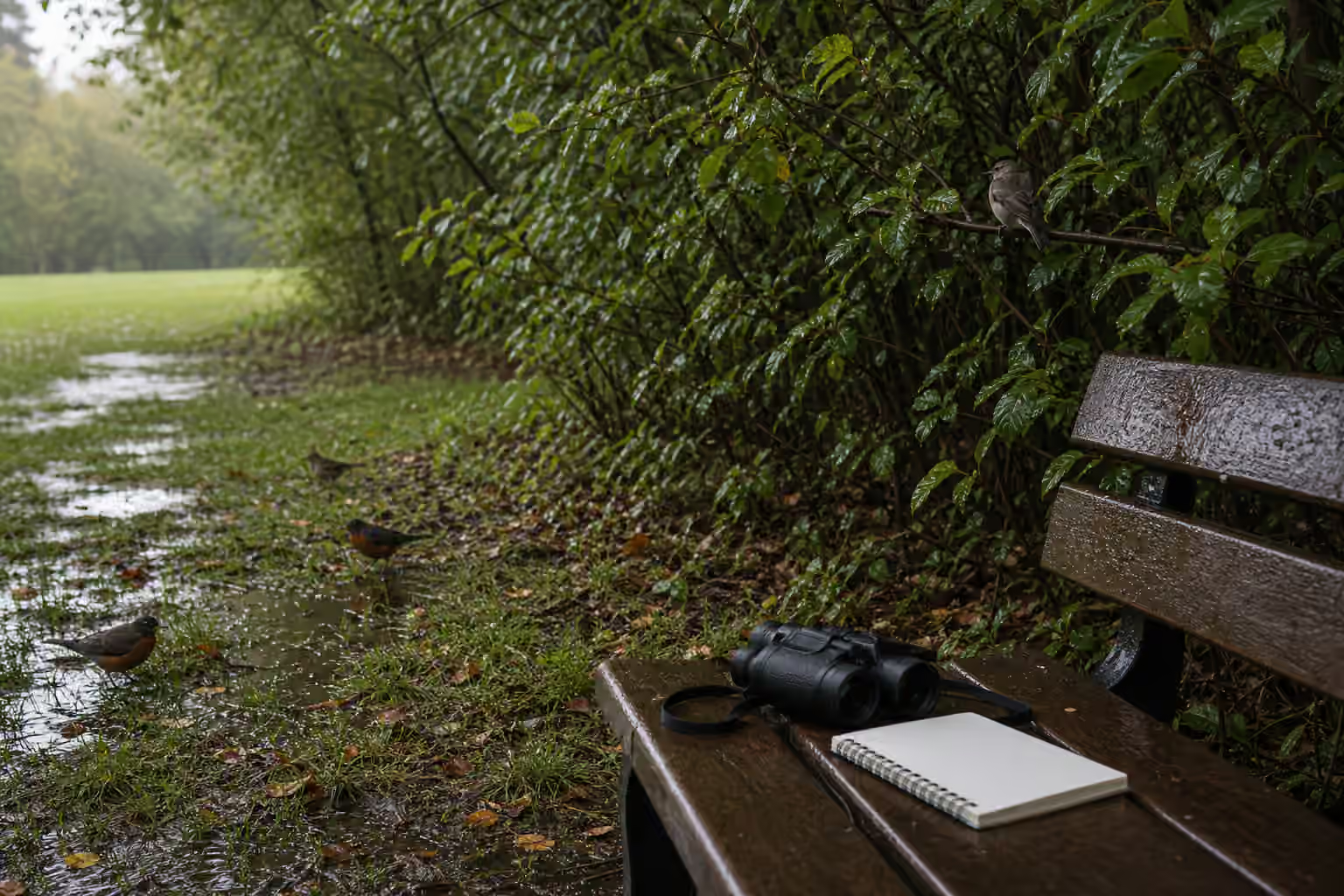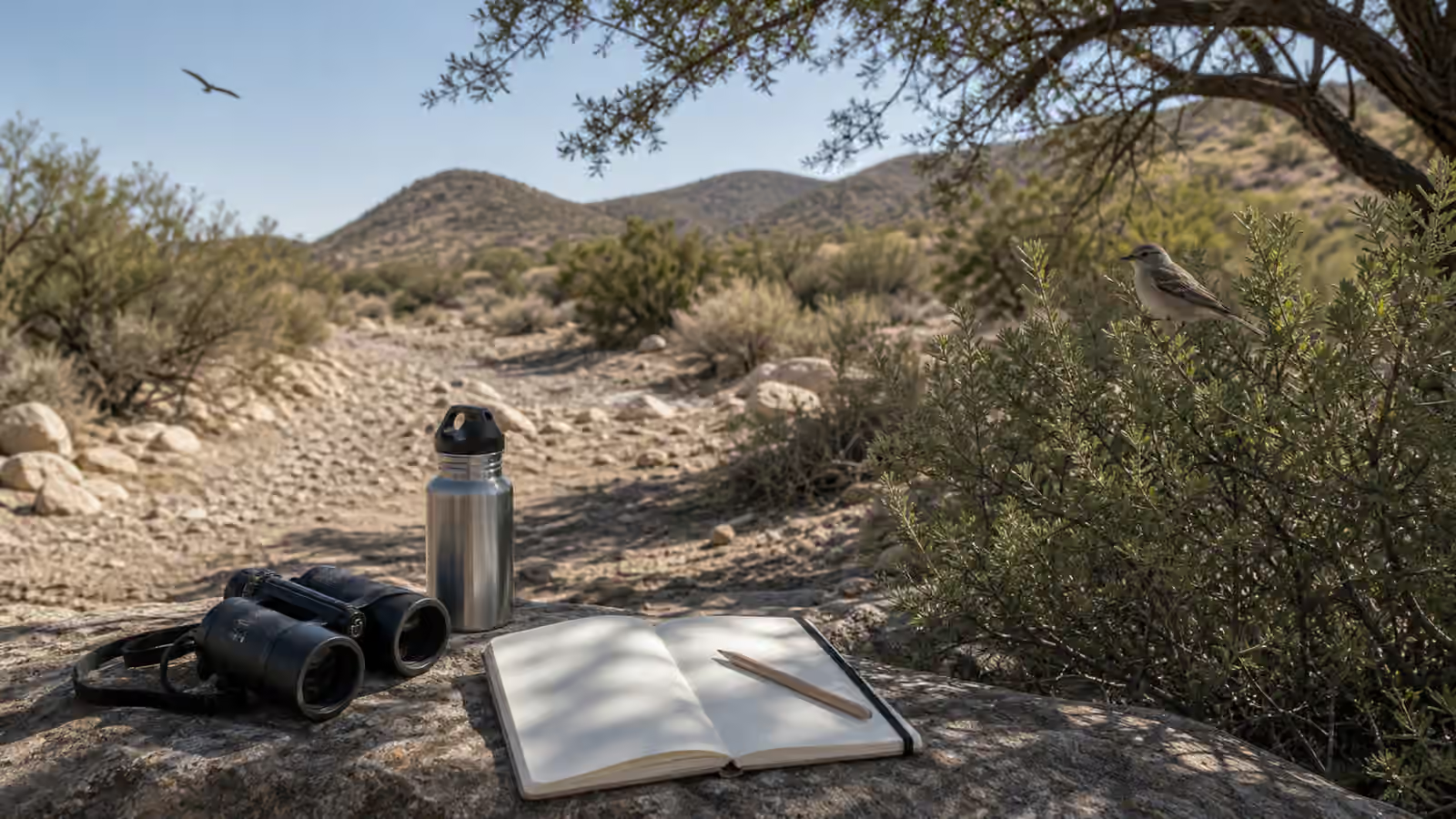

The first bird you hear at dawn may not be the first bird you identify.
That is fine.
Birdsong can feel overwhelming when you begin. A tree line that looked quiet yesterday suddenly becomes a wall of whistles, chips, trills, buzzes, rattles, and repeating phrases. One bird sings from the roof. Another answers from a hedge. Something thin and high slips through the background. Something loud repeats from a branch you cannot see.
The beginner mistake is trying to name all of it.
Do not do that.
A dawn chorus walk is not a test. It is a way to learn how sound works in a place. You are training your attention to separate layers, connect sounds to behavior, and keep honest notes that will help later. Identification will come faster if you stop treating every sound like a quiz buzzer.
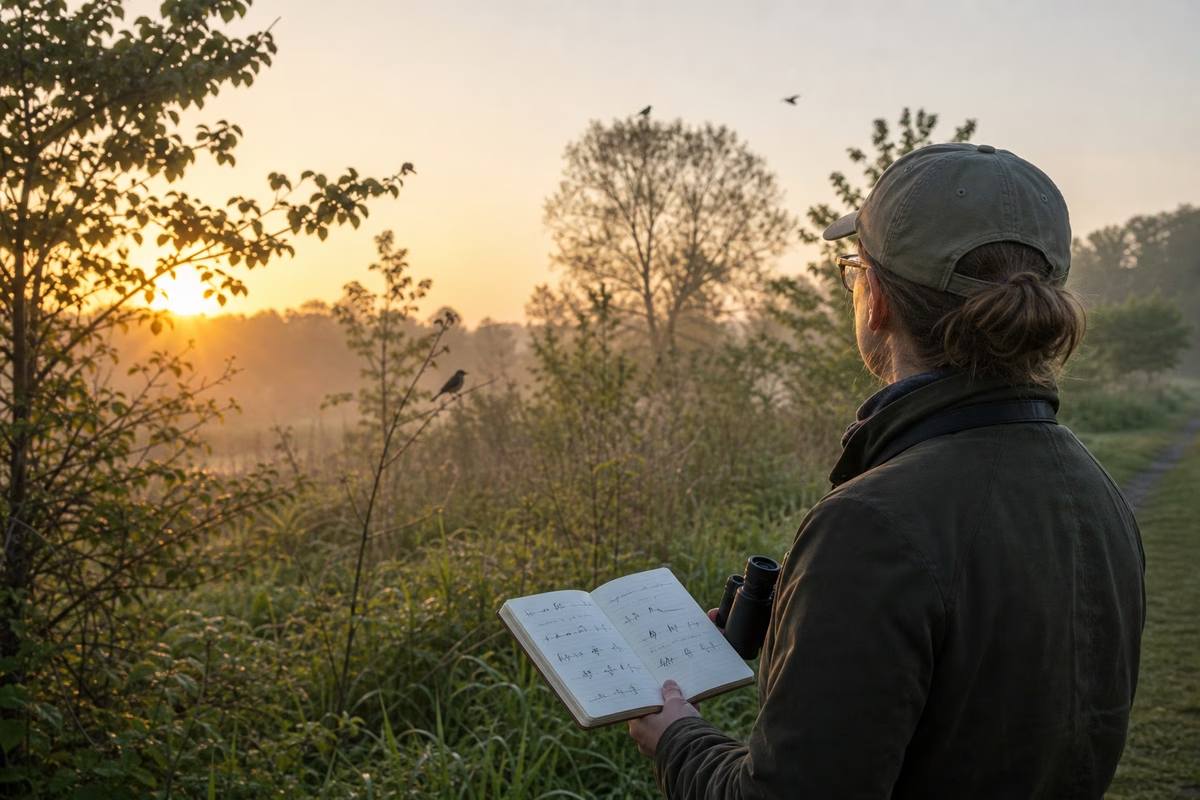
Arrive Before the Place Gets Busy
You do not have to wake up absurdly early forever, but one quiet morning teaches a lot.
Arrive near sunrise if you can. Choose a simple place: a park edge, pond path, cemetery road, backyard, garden, or neighborhood with mature trees. Avoid the loudest road if possible. You want enough birds to hear patterns, not so much noise that every note is swallowed.
Before walking, stand still for three minutes.
At first you may hear only the loudest singer. Then the sound field opens. A closer bird chips from the shrubs. A distant bird repeats from the top of a tree. Waterfowl mutter on the pond. A crow calls from somewhere behind you. The same place starts to have depth.
This is the first skill: hearing distance.
Bird sounds are not floating trivia. They come from bodies in places. High perch, low cover, open water, trunk, roofline, reeds, sky. Location is often the clue that turns noise into birding.
Sort Sounds Into Layers
Do not begin with species names. Begin with layers.
Try these buckets:
- Loud repeating song.
- Short contact call.
- Alarm call.
- Flight call.
- Drumming or wing sound.
- Distant background song.
- Non-bird noise.
Even if you cannot name the bird, you can often sort the sound.
A song is usually more patterned and repeated. A contact call may be short, quiet, and practical. An alarm call can sound sharp or urgent, especially if a hawk, cat, person, or other disturbance moves through the area. Flight calls may pass overhead and vanish before you see anything.
The categories are not perfect. Birds do not read field manuals. But sorting sound by function keeps you from drowning in detail.
Write Sounds the Way You Hear Them
You do not need musical notation.
Write ordinary descriptions:
- clear whistle, repeated three times
- buzzy trill from high tree
- dry chip from low hedge
- two-note phrase, second note lower
- harsh rattle near pond edge
- fast sweet song, rising at the end
Bad spelling is allowed. Private nonsense syllables are allowed. If a sound seems like “tea-kettle-tea-kettle” or “chip-burr-chip,” write that. The goal is not poetry. The goal is to preserve the shape of the sound long enough to compare it.
Add location:
Fast sweet song, rising at end, high in maple near playground, repeated from same perch.
That is much better than:
Nice bird song.
The first note can be tested later. The second evaporates.
Watch the Singer If You Can
The best way to learn a sound is to connect it to a visible bird.
This takes patience. When you hear a repeated sound, do not chase every note. Pick one singer. Watch the likely perch. Look for movement when the sound happens. A throat may pulse. A tail may flick. A bird may lean forward on each phrase.
If you see the bird, stay with it for a minute.
Notice:
- Where is it singing from?
- Does it repeat from one perch or move between perches?
- Is the song loud for the bird’s size?
- Does another bird answer?
- Does it switch to a shorter call when it moves?
This is how sound becomes behavior. You are not only learning a song. You are learning what the bird is doing with the song.
Use Apps as Clues, Not Judges
Sound identification apps can be useful. They can also make beginners lazy or overconfident.
Use them like a field assistant, not a final authority.
Before checking an app, make your own note. Describe the sound, location, and behavior. Then compare. If the app suggests a species, ask whether the habitat, season, and visible bird make sense. If it flashes five names in ten seconds, do not treat all five as sightings.
Apps struggle with overlapping songs, wind, traffic, regional variation, and distant birds. People struggle too. That is why good birding keeps confidence levels.
Useful note:
Possible Northern Cardinal by sound app, but bird unseen. Clear whistled phrases from high shrubs, May morning, repeated several minutes. Medium confidence.
That note is honest. It gives future-you something to learn from.
Learn the Common Voices First
Rare birds are exciting, but common birds teach your ear.
Choose five regular local species and learn them well. Not from a single recording. From repeated encounters outside. Learn how they sound near your home, in wind, in rain, far away, close up, alone, and with other birds singing over them.
Good beginner targets might include your local robin, cardinal, chickadee, crow, dove, jay, blackbird, sparrow, wren, or gull. Your region will differ. The point is to build a small reliable sound library.
Once you know common voices, unknown sounds stand out more clearly.
The first breakthrough is not identifying everything. It is hearing one familiar voice inside the crowd.
Do Not Chase Every Mystery
Some sounds will remain unnamed.
Let them.
If you chase every mystery, the walk becomes frantic. You leave the good listening spot. You pressure birds. You forget to watch the ones in front of you. You may end up with ten weak guesses instead of one strong lesson.
Pick one or two mystery sounds per walk. Write them carefully. Try to see the bird. If you fail, keep the note. Repeated mysteries often solve themselves after a few weeks.
Birding is not a courtroom where every sound must receive a verdict.
A Ten-Minute Dawn Exercise
Try this on your next morning walk:
- Stand still for one minute.
- Count how many directions you hear birds from.
- Pick the nearest repeating sound.
- Describe it without naming it.
- Find the likely perch.
- Watch for movement when the sound happens.
- Write habitat, height, and behavior.
- Only then check a guide or app.
If you identify one bird by voice and behavior, the walk worked.
If you identify none but write better notes than last time, the walk also worked.
The Morning Gets Quieter
One of the pleasures of a dawn chorus walk is hearing the day change.
The first half hour may be crowded with sound. Then traffic rises. People arrive. Some birds stop singing and begin feeding. Others move lower. The bright wall of music becomes scattered calls.
That change is useful. It teaches that birds are not just objects to identify. They are living through a morning.
When you listen that way, birdsong stops being a test of memory and becomes a map of attention. You start to know which corner of the park wakes first, which hedge holds the loud singer, which pond edge mutters before sunrise, and which familiar voice means spring has really arrived.
That is enough reason to go early at least once.