Dry-country birding can look empty until you learn where life gathers. Open ground, pale light, sparse shrubs, rocky slopes, dry washes, thorny tangles, grass clumps, scattered trees, seep edges, and distant calls create a different rhythm from woodland or wetland birding. You may see fewer birds at once, but each sighting can teach a great deal about habitat, heat, shade, movement, and patience.
This guide is about fieldcraft, not survival advice. Conditions vary widely, and some dry landscapes can be remote, hot, exposed, or easy to underestimate. Stay on legal routes, carry appropriate water, check local conditions before you go, and turn back early if the walk stops feeling simple. The birding lesson is straightforward: in dry country, small differences in shade, cover, water, and wind can explain where birds are.
Start With Shade
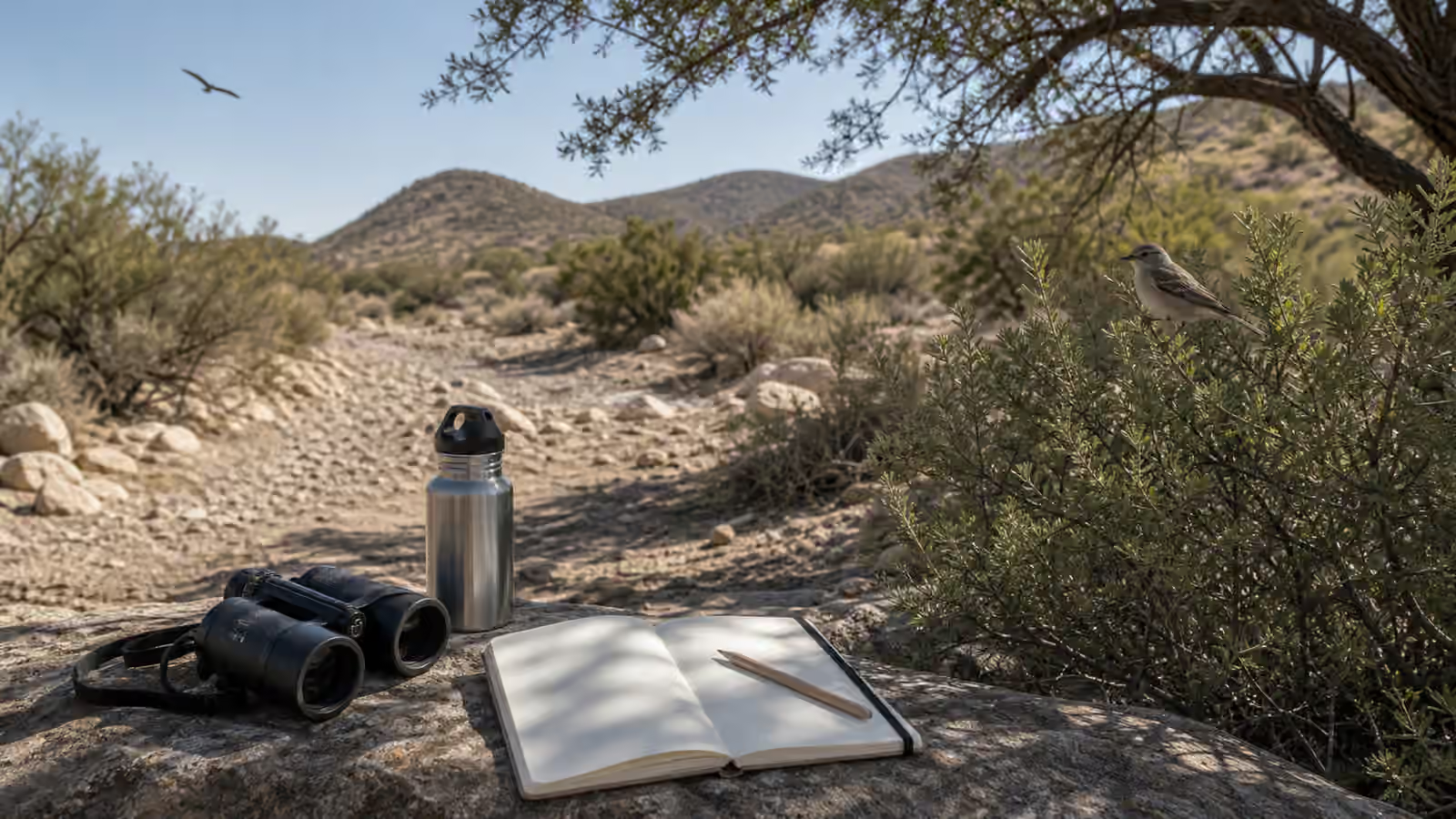
Shade is habitat. A small tree, a rocky overhang, the lee side of a wash, a clump of taller shrubs, or the shadow of a slope can hold more activity than a wide exposed flat. Birds may sing from shade, rest in it, move along it, or feed where insects are active near its edge. Early and late light can make these shaded places easier to read because birds move between cover and open ground.
Do not scan the whole landscape equally. Find the few places that offer relief from exposure. Watch them quietly. A small bird may appear on the outer twigs of a shrub, drop to the ground for a moment, then vanish. A larger bird may stand motionless in partial shade. A raptor may use the same pole, cactus-like perch, snag, or cliff edge to watch open country. Where and When to Go Birding teaches the same principle in broader terms: habitat explains effort.
Shade also affects your own watching. A comfortable observer is more patient and less likely to rush toward birds. Find a legal, stable, low-impact place to stand or sit, then let movement come to you.
Dry Washes Are Travel Corridors
A dry wash may look like an empty channel, but it often concentrates vegetation, insects, seeds, tracks, perches, and slightly cooler air. Birds can move along it while staying near cover. Shrubs may be taller in the wash than on the surrounding flats. Trees may appear where water occasionally moves underground. Leaf litter, seed heads, and exposed banks can attract different birds at different times of year.
Walk slowly along the edge rather than down the middle if that gives you better views and avoids trampling sensitive ground. Listen before you step into a bend. A chip, rattle, trill, wing sound, or rustle may tell you where to pause. The habits from Birding by Ear are especially useful in dry habitats because sound may be the first clue that a bird is present at all.
Washes also help with direction. A bird moving from shrub to shrub along the same line is often easier to follow than one crossing open ground. Mark where it appeared, where it disappeared, and whether it stayed low, climbed, perched openly, or moved in pairs. These notes are more useful than a frustrated statement that the bird vanished.
Sparse Cover Makes Behavior Visible
Dry habitats can be generous teachers because there are fewer leaves between you and the bird. A bird on a bare twig shows posture. A bird running across open soil shows gait. A bird dipping into grass clumps reveals how it uses cover. A bird carrying food, singing from the same perch, or moving with a family group may be easier to read than it would be in dense woodland.
At the same time, distance can be deceptive. Heat shimmer, glare, pale backgrounds, and long views can make size and color unreliable. Use the approach from Silhouette Birding and Bird Flight Style and Wingbeats . Shape, posture, tail action, wingbeats, and behavior often hold up better than color.
Dry-country birds may be cryptic. A ground bird can disappear against leaf litter. A sparrow-like bird can blend into stems. A nightjar-like bird at dusk may be all wing shape and silence. Do not assume absence because you missed movement. Pause, scan the edges of shrubs, check bare perches, and let your eyes adjust to the pattern of the place.
Scarce Water Changes the Map
Water in dry country may be obvious, hidden, seasonal, or sensitive. A seep, stock tank, spring, puddle after rain, irrigation edge, small pond, or shaded trickle can draw birds, but it can also be an important resource for many forms of life. Watch from a distance. Do not block access to water. Do not approach so closely that birds stop drinking, bathing, or moving through.
The method from Water’s Edge Birding still applies, but the stakes of disturbance can feel higher where water is scarce. Look for perches around the water, approach routes through cover, wet mud, shade, and nearby seed or insect sources. Birds may arrive quietly, drink quickly, and leave. Others may linger in shrubs before approaching. Your best view may come from waiting well back with binoculars rather than trying to stand at the edge.
Season matters. After rain, dry country can change quickly. Seeds germinate, insects emerge, flowering shrubs attract feeding birds, and temporary puddles create short windows of activity. During long dry stretches, birds may concentrate around the few places that remain usable. Record the conditions, not only the species.
Open Space Belongs to the Sky
Dry-country birding is not only about shrubs and washes. The sky may hold raptors, swifts, swallows, ravens, vultures, larks where they occur, migrant flocks, or birds moving between distant patches of cover. Open space lets you see travel lines that would be hidden elsewhere. A bird crossing a valley, riding a ridge, or dropping toward a wash can reveal how the landscape connects.
Raptors often become part of the day because open country gives them hunting views and rising air. Raptor Watching for Beginners is useful here: watch wing shape, tail shape, flight style, height, and behavior before reaching for a name. Perched raptors can be deceptive at distance, so note the perch, posture, and any flight views.
Small birds also use open air. A singing bird may rise briefly and drop back into grass or scrub. A flock may cross a bare slope and vanish into a wash. A distant line of birds may move along a ridge. If the view is too far for identification, make a field note anyway. Dry country teaches scale as much as detail.
Let the Place Set the Pace
Dry-country birding rewards a slower pace than the eye first expects. Walk a little, then stop. Listen. Scan shade, shrub tops, ground openings, and sky. Move again only after the scene has had time to settle. Birds that froze when you arrived may resume feeding. A hidden caller may climb to an exposed twig. A bird that flushed too soon may settle at a safe distance and give a better shape view.
This approach pairs well with Slow Birding From Benches, Blinds, and Short Loops , even when there is no bench. A rock, a legal pullout, a trail bend, or a patch of shade can become a watch point. The slower method also reduces pressure on birds using scarce cover.
Your notes should include the structure of the habitat. Write “low shrubs along sandy wash,” “shade under scattered trees,” “rocky slope with open perches,” or “temporary puddle after rain.” These details make future visits better. Over time, dry country stops looking empty. It becomes a readable pattern of shade, cover, water, wind, sound, and open sky.