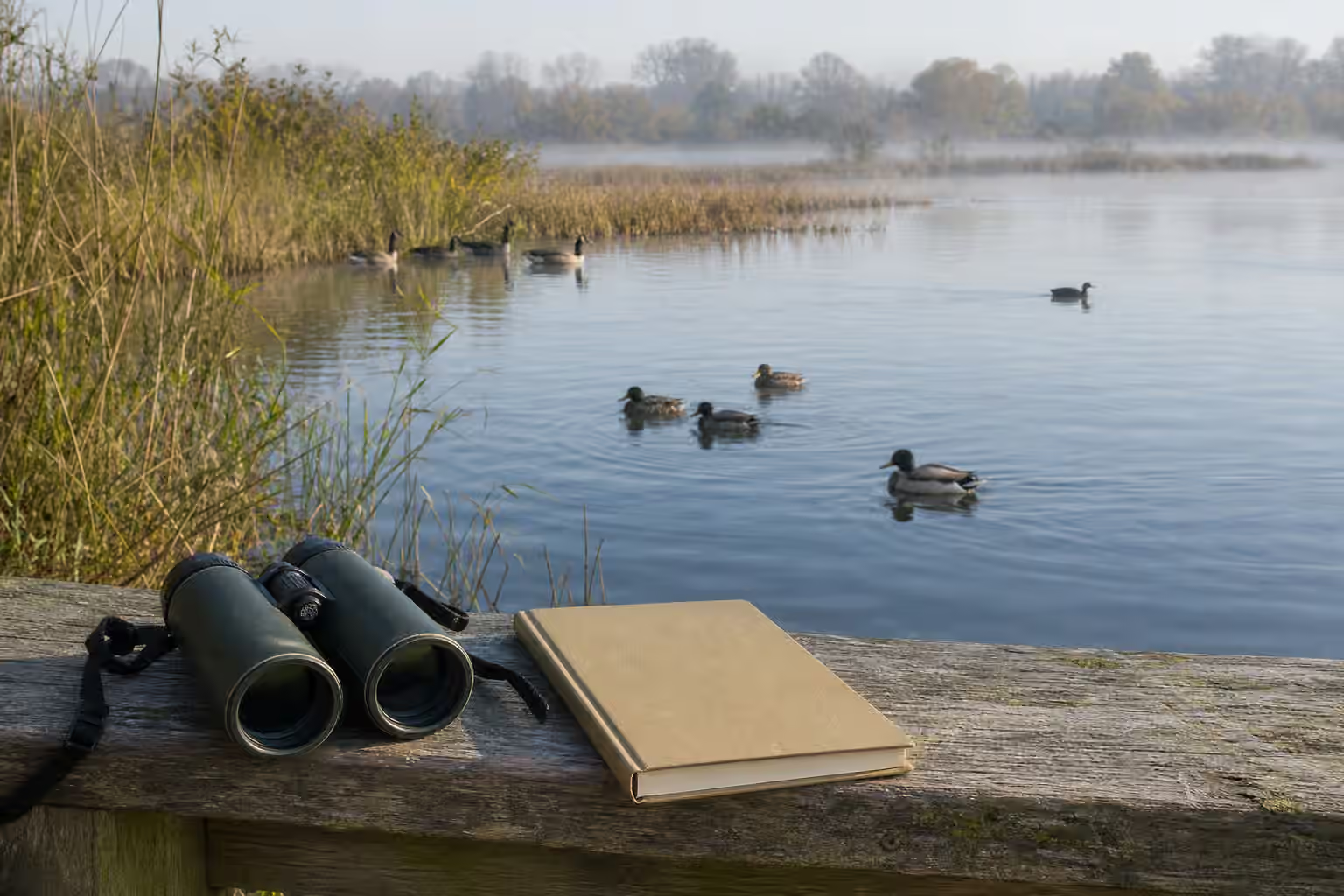
Ducks can look like the easiest birds in a beginner’s field guide until you stand beside real water. The birds are moving, diving, sleeping, turning into glare, tucking their heads, changing shape as they feed, and mixing with geese, swans, coots, grebes, gulls, and domestic birds. A bright male may seem obvious for three seconds, then the whole flock drifts into backlight and becomes a set of dark ovals on rippled water.
That is why ducks and waterfowl are such good teachers. They are often large enough to watch for more than a moment, but they still ask for the same careful habits that help with harder birds: shape before color, behavior before certainty, habitat before guesswork, and notes that admit what you did not see. A pond with common ducks can teach the same discipline as a mudflat full of shorebirds, only at a gentler pace.
This guide builds on Water’s Edge Birding , How to Identify Birds Without Guessing , and Winter Birding . Those guides explain how water, light, season, and structure shape a birding walk. Ducks and waterfowl give you a practical place to use those ideas because the birds often stay in view long enough for your first impression to improve.
Start With the Bird’s Shape on the Water
The first useful question is not whether the bird has a green head, a white side, or a rusty flank. Color changes with light, distance, age, season, and the angle of the bird. Shape stays useful longer. Look at how the bird sits on the water. Some ducks ride high and compact, with a rounded body and a short neck. Others sit lower, longer, or flatter. A goose has a different mass from a duck. A swan stretches the scene with a long neck and heavy body. A grebe may look narrow and low, as if the water is swallowing part of it. A coot may seem dark and blunt, with a small head and a different rhythm from the ducks around it.
Body shape also changes when the bird feeds or rests. A dabbling duck can look short and neat while floating, then tip forward with its tail in the air and its head underwater. A diving duck may vanish completely, resurface somewhere else, then dive again before you have refocused. A sleeping bird can hide the head mark that made it seem easy. Instead of forcing a name from one pose, watch several poses. The set of shapes tells a truer story than a single frozen view.
Comparison helps. If several birds are together, use the flock as a ruler. Which birds are larger, longer-necked, rounder-headed, or lower in the water? Which ones have heavy bills, sloping foreheads, pointed tails, or broad flat heads? A bird that looked medium-sized by itself may become small beside a goose or surprisingly bulky beside a compact dabbling duck. Scale is not a final answer, but it keeps the field guide from becoming a page of disconnected colors.
Notice How the Bird Gets Food
Feeding behavior separates many confusing water birds. Dabbling ducks often feed at the surface, tip up in shallow water, graze on land, or pick along edges. Diving ducks disappear below the surface and may come up far from where they went under. Geese graze, pull at plants, loaf on shore, or move in family groups. Swans reach down with long necks, sometimes tipping like huge dabblers in deeper water. Grebes dive with a sleeker, more purposeful look, while coots may peck at the surface, dive awkwardly, or walk with a distinctive posture when they leave the water.
These behaviors are not labels to memorize. They are clues to keep your observation honest. If a bird spends most of its time diving in the middle of a reservoir, it belongs in a different mental group from a bird tipping up in a shallow marsh corner. If a bird walks out onto grass and grazes with a flock, it is using the place differently from a duck filtering food along a muddy edge. The feeding method tells you something about body design, habitat depth, and likely identity.
Water depth matters here. A shallow pond margin, flooded field, marsh channel, city lake, broad reservoir, tidal lagoon, and quiet river bend can all hold water birds, but not in the same way. Before naming birds, name the water. Is there exposed mud? Are there reeds? Is the flock far out on open water or tucked into sheltered coves? Are birds feeding, resting, or using the place as a safe pause? The habitat reading from Where and When to Go Birding becomes much more concrete when the birds are showing you which parts of the water they trust.
Treat Color as Evidence, Not the Whole Case
Ducks are famous for color, and color can be useful. A clean head pattern, pale flank, dark chest, bright bill, white patch, rusty side, or bold wing flash may help a lot. The problem is that beginners often grab the first color they notice and ignore everything else. A dark head in shade may not truly be dark. A white side can disappear when the bird turns. A glossy head can shift from green to purple to black depending on light. A female or immature bird may carry only quieter versions of the marks shown in a field guide.
Use color after shape and behavior have narrowed the question. Ask where the color was, not just what color it seemed to be. Was the pale area on the side, belly, cheek, bill, wing, or tail? Was the head plain, capped, striped, or sharply divided? Did the bird have a dark eye area, a pale cheek, or a contrasting bill? Did the wing show a colored patch only when the bird stretched or flew? These details are more useful than saying the bird was brown, gray, or black.
Brown ducks deserve patience. Many females, juveniles, eclipse males, and nonbreeding birds are patterned in subtle browns, buffs, grays, and warm edges. That does not make them impossible. Look for bill shape and color, face contrast, body size, posture, tail shape, flank pattern, and how the bird feeds. Molt and Seasonal Plumage is worth reading before you decide that a dull duck must be unidentifiable. Some birds are genuinely best left as a careful partial identification, but many become clearer when you stop demanding bright male plumage.
Watch the Flock Instead of One Bird Alone
Water birds often gather in groups, and the flock can be more useful than the single bird that first caught your eye. A mixed flock may include obvious males, quieter females, young birds, sleeping birds, and lookalikes that are not ducks at all. Rather than jumping from bird to bird at random, watch how the group is organized. Which birds stay together? Which ones dive while others dabble? Which birds are paired, scattered, or lined up in a loose raft? Which ones keep to shore while others remain in the center?
Flock behavior also reveals disturbance and comfort. Birds that are feeding steadily, preening, or sleeping are using the place differently from birds swimming away with heads raised. A sudden flush may tell you that a raptor passed, a dog approached, a boat came too close, or people moved along the edge. Good birding means reading those reactions and avoiding becoming the cause of them. The distance habits in Birding Etiquette and Field Notes matter around ponds because water can make birds seem closer than they feel.
When a flock lifts into the air, keep watching. Wings may show patches hidden on the water. Flight shape can separate long-necked geese from compact ducks, heavy swans from smaller birds, or fast direct ducks from birds with a different wingbeat. You do not need to identify everything in flight. Notice the line, speed, wing rhythm, and where the birds land. A flock that circles and returns may give you a second chance if you stay still.
Learn the Ordinary Birds Deeply
The best way to learn ducks is not to race through every possible species in one afternoon. Begin with the common water birds near you. Watch them in sun, shade, wind, rain, winter, spring, close water, and distance. Learn how the familiar ducks sit, feed, walk, fly, sleep, and sound. Learn which geese are resident, which birds arrive seasonally, and which local ponds hold the same small set week after week.
This is one reason Patch Birding works so well with water. A local pond changes constantly without moving anywhere. Water level rises and falls. Ice may form or melt in colder regions. Reeds grow, mud appears, algae blooms, insects hatch, people use different paths, and migrants drop in. The same familiar flock becomes a reference point. When a new duck appears among ordinary birds, its different size, shape, posture, or feeding style stands out more clearly because the background is known.
Common birds are not practice birds in a lesser sense. They are the foundation. A mallard-like duck, a familiar goose, a local swan, a common coot, or a regular grebe can teach proportion and behavior better than a rare visitor seen badly for one minute. Once those shapes settle in your mind, the field guide starts to feel like a conversation with real birds rather than a wall of plates.
Season Changes the Water
Waterfowl are strongly seasonal in many places. Some birds breed locally. Some arrive in winter. Some pass through during migration. Some change plumage or look different by age and sex. A quiet city pond in summer may hold resident geese, domestic-influenced birds, and a few familiar ducks. The same pond in cold weather may attract diving ducks, gulls, merganser-like shapes, or other birds if open water remains. A reservoir that seems empty in warm months may become active when winter concentrates birds where water is unfrozen or food is reachable.
Migration can change a water body quickly. A storm, wind shift, cold front, or calm morning after movement may bring birds that were absent the day before. Migration Morning explains the broader pattern of birds using stopover habitat. Ducks add the language of water depth, shelter, and open resting space to that story. A sheltered cove, flooded field, marsh opening, or quiet river backwater may matter because it offers birds a place to feed or rest during a larger journey.
Season also changes what you can responsibly observe. Breeding birds, young birds, and loafing winter flocks all need space. A family group on shore should not be pushed toward water for a better photo. A cold-weather flock using a small opening in ice may have few good options. A migration raft far out on a lake may look unreachable because that distance is exactly what makes the place useful. The bird’s behavior should decide your approach more than your wish for a closer look.
Make Notes While the Bird Is Still a Bird
Ducks can lull you into thinking you will remember everything because they stayed visible for a while. Then you get home and realize the bird was “brown with maybe a pale face” and nothing more. Write notes while the bird is still in front of you. Describe the size compared with nearby birds, how it sat on the water, whether it dabbled or dove, where it fed, what the bill looked like, what marks were actually seen, and whether the bird was alone or part of a group.
A rough sketch can help even if it is only a floating oval, a head shape, and a bill line. Mark where the pale area was. Mark whether the tail looked pointed or blunt. Mark whether the neck seemed long, short, thick, or tucked. If you take photographs, use them as records, not as a reason to close distance. The restraint from Patient Bird Photography is especially important where birds are resting, feeding, or raising young.
It is fine to leave a note uncertain. “Female dabbling duck, larger than nearby small ducks, orange-edged bill, pale eyebrow, tipping in shallow water” is better than a forced name. “Diving duck species, dark head, pale side, low on water, seen in glare” is honest and useful. Uncertainty with evidence gives you something to learn from. Certainty without evidence only feels tidy for a moment.
Let the Water Slow You Down
A good duck walk does not need to be dramatic. Stand where you have a responsible view, keep the light in mind, and let the water settle into patterns. Watch one bird long enough to see it feed, preen, turn, stretch, and return to the flock. Compare it with the bird beside it. Notice the birds you had been calling ducks that are actually coots, grebes, gulls, or domestic birds. Notice how different a goose feels from a duck when both are relaxed on the same pond.
The names will come. Some will come quickly because the marks are clear. Others will come after repeated local watching. A few will remain open, and that is part of the practice. Ducks and waterfowl reward the beginner who does not treat common water as a solved scene. There is always another posture, another feeding method, another seasonal change, and another reason to look before naming.