Night birding begins with a different kind of attention. In daylight, the eye leads. You scan branches, shorelines, wires, fields, and sky. At night, the world refuses to be read that way. The path becomes quieter. Shapes flatten. Distance changes. A bird may be present only as a call from somewhere beyond the trees, and the best thing you can do is stand still.
That stillness is the heart of ethical night birding. The goal is not to drag hidden birds into view. The goal is to learn what can be noticed without making the night harder for the animals living in it. Owls, nightjars, rails, migrating songbirds, herons, shorebirds, and many other birds use darkness in different ways. Some are hunting. Some are resting. Some are migrating overhead. Some are feeding in places that would feel empty in daylight. They are not waiting for an audience.
Beginners often approach night birding with excitement and a little unease. The idea of hearing an owl call from a dark wood is powerful. The temptation is to do too much: shine a bright light, walk closer, play recordings, whisper loudly, or push down a trail because the bird seems just out of reach. Ethical night birding asks for the opposite. It asks you to let partial knowledge be enough.
Darkness Changes the Rules
Birds that tolerate daytime observers may behave differently at night. A flashlight that feels modest to a person can be disruptive to an animal using low light. A bird flushed from a roost may lose rest, waste energy, or become more vulnerable. An owl responding to a recording may be defending territory, not offering a show. A nesting or feeding bird may change behavior because a group of people arrived with lights and eager voices.
This does not mean night birding is wrong. It means the method matters. A careful night walk can be quiet, educational, and low impact. A careless one can turn curiosity into pressure. The difference is usually not the equipment. It is restraint.
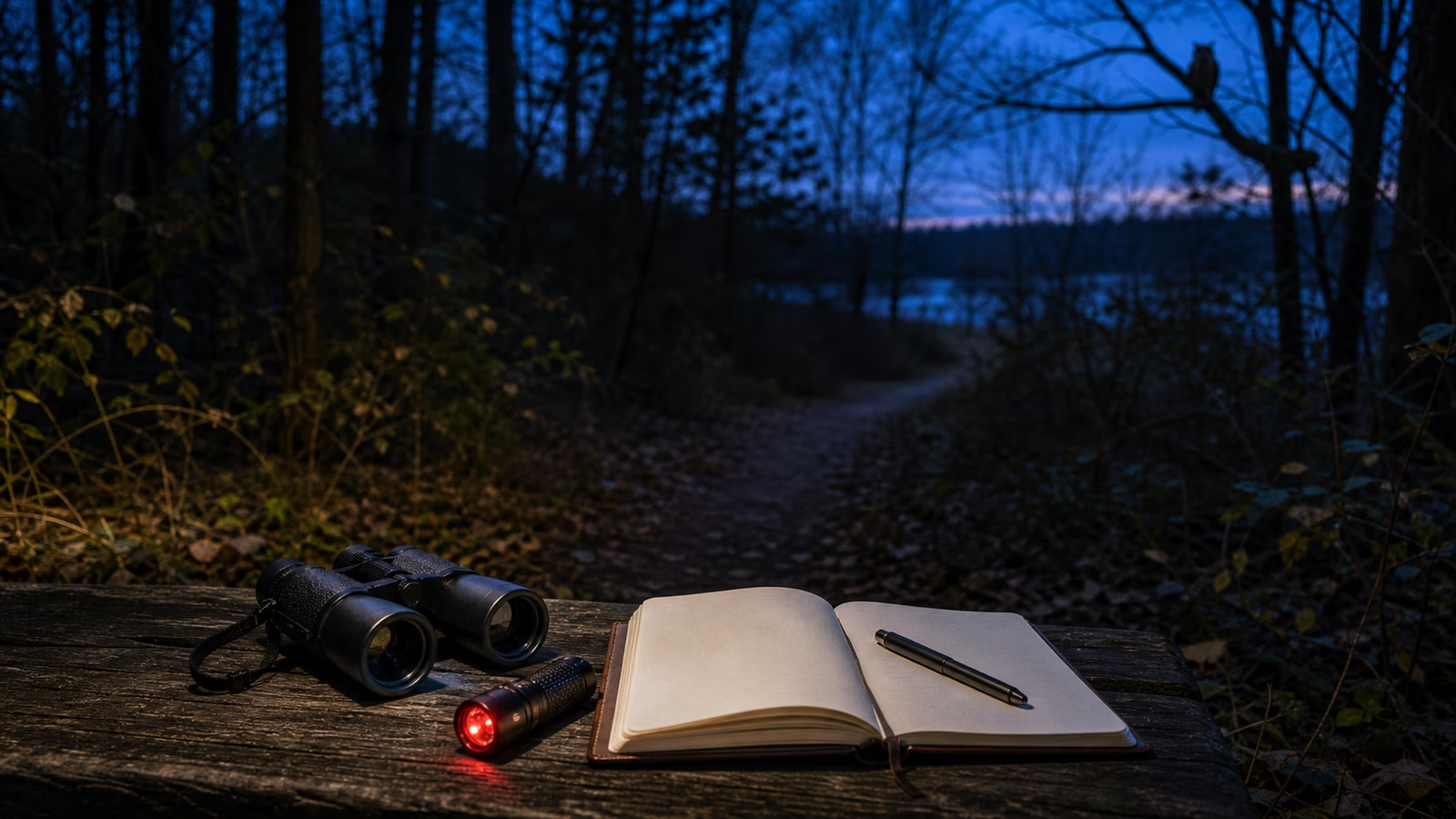
The first rule is to move slowly and stop often. Give your hearing time to adjust. Let your eyes adapt. Avoid sweeping lights across trees, fields, reeds, or water. If you need a light for safety, point it toward the ground and keep it dim. A red light can be less harsh for people and some field situations, but it is not permission to shine directly at wildlife. The most respectful light is often the one used least.
Listening Is the Main Skill
Night birding is built around sound. Owls may hoot, bark, whinny, trill, screech, or call in patterns that carry through woods and fields. Nightjars can give repetitive calls from open or shrubby habitats. Migrating birds may pass overhead as faint flight calls. Marsh birds may speak from reeds where sight is nearly useless. Even common daytime birds can make small night sounds when disturbed or moving.
The beginner’s job is not to identify every sound immediately. It is to learn the soundscape. Is the call near or far? Repeated or single? Moving or fixed? Coming from high trees, open sky, marsh, shoreline, or field edge? Did the sound happen after you moved, after a car passed, after another animal called, or without obvious cause?
Writing this down matters. Night memory is slippery. A call that seemed obvious in the moment can become vague by morning. Plain notes help: low hoots from distant woods, repeated every minute; faint chips overhead after midnight; harsh call from marsh edge; no visual contact; no playback used; stayed on trail. These notes are not glamorous, but they teach attention.
Listening also makes the experience richer because the night is not empty between bird calls. Wind in dry leaves, insects, frogs, distant traffic, water, mammals, and human noise all shape what you can hear. Good night birding is partly learning what not to call a bird.
Playback Should Be Rare and Thoughtful
Recorded calls are one of the most sensitive tools in birding. They can help people learn sounds, but using them in the field can affect bird behavior. At night, this is especially important for owls and other territorial birds. A bird may respond because it thinks a rival has entered its space. Repeated playback can waste energy, disrupt feeding or breeding behavior, and change what the bird would otherwise be doing.
For beginners, the safest habit is to avoid playback for casual night birding. Learn calls before you go. Listen in the field. Accept that many birds will remain unseen and unanswered. If you are with an experienced leader in a setting where playback is permitted and used sparingly, pay attention to the restraint rather than the result. How short is the recording? How long is the silence afterward? Does the group stop if a bird responds? Is the goal education or repeated entertainment?
Some parks, refuges, tours, and birding events have rules about playback. Follow them. If the rule is unclear, choose the lower-impact path. A night bird that does not respond has not failed you. It has continued its life.
Safety Is Part of Ethics
Night birding also requires care for people. A group stumbling on a dark trail, blocking a road shoulder, trespassing, or startling residents is not practicing good fieldcraft. The same patience that protects birds should protect the outing.
Know where you are allowed to be after dark. Many parks close at sunset. Some neighborhoods are not appropriate for late-night wandering with binoculars. Rural roads can be dangerous because drivers do not expect people on the shoulder. Wet boardwalks, roots, loose rocks, tides, and cold weather can turn a simple walk into a problem. A quiet plan is better than a heroic one.
Bring only what you need. Binoculars may help in twilight or moonlight, but many night sightings will be heard, not seen. A small light, warm layer, charged phone, water, and clear route matter more than a heavy kit. Go with someone else if the location is unfamiliar. Tell someone where you are going. Leave before fatigue makes you sloppy.
Ethical birding is not only about not disturbing birds. It is about not creating avoidable trouble in the places birds share with people.
The Best Sightings May Stay Invisible
One of the hardest lessons for beginners is that a good night birding experience may not produce a photograph or even a view. You may hear an owl once and never see it. You may stand under migrating birds and catch only faint calls overhead. You may visit a marsh and leave with nothing certain except the feeling that the place is alive after sunset.
That is not failure. It is the proper scale of the activity. Night birding teaches humility because darkness keeps ownership out of reach. You cannot force the field guide view. You cannot always confirm the call. You cannot turn every presence into a record. Sometimes the ethical choice is to hear enough, write it down, and leave.
This kind of birding can deepen daytime practice. After a few careful night outings, you may listen better at dawn. You may understand habitat more fully. You may notice that a local park has a second life after the dog walkers leave. You may become more cautious about approaching roosts, nests, and hidden birds in daylight because you have felt how vulnerable darkness can be.
The reward is not conquest. It is relationship. You learn that the birds around you have hours you rarely witness, and that your curiosity has to be shaped by their need for space.
Leave the Night Intact
A good night outing ends quietly. The birds are not flushed, the roosts are not surrounded, the path is not littered, the residents are not annoyed, and the group leaves with notes rather than trophies. You may have heard one owl, or none. You may have learned a route, a sound, a boundary, or the simple fact that standing still in the dark is harder than it sounds.
That is enough. Birding does not always have to move toward a closer look. Sometimes it moves toward better listening.
Ethical night birding asks you to let the dark remain dark. Bring a small light for your feet, not a spotlight for the trees. Bring curiosity, but leave room. The birds were there before you arrived, and the best compliment you can pay them is to let them continue after you go.