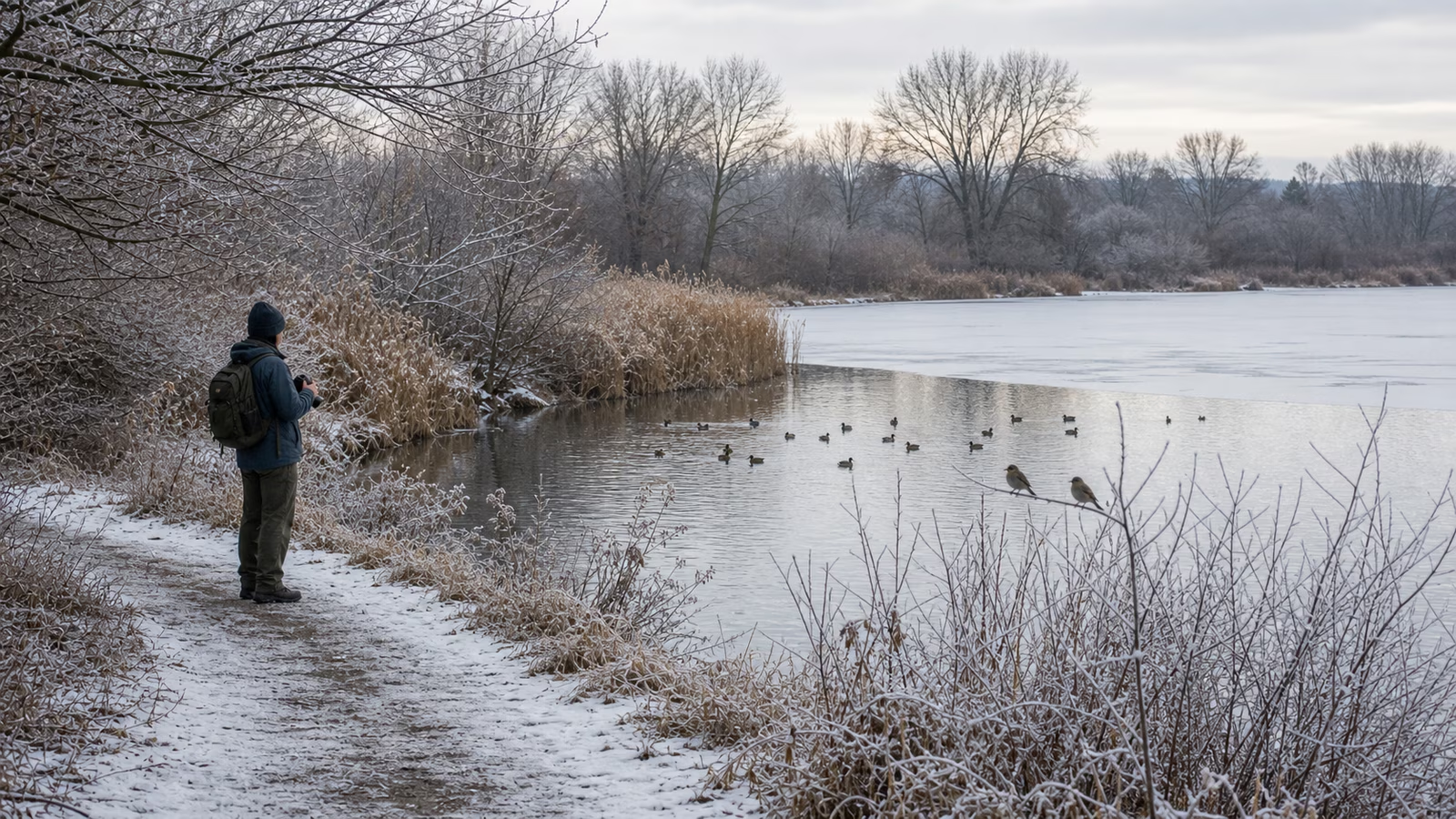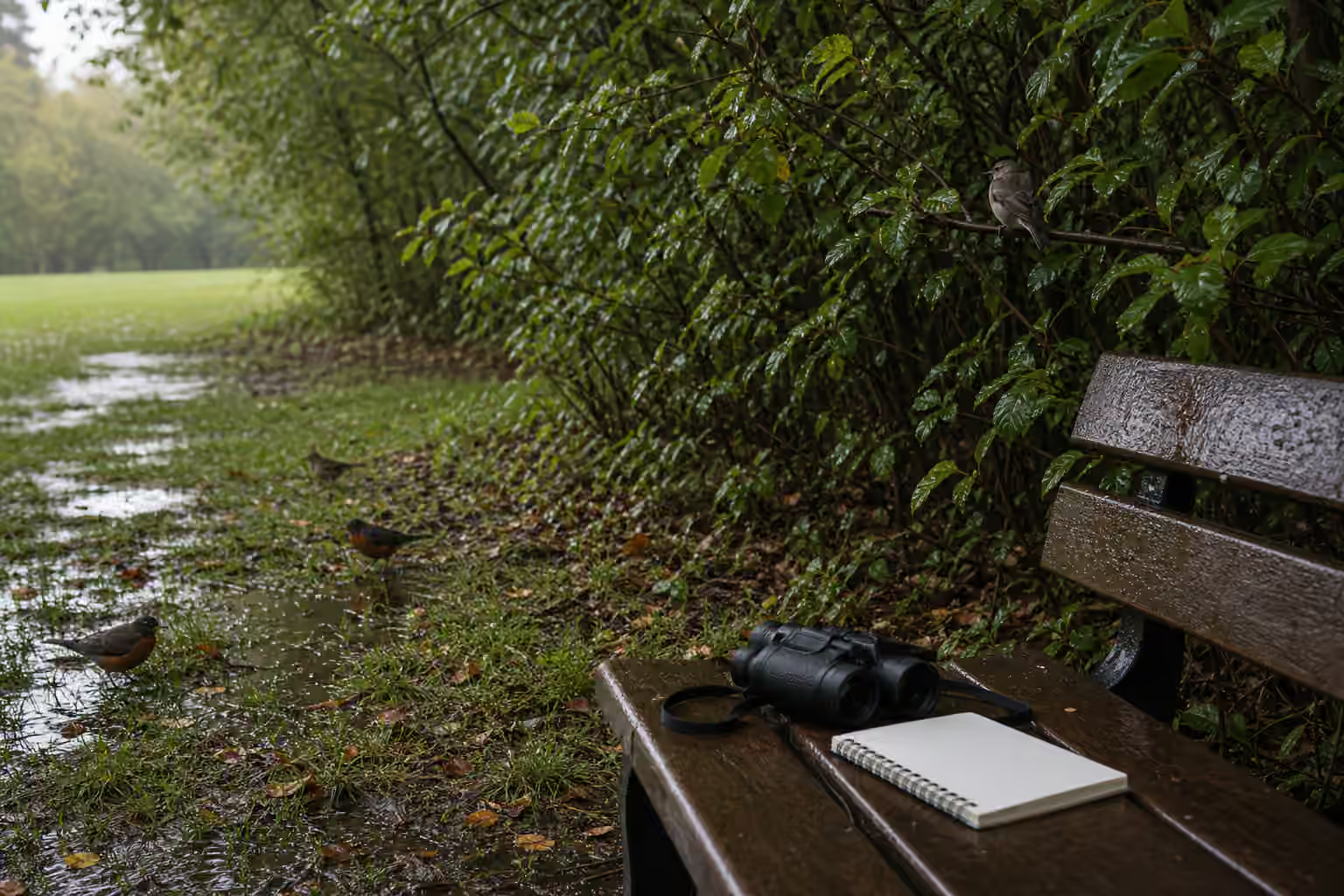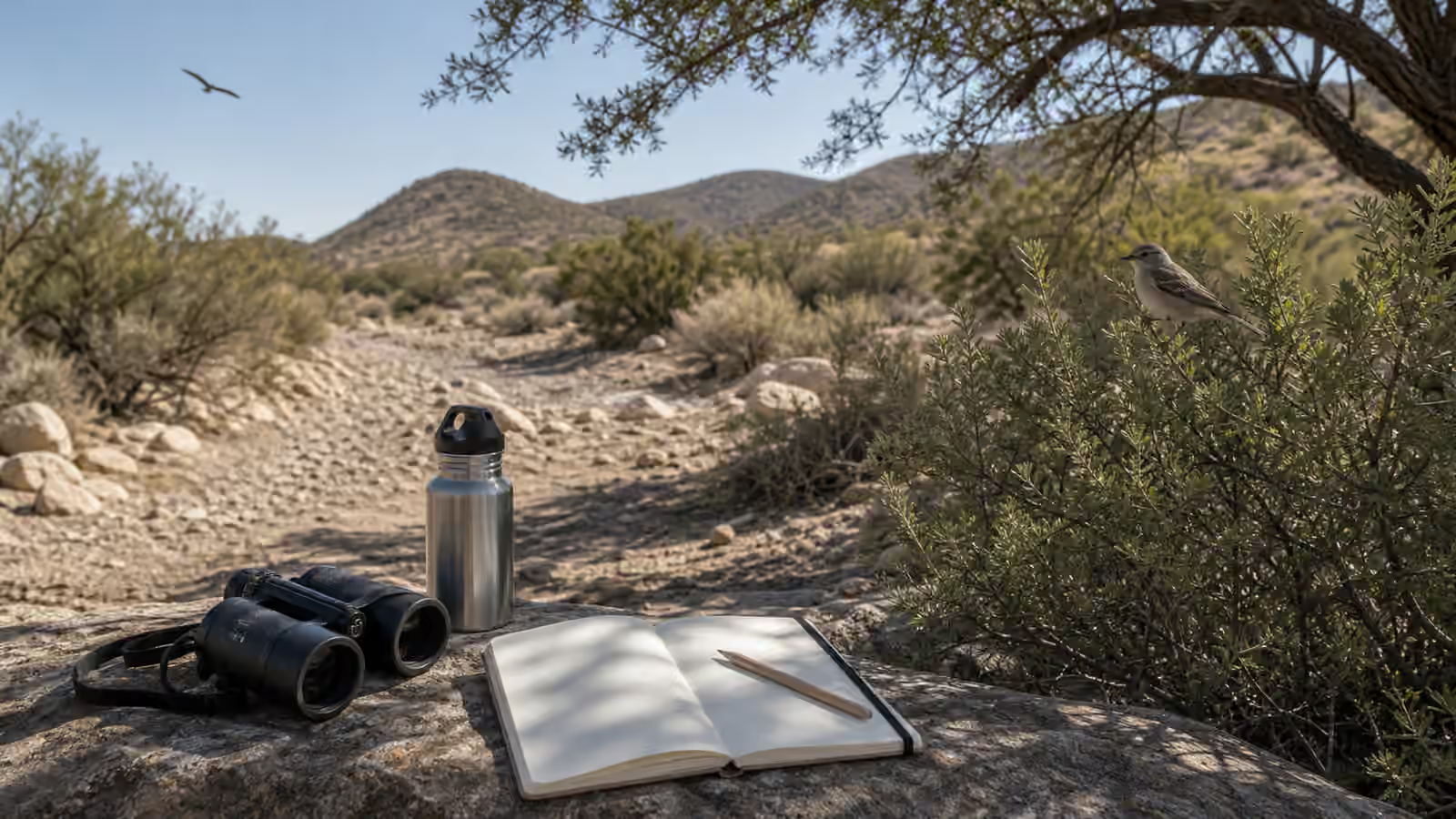
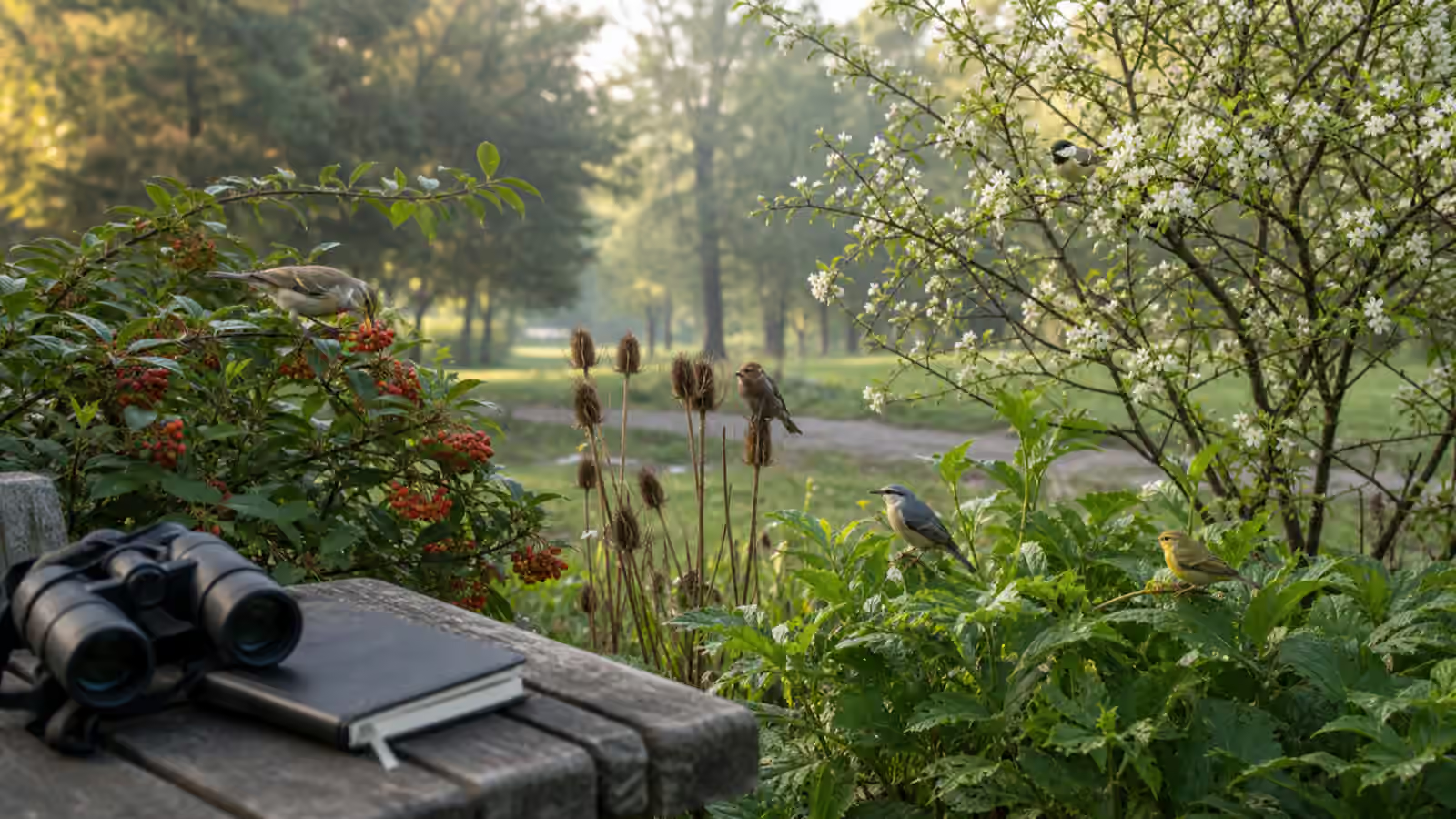
Many birding walks become easier when you stop asking where the birds are and start asking what the place is feeding.
Birds do not scatter themselves evenly through a park, garden, marsh, schoolyard, or strip of roadside trees. They gather where food is available, cover is close enough, and the risk feels manageable. A quiet shrub with ripe berries may hold more activity than a wide scenic lawn. A flowering tree beside a sidewalk may be better than a deep forest path for a few spring mornings. A weedy corner left unmowed through winter can be busier than the neatly kept part of the same park. Food does not explain every sighting, but it gives a beginner a practical way to search with purpose.
This is different from chasing a single rare bird. Food-source birding is a habit of reading habitat at close range. You notice what is flowering, fruiting, seeding, hatching, thawing, or exposed. You return to the same tree or edge over several days. You watch how birds approach it, how long they stay, and what makes them leave. The point is not to memorize a universal menu. The point is to let food make the landscape legible.
Flowers Are More Than Color
Flowering trees and shrubs can pull birds into ordinary places before the leaves are fully open. Some birds come for nectar, especially in regions where hummingbirds or nectar-feeding species are present. Many more come for the insects that flowers attract. Tiny caterpillars, flies, beetles, and other small invertebrates can turn a blooming tree into a temporary feeding station for warblers, vireos, chickadees, orioles, tanagers, and local equivalents.
The beginner mistake is to admire the whole tree from a distance and then move on. Stand where you can watch one section carefully. Look for leaves that twitch without wind, blossoms that shake, and small shapes moving along the outer branches. Many birds feeding in flowers do not sit openly. They work through the bloom in bursts, pause behind a cluster of petals, and appear only when they cross a gap.
Light matters here. A flowering tree seen against a bright sky may reduce every bird to a dark shape. Move a little if you can do so without trampling plants or crowding the birds. A side-lit view often reveals more than a closer backlit view. If the bird is still hard to name, describe the way it feeds. Is it hovering, gleaning along twigs, probing into blossoms, hanging upside down, or making short flights after insects? That behavior may be more useful than a flash of color.
This habit connects naturally with Warblers for Beginners , because spring migrants often announce themselves first as motion in fresh leaves and flowers. It also deepens Birding by Ear , because a singing bird near a bloom may be easier to relocate when you understand why it is using that tree.
Berries Make Small Hotspots
Fruiting shrubs and trees create some of the most reliable birding moments in a local patch. Berries, crabapples, figs, cherries, elderberries, hackberries, serviceberries, hollies, junipers, and many regional plants can gather birds when the fruit is ripe or softened by weather. The exact plant list changes by region, but the field habit is stable: learn which fruiting plants in your own area attract birds, then revisit them while the fruit lasts.
A berry shrub may look empty when you arrive. Give it time. Many birds approach fruit cautiously, especially in busy parks or near paths. They may stage in nearby cover, drop in for a few berries, and retreat. Some flocks cycle through repeatedly. If you stand quietly with a little distance, the shrub may become active again after it decides you are not the most important thing in the scene.
Fruit also changes bird behavior. A bird feeding on insects may move quickly and vanish into leaves. A bird feeding on berries may pause, stretch, swallow, wipe its bill, or shift to a better branch. Watch the pattern. Which birds feed high? Which stay low? Which chase others away? Which wait their turn? A fruiting shrub is not just a food source. It is a small social stage where dominance, caution, hunger, and cover all show themselves.
Fruit can be especially useful during migration and in winter. Migrants need energy at stopovers, and winter birds may concentrate where fruit remains after other food is scarce. Migration Morning explains the broader pattern of edges and rest stops; food-source birding gives you a smaller target inside that pattern. Instead of walking every trail with equal attention, you can check the fruiting edge, the sheltered hollow, and the shrubs that still hold berries.
Seed Heads Are Not Mess
Birds often reward the places humans are tempted to tidy. Dried grasses, thistle, sunflower heads, goldenrod, sedges, and weedy seed stalks can hold finches, sparrows, buntings, blackbirds, doves, and other seed-eating birds. In winter, these areas may look brown and finished to us while still functioning as a pantry.
The best way to watch seed heads is to slow down before the birds flush. Small seed-eaters often feed low, drop into cover, or rise in a nervous burst when someone walks too close. Stop at the edge rather than stepping into the patch. Look for bending stems, falling chaff, and birds climbing seed heads at odd angles. Listen for dry chips and soft contact notes. A flock may be present long before you see a clear bird.
Seed patches also teach scale. A beginner scanning for bright birds may miss the sparrow that matches the dry grass almost perfectly. Instead of searching for color, search for movement and posture. A bird that balances on a stalk, drops to the ground, and pops back up is telling you something about both its body and its food. This is where Reading Bird Behavior for Beginners becomes practical: feeding style, flock spacing, alarm, and retreat routes are field marks too.
If you manage a yard, balcony, garden, or community space, this lesson can change how you think about “cleaning up.” Backyard Bird Habitat covers habitat choices more directly, but the field lesson is simple. A plant that has finished blooming may still be feeding birds. A neat border may be less useful than a patient one.
Insects Are Often the Hidden Meal
Many birders learn berries and seeds first because they are visible. Insects take more attention. A leafy tree may hold birds because caterpillars are feeding there. A damp log may attract wrens or thrushes. A muddy edge may gather flies and larvae for shorebirds and wagtail-like species. A warm wall, light gap, or sheltered path may concentrate small flying insects in cool weather.
You do not need to identify every insect. Notice signs of insect activity. Leaves with small holes, curled edges, fresh growth, webs, galls, and flowers buzzing with life all deserve a second look. Birds that seem to be “doing nothing” may be making precise little feeding moves that your first scan missed. A flycatcher returning to the same perch is using the air as a feeding field. A warbler moving along leaf undersides is reading the tree more finely than you are. A woodpecker working one patch of bark has found a food layer hidden from a casual view.
The best insect birding often happens at edges. Sun warms one side of a tree line. Wind pushes insects into shelter. A pond edge holds emergent life. A patch of shrubs beside an open path gives birds a safe place to feed and retreat. Where and When to Go Birding covers these broad choices; food-source thinking explains why one edge outperforms another on a given morning.
Keep Notes on the Food, Not Just the Bird
If you record only the bird name, you lose half the lesson. Add the food source to your note. “Two small warblers feeding in flowering maple.” “Finches on dry seed heads by the east fence.” “Thrush under fruiting shrubs after rain.” “Flycatcher returning to dead branch over midge cloud.” These details make your future walks better because they connect sightings to conditions you can find again.
Over time, your local calendar becomes sharper. You learn which tree blooms first, which berry patch gets stripped quickly, which weedy slope holds winter sparrows, and which wet corner wakes up after rain. This is one of the pleasures of Patch Birding . Repetition turns ordinary plants into landmarks. A shrub is no longer just a shrub. It is the place where birds arrive when the fruit softens, the place where sparrows hide when the path is busy, the place where the first migrant of the morning paused before moving on.
Food-source birding also keeps ambition in proportion. You may not identify every bird. You may not see anything rare. But you will understand the outing better. The birds you do find will feel less random, and the quiet places will give you questions instead of frustration. What is feeding here? What will change next week? Which edge should I check after rain? Which plant has become important without announcing itself?
When a walk feels empty, look again at the food. The answer may be in a flowering branch, a fruiting hedge, a muddy seam of water, a patch of seed heads, or a single sunlit leaf where something small has just moved.