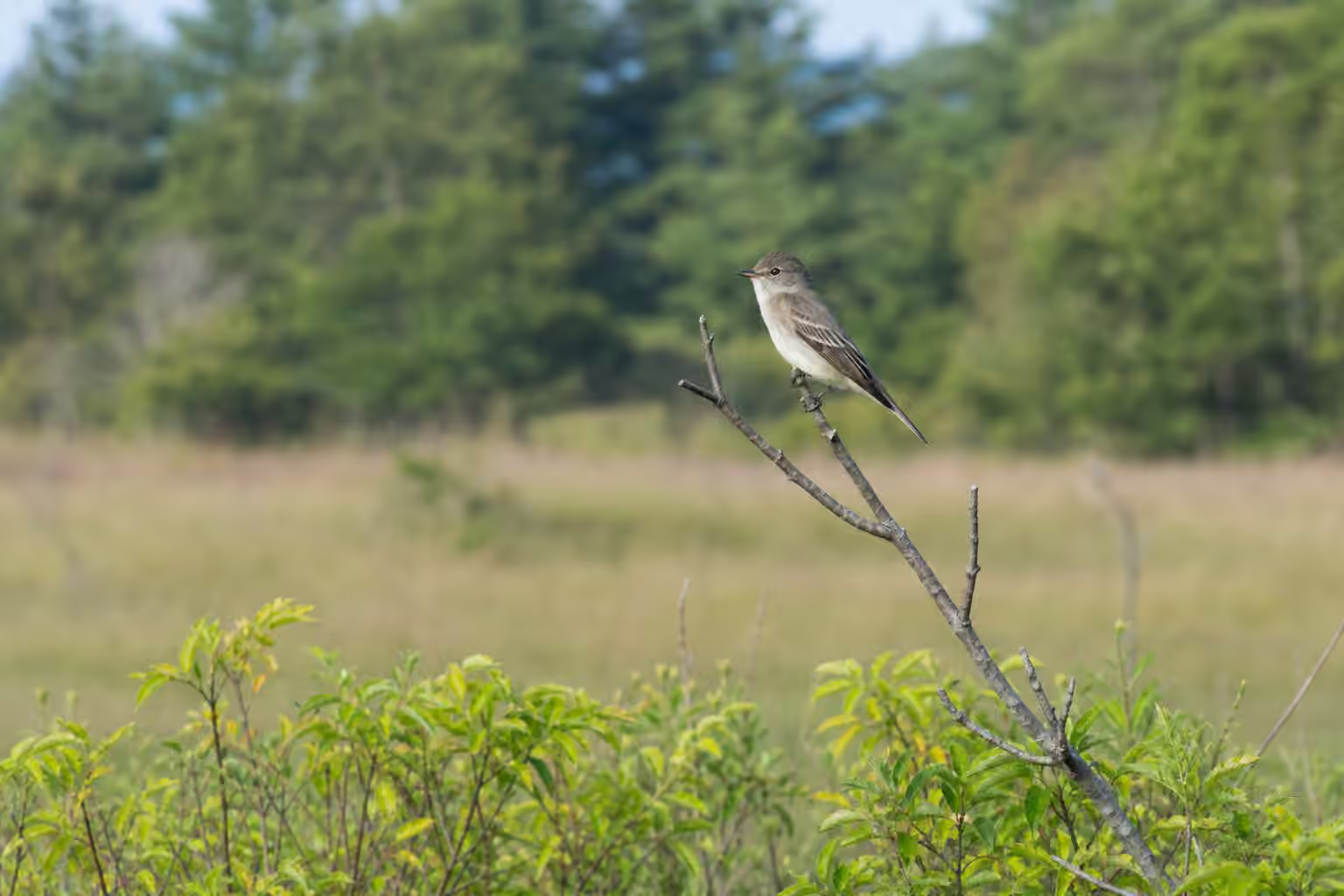
Flycatchers can feel unfair at first. Many are small, muted, and built from the same quiet colors: olive, gray, brown, cream, pale yellow, a little white on the wing, a little shadow around the eye. They often arrive in spring when leaves are fresh and moving, and they may give only a few seconds of clean view before slipping behind a branch. A beginner who tries to solve them by color alone usually ends the walk tired and unconvinced.
The better way into flycatchers is to watch how they work. A flycatcher is often less a painted object than a pattern of behavior: upright on a perch, alert, still for a moment, then out into open air after an insect, then back to a perch that may be the same twig or another one nearby. That rhythm gives the group its name, but it also gives the birder a foothold. Before the field marks settle, the bird’s method starts to make sense.
This guide fits naturally after How to Identify Birds Without Guessing because flycatchers reward the same order of thought: shape, behavior, habitat, sound, and only then fine marks. It also pairs with Reading Bird Behavior for Beginners , since many flycatcher identifications begin with the bird’s repeated routine rather than a dramatic flash of color.
Start With the Hunting Rhythm
The classic flycatcher move is called a sally. The bird launches from a perch, grabs or chases an insect, and returns to a perch. Sometimes the flight is a short loop into sunlit air. Sometimes it is a quick dart into leaves. Sometimes the bird drops down to the ground or sweeps sideways under a branch. You do not need the technical word to use the clue. What matters is the repeated pattern of waiting, striking, and resetting.
That rhythm separates many flycatchers from birds that are similar in size but living differently. A warbler may creep, flick, glean, and vanish through leaves. A sparrow may stay low and pick at seed heads or ground litter. A vireo may move slowly through foliage, pausing to inspect leaves. A flycatcher often gives you a perch-based performance. It sits like a small watchman, leaves abruptly, and returns with purpose.
Stay with one bird long enough to see the pattern repeat. A single flight can mislead you, especially when many birds are feeding in the same tree. Three or four minutes can reveal whether the bird has a favorite exposed twig, whether it hunts high or low, whether it returns to open perches, and whether it flicks its wings or tail between attempts. That patient watching often does more for identification than immediately opening a reference.
Perches Tell a Story
Flycatchers choose perches with work in mind. Many like a view into open space, because flying insects are easier to spot from a clear lookout. In a meadow edge, a bird may sit on a dead branch above shrubs. Along a creek, it may use low branches over water. In a mature woodland, it may favor mid-level gaps where sunlight touches leaves. Around a yard or park, it may use a fence, wire, garden stake, or exposed branch, then dart out over lawn or path.
Perch height is useful, but it is not a rule by itself. Some flycatchers often work low, some high, and some shift with weather, insects, season, and local structure. The important habit is to record the perch in relation to the place. A small bird repeatedly hunting from low shrubs at a marsh edge suggests a different problem than a small bird high in a leafy canopy or one using fence posts in open country. Habitat does not name the bird on its own, but it keeps your choices honest.
Pay attention to how visible the perch is. Flycatchers often give better views than restless leaf-gleaners because they pause between flights. The view may still be partly blocked, but the bird has a habit of returning to a usable angle. If you lose it, keep your eyes on the perch and the nearby open space rather than swinging wildly through the whole tree. The bird may come back to the same hunting lane.
Shape Beats Color
Many beginner frustrations with flycatchers come from expecting color to do more than it can. Muted plumage is part of the group. Light, leaf shade, worn feathers, age, sex, and angle can make one bird look greener, browner, grayer, or yellower from one minute to the next. Shape is steadier.
Look at the head first. Some flycatchers look round-headed and large-eyed, with a gentle expression created by an eye ring or pale spectacles. Others look flatter-headed or crested, with a stronger profile. Notice the bill, which is usually broad at the base for catching insects in flight. It may look short from the side and surprisingly wide from the front. A fine warbler bill feels different; a sparrow bill feels heavier and more conical.
Posture also matters. Many flycatchers sit upright, with the body held alert and the tail aligned below. Some flick the tail downward or upward; some quiver the wings; some sit almost motionless between flights. These gestures are not always enough to identify a species, but they help you recognize the family problem you are solving. They also train your eye to see a bird as a living shape rather than a checklist of colors.
Wing bars, eye rings, throat contrast, belly tone, tail color, and the darkness of the head can all help once you know which group you are in. Use them carefully. A strong eye ring in poor light may disappear. A pale wing bar may be hidden by angle. A yellowish belly may be real or may be sunlight reflected from leaves. The best note says what you actually saw and how certain you were, not what you hoped the guide would confirm.
Voice Carries More Weight Than Beginners Expect
Some flycatchers are famously difficult by sight, especially small species with similar plumage. Their voices may be the cleanest clue. This does not mean you must become a sound expert before enjoying them. It means that, when a flycatcher calls or sings, you should treat the sound as part of the bird, not background music.
Listen for the shape of the sound. Was it a sharp whit, a sneezy phrase, a dry rattle, a soft two-part call, a rising whistle, or a repeated emphatic note? Where did it come from? Did the bird call right before flying, while perched, or from hidden cover? If you can connect the sound to the visible bird, even briefly, you have a better observation than a silent glimpse.
Birding by Ear is useful here because it teaches a practical way to hold sounds in memory. You do not need perfect musical language. A rough phrase, repeated honestly, can be enough to compare later. If you use a sound app, let it suggest possibilities, but check the bird’s size, habitat, and behavior before accepting the label. Overlapping singers, distant calls, and wind through leaves can fool tools and people alike.
Habitat Narrows the Problem
Flycatchers turn up in many places, which is part of their appeal. A city park can hold migrants using scattered trees. A woodland edge can hold birds working sunny gaps. A wet meadow, creek line, pasture fence, orchard edge, or lakeside grove can all provide insects and perches. The same general hunting style appears in different rooms of the landscape, and each room changes the likely cast.
When you find a flycatcher, describe the room before naming the bird. Is it deep shade or open edge? Dry scrub or wet woodland? High canopy, middle branches, low thicket, or exposed fence line? Is the bird alone, paired, or part of a migration wave with warblers and vireos? Is it early spring, late spring, breeding season, or fall movement? These details do not replace field marks, but they make the reference smaller and more meaningful.
The habitat guides on this site can help you frame those observations. Woodland Birding builds the habit of reading layers, light gaps, trunks, edges, and canopy movement. Grassland Birding is useful for open-country perches and fence-line watching. Urban Birding is a reminder that a flycatcher using a city park, cemetery, or shaded courtyard is still part of a real habitat, not an exception to nature.
Work With Uncertainty
Some flycatchers will remain unidentified. That is not a beginner failure. Even experienced birders leave certain birds at genus level or with cautious language when the view, voice, or season is not enough. This is especially true during migration, when a silent bird may pass through quickly and never give the call or angle that would settle the question.
Use honest names. Flycatcher species. Possible phoebe. Empidonax-type flycatcher. Large crested-looking flycatcher. Small flycatcher with eye ring and wing bars, silent, low wet edge. These labels may feel less satisfying than a species name, but they preserve the observation. They also teach you what was missing. Maybe you needed the call. Maybe you needed tail color in better light. Maybe the bird never showed enough.
This is where Field Guides and Bird Apps can help if you use references with restraint. Compare likely birds, read the similar-species notes, and ask which option explains the whole observation with the fewest excuses. If none does, keep the identification open. A clean unknown is better than a confident wrong answer that trains your eye toward weak evidence.
A Slow Way to Practice
The next time you find a perched, insect-hunting bird, resist the first label for a minute. Watch the perch. Watch the flight path. Notice whether it returns to the same spot, drops low, loops high, or darts into leaves. Check the head shape, bill width, posture, wing bars, eye ring, and tail movement only after you have seen the behavior. Listen if it calls. Then describe the habitat in plain language.
After that, open the guide or app. The reference will feel less like a wall of similar birds and more like a set of questions you have already begun to answer. The bird may still refuse to become a species. That is fine. Flycatchers teach patience because they sit still just long enough to invite certainty, then remind you that good birding is built from evidence, not pressure. Watch the perch, follow the sally, write the honest note, and let the next view improve the last one.