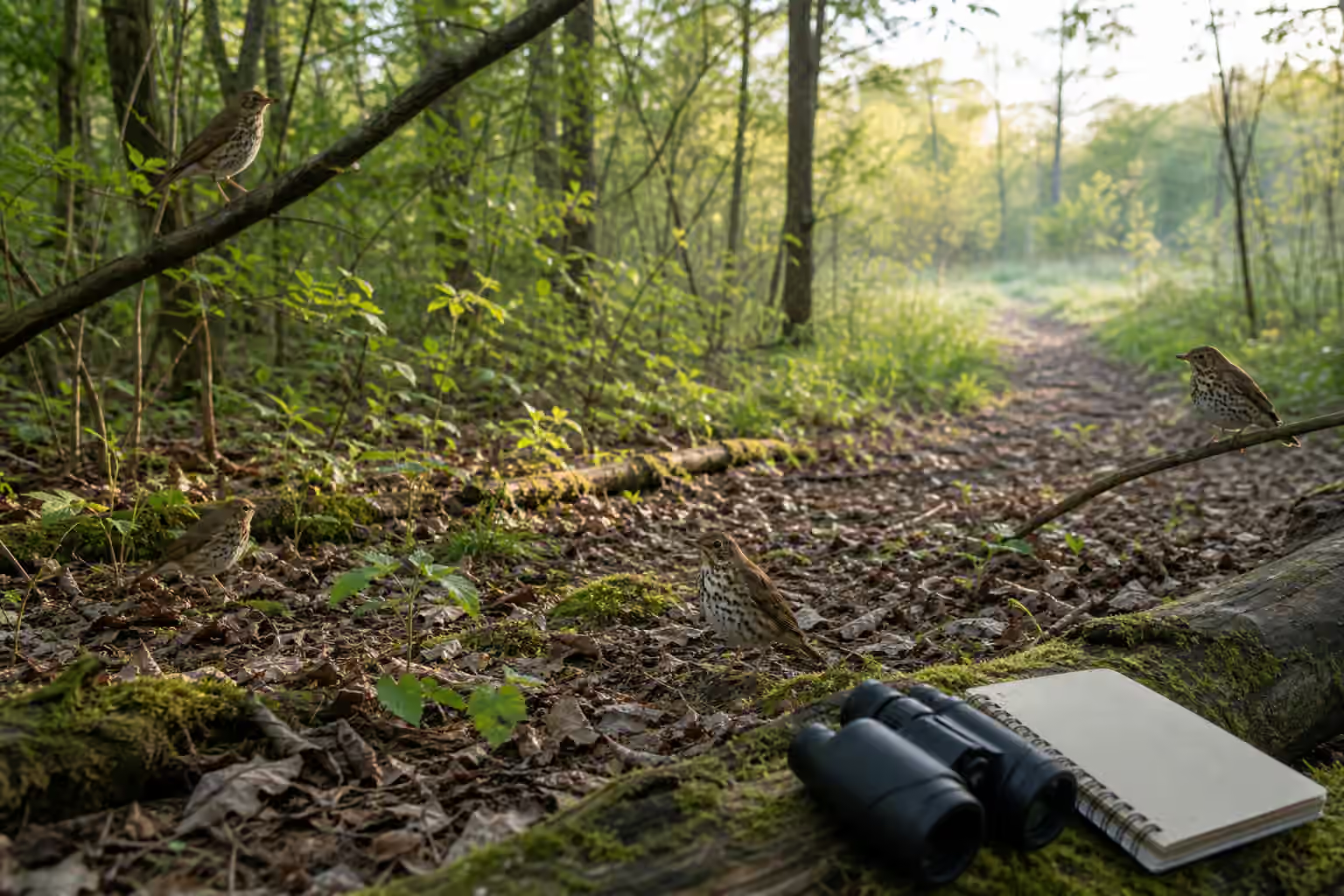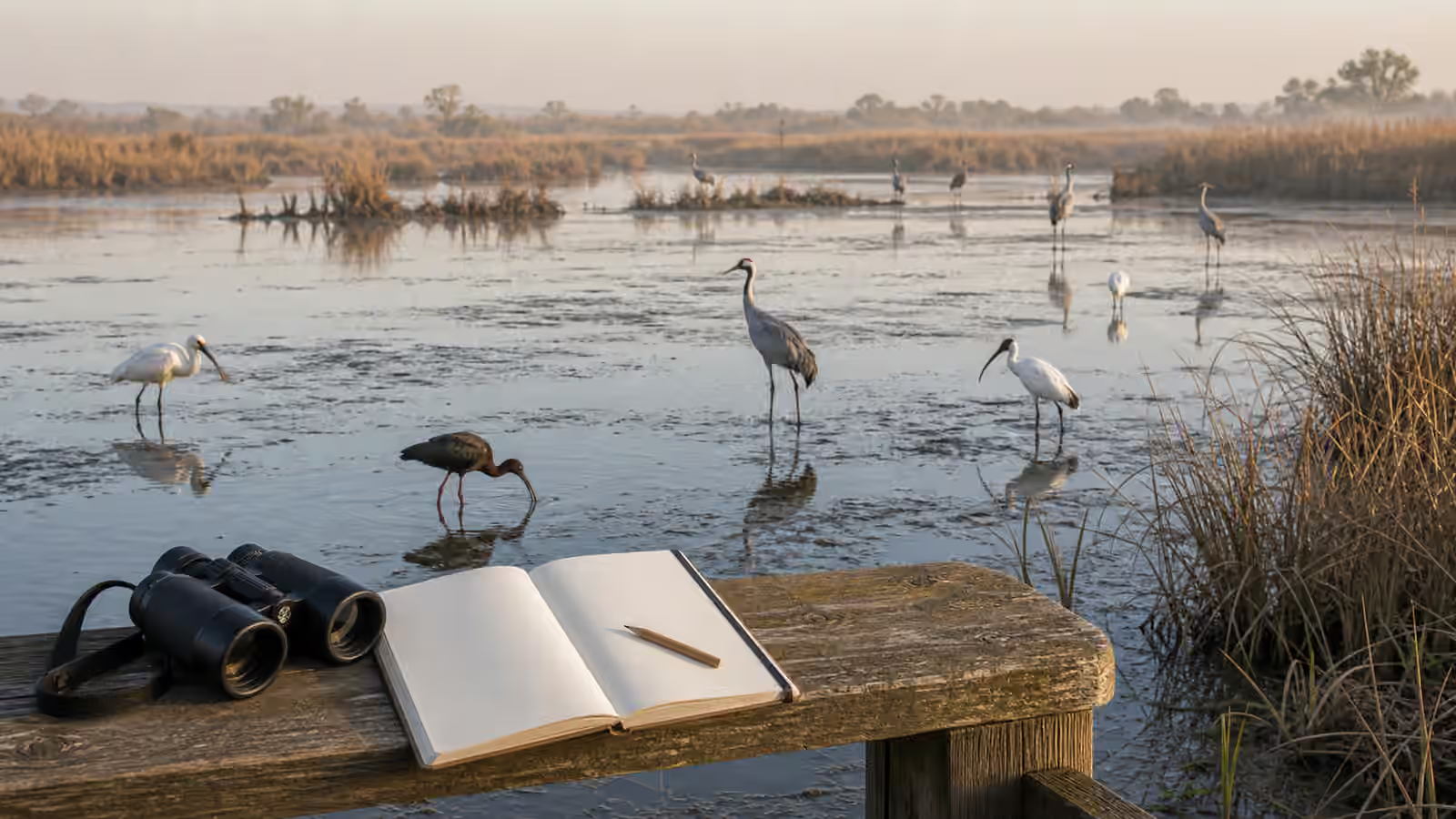
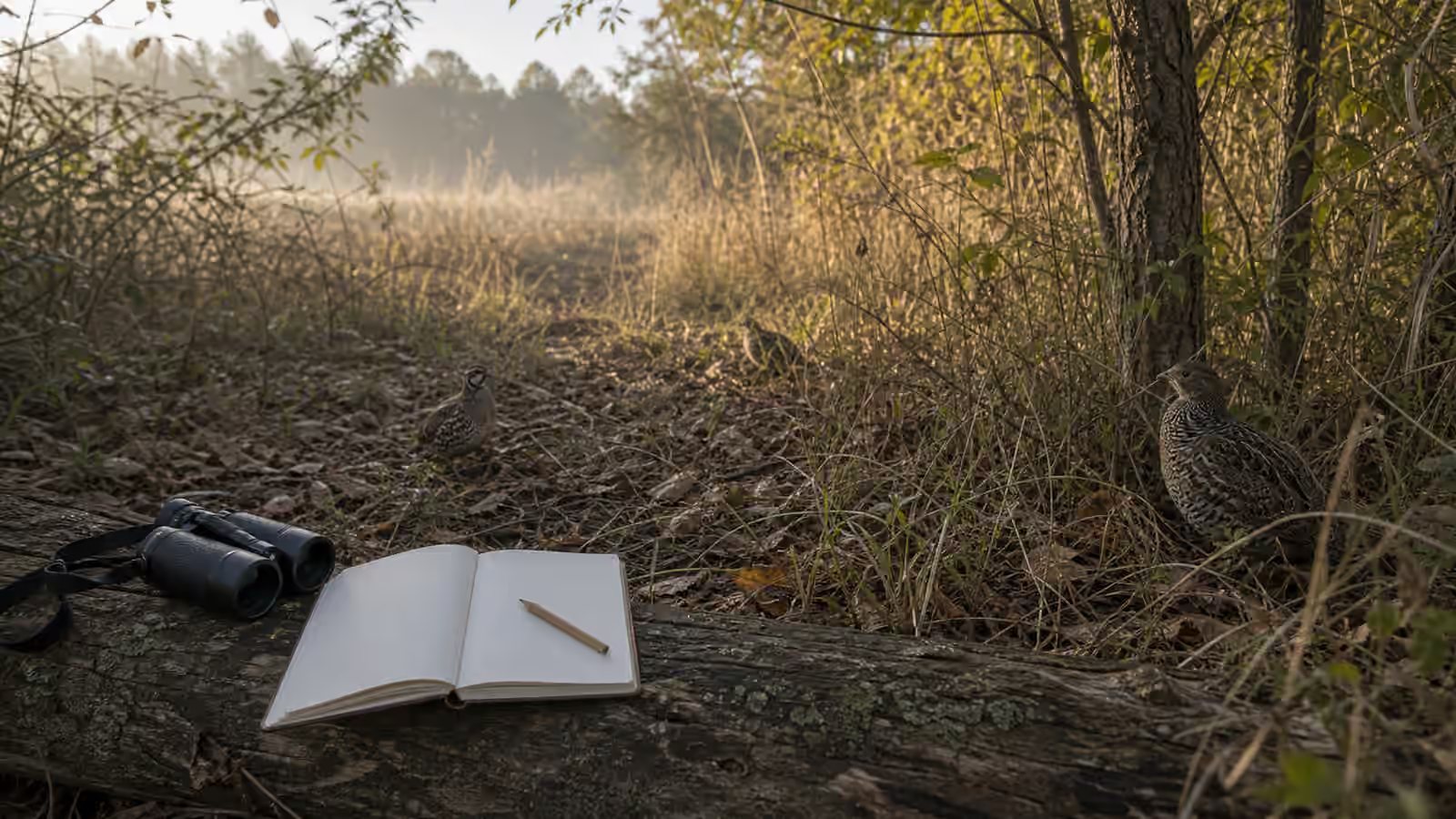
Ground birds often appear all at once. A quail-like bird bursts from grass. A grouse-like bird steps onto a track and freezes. A turkey-like bird crosses a field edge with surprising quiet. A pheasant-like bird runs before flying. A family group slips from one patch of cover to another while you are still raising binoculars. These birds can feel difficult because they are built to be noticed late.
The term “game birds” has hunting history, but birders can approach the group as naturalists: ground-feeding, cover-using birds with strong legs, cryptic plumage, sudden flight, and rich connections to habitat. Local species vary widely. The useful beginner method is to read ground, cover, sound, group behavior, and distance before trying to force a quick name.
Look Low Before You Walk Through
Many ground birds are easiest to miss when you are moving too quickly. Before entering a field edge, brushy path, woodland opening, dune trail, pasture margin, or scrubby slope, pause and scan low. Look along the boundary between cover and open ground. Watch tracks, bare patches, leaf litter, seed heads, fallen logs, road edges, and trail shoulders. A bird may be standing still, relying on pattern and shadow.
This approach connects with Scrub and Hedgerow Birding and Grassland Birding . Ground birds often use the seam between feeding space and escape cover. They may walk in the open for a few seconds, then disappear into grass or shrubs. If you rush the edge, you may only hear wings and see a blur.
Keep your eyes soft. Instead of searching for a complete bird, search for a head above grass, a rounded back, a line of movement, a dark eye, a short bill, or a shape that does not match leaves. Many good views begin as a pattern that feels slightly wrong.
Flight Is Brief but Useful
When ground birds flush, the view may be sudden and short. Try to notice size, wing sound, tail length, direction, and how far the bird flies. Some birds explode upward and drop quickly back into cover. Some run before taking off. Some fly low and direct across an opening. Some show rounded wings, long tails, pale wing patches, or strong body bulk. A flush is not ideal, but it can still be evidence.
Do not chase the bird after it lands. A flushed bird has already spent energy avoiding you. Mark the landing area generally, then continue on your route or wait from a distance. If you repeatedly flush birds along the same stretch, leave that cover alone. The ethics in Nest Season Birding apply whenever birds may be breeding, feeding young, or using cover that should not be pressured.
Flight style also helps you separate ground birds from other possibilities. Bird Flight Style and Wingbeats offers the broader method. In this group, the combination of explosive start, low travel, heavy body, and quick return to cover can tell you that the bird belongs to a ground-focused life even when the exact species remains unresolved.
Sound Often Comes First
Ground birds can be loud without being visible. Calls, whistles, clucks, booming sounds, wing whirs, drumming, rustles, or soft contact notes may come from grass, brush, woods, or rocky slopes. Some sounds carry far. Others vanish into wind and vegetation. The challenge is locating the bird without pushing toward it.
Use the sound-mapping habits from Birding by Ear . Place the sound in the habitat. Is it from open grass, dense shrubs, a tree line, a slope, a field edge, or leaf litter? Does it repeat from one spot or move with a group? Is there an answering bird? Does the sound happen at dawn, dusk, or after you accidentally approached cover?
If a bird is calling from hidden cover, your best response may be stillness. Watch nearby openings, trails, bare patches, and low perches. Some birds will never show well, and that is acceptable. A sound-only record with honest habitat notes is better than disturbing a hidden bird for a view.
Tracks, Dust, and Feeding Marks Add Context
Ground birds leave signs. Tracks in mud, dust, snow, or sand may show three forward toes and a walking line. Dusting spots can appear as shallow bowls in dry soil. Feeding marks may include scratched leaf litter, disturbed duff, picked seeds, or small cleared places under shrubs. Droppings, feathers, and regular paths may appear where birds use the same cover repeatedly.
Bird Signs: Tracks, Feathers, and Feeding Marks is a strong companion for this topic. Signs rarely identify a bird by themselves, especially where several ground birds or mammals use the same place, but they tell you where to slow down. A dusty patch near a shrub line, a track crossing a sandy wash, or scratched leaves under mast-producing trees can make the habitat more readable.
Do not collect feathers or disturb signs. In many places, possession of feathers is regulated, and even where it is not, the better field habit is to photograph, sketch, or note what you found and leave the place intact.
Groups Change the Identification Problem
Many ground birds move in coveys, broods, flocks, or loose family groups for part of the year. A group may cross a path one bird at a time. The first bird may be larger, more alert, or more brightly marked. Young birds may look smaller and plainer. Several birds may run while one pauses on a mound or log. The whole group may vanish into cover with almost no sound.
When you see a group, count only what you can count without chasing. Note whether birds walked, ran, flew, or froze. Watch spacing. Did they stay tight, scatter, or form a line? Did they feed in the open or remain near cover? Juvenile Birds and Family Groups is useful because young ground birds can make identification feel messy. Family behavior may be more important than a perfect view of every individual.
Groups also deserve extra distance. A family trying to cross a trail, road, or opening should not be split by a birder moving closer. Stop, stay visible but still, and let them choose their route.
Habitat Gives the Bird Its Shape
Ground birds are tied to texture. Quail-like birds may use brushy edges, washes, grass clumps, or field margins. Grouse-like birds may be associated with woodland openings, heath, tundra-like places, sagebrush-like country, forest edges, or regional equivalents. Turkey-like birds may use woods, fields, mast-producing trees, and roosting sites. Pheasant-like birds may use grass, crop edges, ditches, and dense cover. Local patterns matter, but the common thread is cover near food.
The guide to Finding Birds by Food Sources helps you think this through. Seeds, berries, buds, leaves, insects, acorns, grain, and disturbed soil can all matter. A bird’s body shape reflects that life: strong legs, rounded body, short bursts of flight, and plumage that can disappear into the ground.
Good ground-bird watching is rarely dramatic for long. It is a quiet pause before a trail bend, a careful look along a field edge, a sound placed in cover, a family group given room to pass, or a sketch of a bird that vanished almost before you named it. Those moments are enough. They teach the birder to respect the ground as habitat, not just as the space below more visible birds.