Grassland birding can feel exposed and empty at first. In woods, the problem is usually too much cover. At a pond, water gives you a surface to scan. In open country, the horizon stretches out, the wind moves everything at once, and the birds seem to vanish into grass that is not tall enough to hide anything and somehow hides almost everything.
That emptiness is part of the lesson. Grasslands, old fields, hayfields, prairie remnants, airports margins, weedy lots, coastal meadows, sage flats, desert grass, and pasture edges are not blank spaces. They are full of height, texture, seed, insects, song posts, fence lines, wet dips, bare patches, and low cover. A beginner who learns to read those details will start seeing birds that were present all along.
This guide builds on Where and When to Go Birding , How to Identify Birds Without Guessing , and Birding by Ear . Open country often gives you fewer close views than a backyard feeder, but it gives excellent clues if you watch how birds use the air above the grass, the stems inside it, and the few perches that rise above it.
Start Before You Step Into the Open
The first useful habit is to pause at the edge. Open-country birds notice movement. A person walking directly across a field edge may flush sparrows, larks, pipits, meadowlarks, quail-like birds, blackbirds, raptors, or ground-feeding migrants before seeing any of them. Some birds will fly far. Others will drop back into cover a short distance away and become invisible again.
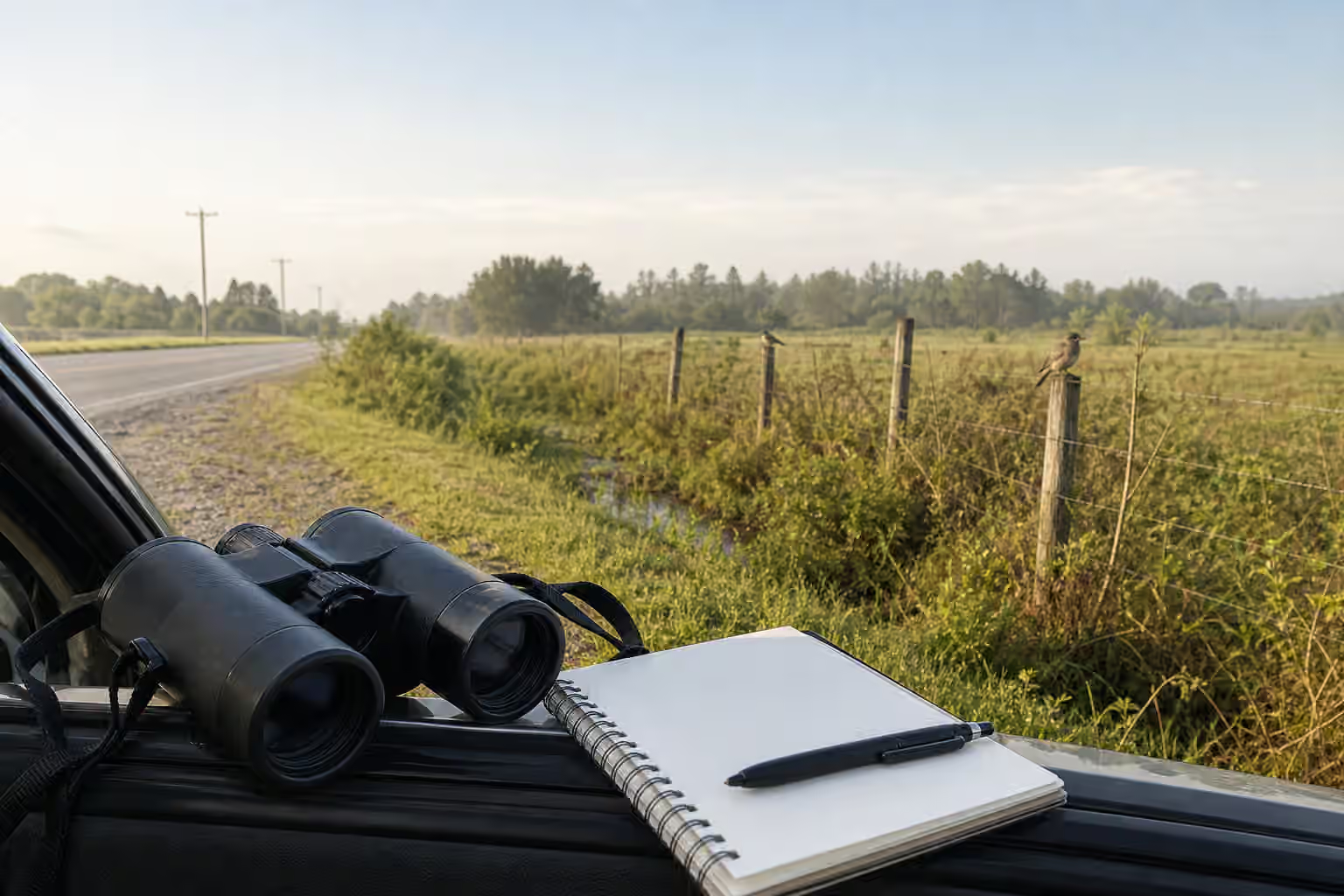
Stand still where the path, gate, road shoulder, or mowed edge gives you a view. Look with your eyes before raising binoculars. Notice the fence posts, wires, shrubs, hay bales, utility lines, isolated trees, taller weed stems, puddles, bare tracks, and changes in grass height. In a woodland, birds divide the habitat vertically by canopy, trunk, shrub, and ground. In grassland, the structure is flatter but still real. A five-inch change in vegetation height can matter. A damp swale can hold different insects from a dry ridge. A strip of unmowed seed heads can feed birds long after a neat lawn has gone quiet.
This is also the moment to read wind and light. Wind can push birds low, make songs harder to locate, and turn every grass stem into false motion. Strong backlight can reduce perched birds to silhouettes, which is not useless if you lean on shape, posture, and behavior. If you can choose your route, put the light behind or beside you and avoid walking straight toward the most active patch.
Perches Are Clues
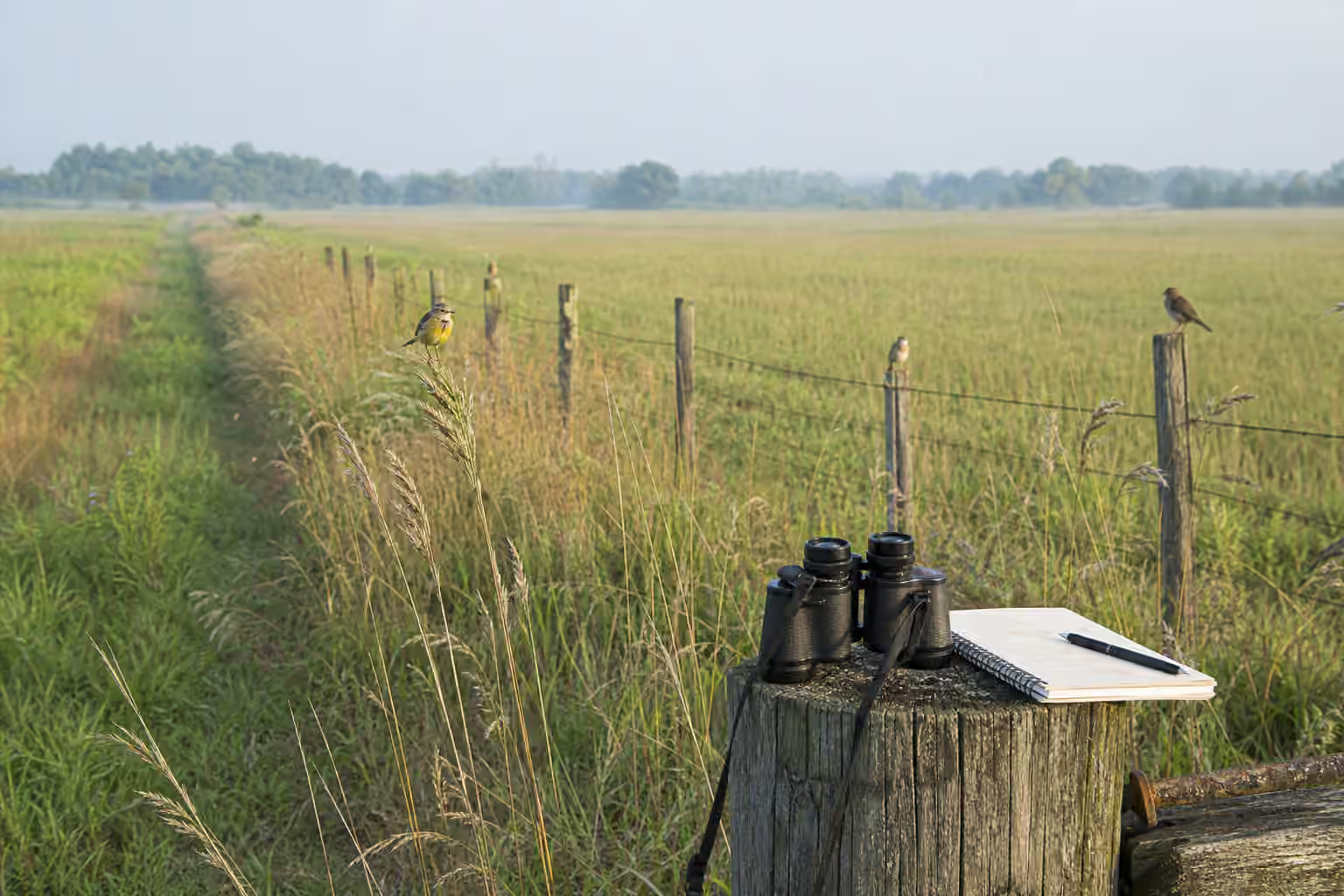
In open country, every raised object is worth checking. Fence posts, wires, lone shrubs, dead stems, signs without readable text, irrigation equipment, small trees, and the tops of weeds can all become song posts, hunting perches, lookout points, or resting places. A bird on a fence wire may be more than a convenient view. It may be showing you the center of a territory, the edge of feeding cover, or the line it uses to move through the field.
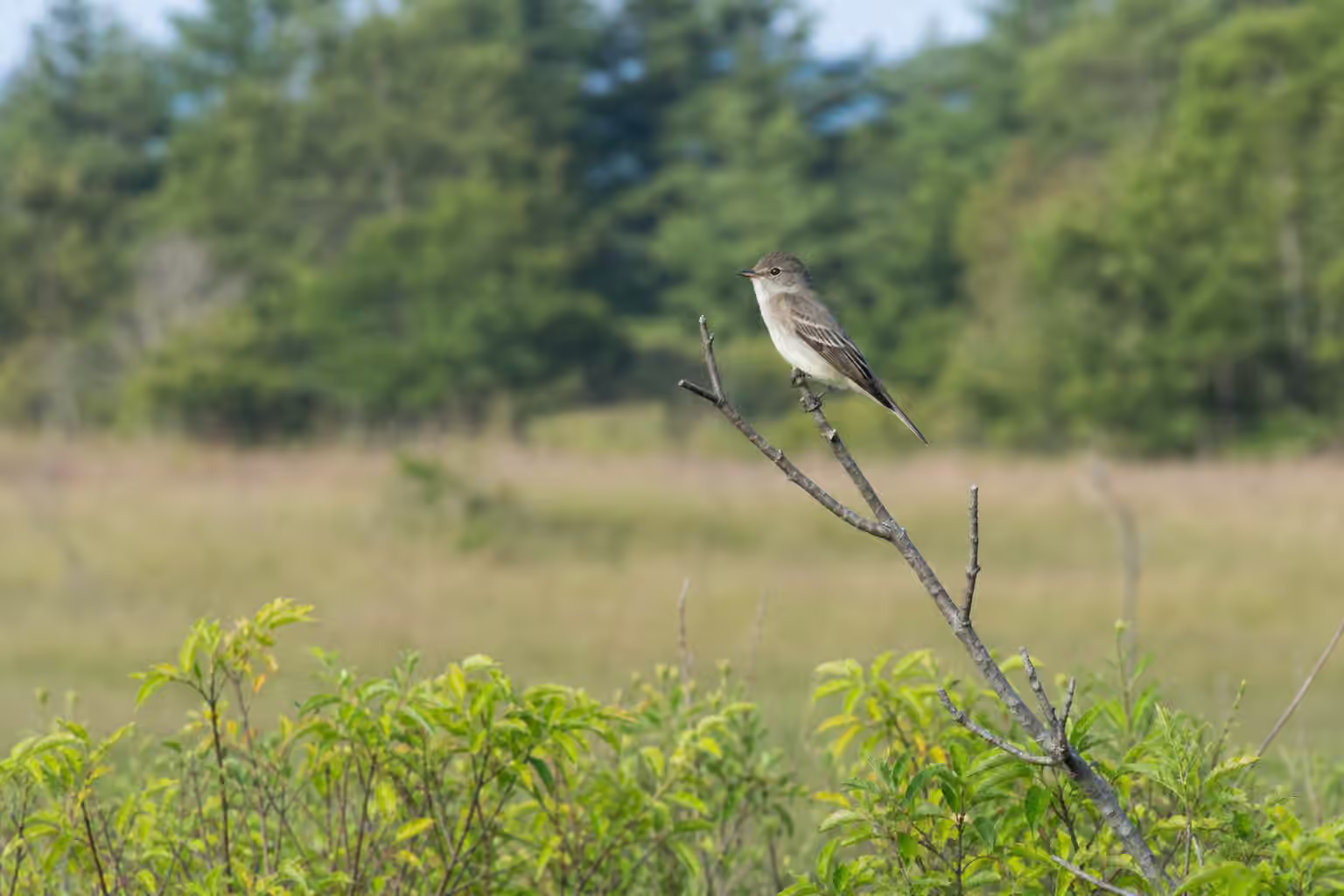
Look at how the bird sits. A meadowlark-like bird may look chunky and upright, often with a strong bill and a habit of singing from an exposed place. A swallow may use a wire as a rest between flights. A flycatcher may return to the same post after short sallies. A sparrow may pop up to sing, then drop immediately into grass. A shrike, kestrel, harrier, hawk, or owl in some regions may use the same open landscape as a hunting ground, but from a very different posture and scale.
Do not treat the perch as separate from the field. Ask what surrounds it. Is the post beside shorter grass, a brushy edge, a ditch, a crop margin, or a wet patch? Does the bird fly down to the ground, out into the air, or back into cover? A perch tells you where to look next after the bird disappears.
Listen Across the Field
Grassland birding is often birding by ear with a long view. Songs may come from birds you cannot see in the grass, birds climbing into the air, or birds perched on stems that bend under their weight. Some open-country birds sing from fixed posts. Others give flight songs, rising above the field and then dropping back to a spot that can be hard to mark. A few voices seem to move because the bird is moving; others seem to move because wind bends the sound.
Instead of trying to learn every voice at once, map one sound to one place. Pick a repeated song and locate it as best you can. Is it coming from the fence line, the low wet area, the taller grass, the shrub edge, or overhead? If the bird flies, watch where it lands. If you cannot see it, write a plain note about the sound, height, and habitat. “Buzzy song from tall grass beside ditch, repeated from same area” is useful. It may not be a name, but it is evidence you can return to.
Wind makes this harder, so choose calmer mornings when possible. Dawn can be excellent because many birds sing before heat and human disturbance rise, though open-country raptor movement may improve later when warm air builds. The important point is not to force one universal schedule onto every bird. Open country asks you to match timing to behavior.
Watch Movement Through Grass
Birds in grass often appear as motion before they appear as birds. A stem bends against the wind. A seed head jerks. A small shape runs along the ground and disappears. A flock lifts, circles, and drops back into cover. Your eyes will catch more if you stop scanning only for whole birds and start scanning for contradictions in the grass.
When a bird flushes, keep watching after it lands. Beginners often lower binoculars as soon as the bird drops, but the landing place is the next clue. Mark it against something fixed: a pale weed clump, a fence post, a puddle, a darker patch, a bent stalk, or a distant tree. Then wait. The bird may climb a stem, call, feed, or move out through a gap. Chasing directly toward the landing spot usually repeats the problem by flushing it again.
The habits from Sparrows and Little Brown Birds are especially useful here. Many open-country birds are brown, streaked, buff, gray, or sandy because those colors work in grass and soil. Habitat, posture, bill shape, tail length, flock behavior, and season often matter more than one color mark seen badly.
Edges Change the Bird List
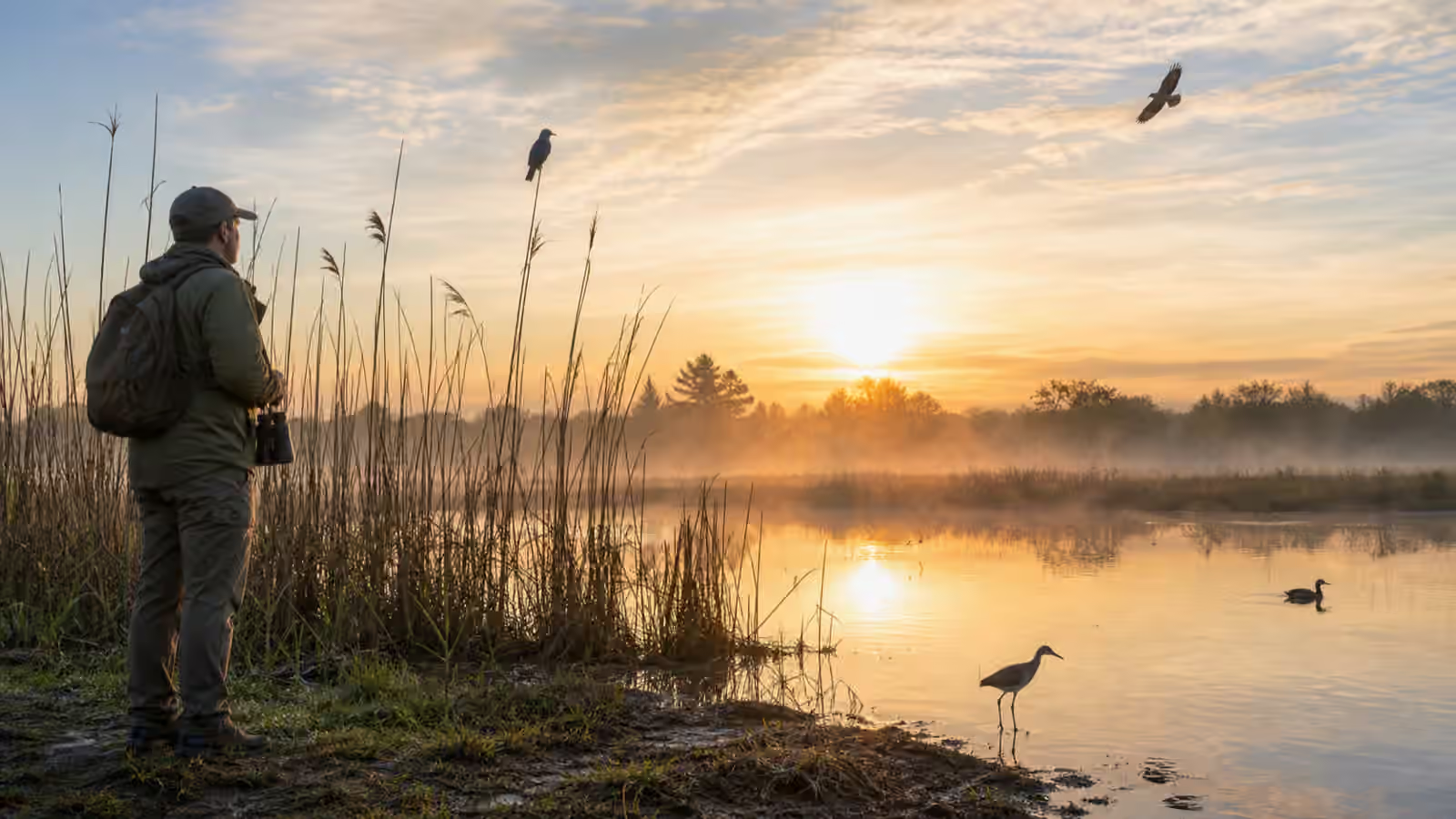
No field is only a field. The edges often hold the greatest variety. A hedgerow, drainage ditch, pond corner, brush pile, gravel track, treeline, marsh seam, mowed path, or crop border can bring together birds from several habitats. Sparrows may feed where seed heads meet bare ground. Blackbirds may move between reeds and pasture. Swallows may work low over insects rising from a wet swale. Raptors may patrol the same edge because small birds and mammals concentrate there.
Edges also create identification traps. A bird flushed from grass near a woodland edge may not be a grassland specialist. It may be a woodland bird feeding in the open, a migrant using temporary cover, or a generalist moving between habitats. That does not make the sighting less interesting. It simply means the place should guide your question rather than dictate the answer.
If the edge includes water, Water’s Edge Birding can help you read mud, reeds, and shallow pools alongside the open field. If the edge is high or exposed, Raptor Watching for Beginners becomes relevant because open country often gives hawks, falcons, harriers, vultures, and eagles the room to hunt, soar, and migrate.
Season Makes the Field Speak Differently
A grassland in spring may be full of song, display flights, territorial chases, and birds carrying food or nesting material. In that season, distance matters. Ground-nesting birds can be easy to disturb because the nest is not above eye level in a branch; it may be hidden in grass where a person sees nothing. Stay on allowed paths, respect closures, and avoid pushing into cover for a closer look. Birding Etiquette and Field Notes applies strongly in open habitats because disturbance can spread across a wide area.
Summer can be quieter as heat rises and breeding birds become less conspicuous. Worn feathers, molting adults, and young birds can complicate identification. Fall changes the field again. Seed heads, weedy margins, migrants, and mixed flocks can make an ordinary old field suddenly active. Winter strips the scene down to food, cover, and weather. A sheltered ditch, brushy fence line, or patch of standing grass can matter more than a broad view across short turf.
Repeated visits make these changes visible. This is where Patch Birding fits open country well. Choose one field edge, meadow loop, prairie trail, or old pasture you can visit in different weather. Write down grass height, mowing, water level, wind, seed availability, and where birds actually appeared. After a few visits, the field stops being a single view and becomes a set of places with histories.
Distance Is Part of the Practice
Open country tempts people to close the gap because the bird seems visible and the walking looks easy. The better practice is to make distance useful. Use binoculars from the edge. If you have a scope, set it up where you will not block a path or pressure birds. Let record photographs stay distant if approaching would change behavior. A soft image that confirms shape or posture is better than a close image bought by flushing birds from food, cover, or a nest area.
Make notes in plain language while the scene is still in front of you. “Small streaked bird rose from grass, short rounded flight, dropped near yellow weed patch, later sang from low stem” is far more useful than “unknown sparrow.” Notice flock size, feeding height, escape route, song perch, and whether birds returned after you stopped moving. These details help even when the name remains open.
Grassland birding rewards a calm eye. At first you may see only wind, grass, and far fence posts. Then a post becomes a perch, a song has a location, a bending stem has a bird beneath it, and a distant shape over the field becomes a hunting raptor rather than a generic speck. The habitat has not changed. Your reading of it has.
Open country teaches that birds do not need dense woods or dramatic water to make a place rich. They need food, cover, space, timing, and the freedom to use them without being chased. Stand still at the edge, let the field settle, and allow the first small movements to show you where the guidebook page should begin.