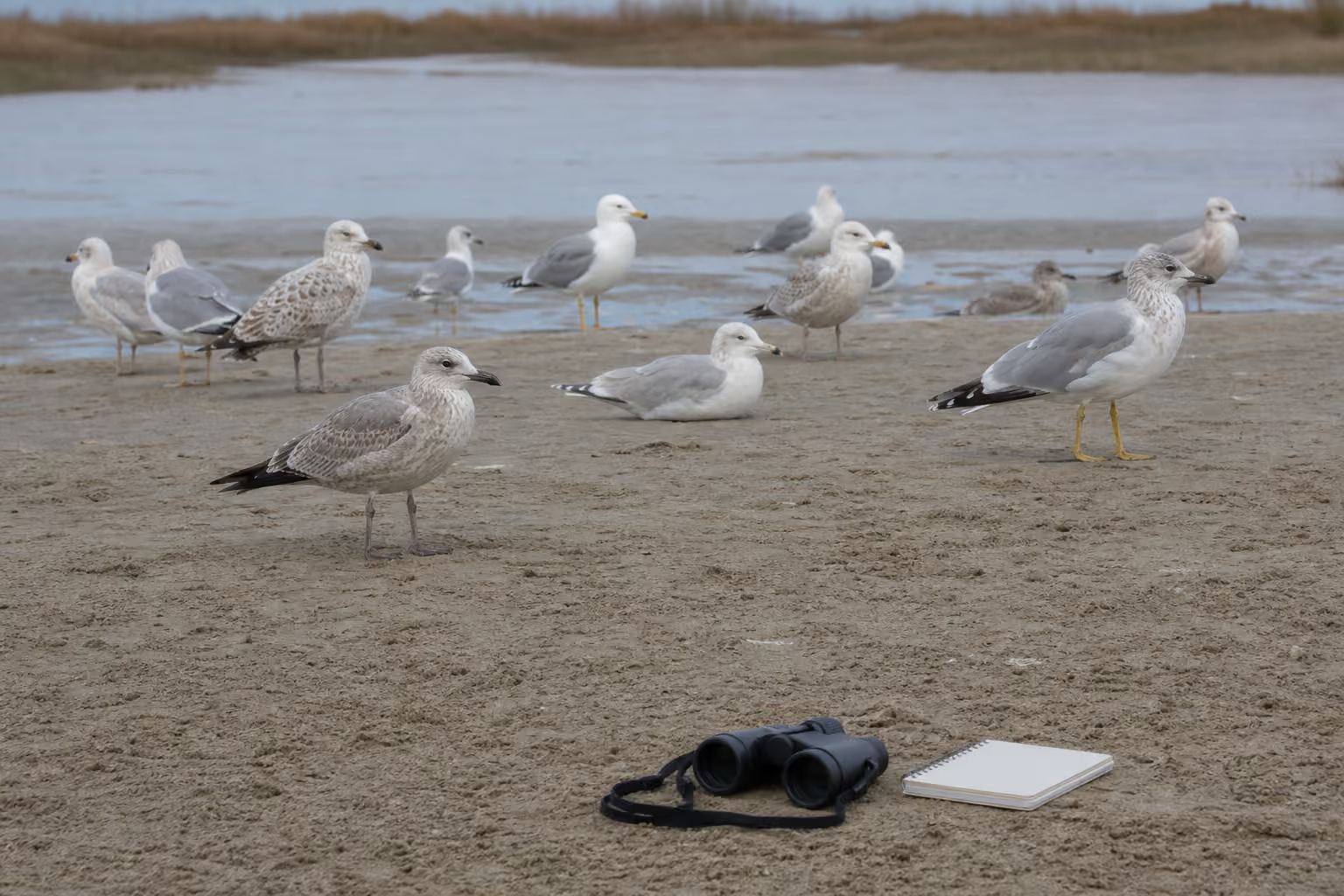
Gulls have a reputation for humbling birders, and the reputation is mostly earned. They stand in parking lots, loaf on sandbars, ride wind over harbors, follow fishing boats, gather on reservoirs, and then refuse to look like the clean adult pictures people remember from a field guide. One bird has a pale head and dark mantle. Another has mottled brown wings, a dark bill, and legs partly hidden in wet sand. A third looks almost adult until it stretches and shows a tail pattern that complicates the whole question.
That difficulty can make gulls feel like a private exam for experts, but they are better treated as a slow field lesson. Gulls teach patience with age, posture, structure, light, and comparison. They also give beginners a gift that many birds do not: they often stand still long enough to study. A flock of gulls on a beach, pond, landfill edge, pier, or winter river can become a classroom if you stop trying to name every bird immediately.
This guide builds on How to Identify Birds Without Guessing , especially the habit of reading size, shape, behavior, habitat, and field marks in that order. Gulls reward that discipline because plumage alone can mislead you. The same species can look different at different ages and seasons, while different species can look confusingly similar when they are far away, wet, worn, or backlit.
Start With the Flock
A lone gull can be hard because there is nothing to measure it against. A flock gives you scale. Before choosing one bird, look at the whole group. Are most birds the same size, or do a few look larger and heavier? Are some darker-backed than others? Are there clean white-headed adults mixed with mottled brown immature birds? Are the birds resting, feeding, bathing, calling, or moving in a loose stream along the shore?
Comparison is one of the most useful gull skills. A bird that seems large by itself may become average beside a heavier bird with a deeper chest and thicker bill. A mantle that looks dark in isolation may look only medium-gray when a truly dark-backed bird stands nearby. Leg color can seem bright or dull depending on light and wet sand. Bill shape can look different when the bird is relaxed, calling, preening, or facing slightly away. The flock lets you correct your first impression.
This does not mean every gull in the flock must be identified. In fact, a good beginner practice is to choose a few birds that show clear differences and describe them carefully. One pale adult with a yellow bill, one mottled immature bird, one darker-backed adult, and one bird that looks larger than the rest can teach more than a rushed attempt to label fifty distant birds. Gulls become less chaotic when you let the flock become a set of comparisons rather than a crowd of names.
Age Is Part of the Bird
Many beginner identifications fall apart because the bird is not an adult in the neat breeding-plumage picture. Gulls pass through immature plumages, and larger species can take several years to reach full adult appearance. Young birds may be brown, checkered, streaked, smudged, or mottled. Bills may be dark before they become pale. Tails may show dark bands or patches. Wings can carry worn feathers from one season and fresher feathers from another.
The first useful question is not always “which species is this?” Sometimes it is “is this bird an adult or not?” A clean adult gull often has a more settled pattern: pale head and body, gray or dark mantle, cleaner wing tips, and a more finished bill color. An immature gull often looks less tidy. Its feathers may show brown centers, pale edges, dark tail markings, or a bill that has not yet taken on adult color. Some birds are in between, which is exactly why gulls create so many careful question marks in field notes.
Molt and Seasonal Plumage is especially relevant here. Feather wear and replacement are not minor details for gulls. A bird can look bleached, ragged, fresh, crisp, streaky-headed, or partly transformed depending on season and age. Treat those changes as evidence rather than as defects in the field guide. The bird in front of you is not failing to match the picture. It is living through time.
Structure Holds Up When Color Fails
Color changes with light, distance, and wet feathers, but structure often remains useful. Look at the bird’s bulk, posture, head shape, bill depth, wing length, leg length, and overall balance. Some gulls look long-winged and elegant. Some look compact. Some stand high on longer legs. Some seem heavy in the chest, with a strong bill and a blunt expression. Others look smaller, rounder, or more delicate.
Bill shape deserves careful attention. A thick bill can make a bird’s head look powerful even before you see color clearly. A slimmer bill changes the face. The angle of the forehead, the size of the head compared with the body, and the way the bill meets the face all help build an impression. None of these clues should be used alone, but together they give you a better starting point than “gray back, white head.”
Watch the bird walk if it does. A gull standing hunched in wind may look shorter and heavier than it really is. A relaxed bird with feathers fluffed can seem rounder than a sleek bird about to fly. A bird preening may hide the bill or tail. Wait for a normal standing posture, then compare it with nearby birds facing the same direction. The fairest comparison is often not the most dramatic view. It is two birds standing side by side in similar light.
Behavior Gives Context
Gulls are not just field marks on legs. They are opportunistic, social, alert birds that use places in recognizable ways. A gull loafing on a sandbar is doing something different from a gull feeding actively at a tide line, hovering over a river, following a plow, dropping shellfish, bathing in a pond, or circling behind a boat. Behavior will not always identify the species, but it tells you what kind of evidence you are watching.
Resting flocks are good for structure and age because birds remain available for comparison. Feeding flocks are better for behavior, flight, and wing pattern, but they can be harder to study calmly. A bird that opens its wings, calls, chases another gull, or lands beside the group may reveal tail pattern, wing-tip pattern, and relative size in a few seconds. Those brief moments often matter more than a long view of a bird asleep with its head tucked.
At water edges, gulls often sort themselves by safety and food. Some stand near open water. Some rest on exposed mud or rocks. Some gather where wind pushes floating scraps, insects, fish, or other food toward shore. Water’s Edge Birding teaches the broader habit of reading mud, reeds, open water, glare, and distance. With gulls, that habit helps you understand why the birds are there before you begin separating them.
Flight Views Are Evidence, Not Decoration
A standing gull can hide important clues. Flight may show wing length, wing-tip pattern, tail markings, upperwing contrast, underwing tone, and the bird’s way of moving through air. Some gulls look buoyant and light. Some look broad-winged and powerful. Some flap steadily. Some bank and hang in wind with little effort. On a windy coast, flight style may be easier to watch than plumage.
The problem is that flight views can also be fleeting. Do not try to memorize every mark at once. Notice one or two features clearly. Did the wing tips look dark? Was there a pale window in the wing? Did the tail show a dark band? Did the bird look much larger than the gulls below it? Did it glide with long narrow wings or flap with a heavier rhythm? A partial but accurate observation is more useful than a confident memory assembled after the bird has vanished.
Seawatching and Big-Water Birding is useful for gulls that are moving offshore, crossing bays, or passing along a lake in wind. Distant gulls over big water often remain unidentified, and that is acceptable. The skill is learning which flight clues you can honestly see and which ones distance has taken away.
Habitat Narrows the Question
Gulls are adaptable, but they are not randomly distributed. A city parking lot, winter reservoir, tidal beach, fishing harbor, inland river, farm field, lake ice edge, and open ocean each suggest different possibilities depending on region and season. Local knowledge matters because the common gulls in one place may be scarce in another. A beginner does not need to learn every rare possibility before going outside. It is better to learn the regular local species first, including their adults and common immature looks.
Season changes the flock. Winter may bring larger gatherings, more northern visitors in some regions, and birds using open water when other places freeze. Spring can include shifting head patterns, paired behavior, and movement. Summer may reduce some gull variety inland while coastal colonies or post-breeding dispersal shape other places. Fall can bring young birds and worn plumages into the mix. The point is not to memorize a calendar as a rulebook. The point is to ask whether the bird fits the place and time you are actually standing in.
This is where repeated local birding becomes powerful. A gull flock at the same reservoir every winter afternoon will teach you more than a single dramatic outing. If you keep returning, you begin to recognize the usual size range, the normal adult mantle shades, the expected number of immature birds, and the moments when something looks different enough to deserve extra study.
Make Notes That Admit What You Saw
Gull notes should be humble and specific. “Big gull” is a start, but it will not help much later. A better note might say that the bird was larger than nearby common gulls, with a heavier bill, pale head with faint streaking, medium-gray mantle, pinkish legs, dark wingtips, and a relaxed loafing posture on a winter reservoir sandbar. That note may still end with uncertainty, but it preserves the evidence.
Write comparisons whenever possible. The bird was taller than the birds beside it. The back looked darker than most of the flock but not blackish. The bill looked thicker than the smaller gulls nearby. The immature bird had a dark tail band and checkered upperparts. These notes keep your observation grounded in the scene rather than in memory alone.
Photos can help, especially with gulls that hold still, but they should not replace watching. A photograph may freeze wing pattern or bill color, yet miss behavior, sound, posture, and comparison. A short written note paired with a distant photo is often stronger than either one alone. Birding Checklists and Local Records explains why honest uncertainty makes records more useful. Gulls are a perfect place to practice that honesty.
Do Not Let Rare Gulls Steal the Walk
Gulls attract rarity hunting because unusual individuals can hide in ordinary flocks. That can be exciting, but it can also distort beginner learning. If every gull becomes a possible rarity, the common birds never become familiar. The better order is to learn the expected gulls well enough that the unexpected bird actually stands out.
Spend time with ordinary adults. Watch immature birds without demanding a final name from each one. Notice how the flock changes with tide, time, weather, disturbance, and food. Learn what local birders mean when they describe a bird as small, large, dark-backed, long-winged, first-cycle, worn, fresh, or not safely identifiable. Those words become useful only when tied to real birds you have watched.
Good gull birding often ends with a few named birds, several careful notes, and at least one unresolved individual. That is not a weakness in the outing. It is the shape of the subject. Gulls make room for uncertainty because they carry age, season, light, and variation in plain view. The beginner’s task is not to overpower that complexity. It is to look long enough, compare honestly enough, and leave with better evidence than you had when the flock first looked like a row of identical white birds.