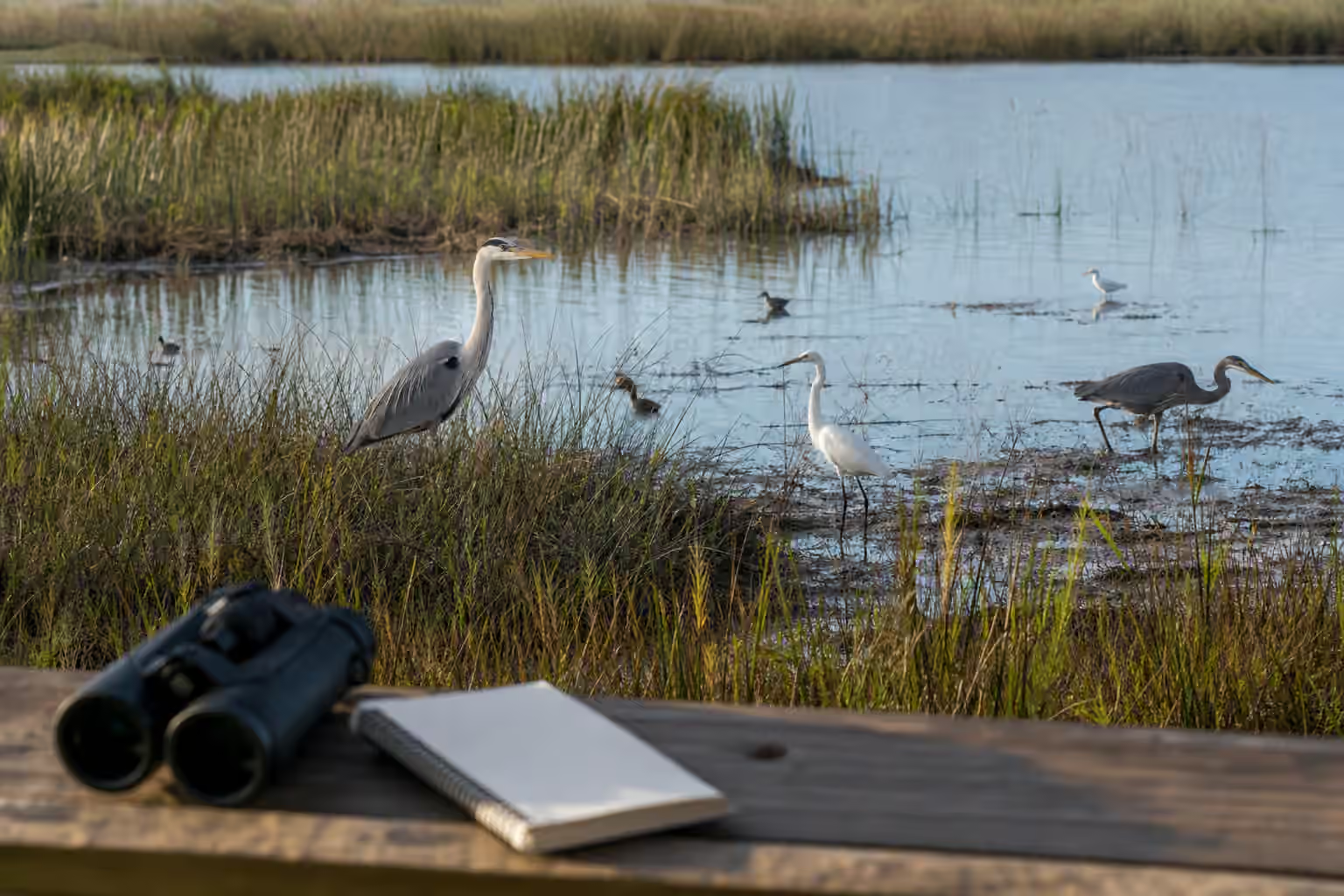
Herons and egrets look easy until they do not. A tall bird standing in shallow water seems obvious from a distance. Then it folds its neck, steps behind reeds, turns into glare, flies with slow wingbeats, or appears beside a similar long-legged bird that changes your sense of size. White birds look bright in sun and gray in shade. Gray birds become silhouettes. A small heron can seem large when alone, while a large heron can look compact when crouched and hunting.
The appeal of these birds is that they reward patient watching. They are not only field marks. They are posture, water depth, strike distance, slow stalking, sudden flight, and long minutes of stillness that are not empty at all. This guide fits naturally beside Water’s Edge Birding and Marsh Birding , because wading birds often reveal how a wetland works.
Start With Posture
Long-legged birds change shape dramatically. A heron standing upright with neck extended looks like a tall spear. The same bird with its neck folded can look compact and heavy. A hunting bird may lean forward, freeze, and then strike. A resting bird may tuck its neck, lower its body, or stand on one leg. A bird in flight may pull its neck into an S shape while the legs trail behind.
Beginners often identify from color first, especially when the bird is white or blue-gray. Color helps, but posture usually gives the first truth. Ask how the bird is holding itself. Is the neck long and extended, folded tight, or stretched low over the water? Is the bill pointed downward, forward, or upward? Is the bird walking steadily, standing still, crouching, or stepping with exaggerated care? Is it deep in reeds, open on mud, perched in a tree, or stalking a shallow edge?
Reading Bird Behavior for Beginners is useful here because wading birds make behavior visible. A still bird is still doing something. It may be waiting for prey to approach, watching surface movement, resting, scanning for disturbance, drying, or using its body as part of the hunting method. The longer you watch, the less stillness looks like absence.
Water Depth Is a Field Mark
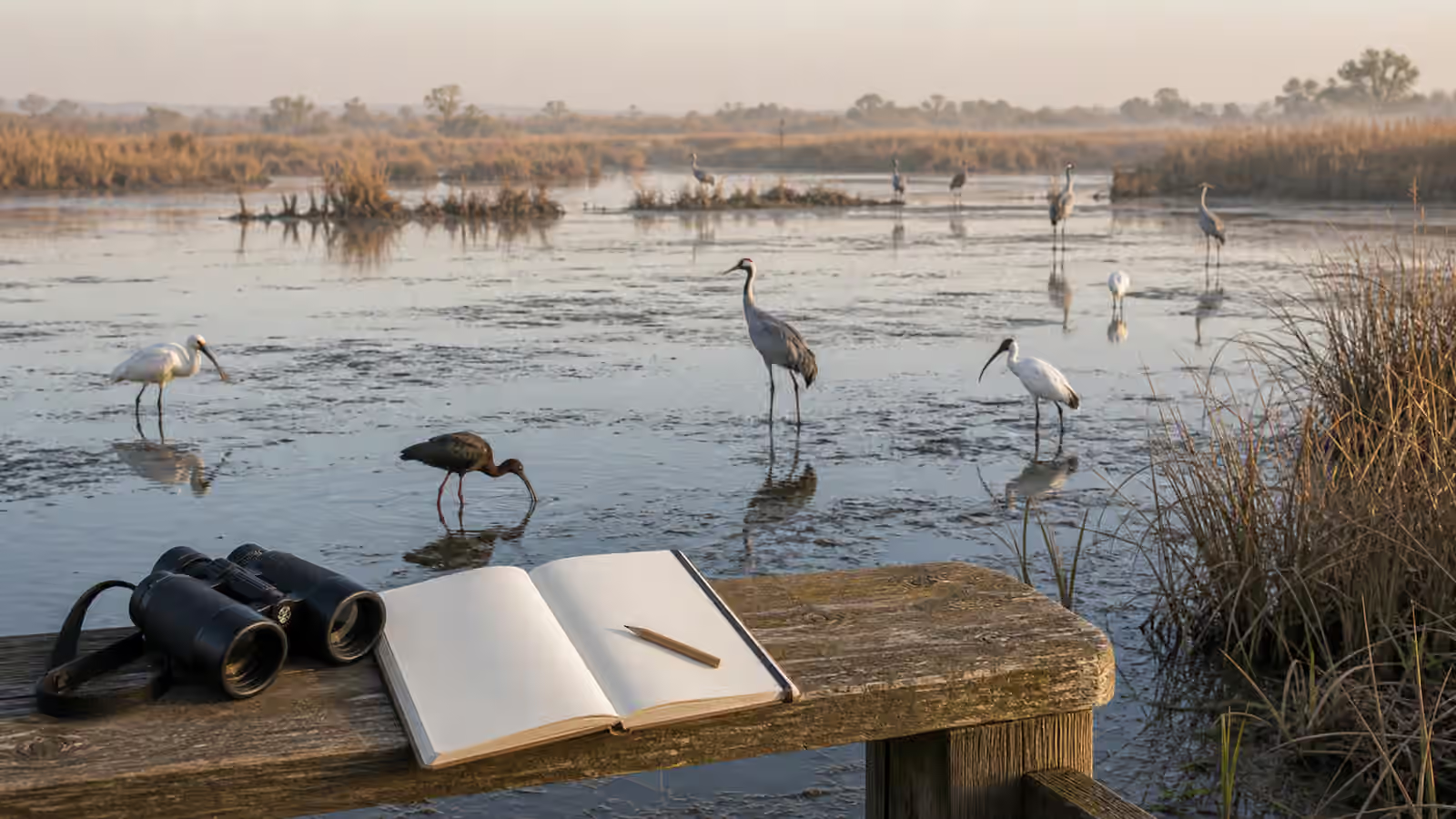
Wading birds are shaped by water depth. Long legs let them hunt where shorter birds cannot stand. A bird feeding in ankle-deep mud is using a different part of the wetland from one standing belly-deep in a channel. A small heron at the reed edge, a large heron in open shallows, an egret stepping through flooded grass, and an ibis-like bird probing softer mud are all telling you something about the place.
Before naming the bird, read the water. Is it a tidal flat, freshwater marsh, pond edge, drainage ditch, riverbank, rice field, lake margin, flooded lawn, mangrove edge, or rocky shore? Is the water rising, falling, still, windblown, shaded, muddy, or clear? Are small fish, frogs, insects, crabs, or other prey visible? The bird’s position often follows food and cover.
This habitat-first habit prevents lazy identification. A white wading bird in a distant marsh is not automatically the first egret in your memory. A gray bird on a city pond is not automatically the largest local heron. Size, structure, leg color when visible, bill shape, neck shape, feeding method, and habitat all need to agree. How to Identify Birds Without Guessing teaches that order for all birds, and wading birds make the reason clear.
Stillness Has Different Kinds
Not all stillness is the same. A hunting heron may stand with its body angled toward the water and its attention fixed on a small patch. It may sway slightly, lift one foot slowly, or tighten before a strike. A resting bird may look softer, with feathers loosened and neck tucked. A wary bird may stand taller, point its bill toward the disturbance, or step away before flying. A bird at a nesting colony may hold a very different posture as it interacts with other birds.
These differences matter because they tell you whether your presence is changing the scene. If a bird was feeding and now stands tall staring at you, the view is no longer neutral. Backing off may give it room to resume. Birding Etiquette and Field Notes is especially important with conspicuous birds because their size can make people assume they are tolerant. A bird that lets you see it is not necessarily a bird that welcomes approach.
When the bird strikes, notice the method. Some birds jab quickly. Some walk and pause. Some stir the water with a foot. Some hunt from shade. Some fly short distances along the edge after each attempt. You do not need a species name to learn from the behavior. The verb itself is a field note.
Compare White Birds Carefully
White wading birds can be difficult because brightness hides detail. In strong sun, a white bird may lose feather edges and leg color. In shade, it may look gray. Against dark reeds, it may seem larger than it is. Against bright water, it may almost disappear. The answer is to compare structure instead of staring at whiteness.
Look at bill length, bill thickness, neck length, leg length, body size, and posture. Some white birds look delicate, with slender bills and light steps. Others look heavier, with stronger bills and slower movement. Some feed actively in groups. Others stand alone. Some hold the neck in a smooth curve. Others look kinked or compact. A breeding season bird may show plumes or soft color around the face, but those details can vary by season and are often hard to see at distance.
If several white birds are present, use them as measuring tools. The bird that looked large alone may be smaller beside another. A bill that seemed long may be short compared with the neighbor. Leg color may become visible when a bird steps onto mud. Wait for movement, because walking often reveals proportions better than standing.
Flight Changes the Bird
A wading bird in flight is a different lesson. Herons and egrets often fly with the neck folded back and legs trailing, giving a front-heavy shape with broad wings and deliberate wingbeats. This separates them from many cranes, storks, ibises, spoonbills, cormorants, gulls, and geese, though the exact comparison depends on your region. The important beginner habit is to notice the whole flight shape rather than only the color.
Watch how the bird takes off. Does it push up from shallow water, flap slowly over reeds, fly low along a channel, or rise high across open sky? Are the legs trailing beyond the tail? Is the neck folded or extended? Are wingbeats deep, quick, floppy, or stiff? Does the bird call as it leaves? Does it land nearby or leave the wetland entirely?
Flight can also reveal hidden birds. A marsh may seem to hold one heron until a second bird lifts from behind reeds. A roost tree may release several birds at dusk. A feeding edge may go quiet when a raptor passes. Weather Window Birding can help explain why wind, rain, heat, and light change these movements.
Respect Colonies and Nesting Places
Many wading birds nest or roost in groups where local habitat allows. A colony can be visually impressive, but it also calls for restraint. Nesting birds may be sensitive to disturbance, and colony sites can attract photographers, curious walkers, and repeated attention. Stay on allowed paths and use distance, binoculars, or a scope rather than trying to get below or inside the colony.
Nest Season Birding gives the broader rule: do not let curiosity make life harder for birds raising young. With wading birds, the nests may be obvious and still not appropriate to approach. Watch behavior from a respectful distance. Adults arriving with food, young birds stretching, birds changing places at a nest, and the noise of a colony can all be observed without forcing a close view.
Roosts deserve similar care. A bird standing in evening light may be conserving energy. A flock gathering at dusk may have chosen a protected place. Repeated flushing from a roost can cost birds the shelter they were seeking. The best view is the one that lets the birds keep using the place after you leave.
Make Notes That Hold the Scene
Wading bird notes should include posture and place. “Large gray heron in shallow channel” is a start, but a stronger note says that the bird stood knee-deep at the reed edge, neck folded, then struck twice at the surface before flying low to the next pool with legs trailing. That note records habitat, behavior, and flight shape. It is useful even if the exact species later needs checking.
If color was hard to judge, say so. Backlit white bird, leg color not visible, bill looked slender but distant, feeding actively with two larger birds nearby. That kind of note protects the observation from becoming cleaner in memory than it was in the field. Birding Checklists and Local Records treats this honesty as part of good birding, and wading birds are a good place to practice it.
Herons, egrets, and other wading birds ask you to watch time slowly. One step can matter. One change in neck angle can explain intent. One stretch of shallow water can hold the reason the bird is there. If you let the stillness teach you, the wetland stops being a scenic background and becomes a set of feeding edges, hiding places, flight routes, and patient birds solving the day one measured step at a time.