Hummingbirds can make birding feel both easy and impossible. Easy, because a tiny bird hovering in front of a flower is hard to mistake for most other birds. Impossible, because the same bird may become a flash, a sound, a needle bill, a dark throat, a bright spark, and an empty space in less than a second. A beginner may see the bird often and still feel unsure about what was actually observed.
The way into hummingbirds is to stop treating them as jewels and start treating them as working birds. They have routes, perches, feeding choices, chases, pauses, sounds, seasonal patterns, and field marks that change with angle and light. Their speed is real, but their behavior is often repeated. If you watch the pattern instead of chasing every flash, the bird becomes much more readable.
This guide connects naturally with Backyard Bird Habitat and Window Birding . Hummingbirds often meet birders close to home, around gardens, balconies, flowering edges, parks, and feeders. The closeness can be exciting, but it does not remove the need for patient observation and respectful habits.
Watch the Route First
Before trying to name a hummingbird, watch where it goes. Many hummingbirds move through repeated routes. A bird may visit the same flowers in a loose circuit, perch on the same bare twig between feeding bouts, defend one patch from other birds, or appear from the same shrub edge every few minutes. That route is a field mark of behavior, even before species is settled.
Use your eyes before binoculars. A hummingbird is small enough that binoculars can make it surprisingly hard to find if you do not already know its path. Watch the flower patch, the favorite perch, the gap above the shrub, and the open space between them. Once the route becomes predictable, lift the binoculars to the perch or flower where the bird is likely to pause. This is calmer than swinging after every blur.
Routes also reveal conflict. A hummingbird may chase another bird away from flowers, patrol a boundary, or sit where it can watch several feeding spots. Territorial behavior can look dramatic, but it is ordinary in many settings. The useful question is not only who won the chase. Ask which perch started it, which flowers were defended, and whether the same bird returned after the burst of movement.
Hovering Is Not All the Same
Hovering is the behavior that makes hummingbirds famous, but it is not one simple pose. A bird may hover steadily at a flower, back away, shift sideways, rise above a plant, drop to a lower bloom, or dart in and out without fully stopping. It may feed from open tubular flowers, inspect blossoms that seem too small, take tiny insects, or pause near a spider web or leaf cluster. The bill points to what the bird is using.
This is where Reading Bird Behavior for Beginners becomes practical. Watch the verb. Feeding, guarding, chasing, bathing in mist or leaves, preening, resting, and courtship displays all make different shapes in time. A hovering bird at flowers gives you one kind of evidence. A perched bird turning its head gives another. A bird snapping after small insects at a sunny edge gives another still.
Do not assume that every visit is the same. A bird may feed quickly when other hummingbirds are nearby, then linger when the patch is quiet. It may favor flowers in sun during one part of the morning and shaded edges later. Wind can make some flowers harder to use. Rain can change where insects and nectar are available. The behavior belongs to the place and conditions, not only to the species.
Light Can Create and Remove Color
Hummingbird color is notoriously dependent on angle. A throat or crown can look brilliant for one instant and dark the next. Iridescence is not a painted patch that looks the same from every side. It is light reflected at the right angle. Beginners often see a dark-headed bird, then a flash of red, purple, green, blue, or gold, and wonder whether the bird changed. The bird did not change as much as the light did.
This makes structure important. Look at size, bill length, tail shape, wing length, body proportions, and posture. Does the bird look compact or long-tailed? Does the bill seem straight, slightly curved, long, short, heavy, or fine? When the bird perches, do the wings reach near the tail, beyond it, or fall short? Is the tail squared, forked, rounded, or only briefly visible? These marks can be hard, but they are less dependent on a single flash than throat color alone.
How to Identify Birds Without Guessing is a good guardrail. Let habitat, season, behavior, structure, and color agree. A bright flash is useful evidence, but it should not carry the entire identification if the bird was distant, backlit, or seen for a fraction of a second.
Flowers Tell Part of the Story
Hummingbirds are often easiest to find by watching flowers, but flowers are not only decorations. Flower shape, height, density, and placement affect how birds use a patch. Tubular flowers, flowering vines, shrubs, native plantings, garden edges, and meadow borders can all attract attention depending on region and season. The exact plant names matter less to a beginner than the habit of noticing what the bird is visiting.
If you keep a yard, balcony, or community garden, the broader ideas in Backyard Bird Habitat apply. A useful place for hummingbirds is not just a bright flower. It includes nearby cover, small perches, shelter from wind, and a setting where birds can feed without constant disturbance. A bird may visit the most visible bloom, then retreat to a nearly invisible twig to rest and watch.
Observe without turning the flower patch into a stage. Standing too close can change the route. Reaching into plants to force a better photo can disturb feeding birds and damage the habitat that attracted them. Patient Bird Photography offers the right attitude: let behavior set the pace, and let distance preserve the scene.
Perches Are the Better Classroom
The best view of a hummingbird is often not at the flower. It is on the perch. A perched bird may preen, turn, stretch, call, guard, or simply rest. It may return to the same twig so often that you can study it without rushing. The bird that was unreadable in motion may become a set of real clues when it stops for five seconds.
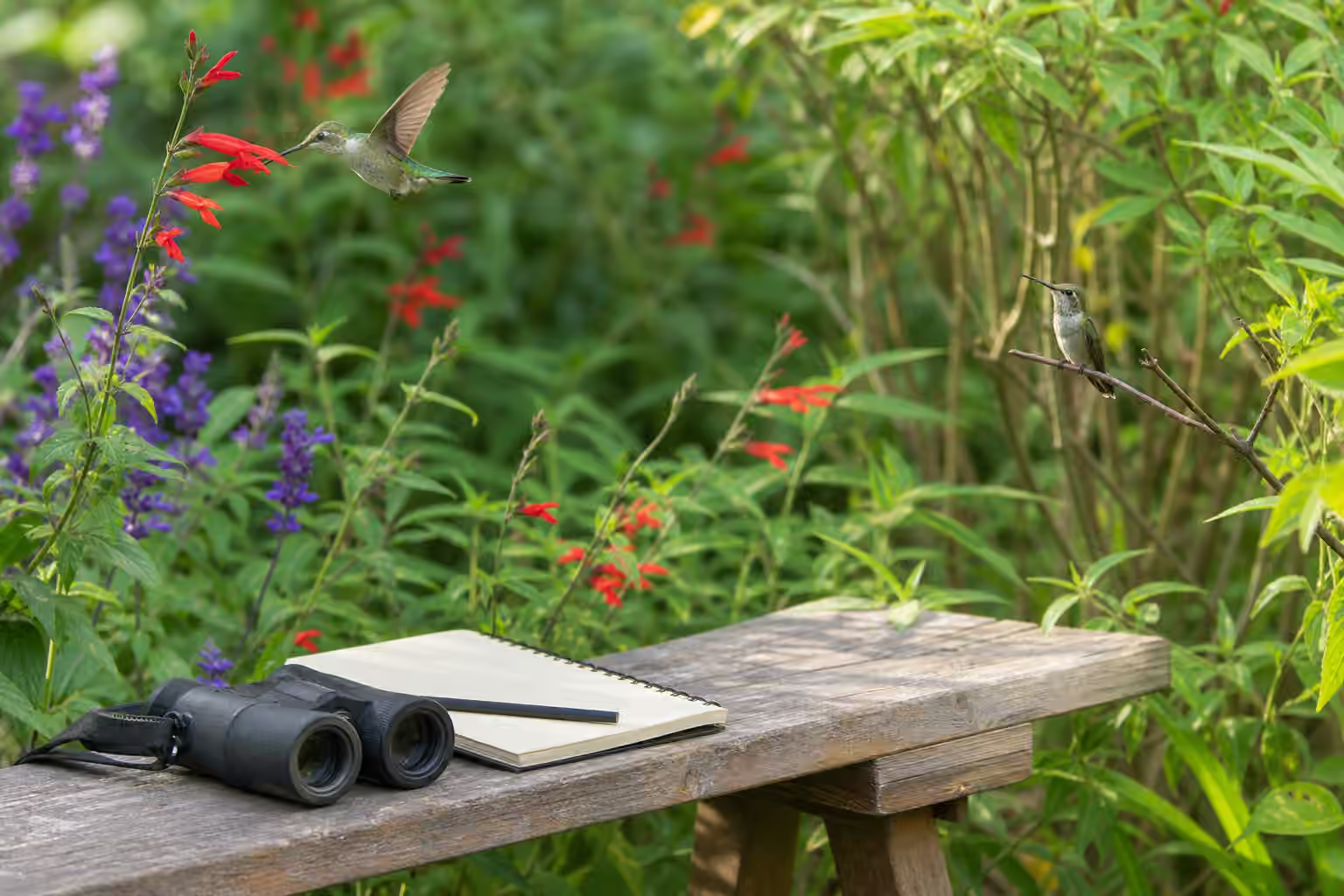
Search for thin exposed twigs, fence wires, bare stems, dead branch tips, tomato cages, shrub tops, or other small perches near flowers. Do not stare only at blossoms. A hummingbird may feed quickly and then vanish to a perch only a few feet away. Once you find that perch, hold your view nearby. The next visit may give bill shape, throat color in good light, tail movement, or size comparison with leaves and stems.
Sound can help too. Hummingbirds may give chips, squeaks, wing sounds, display sounds, or soft notes that point to a perch or chase. The listening habits from Birding by Ear still work, even though these are not long songs. Direction, repetition, and behavior matter.
Feeders Require Attention
Feeders can make hummingbirds easier to observe, but they are a responsibility rather than a shortcut. If you use one, keep it clean, place it where birds have cover and you can watch without crowding, and avoid letting the feeder replace attention to flowers, insects, perches, and natural movement. Local guidance can vary with climate and season, so treat maintenance as part of the practice, not an afterthought.
A feeder can teach useful behavior if you watch it carefully. Which direction does the bird approach from? Does it perch before feeding or arrive directly? Does one bird guard the area? Are there nearby flowers that the same bird visits between feeder trips? Does activity change with rain, wind, heat, or time of day? The feeder is only one point in a wider route.
From inside, a window can be a fine observation post if reflections and bird safety are handled responsibly. Window Birding is useful because repeated views from one place let you learn individual routes and timing. The goal is not to make the bird perform close to glass. The goal is to watch a familiar space carefully enough that the small movements begin to make sense.
Notes Turn Flashes Into Evidence
Hummingbird notes should preserve uncertainty. Write the route, perch, flowers, light, behavior, and what you actually saw. A note that says “small hummingbird at red tubular flowers, green back, pale underside, throat dark except one brief red flash when facing sun, returned twice to same twig” is stronger than a confident name with no support. Another note might say “hummingbird heard and seen as a fast shape over garden, no useful field marks.” Both are honest.
Season belongs in the note too. Migration, breeding, dispersal, flowering cycles, and local weather can all affect which hummingbirds are present and how visible they are. Birding Checklists and Local Records explains why effort and context matter. A five-minute window watch and an hour in a flowering garden are different records.
Hummingbirds reward repeated watching. The first impression may be speed and sparkle. The better lesson is pattern. A bird uses a route, guards a perch, checks flowers, changes color with light, rests in cover, and leaves clues every time it pauses. Once you begin seeing those patterns, a tiny fast bird becomes less like a flash and more like a neighbor whose habits you are slowly learning.