Kingfishers can feel like birds made from interruption. A quiet stream seems empty, then a rattling call tears along the water and a compact bird flashes past with a heavy head and direct flight. By the time your binoculars reach your eyes, it may be gone around the bend. Many beginners meet kingfishers this way, as a voice and a shape moving away.
That briefness is part of the lesson. Kingfisher birding is not usually about walking faster. It is about reading water and perches well enough that the bird’s quick appearances begin to make sense. Streams, ponds, canals, lake coves, tidal creeks, drainage channels, and reservoir edges can all hold the same pattern: water with small prey, open flight lines, and a perch that gives a clear angle down.
This guide belongs beside Water’s Edge Birding and Birding by Ear . Water’s edge birding teaches you to read habitat. Birding by ear teaches you to treat sound as evidence. Kingfishers ask for both at once.
Look For The Perch Before The Bird
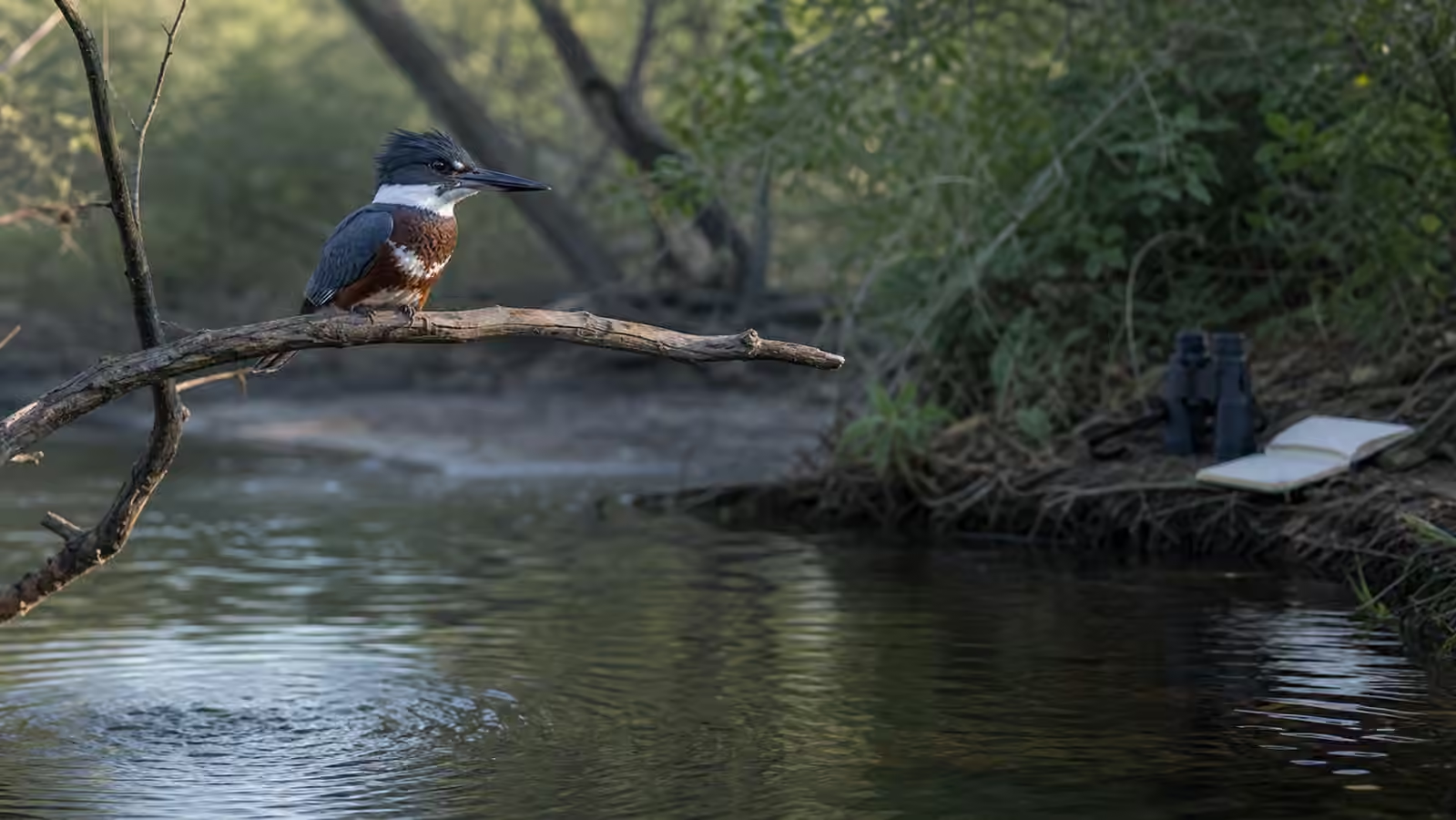
A beginner often scans the water surface and misses the branch above it. Kingfishers are tied to perches because the perch is part of the hunting method. A bare branch over a pool, a snag beside a creek, a wire above a canal, a leaning reed stem, a dock rail, or an exposed root can become a watch point. The bird may sit there only briefly, but the perch remains after it leaves.
When you arrive at a likely place, do not walk straight to the water’s edge. Stop back from the bank and scan the structure. Look for horizontal branches with open views, low wires, posts, and shaded bends where a bird could watch the water. If you find whitewash, worn bark, repeated splash marks, or a perch that seems too perfectly placed to ignore, give it time. Even if no bird is present, you are learning how the place works.
The habit from Finding Birds by Food Sources helps here. A kingfisher is not appearing randomly. It is using a feeding setup. Small fish, aquatic insects, clear shallows, calm pockets, and safe approach routes all matter. Once you understand the setup, the bird’s movement becomes less surprising.
The Call Often Arrives First
Many kingfishers announce themselves with a harsh rattle or repeated call before they are visible. The sound may travel along the water like a moving line. Instead of spinning in place, listen for direction. Is the call coming upstream, downstream, across the pond, or from behind a screen of trees? Is it getting louder, fading, or circling back?
Sound helps you place the bird in the landscape. A call that passes and stops may mean the bird landed. A call that continues evenly may mean it is flying along the channel. A sudden call from the same perch several times may reveal a favored route. The goal is not to memorize a perfect recording. The goal is to connect the sound to water, height, and movement.
If you use a phone recording, keep it quiet and passive. Do not play calls to pull the bird closer. Playback can change behavior, especially near territories or nesting places. For beginner learning, the wild call is enough. Stand still, record a short clip if useful, and write where the sound came from.
Shape Matters In The Flash
A kingfisher in flight may not give you much color. What it often gives is shape. Many have a large head, a stout body, a strong bill, and direct flight close to water. The silhouette can look front-heavy, almost as if the bird’s head is pulling the rest of it down the stream. Some species show bold wing or body color, but glare, shade, distance, and speed can remove those details quickly.
Silhouette Birding is useful because water creates backlight and reflection. Instead of insisting on color, notice the flight path. Did the bird follow the creek bend? Did it cross open water with steady wingbeats? Did it rise to a branch, hover briefly, or drop to the surface? A partial view can still be a good observation if the shape and behavior are clear.
When the bird perches, resist the urge to close distance. A kingfisher that has stopped on a branch may leave if you step into the open. Use the view you have. Binoculars can show the bill, crest or head shape, posture, and direction of attention. A scope may help at larger ponds or wide rivers, but many stream encounters are too quick and close for scope work.
Read The Fishing Moment
Fishing behavior is the heart of kingfisher birding. A perched bird may lean forward, watch a patch of water, bob, flick, or shift before diving. The dive can be sudden. The bird may drop straight, angle down, hover first, or leave the perch in a quick arc. After the strike, it may return to the same perch, fly to another, or disappear with prey.
Do not reduce the moment to success or failure. Watch the whole sequence. Where was the bird looking? Was the water shallow, shaded, still, or moving? Did the bird choose the same pool again? Did it face into the light or away from it? Did wind or glare seem to matter? These details turn a lucky sighting into field knowledge.
This is where Reading Bird Behavior for Beginners becomes more than a general principle. The behavior is the identification and the story. A bird built to watch water from a perch is using the place differently from a heron stalking slowly or a swallow feeding above the surface. The method tells you what kind of bird you are watching even before the name is settled.
Keep The Bank Quiet
Water edges are narrow places. A person moving along a bank can block escape routes, disturb resting birds, damage plants, or push a bird away from its hunting line. Kingfishers often need clear access to perches and banks. In some regions, they may nest in earthen banks or use sensitive waterside habitat. The local details vary, but the field ethic stays simple: stay on paths, avoid trampling bank edges, and do not approach holes, burrows, or repeated activity sites.
Nest Season Birding gives the wider caution. Curiosity around a possible nest site should become distance, not investigation. If a kingfisher repeatedly calls, circles, or avoids a stretch of bank after you arrive, step back. A better view is not worth changing the bird’s use of the place.
Photography needs the same restraint. A kingfisher on a perch can tempt people to creep closer because the scene is beautiful. A distant record photo paired with good notes is better than a sharp image made by pushing the bird from a fishing spot. The best kingfisher view is one where the bird keeps hunting as if you are not the main event.
Let The Route Teach You
After several visits, a kingfisher place may become legible. You may learn the bend where the call usually appears, the branch that catches morning light, the pool where small fish gather, or the route the bird takes when walkers pass. Those patterns are the reward for patient birding.
Your notes should preserve them. Write the water level, light, perch, flight direction, call, and behavior. “Kingfisher heard at creek” is a start, but a stronger note says that a rattling call moved downstream along the shaded bank, the bird landed briefly on a dead branch above the pool, then flew low under the footbridge. That note gives your future self a map.
Kingfishers do not always stay long. They do not need to. They can teach in flashes if you learn to prepare for the flash. Read the water, find the perch, listen for the call, and let distance do its work. The bird that once felt like a blue or brown streak leaving the scene becomes part of the scene’s structure.