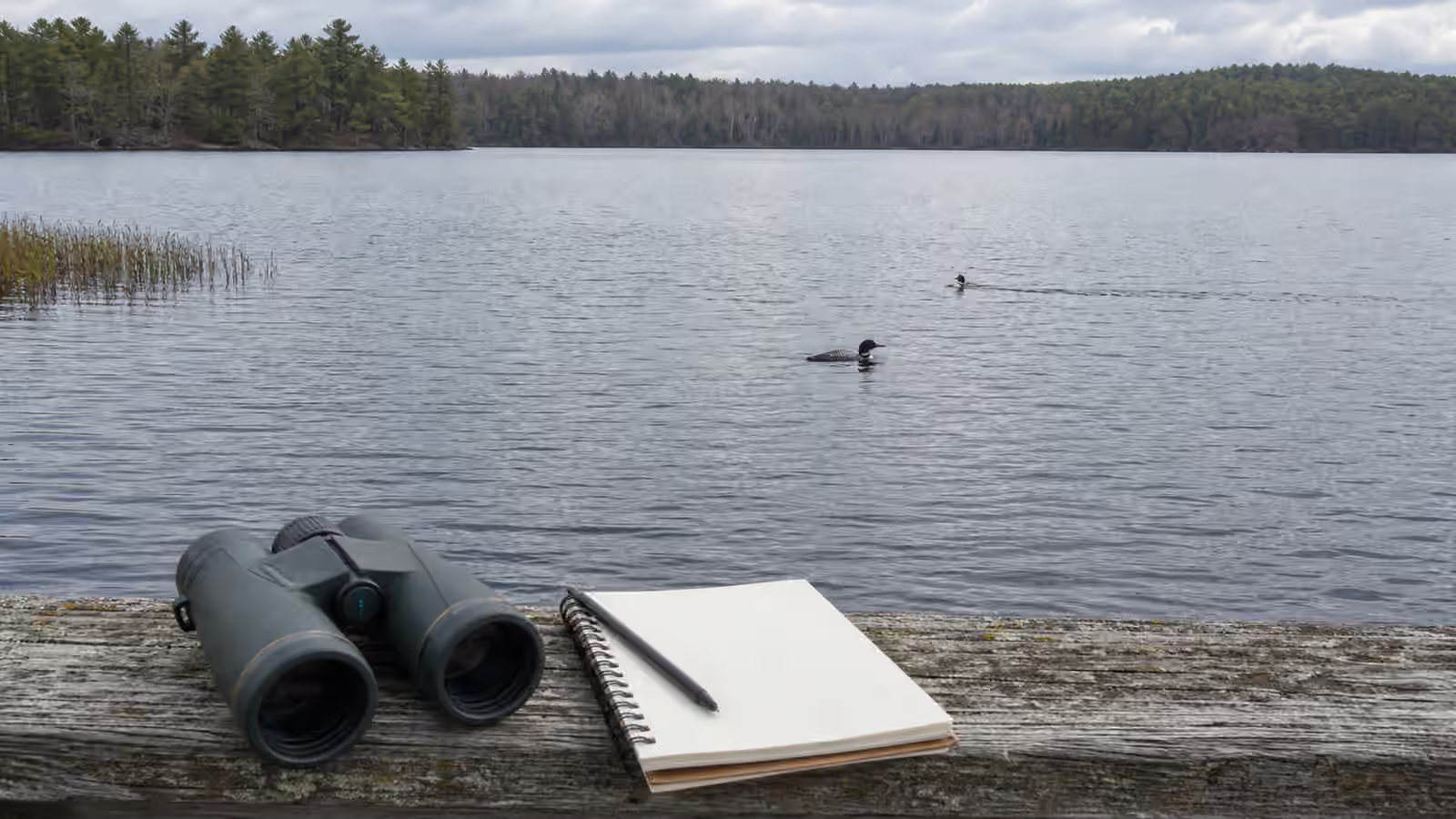
Loons and grebes ask beginners to change pace. They are often visible, but not close. They sit low on water, vanish beneath the surface, reappear in a different place, and change shape with every dive, stretch, and turn. A bright field-guide plate can make them seem like clean open-water subjects. A real lake makes them smaller, darker, wetter, and more interesting.
This group belongs beside Ducks and Waterfowl for Beginners and Water’s Edge Birding , but it needs its own habits. Ducks often teach dabbling, flock structure, bright plumage, and edge use. Loons and grebes teach low posture, diving rhythm, bill angle, head shape, distance, and the patience required for birds that spend part of the observation underwater.
The names also vary by region. Some places have loons on large lakes or coastal water in the colder months. Some have grebes on reservoirs, ponds, marshy edges, or open water. Some have cormorants, coots, mergansers, diving ducks, or other birds nearby that complicate the first impression. You do not need to sort every possibility at once. Begin with how the bird lives on the water.
Notice How Low the Bird Sits
The first clue is posture. Many diving waterbirds ride lower than the dabbling ducks beginners learn first. A loon can look long, heavy, and low, with a body that seems built into the surface of the lake. A grebe can look compact or slender depending on species and posture, but it often has a tucked, buoyant, almost neckless quality at one moment and a longer-necked shape the next. A coot may be dark and blunt. A diving duck may show a rounder body and different head shape. The comparison matters more than a single impression.
Watch the waterline. Does the bird float high like a cork, or does it seem partly submerged? Is the back flat, rounded, or peaked? Does the neck rise cleanly, or does the head seem set low? Is the bill held level, angled upward, slightly drooped, dagger-straight, or short and pointed? These features remain useful when color is washed out by glare.
Posture changes with behavior. A relaxed bird may sit differently from one that is alert, preening, calling, stretching, or preparing to dive. Do not identify the bird from one pose if you can avoid it. Let it show several versions of itself. The same patient habit helps with Silhouette Birding in Backlight , where shape and posture carry more weight than color.
Watch the Dive, Not Just the Surface
Diving rhythm is one of the best clues. Some birds slip under smoothly and stay down long enough for you to lose them. Some pop up nearby. Some travel underwater and surface far from the starting point. Some make a small leap or forward thrust before diving. Some seem to sink without drama. The exact pattern varies, but the habit of watching the whole dive cycle makes identification more grounded.
When a bird dives, keep your binoculars or scope near the last location, then widen your attention. Count roughly, not with the pressure of a stopwatch, but enough to notice whether the dive was brief or long. Look for ripples, bubbles, or a new head breaking the surface. If there are several birds, mark one bird against a fixed point on shore so you do not accidentally follow a different individual when it appears.
The feeding place matters too. A bird diving near reeds, along a sheltered cove, in the middle of a reservoir, off a rocky point, or beyond surf is using different water. Depth, fish, aquatic insects, submerged vegetation, and shelter all shape where diving birds spend time. Finding Birds by Food Sources is not only about fruiting shrubs and seed heads. Food also explains why a quiet patch of open water becomes busy.
Separate Loons, Grebes, Cormorants, and Ducks by Structure
At distance, a dark diving bird can become a mental blur. Slow down and sort structure. Loons tend to look larger and longer, with a strong body, substantial bill, and a different presence on open water. Grebes often look smaller or more delicate, with pointed bills, compact bodies, and a habit of changing apparent shape as the neck extends or tucks. Cormorants may sit lower still, show a longer neck and heavier head, and sometimes perch with wings spread. Diving ducks usually carry a duck shape even when they dive: rounder body, different bill, and often flock patterns that feel unlike loons or grebes.
These are not rigid formulas. Light, age, season, and distance can blur them. Still, structure prevents the beginner from treating every low bird as the same mystery. Ask whether the bird is long or compact, heavy-billed or fine-billed, flat-backed or rounded, solitary or flocked, far out or near reeds, constantly diving or mostly loafing. The questions narrow the field before color enters.
If you have a spotting scope, this is a good group to use it on. Spotting Scope Fieldcraft explains why stable, patient viewing matters. A scope can reveal bill angle, head shape, flank pattern, and the way water meets the body. It can also make you too confident if heat shimmer, distance, or waves distort the image. Treat magnification as help, not proof.
Let Season Change Your Expectations
Many diving waterbirds look different across the year. Breeding plumage may be striking, with bold head patterns, rich neck colors, or crisp back markings. Nonbreeding plumage can be quieter, gray, white, brown, black, or softly patterned. Young birds can look different again. A beginner who expects every bird to look like the brightest field-guide image will struggle, especially in winter and migration.
This is where Molt and Seasonal Plumage becomes practical. Instead of asking why the bird is not colorful enough, ask what season you are in and what plumage stage is likely. A loon in winter may look far plainer than the dramatic bird people imagine from northern breeding lakes. A grebe may carry only subtle head contrast outside the breeding season. A distant bird in flat light may hide almost everything except shape.
Season also affects location. Some birds use inland lakes in migration, large reservoirs in winter, sheltered bays during rough weather, marshy ponds during breeding season, or coastal water when inland water freezes. The same lake may be empty one month and hold several diving birds after a weather shift. Winter Birding helps explain why open water can become important when other places are less available.
Work With Glare, Waves, and Distance
Open water makes honest birding difficult. Glare can erase color. Wind can hide the body behind chop. Heat shimmer can make edges wobble. A white throat can flash and disappear. A dark head can become only a shadow. The answer is not to force certainty. The answer is to collect sturdier evidence.
Change your angle if you can do so without disturbing birds or leaving safe public access. Sometimes a few steps along a path reduces glare. Sometimes higher ground gives a cleaner view. Sometimes it is better to wait for the bird to turn. If the sun is low and harsh, silhouette skills matter. If waves are high, behavior and size comparison may matter more than plumage.
Write down conditions in the note. “Distant low diving bird in glare” is a different record from “close grebe in flat light.” Conditions explain uncertainty. They also help you learn which water bodies are best at different times of day. A lake that is brutal at sunrise from one side may be excellent from the other side in afternoon.
Respect Resting and Feeding Space
Many diving birds keep distance because distance is useful. Open water gives them room to feed, rest, avoid shore disturbance, and watch approaching threats. A bird far from shore is not failing to cooperate. It is using the habitat properly. Your task is to observe without turning the bird’s distance into a problem to solve.
Avoid pushing along shorelines for a closer angle if birds are feeding nearby. Do not try to flush a bird for a flight view. Keep dogs, boats, and loud movement out of sensitive edges where you have control. If a bird stops feeding, swims steadily away, stretches its neck in alertness, or repeatedly dives away from your position, give it room. The ethics from Birding Etiquette and Field Notes apply strongly on water because birds may have fewer nearby alternatives than they appear to have.
Photography can be tempting with loons and grebes because the birds are elegant and water adds drama. Let the image be secondary. A distant bird behaving naturally is more valuable than a closer bird that changed behavior because you pressed forward. A patient record photo from an appropriate distance can support notes. It does not need to become a portrait.
Make Notes Before the Bird Disappears Again
Diving birds punish vague memory. You think you have seen enough, the bird dives, another bird surfaces, light changes, and the details rearrange themselves. Write while the bird is still in view. Note size compared with nearby birds, posture on the water, bill shape, head shape, neck length, how long it stayed down, where it surfaced, whether it was alone or with others, and what the light was doing.
A simple sketch helps. Draw the waterline, head, bill angle, and body slope. Mark the pale and dark areas only where you truly saw them. If the bird turned once and showed a flank or face pattern, write that moment down. If you never saw the bill clearly, say so. A good uncertain note is not a failed note. It is a map of what evidence existed.
Checklists are useful when they preserve effort and doubt. Birding Checklists and Local Records encourages recording context rather than only names. For diving waterbirds, context can be the difference between a useful learning record and a forced guess. “Grebe species, compact, low, small pointed bill not clearly seen, diving near reeds” is honest. It gives you something to compare on the next visit.
Let Water Birds Teach Patience
Loons, grebes, and other diving waterbirds are good teachers because they refuse to stay in the frame on command. They make you watch water, wait through disappearance, compare posture, accept distance, and respect uncertainty. That can be frustrating at first. It also builds the habits that make every part of birding stronger.
Return to the same lake, pond, reservoir, or bay when conditions change. Watch in calm water and wind. Watch in bright light and overcast light. Watch when birds are feeding and when they are resting. Compare them with ducks, coots, cormorants, gulls, and distant floating debris until the real birds begin to separate by structure and behavior.
The first reward may not be a rare name. It may be the moment you recognize a low, fine-billed bird as different from the ducks around it before you know exactly what it is. That is progress. Birding often begins with naming, but it deepens when you understand why the name fits the bird’s body, rhythm, and place on the water.