Marsh birding asks for a different kind of attention. A woodland hides birds behind leaves. A beach spreads them across open sand. A marsh does both at once. Water opens small windows, reeds close them, and many of the birds you want to understand are present as sound, motion, posture, or a brief shape crossing a gap.
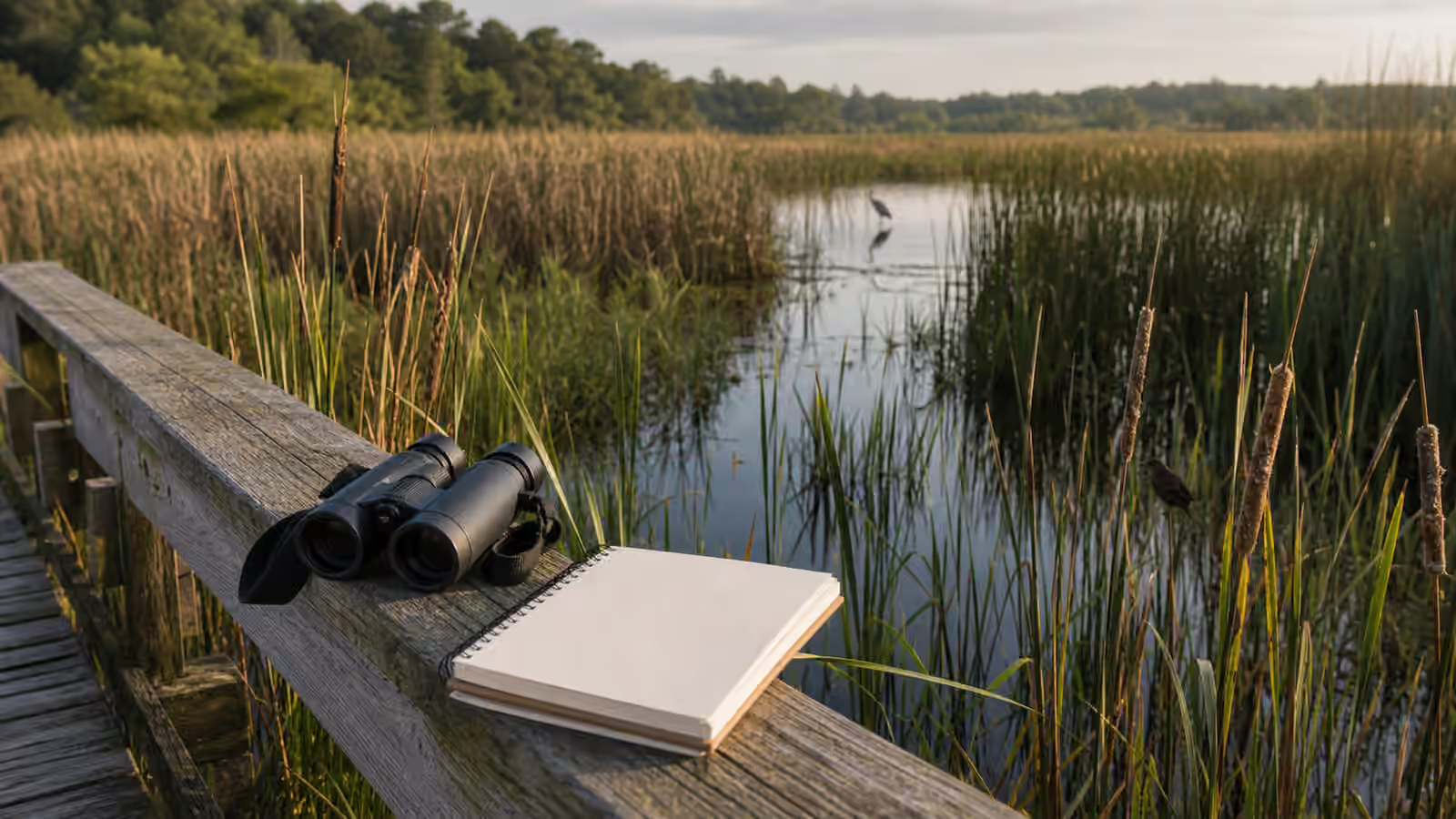
The first visit can feel frustrating. Something splashes before you see it. A bird calls from three feet inside cattails and never appears. Blackbirds make the whole place seem loud. A heron stands so still near the far edge that it becomes part of the reeds until it lifts its head. The lesson is not that marshes are too difficult for beginners. The lesson is that a marsh rewards slower evidence.
This guide fits beside Water’s Edge Birding and Birding by Ear . Water’s edge habits help you scan the open parts of a wetland. Listening habits help you understand the closed parts. Marsh birding brings those two skills together.
Stop Before the Boardwalk Opens
The best marsh view often begins before the obvious viewpoint. Birds using reeds, mud, floating vegetation, and shallow water notice movement quickly. A person walking straight to a railing can push ducks away from the near edge, send small birds deeper into cover, or make a wading bird step behind stems before the binoculars come up.
Pause at the approach. Look over the nearest water first, then the first strip of reeds, then any mud, floating plants, snags, low shrubs, open channels, and distant edges. This near-to-far scan matters because the closest bird is often the one beginners miss. A rail-like bird may slip along the base of cattails. A sparrow may cling sideways to a reed. A frog, fish, or insect movement may explain why a heron is standing in one exact spot. The marsh is not only the wide view from the platform. It is also the first five quiet feet beside the path.
If there is a boardwalk, use it as a blind, not as a runway. Walk a few steps, stop, listen, and let the reeds settle. Watch for stems that move against the wind, a dark shape low over water, or the quick rise and drop of a bird that has only crossed from one patch of cover to another. A marsh often gives you pieces before it gives you the bird.
Read the Edge Between Cover and Water
Marsh birds live by edges. The line where reeds meet open water, mud meets grass, floating plants meet a channel, or shrubs meet wet ground is often more productive than the middle of any one habitat. Edges offer food, cover, perches, and escape routes close together.
Begin by asking what kind of edge you are seeing. A hard bank with deep water will be used differently from a soft muddy margin. A wide stand of cattails will hide different behavior than sparse reeds with gaps. A shallow pool with floating leaves may hold feeding birds that never step into open mud. A channel through reeds may work like a road, with birds moving along it briefly and then vanishing again.
This is where Reading Bird Behavior for Beginners becomes especially useful. A bird’s action may be clearer than its name. Is it clinging to a vertical stem, walking on floating vegetation, probing mud, diving, dabbling, hovering over water, perching above reeds, or standing motionless with its bill pointed down? Those verbs narrow the possibilities and make the sighting memorable even when the view is short.
Color can be unreliable in marsh light. Bright water throws glare upward. Dark reeds turn birds into silhouettes. Morning and evening sun can warm every brown and flatten every gray. Shape, feeding surface, height in the vegetation, and movement usually hold up better than color alone.
Let Sound Draw a Map
A marsh can be one of the best classrooms for birding by ear because sound has places. A dry chatter from high reeds, a low cluck from dense cover, a liquid song from a willow, a rattle from a cattail patch, a splash in a channel, and a nasal call from open water all belong to different parts of the wetland.
Do not try to name everything at once. Stand still and build a sound map in your head. Place each sound by height, distance, and habitat. Was it low at the base of the reeds or above your head from a perched bird? Did it come from open water, a muddy edge, a shrub island, a grassy bank, or a hidden channel? Did the sound repeat from the same place, move along the reeds, or answer another bird across the marsh?
This habit keeps listening from becoming guesswork. A sound low in cattails suggests a different search image from the same pitch heard in a tree. A bird calling from the open water has given you a different clue from one hidden in sedges. If you later see a bird emerge from the same patch, the voice and place begin to join in memory.
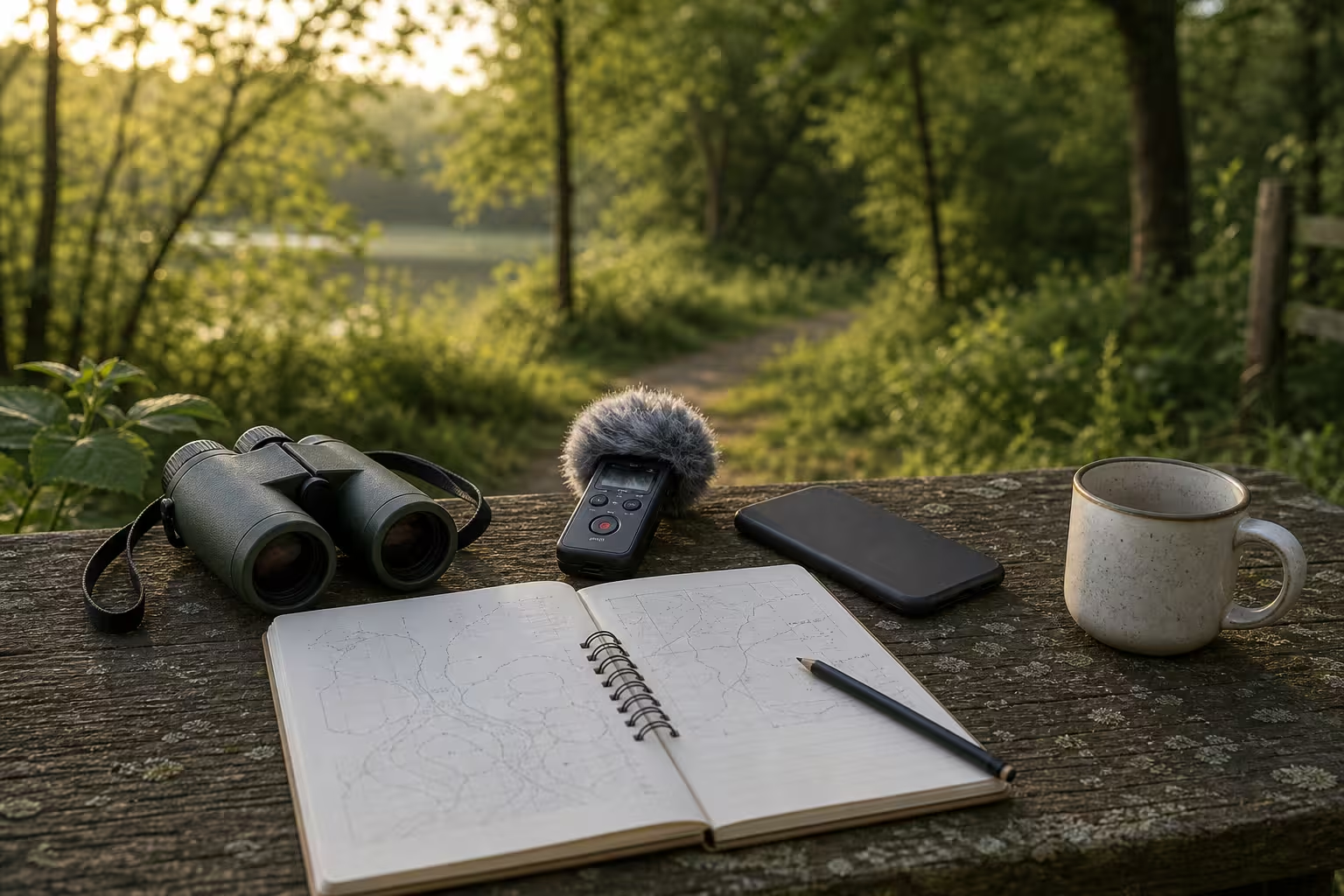
Recording can help, but the recording needs context. A short audio clip with a note about habitat, water level, time, and behavior is better than a mystery file with no memory attached. Playback needs restraint. Playing calls to pull hidden marsh birds into view can change their behavior, especially during breeding season or around sensitive species. For ordinary learning, listening is enough. Let the bird stay hidden if hidden is how it is living well.
Watch Reeds Like Moving Branches
Reeds are not a wall. They are perches, ladders, screens, feeding surfaces, and wind indicators. A small bird may climb a stem, pause at a seed head, drop to the base, then reappear two yards away. A blackbird may use the tallest reed as a display perch. A wren may keep low, showing only a tail flick and a burst of song. A heron may stand behind reeds with just the neck line visible. A bittern-like shape, where present, may depend on stillness so complete that movement is the rare clue.
Before raising binoculars, watch how the vegetation itself is moving. Wind pushes many stems together. A bird makes one stem bend against the pattern, or makes a small cluster shake below the wind line. Follow that contradiction. Do not expect the bird to stay in view. Marsh watching often means holding a place in your attention until the bird gives a second clue.
Binoculars can make reeds harder if you zoom in too soon. Start with your eyes, find the patch of movement, then raise the binoculars to that patch. If the bird disappears, keep watching the same opening. Many reed birds move through small circuits. They may return to a favored stem, cross the same gap, or call again from nearly the same place.
Treat Water Level as Field Evidence
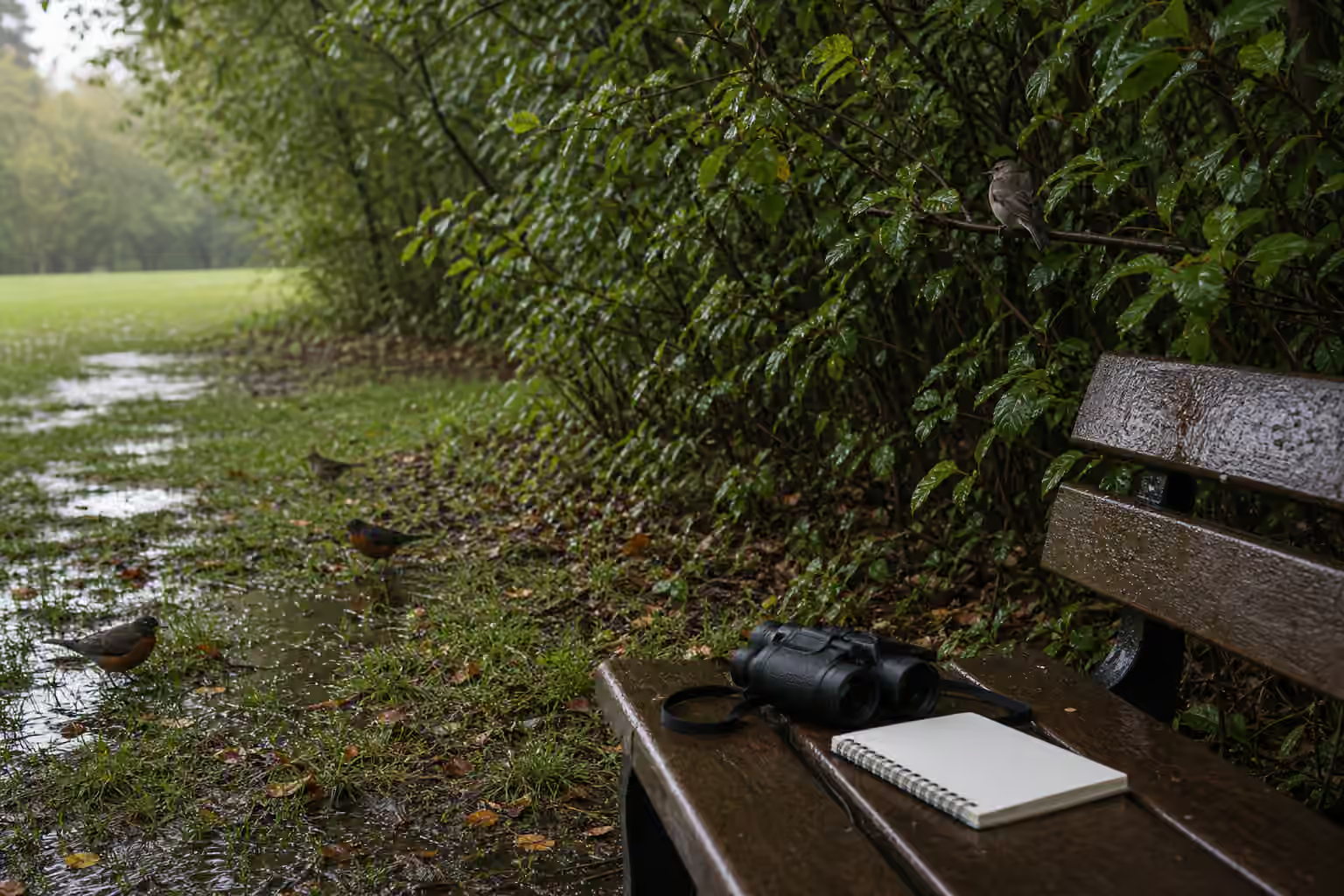
Water level changes a marsh more than a casual visitor may realize. High water can cover mud and push feeding birds to the edges. Low water can expose flats, roots, snails, insects, and shallow pools. A storm can rearrange floating vegetation. A dry spell can concentrate birds near the remaining wet places. In tidal marshes, the cycle may change the accessible feeding ground within a single visit.
You do not need technical measurements to use this information. Write simple notes. The channel was full. Mud showed under the boardwalk. Reeds were flooded at the base. Floating plants gathered on the north side. The far pool was nearly dry. Over repeated visits, these plain observations explain why birds appeared in one corner and not another.
The same habit helps with seasons. Spring and early summer may make the marsh loud with territories, nesting behavior, and food carrying, which calls for the restraint described in Nest Season Birding . Late summer can bring worn feathers, young birds, and quieter adults. Fall may move migrants through weedy edges and shallow pools. Winter, where water remains open, can gather waterfowl and other birds into the few places that still offer food and cover.
Give Hidden Birds More Distance Than You Think
Marsh birding can tempt people to lean, whisper, point, and creep closer because the bird is so near and still unseen. That closeness is exactly why distance matters. Dense cover is not empty space. It may be a feeding area, a nest area, a resting place, or an escape route. Leaving the path to force a view can damage vegetation and pressure birds that were using the cover because it kept them safe.
Use the visible behavior as your boundary. If birds stop feeding, slip deeper into reeds, alarm call repeatedly, bunch together, or flush from cover, back off or move on. A relaxed bird gives better information than a pressured bird leaving the scene. This is the same field ethic as Birding Etiquette and Field Notes , sharpened by habitat that can hide stress until the bird suddenly bursts away.
Photography needs the same patience. Marsh birds can appear in beautiful light, but reeds, water, and distance make clean images difficult. A distant record photo is useful if it preserves posture, bill shape, or habitat. A close photo made by pushing into cover costs too much. Let the marsh keep some secrets.
Make Better Marsh Notes
Marsh notes should remember place as much as species. A useful note might say that a small bird was low in cattails beside a shallow channel, clinging to stems and giving a dry chatter. Another might say that a heron stood at the shaded edge of open water, struck twice at the surface, then stepped back behind reeds when walkers passed. Even if you do not know the name, you have recorded habitat, behavior, and response.
If you keep a regular local route through Patch Birding , a marsh corner can become one of the most instructive parts of the patch. Return in different wind, water levels, light, and seasons. Notice which channels hold birds after rain, where blackbirds gather, which reed openings produce repeated sounds, where ducks loaf, and where small birds feed during migration. The place will start to explain itself.
You can also connect marsh notes to waterfowl practice. Ducks, geese, coots, grebes, and other water birds often use marsh pools and channels in ways that support the habits in Ducks and Waterfowl for Beginners . Watch whether a bird dabbles, dives, swims in a tight group, rests near cover, or moves out from reeds only after the marsh has been quiet for a while.
Leave With the Partial Sighting
A good marsh walk does not always end with a long list. It may end with three confirmed birds, five useful sounds, one unknown bird seen only as a shape, and a better understanding of where the water meets cover. That is not failure. That is how marsh birding often works.
The partial sighting is valuable if you keep it honest. Do not force a name onto every hidden call or split-second movement. Write the evidence, mark uncertainty, and return later. The same reedbed that hid a bird today may reveal it next week when the light changes, the water drops, or the bird chooses a different perch.
Marshes teach patience because they make the bird’s world larger than your view of it. Reeds, mud, channels, floating plants, insects, fish, weather, and distance all matter. When you learn to read those pieces, the wetland stops being an opaque place full of mystery sounds. It becomes a living map, and each quiet visit adds another honest mark to it.