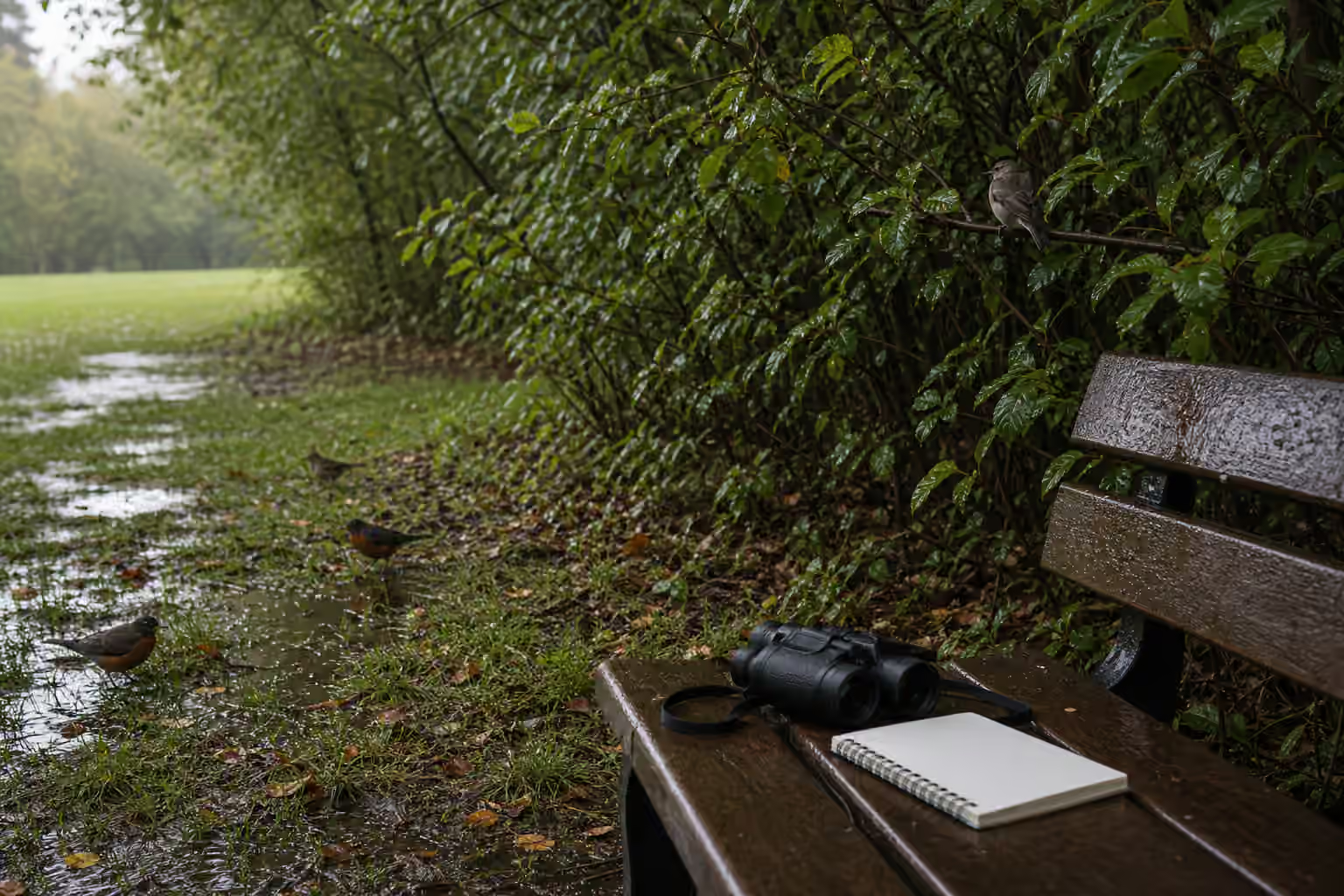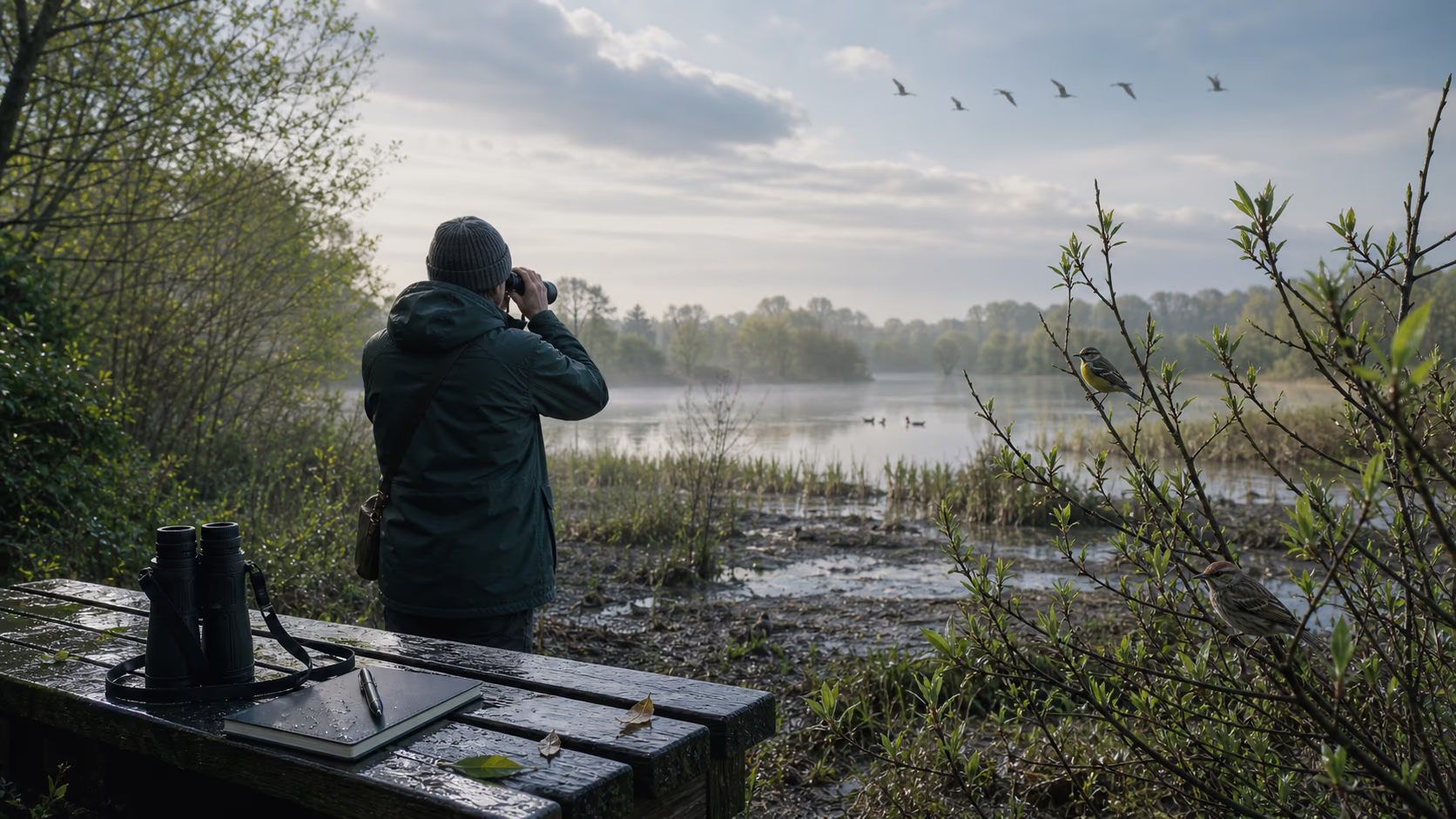

A migrant trap is a place where moving birds pause because the surrounding landscape gives them few better options. It might be a small grove on a headland, a line of shrubs beside open water, a city park in a built-up neighborhood, a cemetery with mature trees, a garden near a coast, an island of trees in farmland, or a lake-edge patch after a night of movement. The place can be tiny. Its importance comes from context.
Migrant trap birding connects naturally to Migration Morning and Patch Birding , but it has its own feel. You are not only asking what habitat is good in a general sense. You are asking why a tired, hungry, wind-shifted, weather-delayed, or route-following bird would stop in this particular patch at this particular time.
Context Makes the Patch
A small grove in a large forest may be ordinary. The same grove on a bare headland can be important. A row of shrubs in a shrub-rich landscape may not stand out. The same row beside open beach, open water, pavement, or large fields can draw birds because it is the first cover available. A city park may hold migrants because buildings, roads, and hard surfaces make trees and grass more valuable than they look on a map.
Read the surroundings before you read the patch. What is open nearby? Water, pavement, fields, cliffs, rooftops, dunes, or short grass can make birds concentrate in cover. What offers food? Flowering trees, insects, fruit, seed heads, wet edges, and sheltered leaves can hold birds for a morning. What offers safety? Dense shrubs, low branches, vines, and quiet corners can matter as much as tall trees.
This is where Where and When to Go Birding becomes practical. A migrant trap is not magic. It is habitat plus movement plus contrast.
Weather Changes the Story
Migration is shaped by weather, but beginners should treat weather as context rather than a promise. A calm morning after a night of movement may place birds in treetops. Wind can push birds toward sheltered edges. Rain may cause birds to pause, feed low, or wait out poor conditions. Clear skies can mean birds passed over without stopping. A cold front, warm spell, foggy dawn, or unsettled night may change what a small patch holds.
Weather Window Birding is a good companion because it teaches you to read wind, rain, light, and shelter in the field. At a migrant trap, ask which side is protected from the wind, where insects might be active, which trees catch early sun, and where a bird could feed without crossing open ground. The best corner may not be the prettiest corner. It may be the lee side of a hedge, the first flowering tree, or a damp hollow under shrubs.
Keep expectations modest. A famous movement day may be quiet where you stand. A dull-looking morning may produce a single bird that teaches you something. The habit is the value: you are learning how weather and landscape meet.
Work the Patch in Layers
A small migrant trap can feel chaotic when birds are moving. Start with layers. Scan the ground and leaf litter for thrushes, sparrows, doves, pipits where present, or other low-feeding birds. Watch shrub edges for chips, tail flicks, and brief movements. Move to lower branches, then mid-canopy, then the outer sunlit leaves. Check dead branches, exposed perches, fruiting shrubs, and the sky above the patch.
Do not chase every movement. Pick a section and let it settle. Migrants often feed in circuits. A bird that vanishes behind leaves may reappear along the same row. A flock may move through once and then circle back. If you rush after every glimpse, you may disturb birds and miss the pattern. Mixed Flocks Birding helps here because migrant traps often hold loose, temporary associations of birds that are not traveling as one neat unit.
Sound can organize the scene. A chip from low shrubs, a thin call overhead, a short song fragment, or a burst of contact notes may reveal where birds are concentrated. Use the calm listening method from Birding by Ear . You do not need to name every call. You need to locate activity and notice whether it is moving, scattered, or centered in one part of the patch.
Food Holds Birds Longer Than Fame
Some migrant traps become known because rare birds have appeared there, but the everyday reason birds stop is usually food and cover. Insects on fresh leaves, flowers, fruit, berries, seed heads, wet grass, shoreline wrack, sheltered bark, or sun-warmed shrubs can matter more than the reputation of the site. If you find the food, you often find the birds.
The guide to Finding Birds by Food Sources is especially relevant. Look for active leaves, not just beautiful trees. Watch where birds return after a short flight. Notice whether they are gleaning, flycatching, probing, picking fruit, working bark, or feeding on the ground. A bird that is actively feeding may give repeated views if you stay still and let it choose its route.
Food also explains why a trap changes by season. Spring migrants may use flowering trees and insect flushes. Fall migrants may use fruiting shrubs, seed heads, and sheltered edges. Late-season birds may gather where a small patch still offers berries or water. A trap is not one place. It is several seasonal versions of the same place.
Respect Tired Birds and Other Birders
Migrant traps can attract birders as well as birds. Keep paths clear, speak quietly, avoid crowding, and do not push into vegetation for a better view. If a bird is feeding low, give it space. If people are watching from one angle, do not walk into the line of sight or flush the bird from the back. If the patch is tiny, your movement matters.
This is also a place to be careful with location sharing. Some sightings can draw crowds to fragile or private spaces. Follow local norms, protect sensitive birds, and do not turn a small patch into a pressure zone. Birding Checklists and Local Records can help you think about useful records without treating every detail as public performance.
The best migrant trap birders often look relaxed because they understand restraint. They let birds feed, let other people see, and accept partial views. The day is about reading movement, not extracting every possible identification.
Return Enough Times to Learn the Pattern
One visit can be exciting, but repeated visits reveal why the place works. Walk the same loop after different winds, after rain, during clear mornings, in early spring, late spring, early fall, late fall, and quiet periods. Note which trees catch birds first, which shrubs hold chips, which corner is sheltered, where flyovers pass, and when the patch goes silent.
This turns a migrant trap into a patch of your own, even if many people know it. Cemetery Birding and Urban Birding show how ordinary small places become rich through repetition. Migrant trap birding adds the drama of movement, but the foundation is still careful local knowledge.
The lesson is not that every small grove hides a rarity. The lesson is that birds moving through a difficult landscape make practical choices. They pause where there is cover, food, shelter, and enough calm. When you learn to see those choices, a tiny patch can feel much larger than its boundary.