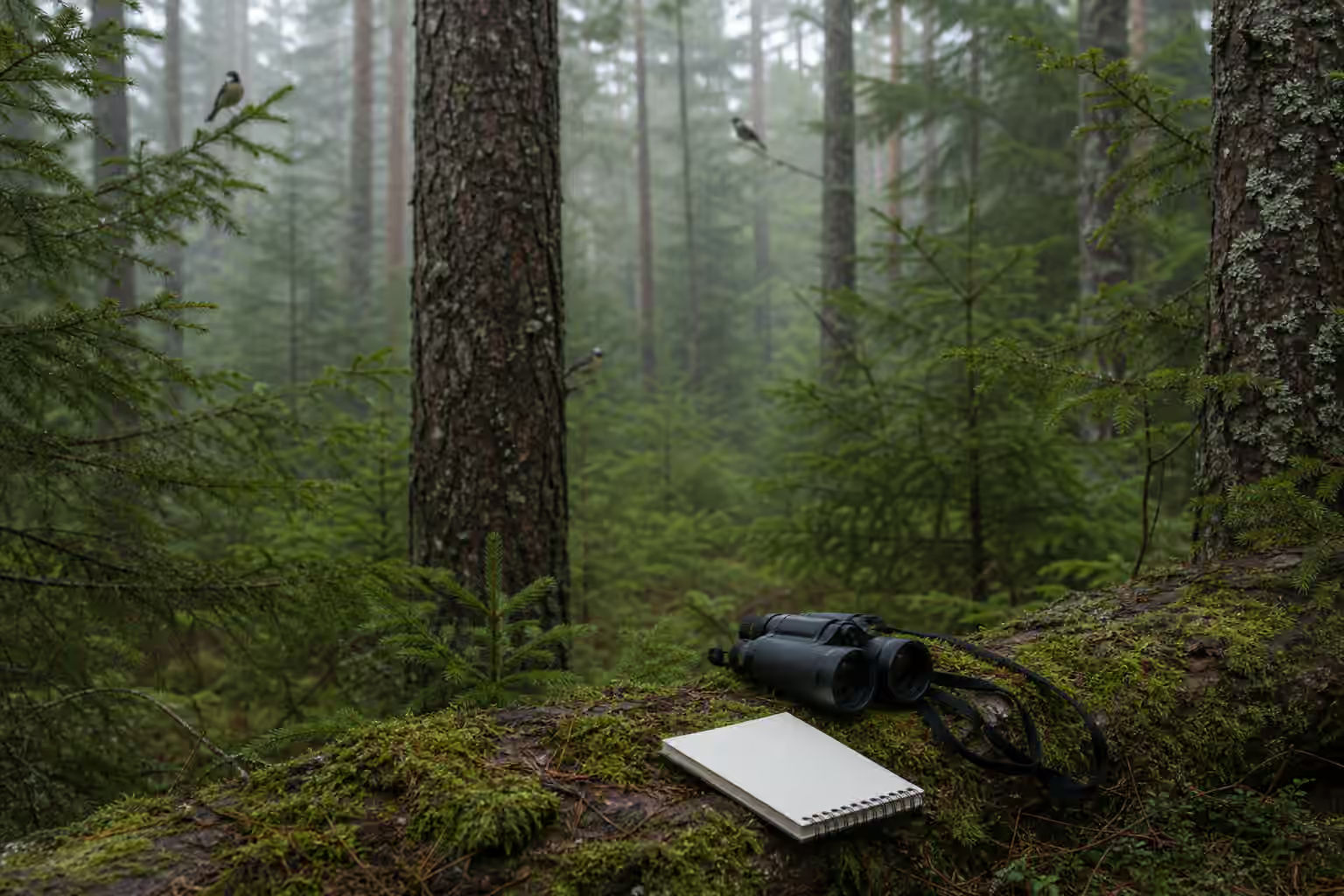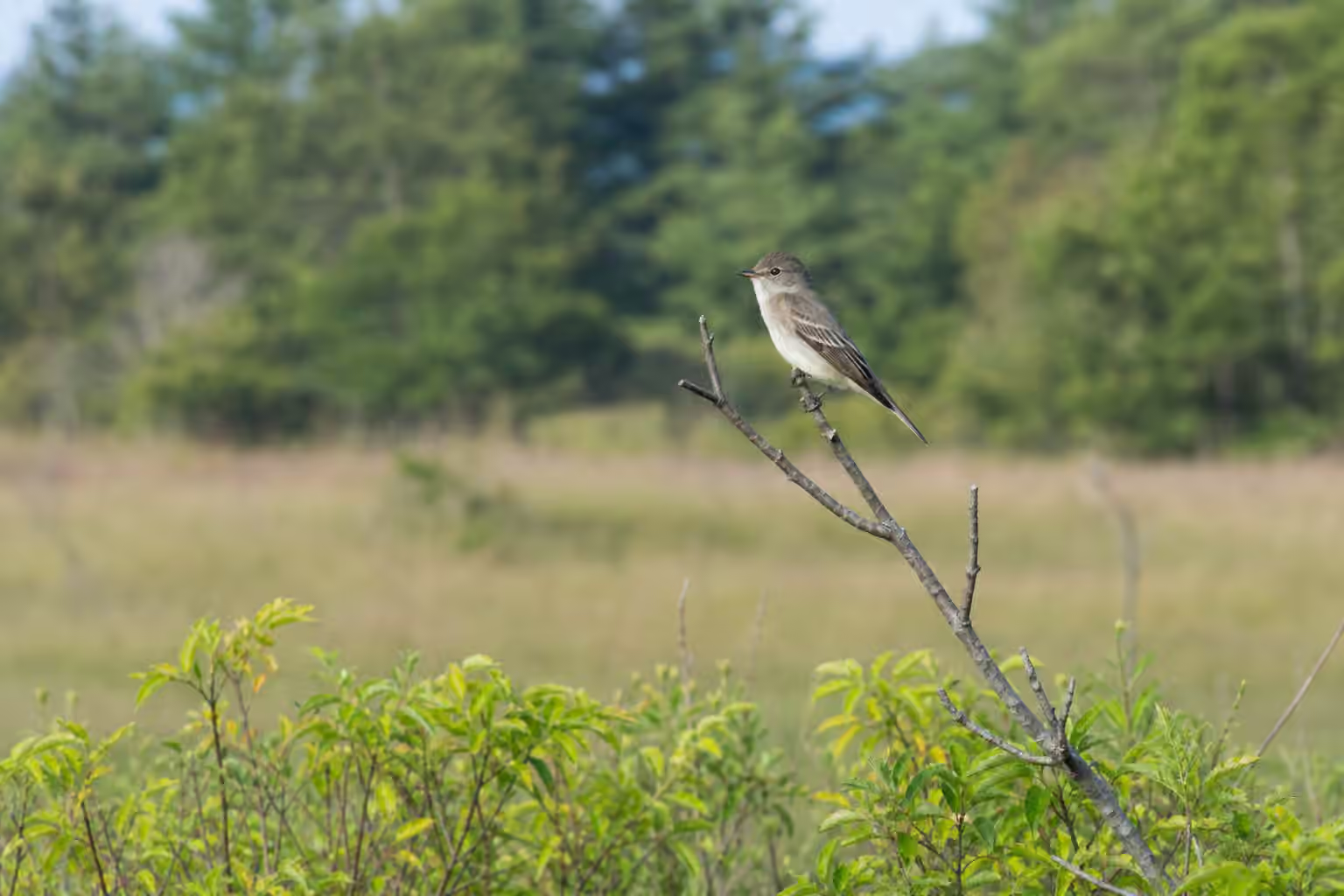
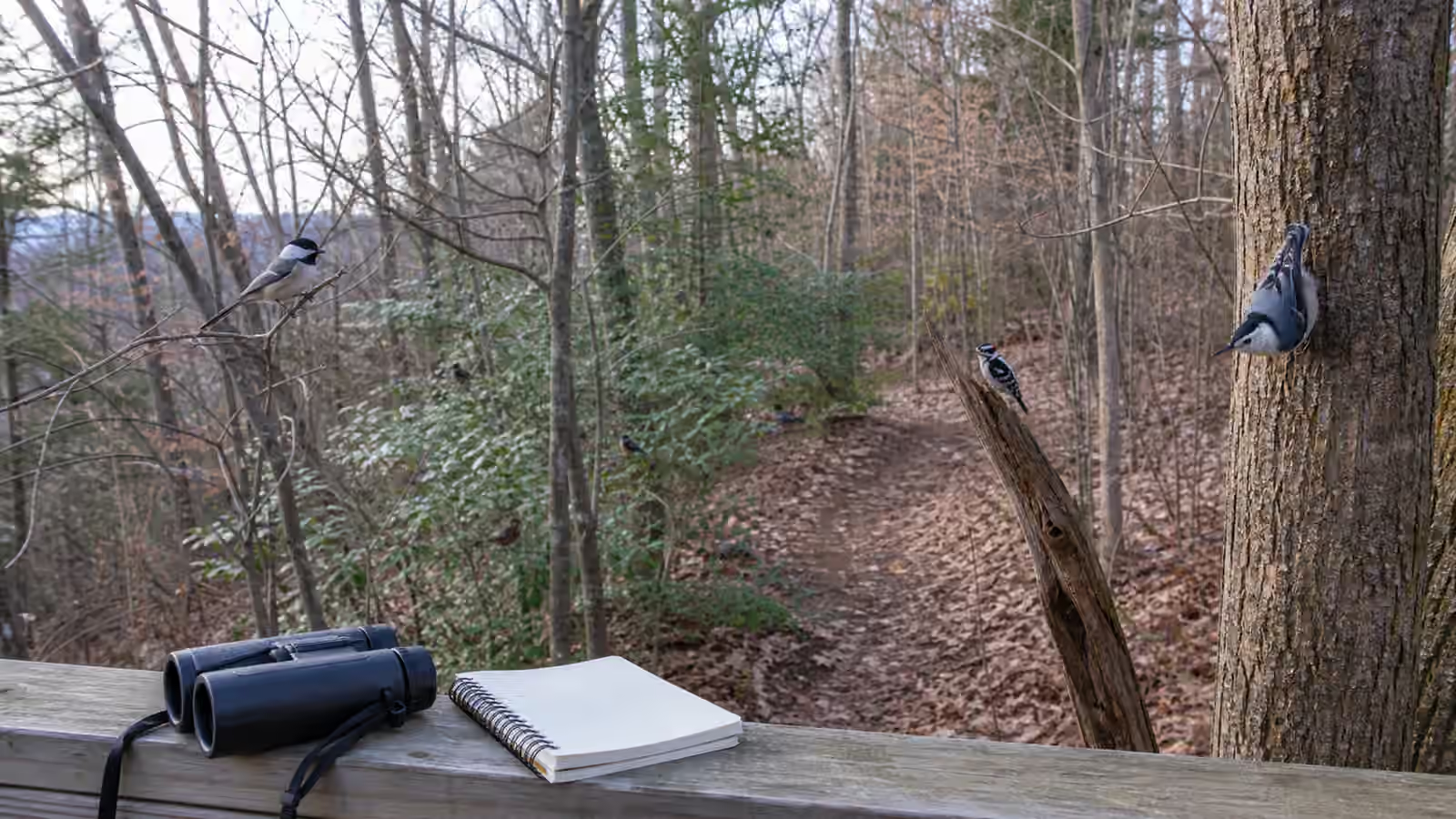
A mixed flock can make a quiet walk feel suddenly crowded. One moment the woods, park edge, hedgerow, or winter thicket seems still. The next moment there are small calls from three directions, leaves twitching above the path, a bird on a trunk, another bird under a twig, and a few quick shapes crossing gaps too fast for names. Then the whole company moves on, leaving you with the sense that the best part of the walk happened faster than you could follow it.
That confusion is normal. Mixed flocks ask a beginner to do several things at once: listen, track motion, judge height, notice behavior, keep distance, and decide which bird deserves attention first. The useful answer is not to identify every bird in the flock. The useful answer is to understand how the flock is arranged and to leave with a few honest observations. Once you learn that, mixed flocks stop feeling like a test and start feeling like one of birding’s best teachers.
This guide builds naturally from Woodland Birding , Reading Bird Behavior for Beginners , and Birding by Ear . A mixed flock is not only a group of birds. It is a moving map of habitat. Different species use different surfaces, heights, foods, and warning systems while traveling through the same place.
See the Flock Before the Species
The first step is to notice the flock as a pattern before you start naming pieces of it. Beginners often hear a familiar chickadee, tit, wren, jay, or other local contact call and immediately search for that one bird. That can work, but it can also narrow your attention too soon. The call may be the loudest part of a wider movement. Look around the caller and ask what else is moving.
Mixed flocks often reveal themselves through small inconsistencies. A twig bounces after the wind has stopped. A bark surface seems to crawl. A shrub gives repeated chips from slightly different positions. A bird flashes across the trail, then another follows from a lower branch. Your job is to widen the frame. Instead of trying to solve the first bird, hold still and watch the area around it.
This matters because mixed flocks are usually structured. One bird may be checking bark. Another may be searching leaf clusters. Another may stay low in shrubs. A larger bird may trail nearby, or a woodpecker may open feeding opportunities that smaller birds inspect after it moves. You do not need to know every relationship. You only need to notice that the flock has shape.
Find the Anchors
Most mixed flocks have anchor birds. These are the species that are common, vocal, visible, or easy enough for you to recognize. The anchor bird is not necessarily the leader in any strict sense, and the details vary by region. For a beginner, the anchor is simply the bird that helps you hold the flock in your mind.
In many places, chickadees, tits, nuthatches, small woodpeckers, jays, wrens, warblers, kinglets, sparrows, or other familiar birds can play this role. You may first hear them before you see anything else. Their contact calls can make the flock easier to relocate after it slides behind trunks or crosses a path. If you lose the small quiet bird you were watching, the louder anchor may help you find the group again.
Do not dismiss common anchor birds as background. They are useful because they repeat. A known call gives you a reference point. A known movement style gives you contrast. When you see a bird moving differently from the anchor, that difference becomes a clue. The nuthatch moving headfirst down a trunk, the woodpecker bracing with its tail, the sparrow staying low near cover, and the tiny leaf-searcher flicking high in the canopy all become easier to separate because one familiar bird steadies the scene.
Read Height and Surfaces
Mixed flocks make more sense when you divide the habitat into working layers. This is especially true in woods, but the same habit works in parks, orchards, hedgerows, marsh edges, and city plantings. Ask where each bird is feeding. Is it on the ground, in low shrubs, on trunks, on dead limbs, among outer twigs, high in the canopy, or in open air between perches?
Height alone is not enough. Surface matters too. Bark birds behave differently from leaf birds. Seed birds in low weeds behave differently from birds gleaning insects from twig tips. A bird that returns to the same exposed perch after short flights is giving a different clue from one that never stops moving through foliage. These details are part of identification, but they are also part of understanding why several species can use the same patch at the same time.
The strongest field notes from a mixed flock often sound plain. A small bird searched outer twigs above the trail. Another moved down the trunk. Several stayed in the lower evergreen shrubs. One larger bird crossed behind the group and gave a harsh call. That kind of note may not feel dramatic, but it preserves the flock’s structure. Later, when you compare your memory with a field guide, those layers will matter more than a rushed color guess.
Stay With One Bird Long Enough
The hardest discipline in a moving flock is choosing one bird and staying with it. Every sound tells you to turn. Every flicker suggests you might miss something better. If you keep switching targets, the whole flock becomes a blur.
Pick one bird that you can see reasonably well. Follow it for thirty seconds if the flock allows it. Watch how it feeds, how high it stays, whether it travels ahead of the group or lags behind, and what surface it uses. If it disappears, let it go and choose another bird. Do not spin after every call. A mixed flock will always contain more birds than you can study in one pass.
This single-bird habit is especially useful during migration and winter. On a good Migration Morning , a leafy edge may hold several small birds that appear and vanish quickly. In Winter Birding , bare branches may make flock movement easier to see, but cold-season birds may also be moving efficiently through food sources. In both cases, one careful observation beats ten half-seen guesses.
Use Sound as a Thread
Sound can keep a mixed flock from dissolving into scattered motion. Contact calls, chips, rattles, thin high notes, and soft calls may tell you where the group is moving even when you cannot see it. The goal is not to identify every call immediately. The goal is to hear direction, distance, height, and repetition.
If the flock moves behind you, pause before chasing. Listen for the loudest anchor call and then look around it. If the flock crosses the trail, let it cross. You may get better views by staying still than by trying to keep pace. Birds that are feeding through a place often move in loose pulses. They pause, spread, bunch up, and shift. A still observer can sometimes watch the flock move past naturally.
Playback does not belong in this beginner exercise. A mixed flock is already communicating. Adding recorded sound can confuse the scene and pressure birds that are feeding, resting, or conserving energy. Listening quietly gives you better information and keeps the encounter cleaner.
Notice the Season
Mixed flocks change through the year. In breeding season, many birds are tied to territories, nests, mates, or young, so flocking may be less obvious among some species. Late summer and fall can bring family groups, dispersing young birds, and migrants moving through cover. Winter often makes flocking easier to notice because birds may travel together while searching for food and watching for danger.
Season also changes what you should expect from plumage. Young birds, worn feathers, and nonbreeding plumages can make a moving flock harder to name. Molt and Seasonal Plumage is useful here because a strange-looking bird in a flock is not automatically rare. It may be young, worn, duller than spring, or seen in poor light.
Food sources matter too. A fruiting tree, weedy edge, insect-rich light gap, brushy ditch, dead limb, or sheltered evergreen patch can pull several birds into one small area. Once you see that, the flock is no longer random. It is a response to the place.
Keep Distance From Busy Birds
Mixed flocks are active, and active birds can make people impatient. A beginner may want to step closer before the flock leaves. A photographer may want to cut ahead for a cleaner angle. Those impulses are understandable, but they often ruin the encounter.
Stay on the path where possible, move slowly, and avoid cutting into the flock’s direction of travel. If birds stop feeding, bunch tightly, alarm, or flush repeatedly, you are too close or moving too aggressively. The habits in Birding Etiquette and Field Notes apply even when the birds are small and common. A mixed flock may be working through limited food in winter, feeding after migration, or moving with young birds. It does not need to spend extra energy avoiding your curiosity.
Distance also improves your learning. When you stop pressing the flock, you can watch ordinary behavior continue. The birds resume feeding, calling, shifting, and revealing how they use the habitat. The best view is not always the closest view. It is the view where the flock still behaves like itself.
Write the Motion Down
After the flock passes, write a note before the details flatten. Name what you are confident about, then describe the structure. Mention the anchor calls, the number of birds if you can estimate it, the layers used, the direction of travel, the food source, and any birds you could not identify. Honest uncertainty is useful. “Mixed flock with chickadee-like calls, nuthatch on trunk, small woodpecker on dead limb, several tiny birds in outer twigs, moving uphill through evergreen edge” is a strong note even without every name.
This is where Patch Birding pays off. If you return to the same place, you may learn that flocks often pass one bend of the trail, one line of shrubs, one creek crossing, or one sunny edge. Repeated notes turn a confusing event into a pattern. You begin to know where to pause before the flock arrives.
A mixed flock will still overwhelm you sometimes. That is part of its value. It teaches you to choose, listen, describe, and let some birds go unnamed. The flock is not asking for instant mastery. It is showing you that birding is a moving practice, built from attention to place, behavior, sound, and time.