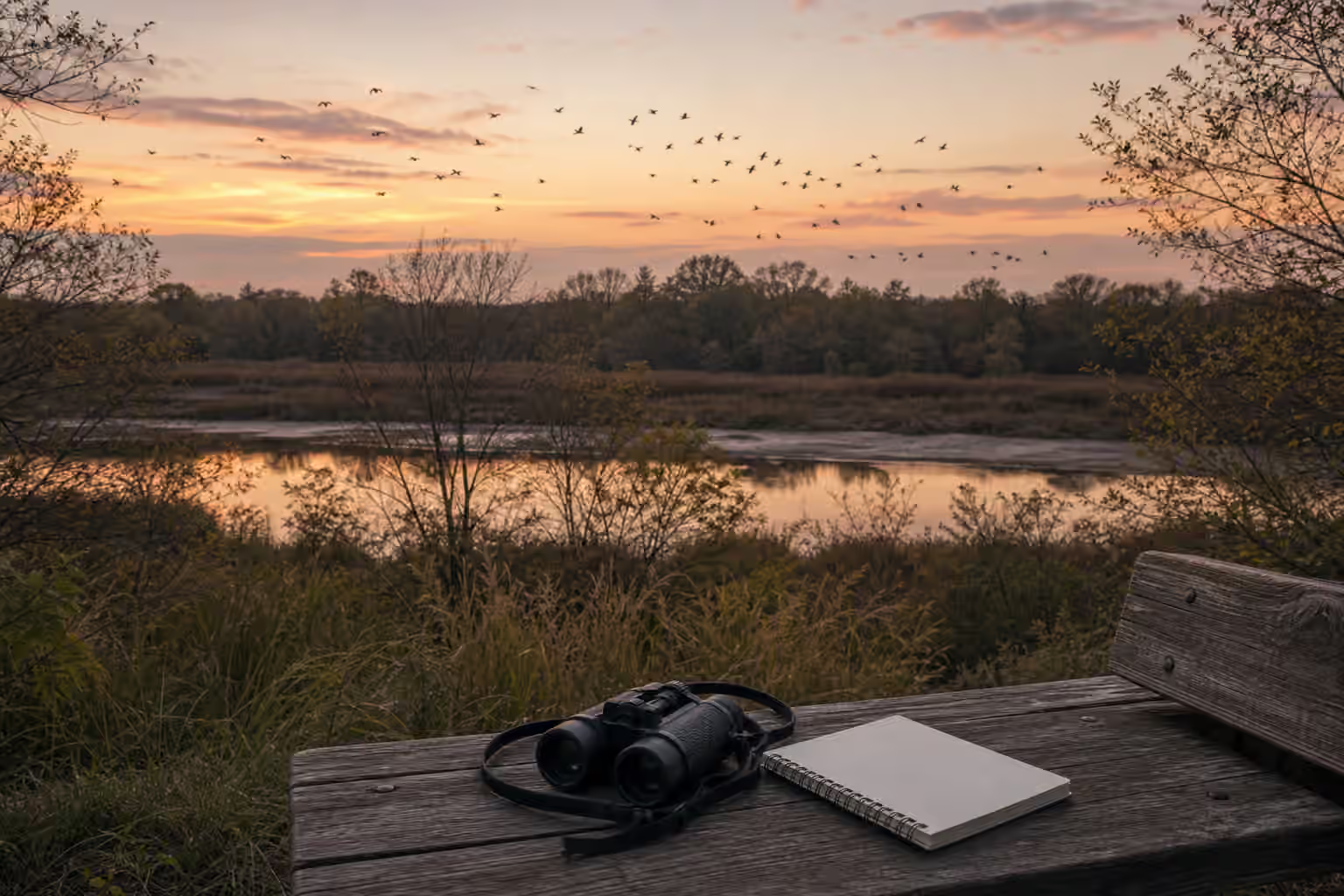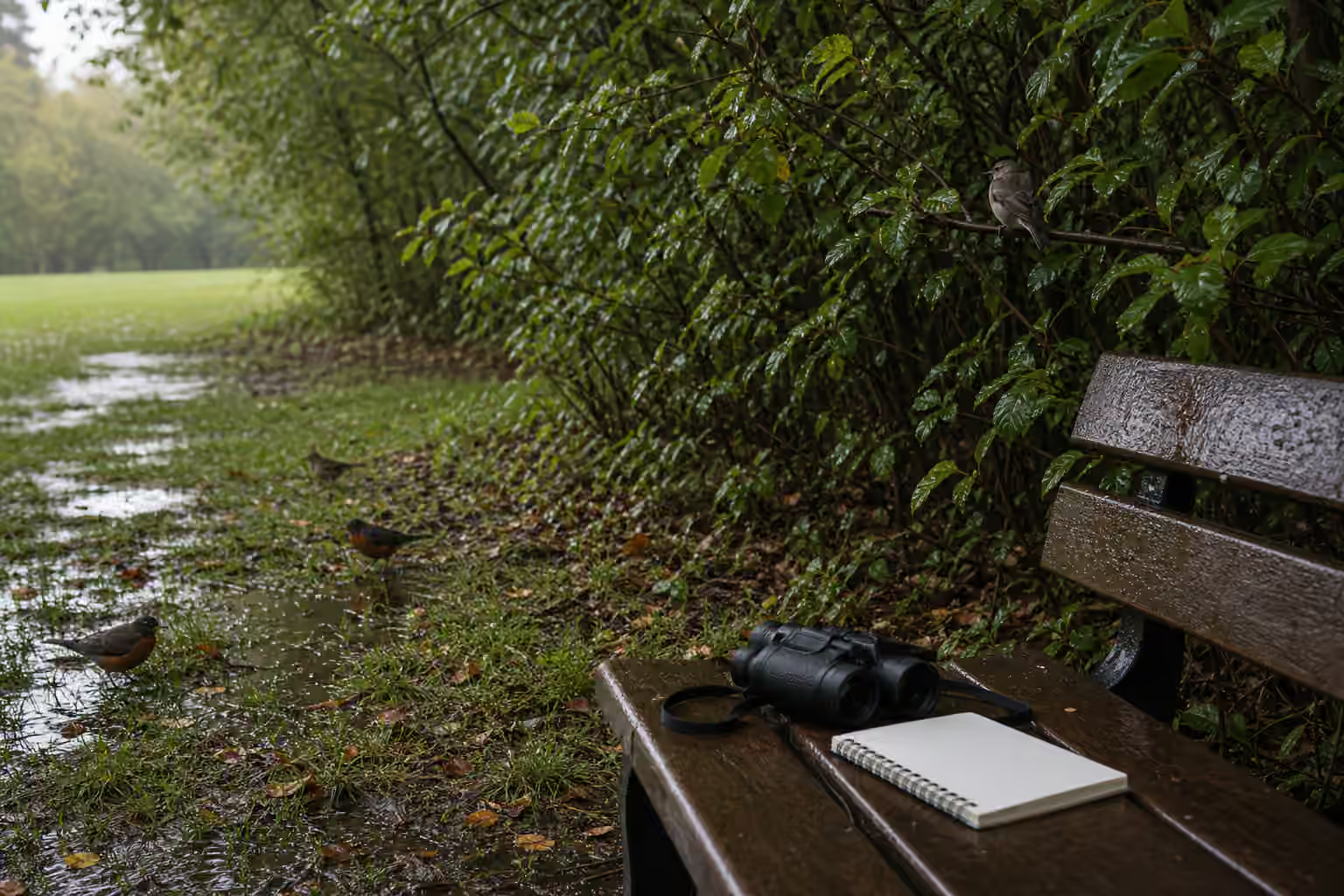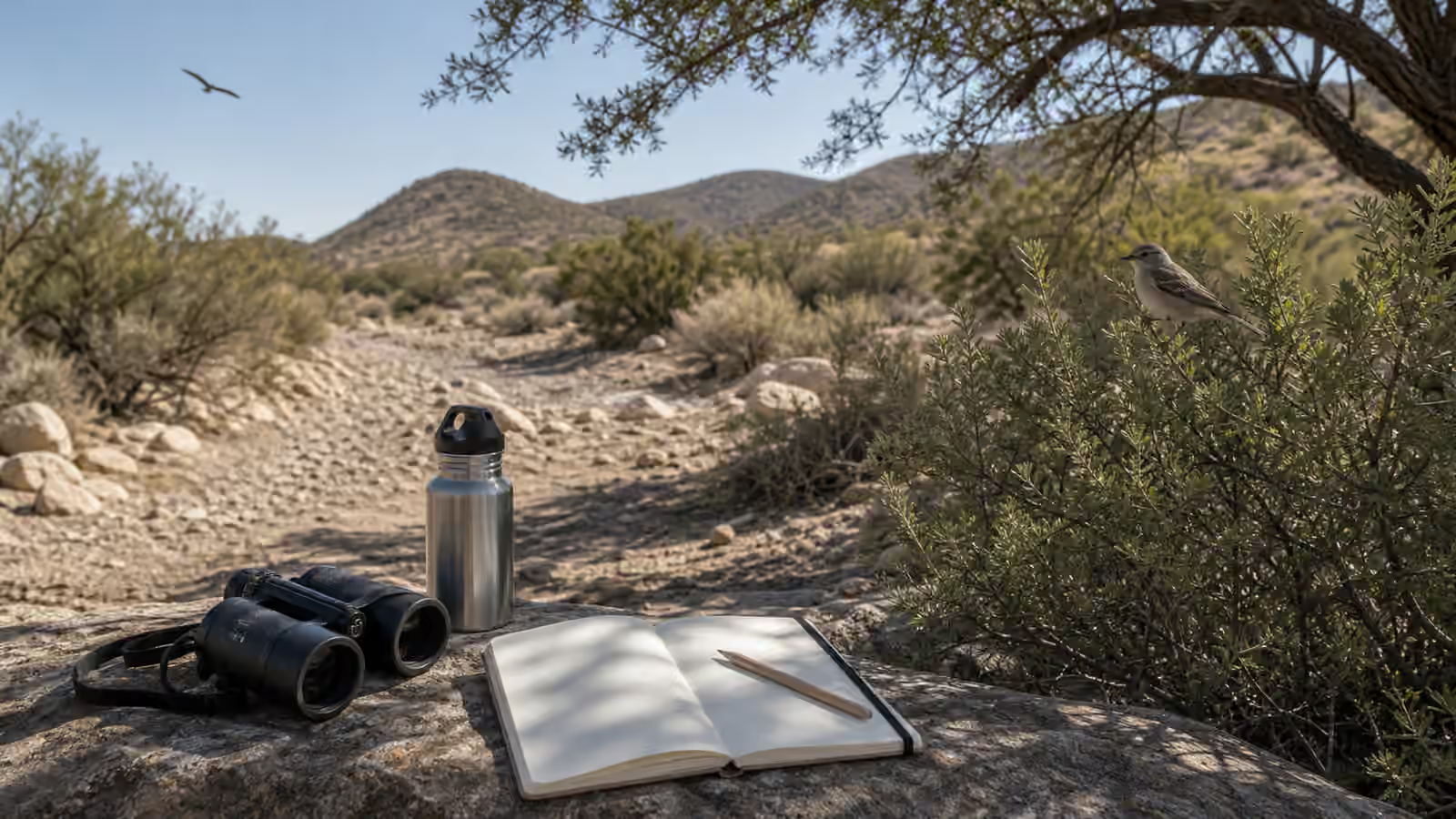
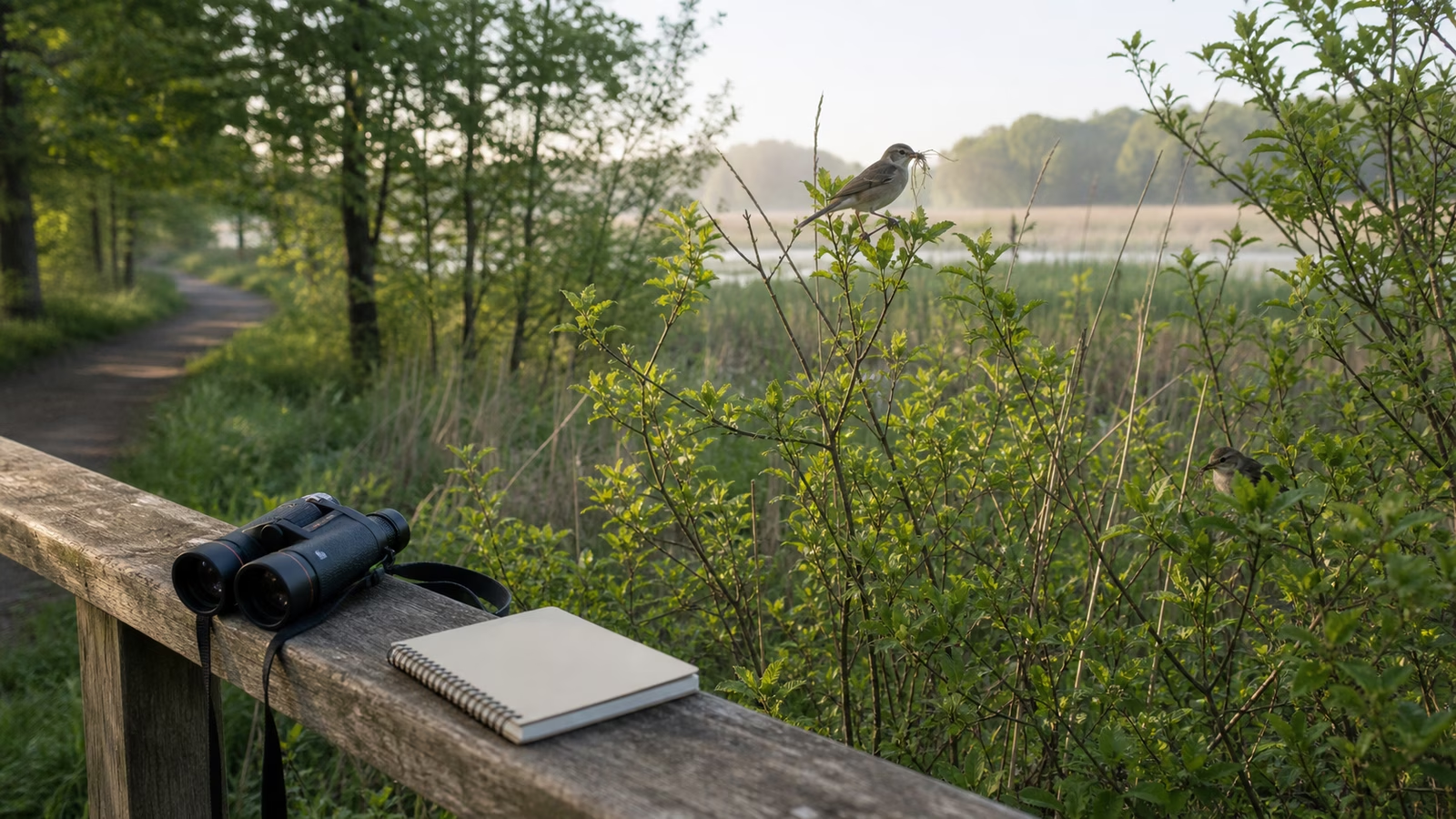
Nest season is when birding becomes intimate and risky at the same time. Birds are suddenly easier to notice because they sing from exposed perches, carry grass through shrubs, chase rivals, inspect cavities, visit the same patch of reeds again and again, or appear with food in their bills. A quiet walk can feel full of clues. The danger is that a clue can make a birder want to solve the whole puzzle.
The better habit is to let some of the puzzle remain hidden. Breeding birds are not only field marks in spring light. They are spending energy on territory, mates, eggs, young, food, and defense. A beginner can learn a great deal by watching from the path, reading behavior, and writing careful notes without trying to find the exact nest.
This guide sits beside Birding Etiquette and Field Notes and Reading Bird Behavior for Beginners . Those habits matter all year, but breeding season sharpens them. The bird that tolerates a distant walker in winter may behave differently when it has young nearby. The same shrub that seemed ordinary last month may become a boundary line, food source, song perch, or nursery. Your job is not to get behind the curtain. Your job is to notice enough from outside it.
Breeding Season Changes the Meaning of Ordinary Behavior
In many places, spring and early summer bring the most obvious nesting behavior, though timing varies with region, elevation, weather, and species. Some birds start early. Some raise more than one brood. Some wander with fledged young long after the nest itself is finished. The calendar is only a rough guide. Behavior is the better teacher.
A bird carrying a twig, rootlet, feather, or strip of bark may be building. A bird carrying an insect, caterpillar, seed, or berry in a purposeful line may be feeding young. A bird singing from the same branch every morning may be holding territory. Two birds moving together through cover may be a pair. A burst of alarm calls may mean a predator, a rival, or you.
None of these signs gives you permission to close the distance. They invite slower observation. If you see a bird with nesting material, enjoy the moment from where you are. If a bird pauses with food and waits for you to move on, move on. If an adult circles, scolds, freezes, or refuses to enter cover while you stand nearby, you have already learned that you are too close.
The best breeding-season birding often feels like restraint. You watch the edge of the action instead of the center. You notice the singing perch, the direction of travel, the kind of food, the habitat, and the way the bird changes when people pass. Those observations are rich enough.
Do Not Turn a Route Into a Target
Food-carrying birds are tempting because they seem to draw a line through the landscape. A warbler disappears into a thicket. A swallow drops under a bridge. A wren vanishes behind a brush pile. A woodpecker approaches a dead limb. It is easy to think the next step is obvious: follow the route and find the nest.
For ordinary birding, that is usually the wrong step. Nests can attract predators, curious people, photographers, pets, and repeated disturbance. Even a well-meaning observer can create a trail of attention. If you stand in the open staring at one spot, other people may look too. If you push through vegetation, you may damage cover. If you return again and again, adults may hesitate before feeding.
There are trained nest-monitoring projects that follow strict methods for a reason. A casual walk is different. On a casual walk, stop at the point where your knowledge becomes pressure. It is enough to write that an adult was carrying food into the willow patch near the east bend, or that a pair was repeatedly visiting the cattails from the fence line. You do not need the exact cup, cavity, scrape, ledge, or burrow.
This is also where sharing needs care. A general note can help other birders understand season and habitat. An exact nest location can create problems, especially for sensitive species, conspicuous raptors and owls, birds near trails, or birds in fragile habitat. Local communities often have norms about what should be hidden, generalized, or delayed. When you are unsure, be less precise.
Courtship and Territory Are Worth Watching on Their Own
Beginners often think nest season is about finding nests, but the most educational parts are usually visible without that. Courtship flights, song perches, boundary disputes, pair feeding, display postures, and repeated countersinging can teach you how birds divide a place.
Stand still near a field edge and listen. One bird sings from a fence post, then another answers from a tree line. A third bird may slip through the grass without singing at all. At a pond, red-winged blackbirds may make territories feel almost mapped by sound. In woodland, thrushes, vireos, warblers, wrens, woodpeckers, and flycatchers may divide height, light, trunks, understory, and openings in ways that become clearer when you stop walking.
You can connect this to Where and When to Go Birding by treating habitat as more than scenery. Breeding birds choose places because those places offer food, cover, nest sites, display perches, mud, cavities, reeds, bark, grasses, insects, or safety from some threats. When a bird repeats a route, ask what the route connects. A song perch may overlook a territory. A shrub line may provide cover. A muddy edge may provide building material. A dead tree may matter more alive to birds than a tidy landscape would.
Watching territory also improves identification. Songs come from particular places. Postures repeat. Flight paths become familiar. A bird that was only a sound at dawn becomes a pattern in space. That pattern may help more than a quick color mark.
Fledglings Make Beginners Nervous
Sooner or later, many birders meet a young bird that looks awkward, short-tailed, fluffy, loud, or badly placed. It may be on a low branch, hopping in grass, calling from a hedge, or sitting near a path. The first impulse is often worry. The second is often interference.
Many fledglings spend time outside the nest before they are strong flyers. They may look vulnerable because they are. Parents may still be nearby, bringing food and calling. A young bird on the ground is not automatically abandoned. The most useful first response is distance and observation. Step back, keep pets away if that is within your control, and watch from far enough that adults can return.
This is a good moment to practice humility. You may not know the whole situation. You may not see the parents immediately. You may not know whether the bird is newly fledged, injured, or in a dangerous spot. Local wildlife rehabilitators, park staff, or bird rescue groups may have guidance for real emergencies, but ordinary birding should begin with space rather than handling.
Fledglings also teach patience. Their begging calls, short flights, and clumsy landings reveal family life after the hidden nest stage. You can learn how adults deliver food, how young birds follow, how siblings spread out, and how cover matters. Again, the lesson is visible without crowding the bird.
Photography and Sound Need Extra Restraint
Breeding season can make a camera feel powerful in the wrong way. Adults return to the same area. Young birds may sit still. Courtship displays can happen in predictable places. That predictability is exactly why restraint matters. If getting the image requires pushing closer, clearing vegetation, standing between an adult and young, or lingering while a bird waits with food, the image is asking too much.
The field habit from Patient Bird Photography applies here with more force: take the picture from where the bird still behaves like itself. A distant documentation photo can be useful. A beautiful close portrait made by pressuring a nesting bird is not a better birding accomplishment.
Sound is similar. Learning songs through Birding by Ear is one of the joys of the season, but playback can provoke territorial responses. During breeding season, many birders choose to avoid playback around birds entirely, especially near known nesting areas, rare birds, owls, rails, marsh birds, and any bird already showing stress. Listening is enough. Recording notes is enough. Let the bird spend its energy on its own season.
Let Your Notes Protect the Place
Good breeding-season notes describe behavior without turning the location into an invitation. Write what you observed, where generally, how far you were, and what changed. A useful note might say that two adults were carrying food into dense shrubs along the west side of the meadow, observed from the main trail, with no attempt to approach. Another might say that a fledgling was calling from low cover while adults fed nearby, and that you moved on after a brief distant view.
Those details help you remember the encounter and improve as a birder. They also keep your attention on evidence rather than trophies. You can return to the same general area later and notice how the season changes without checking the exact hidden spot. Over time, your local patch becomes layered with knowledge: which shrubs held singing birds, where swallows hunted insects, where woodpeckers used dead limbs, where young sparrows appeared after the grasses went to seed.
If you are improving habitat at home, Backyard Bird Habitat is the better model than nest-hunting. Provide native plants where appropriate, reduce obvious hazards, keep feeders and water cleaner if you use them, avoid unnecessary disturbance, and let cover be cover. A yard, balcony, or local path does not need to reveal every private bird detail to become a good place to watch.
Nest season rewards the birder who can be satisfied with partial knowledge. You may never see the nest. You may never know how many young survived. You may only know that a pair sang, built, fed, guarded, and moved through a living corner of habitat while you stood outside the story and paid attention. That is not a lesser view. It is the right scale for the moment.