Owls make many beginners want to rush. The bird is famous, the hour feels charged, and the first call from the trees can turn a quiet walk into a search. That excitement is real, but it can also lead to the wrong kind of birding. Owls are easiest to appreciate when you accept that a good owl outing may end with a sound, a shape, a fresh pellet, or a better understanding of habitat rather than a close view.
The best starting point is restraint. Owls hunt, roost, pair, defend territories, and sometimes raise young in places where disturbance has consequences. A birder who pushes toward a roost for a cleaner photo may change the whole scene. A person who plays calls repeatedly may turn a listening lesson into pressure on a territorial bird. Ethical Night Birding covers the broader dark-hours habit; owl watching asks for the same calm, with even more willingness to leave a bird partly unseen.
Start With Habitat, Not Mystery
Owls do not float through the night at random. They use edges, old trees, wooded ravines, open fields, marsh margins, orchards, desert washes, barns, dense conifers, city parks, cemeteries, and many other places depending on species and region. A beginner does not need to know every local owl before going outside. It is more useful to ask what the place offers. Are there large trees with cavities? Is there open hunting ground nearby? Are there quiet edges where small mammals move? Is there a sheltered stand where a bird could roost through the day?
This habitat-first approach keeps owling grounded. Instead of wandering after every sound, you learn why one field edge is better than another, why a wooded creek might hold sound differently from a street, or why an old row of trees beside pasture deserves attention at dusk. It also makes daytime birding useful. During a regular walk, notice big cavities, whitewash below a perch, feathers, pellets, repeated alarm calling by small birds, or a line of evergreens that offers cover. Those signs are not a license to intrude. They are clues that help you understand the place.
Listening Is Often the Main View
Many owl encounters begin as sound. A call may be low, distant, rhythmic, sharp, barking, whistled, tremulous, or repeated from the same direction. The exact voice depends on the species, but the listening method is the same one used in Birding by Ear . First locate the sound in space. Then listen for rhythm, distance, repetition, and whether another bird answers. Only after that should you worry about naming it.
Darkness makes people overconfident about sound. A call can bounce through a ravine, cross open water, or seem closer than it is. A bird behind you may sound like it is ahead because the trees reflect the note. Give your ears time. Stop walking. Face one direction, then another. Notice whether the sound remains fixed as you move a little along the path. If you are with other people, keep conversation low and brief so the group can hear the same evidence.
Recording a memory in words can help more than reaching for a perfect label. “Deep hoots from wooded slope, repeated every half minute, possible second bird farther east” is a useful note. “Short sharp calls from orchard edge just after sunset, no visual” is useful too. The note is honest because it preserves what you actually heard.
A Glimpse Is Still a Real Observation
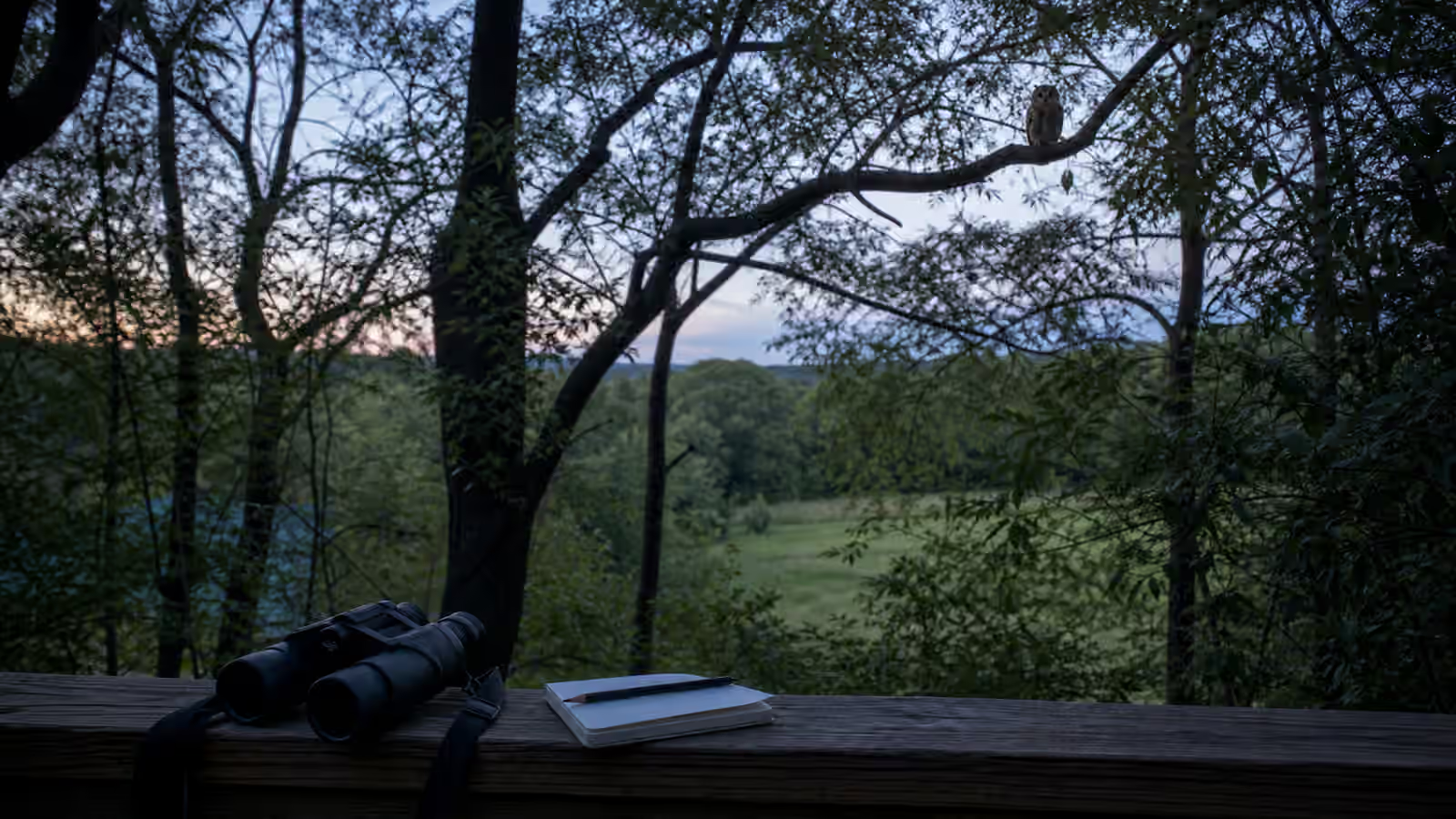
Owls often give partial views. A large rounded head crosses a gap. A pale face turns once and vanishes. A bird lifts silently from a roadside snag. A dark shape sits upright on a fence post until the car passes. A daytime roosting bird may be hidden so well that only a curve of body and a vertical posture make sense of the branches.
The temptation is to force detail into the memory. Resist that. A partial view can still teach size, posture, flight, perch choice, and habitat. Was the bird broad-winged or slender? Did it fly low over a field or through trees? Did it perch upright on an exposed post, tuck into dense cover, or sit near a cavity? Did smaller birds mob the area? These clues overlap with Raptor Watching for Beginners , but owls add a different pace. The best mark may be not color but the way the bird held itself in dim light.
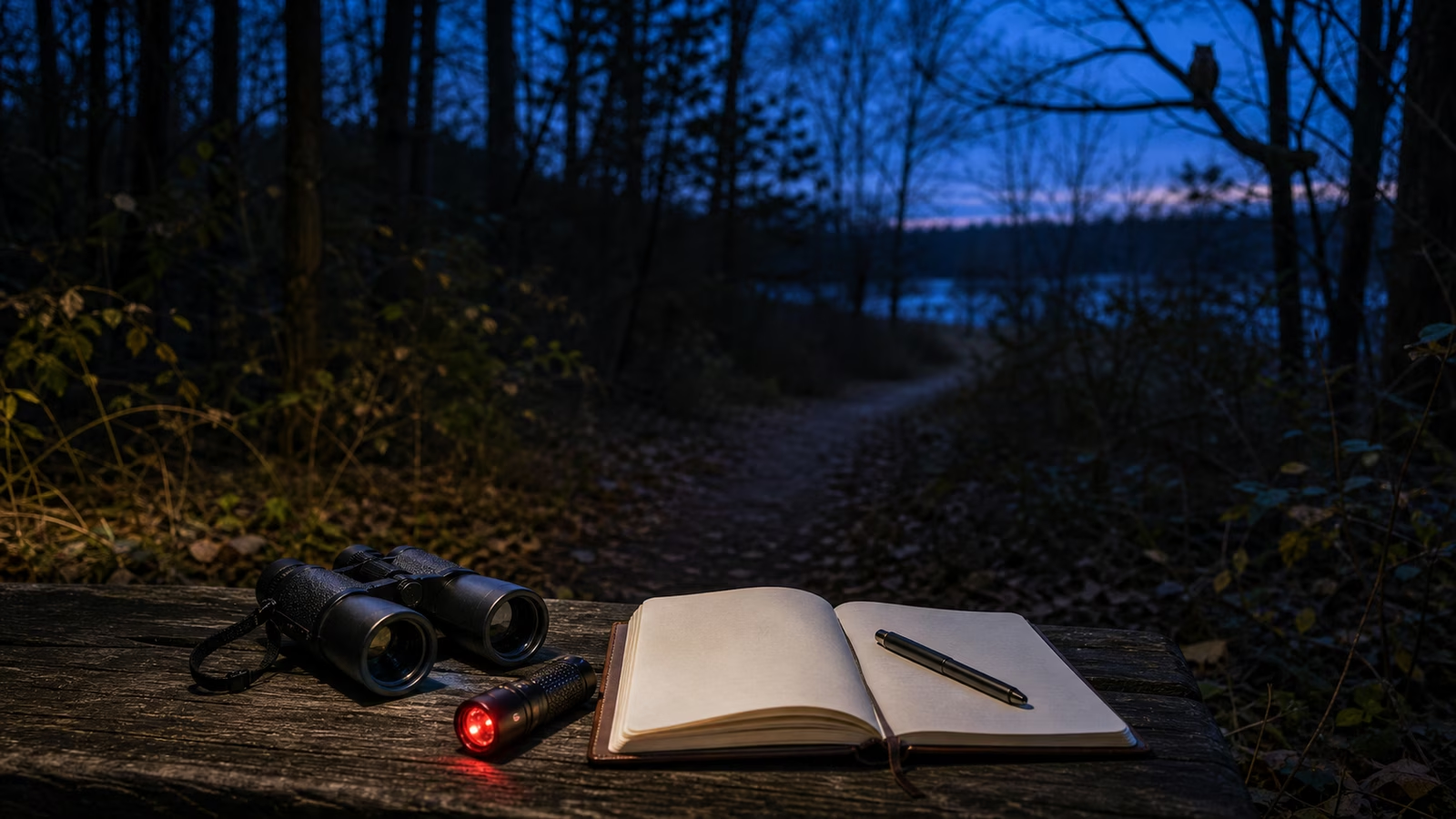
Binoculars can help at dusk, but they are not magic in darkness. Use them when there is enough light and the bird is already located. Do not sweep a light through trees just to create a view. If you use a light for walking safety, keep it aimed at the ground and use the least brightness that lets you move safely. A red light is not a free pass to shine directly at birds.
Roosts Deserve Space
Finding a roost can feel like discovering a secret room in the landscape. It should also change your behavior immediately. A roosting owl is not performing. It is resting, conserving energy, hiding from mobbing birds, and waiting for the next active period. If the bird stiffens, leans away, opens its eyes widely, changes posture, flushes, or draws a crowd, the observation has already become too expensive for the bird.
Good owl fieldcraft often means stepping back after the first recognition. Watch from a distance where the bird can remain settled. Avoid repeated visits that create a path or a public spectacle. Do not share exact roost locations casually, especially during nesting season or in places where photographers may crowd the site. Nest Season Birding gives the general rule: breeding signs and young birds deserve extra distance, not extra curiosity.
Small birds can reveal a hidden owl by mobbing. Chickadees, jays, crows, blackbirds, and other local birds may scold and gather near a roost. That behavior is interesting, but it is not an invitation to push through cover. Watch the mobbing from where you are. The goal is to learn the pattern without becoming the next disturbance in it.
Playback Is Not a Shortcut
Recorded calls can affect owls because many owl calls are territorial or social signals. A bird that answers may be responding to a perceived rival or mate, not volunteering for a lesson. Heavy playback can draw birds from hunting, shift their behavior, or make them visible to people and other animals. Rules and expectations vary by place, and some parks, refuges, tours, and research settings have specific restrictions.
For a beginner, the simplest habit is to learn without playback. Listen at dusk from public paths. Return to good habitat at different seasons. Learn common local calls from references at home rather than broadcasting them in the field. If you are on a guided walk, follow the leader’s rules, and notice how much can be learned from silence. The absence of a response is not an empty evening. It is information about time, weather, season, and place.
Day Signs Build Night Skill
Owling improves when you bird by day. Look for hunting edges, old trees, brushy fields, quiet barns, marsh margins, and wooded slopes. Notice where crows gather noisily, where small birds scold from one dense tree, and where pellets collect under a sheltered perch. Pellets can show that an owl or other raptor has used a site, but leave them in place unless you are part of a permitted educational or research activity. They belong to the field lesson, not to your shelf.
Daytime scouting also helps you move safely at night. You can learn the path, uneven ground, gates, water edges, traffic patterns, and legal access before darkness changes everything. This is not glamorous, but it makes your attention available for birds instead of footing. Weather matters too. Wind can bury calls. Rain can change hunting behavior and your ability to hear. A still evening after a busy day may be more useful than a dramatic night when the trees are roaring.
Let the Record Stay Modest
Owl notes should be humble because the evidence is often partial. Write the time, place, weather, habitat, direction of sound, number of calls, and what you saw if anything. If the identification is uncertain, say so plainly. A careful “heard only” record is better than a confident name built from excitement.
The deeper reward is not simply adding an owl to a list. It is learning how darkness changes birding. You use your ears more. You move less. You accept distance. You notice the relation between woods and fields, roosts and cover, hunting and weather. You discover that a bird can be present without becoming yours to inspect.
Owls ask birders to hold curiosity and restraint together. When you can hear a call from the trees, write it down, and leave the bird unpressured, you have not missed the experience. You have understood the terms on which it was offered.