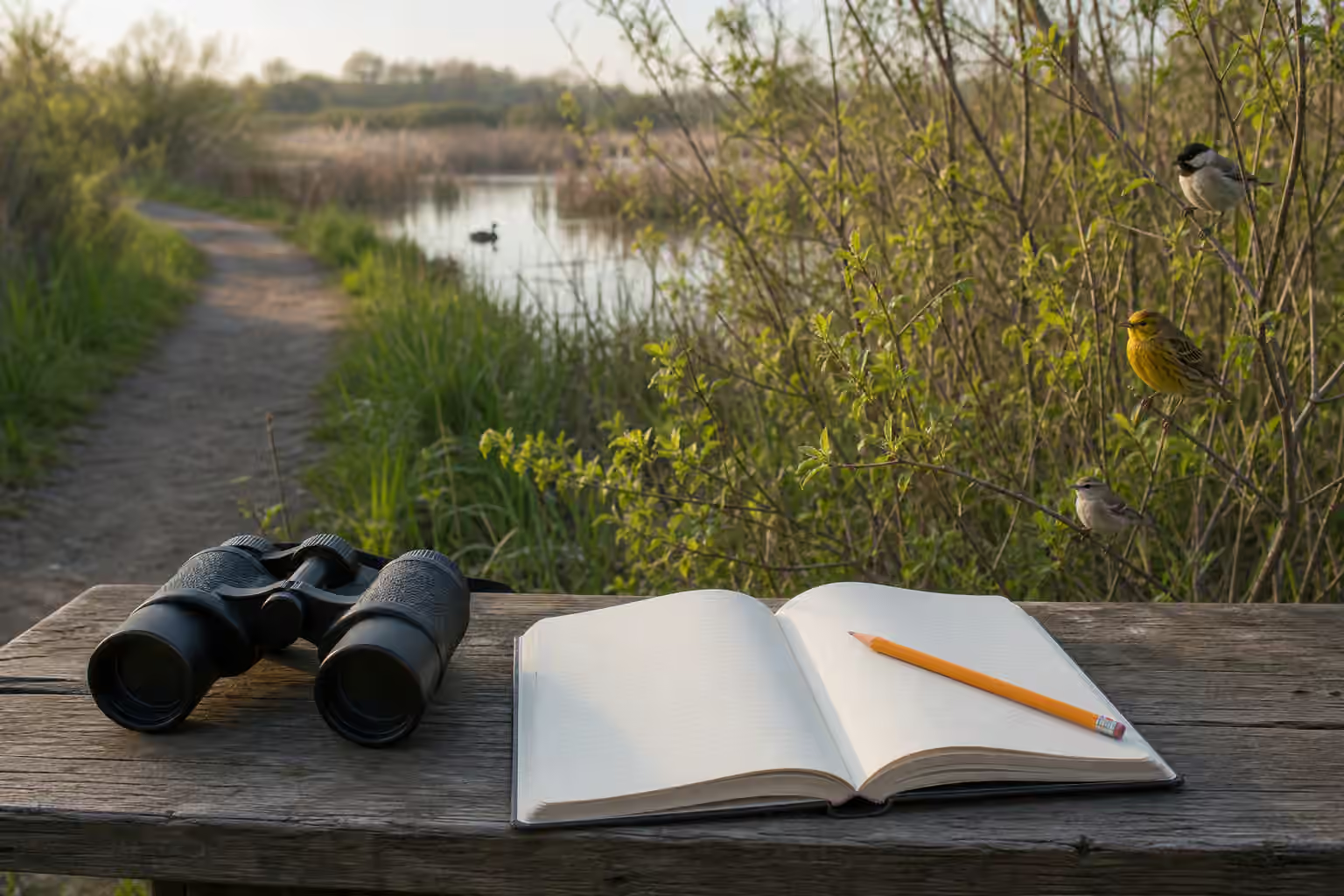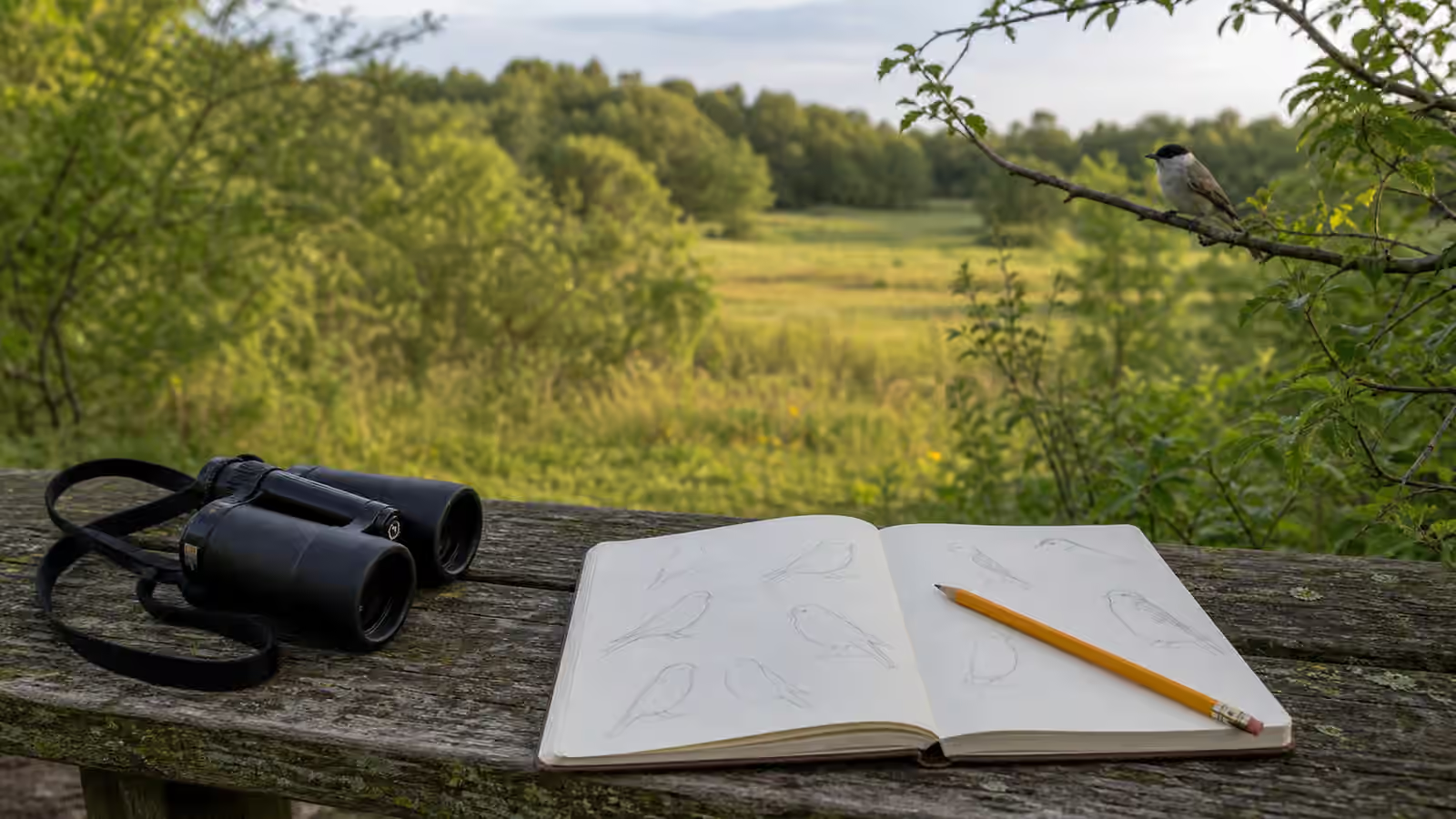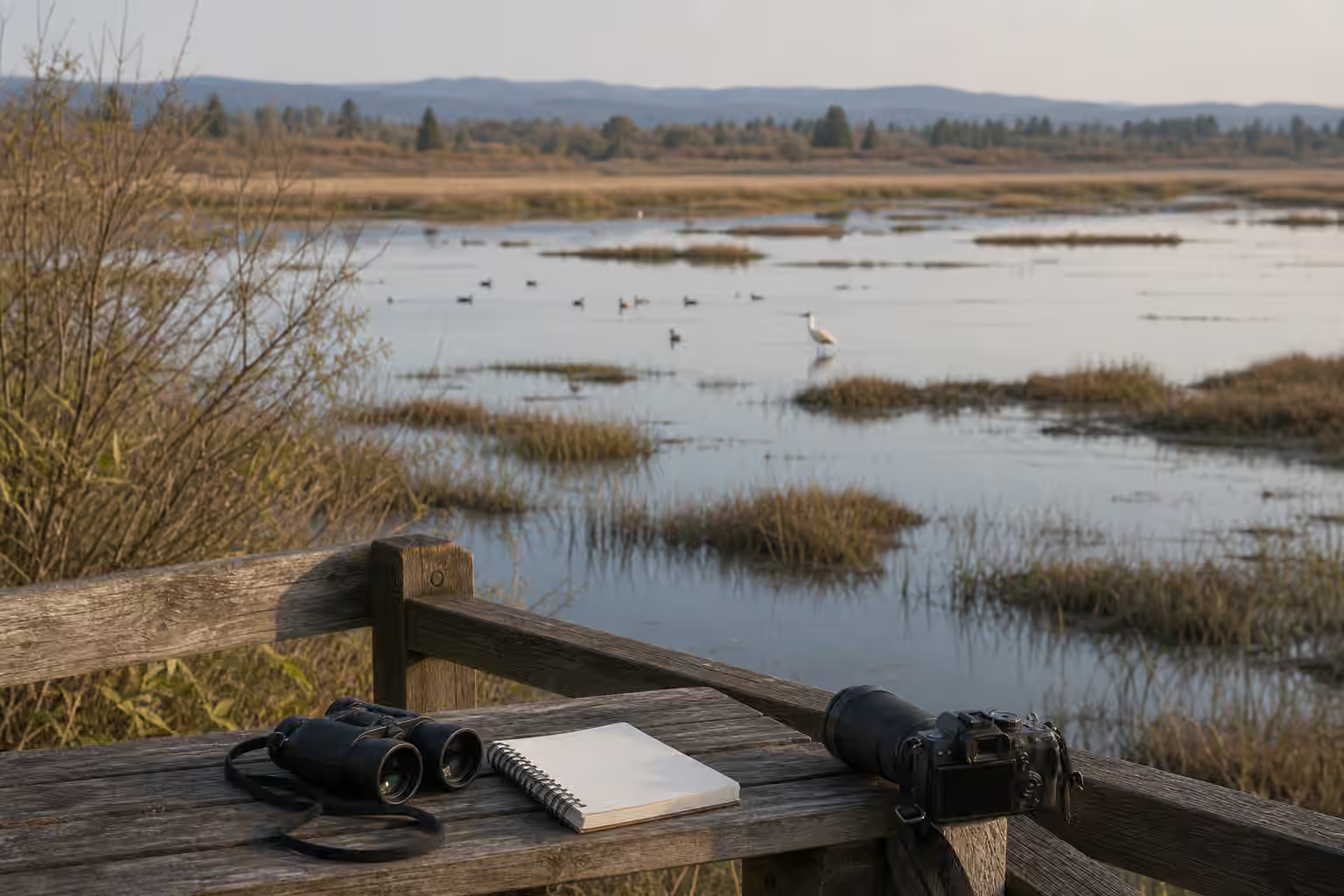
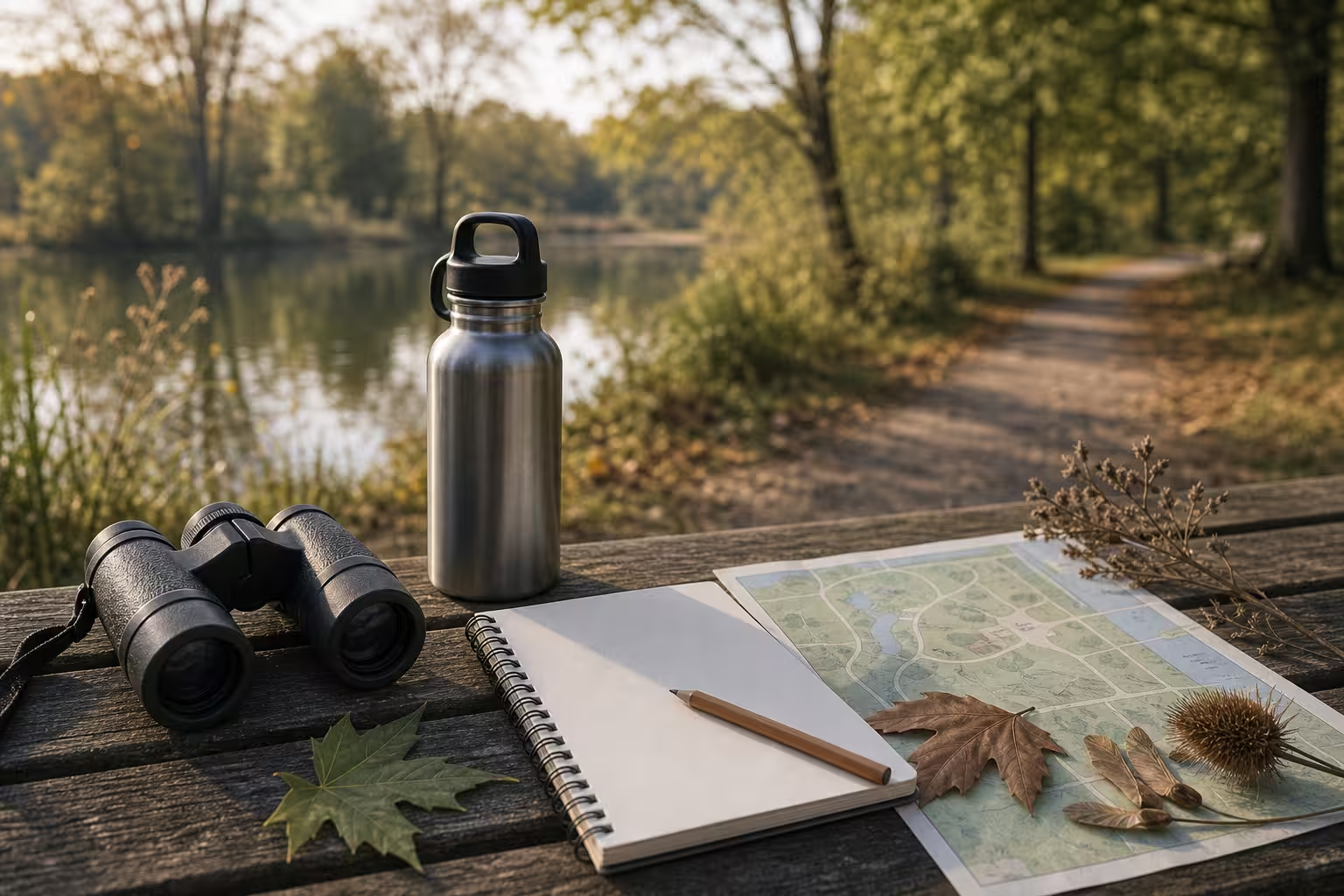
Patch birding begins with a place that does not look special enough.
It might be a neighborhood pond, a strip of trees behind a school, a cemetery with old oaks, a drainage basin, a community garden, a scrubby trail beside a parking lot, or the same half-mile of river you pass on the way to work. It is not famous. Nobody travels across the country to stand there. The first time you visit, you may see only the expected birds and wonder whether you should have gone somewhere better.
Then you return.
That return is the whole practice. Patch birding means choosing a local area and learning it through repetition. Instead of chasing every report, you let one place become familiar enough that small changes stand out. The first reward is convenience. A patch is close enough to visit before work, after dinner, or during a short gap in the day. The deeper reward is attention. You begin to understand how birds use a place when nobody else is announcing it as exciting.
Choosing a place you can actually visit
The best patch is not always the birdiest place nearby. It is the place you will return to often. A spectacular wetland forty minutes away may teach you less than a small park ten minutes from your front door if the park becomes part of your ordinary life.
Look for variety inside a small area. Water, brush, mature trees, open grass, muddy edges, flower beds, hedges, and weedy corners all invite different birds. A patch does not need every habitat. It only needs enough texture that visits change. A single pond can hold ducks in winter, swallows in spring, herons in summer, and sparrows in fall. A line of trees can be quiet for weeks and then suddenly hold migrants after a night of favorable weather.
Access matters too. Choose somewhere legal, safe, and practical. If the gate is often locked, the path floods easily, or the walk requires a level of effort you rarely have, the patch may become a place you admire in theory. Patch birding works because it lowers friction. You want a place that can absorb quick visits and still reward slower ones.
The first month is for learning the room
On your first visits, do not pressure the place to impress you. Walk the same route several times. Notice where the light hits first, where the wind is strongest, where water gathers, where dogs usually pass, where birds retreat when people arrive, and which trees or shrubs seem to hold activity. These details may feel secondary, but they become the map underneath the bird list.
The regular birds are your teachers. American Robin, House Sparrow, Northern Cardinal, Mourning Dove, Mallard, Canada Goose, Red-winged Blackbird, chickadee, titmouse, crow, gull, pigeon, finch, wren, or whatever is common where you live: learn them well. Watch how they move. Listen to the difference between song, call, alarm, and contact notes. Notice their normal numbers. A beginner often wants novelty, but familiarity is what makes novelty visible.
If you know the usual sound of the place, one unfamiliar chip note can pull you toward a warbler. If you know where the robins feed, the day they vanish from a lawn may tell you something about weather, disturbance, or fruiting trees elsewhere. If you know the regular ducks, a new silhouette on the water becomes obvious. Patch birding turns common birds into instruments for reading the site.
A route gives your notes a spine
It helps to create a repeatable route. You do not need to be rigid, but a consistent loop makes your observations more useful. Start at the same entrance, pause at the same pond edge, check the same thicket, look across the same field, and finish near the same trees. Over time, the route becomes a set of listening stations.
This is different from wandering randomly until something appears. Wandering has its pleasures, but repeated structure reveals pattern. You start to know that the sparrows favor one brush pile in cold weather, that swallows concentrate over the south end of the water on windy mornings, that the kingfisher uses the same dead branch, or that migrants often pause near the fruiting shrubs after rain.
Good notes do not have to be literary. Write the date, time, weather, route, general activity level, birds you saw, birds you heard, and anything unusual. Add behavior when it matters. Feeding in seed heads. Carrying nesting material. Singing from the same snag. Moving in a mixed flock. Chasing another bird. Resting quietly during heat. The behavior often matters more than the count because it tells you how the bird is using the patch.
Seasons make the same place new
The great secret of patch birding is that one place becomes several places over a year.
In late winter, the patch may feel bare and honest. Branches reveal woodpeckers, hawks, nests from last year, and the shape of the land. Early spring brings territory, song, and restlessness. Migration can turn a familiar route into a puzzle because birds appear in corners that seemed empty the day before. Summer slows some birding down, but it teaches breeding behavior, fledglings, molt, heat, insects, and the importance of shade and water. Fall brings movement again, often quieter and less colorful than spring, but rich for patient observers. Winter returns with flocks, bare structure, waterfowl, and the small drama of survival.
You do not need to master every seasonal pattern at once. Let the patch teach you gradually. The first year gives you a rough calendar. The second year lets you anticipate. The third year lets you notice what is early, late, missing, or abundant. A local place becomes meaningful because time accumulates there.
Patch birding changes ambition
There is nothing wrong with traveling for birds. Famous refuges, migration hotspots, shorelines, mountains, deserts, and forests can be extraordinary. But if birding becomes only a chase for what is rare, beginners can miss the skill that makes every place richer.
Patch birding rewards steadiness. You may not add new species quickly every week. Instead, you get better at seeing. You learn that a bird list is not the same as a field experience. You learn which claims deserve confidence and which should remain uncertain. You learn when not to disturb a bird just because you want a better look. You learn to enjoy the same wren in the same brush pile because familiarity has become part of the pleasure.
This kind of birding is also useful for conservation. Repeated local observation can reveal habitat changes, arrival dates, breeding evidence, unusual absences, and the effects of mowing, flooding, drought, tree removal, or restoration. Even casual notes can become valuable when they are consistent and honest.
The place becomes yours without belonging to you
A patch can feel personal after enough visits. That feeling is good, but it needs humility. The park, pond, trail, or vacant edge is shared by birds, plants, insects, neighbors, dog walkers, children, maintenance workers, and people who may not care about birds at all. Patch birding should deepen respect, not create territorial impatience.
Stay on allowed paths when needed. Do not push into sensitive nesting areas. Do not broadcast calls casually to force birds into view. Do not treat other visitors as obstacles to your private sanctuary. If someone asks what you are looking at, answer kindly if you can. A local patch is one of the best places to make birding less mysterious to other people.
The best patch birder becomes part of the place’s quiet care. They pick up a bit of trash, report hazards when appropriate, share sightings responsibly, and know when a bird needs distance more than attention.
Begin tomorrow
To start, choose a place close enough that you can visit it twice this week. Bring binoculars if you have them, but do not wait for perfect gear. Bring a notebook or use an app. Walk slowly. Stop more than you think you need to. Listen before moving. Write down what you know and mark what you are unsure about.
Then go back.
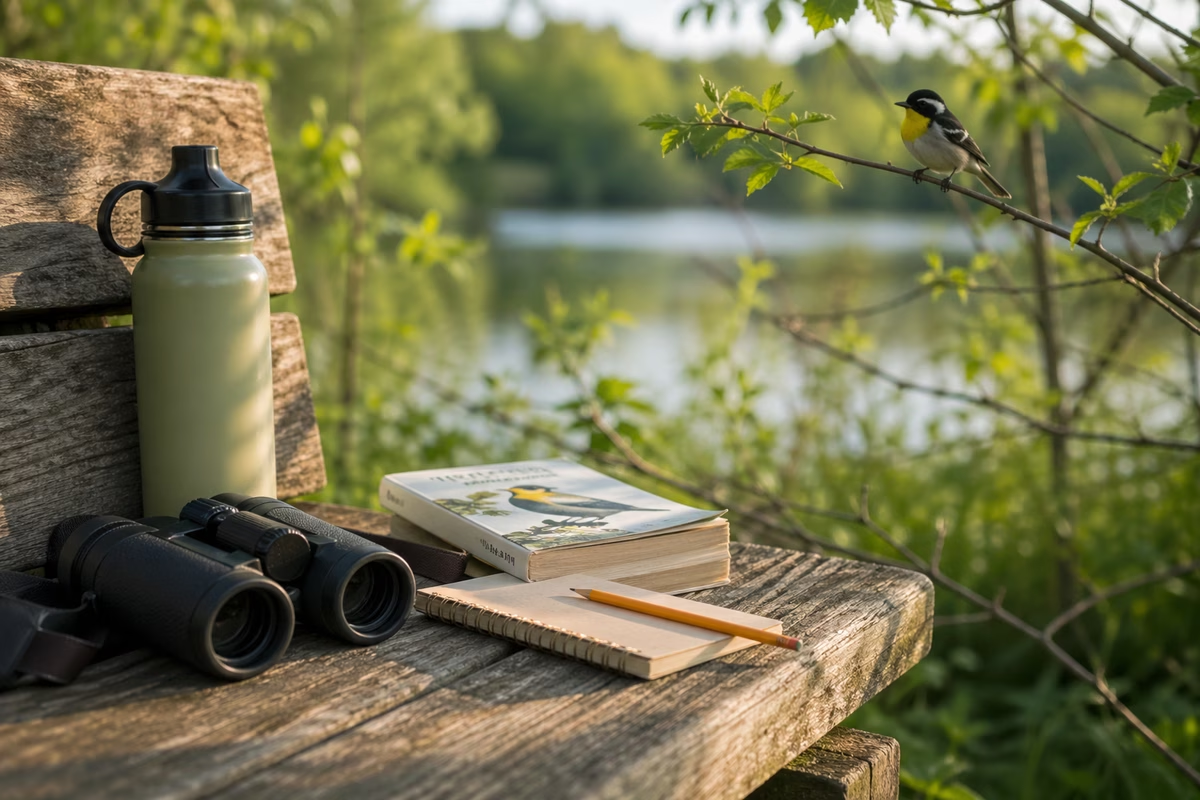
The first visit introduces you to the patch. The tenth begins to teach you. The fiftieth changes how you see ordinary ground. A birding life does not have to begin with a famous migration spectacle. It can begin on a bench near a pond, with a blank page, a pencil, and the decision to return.