
Some marsh birds seem designed to remind birders that seeing is not the only way to know a place. A rail may call from reeds a few yards away and never step into the open. A bittern may stand so still that it becomes part of the marsh until the light changes. A gallinule, coot, sora-like bird, crake-like bird, or regional marsh species may give you only a ripple, a short call, a dark shape between stems, or a flight so brief that it feels more like a rumor than a sighting.
This guide builds from Marsh Birding , Birding by Ear , and Birding Etiquette and Field Notes . Rails and bitterns reward quiet fieldcraft, but they punish impatience. If you push into the reeds, play sounds, lean over cover, or chase every rustle, you may disturb the birds and still learn less than you would have learned by standing still.
Read the Marsh Before the Bird
A beginner often arrives at a wetland wanting a clear view. The marsh rarely agrees. Reeds, cattails, sedges, rushes, grasses, flooded shrubs, mud, floating vegetation, and shallow channels create a layered place where birds can move almost invisibly. Instead of treating cover as an obstacle, treat it as the main clue. Secretive marsh birds are shaped by that cover. They use narrow openings, soft mud, broken stems, shallow water, hidden feeding lanes, and dense edges where a larger bird would struggle to move.
Before you search for a name, ask what kind of marsh is in front of you. Is the water shallow or deep? Are there exposed mud edges, floating mats, cut channels, open pools, or thick stands of reeds? Is the path raised, level with the water, or set back from the edge? Are there places where a bird could cross without leaving cover? Water’s Edge Birding helps with this broader habit of reading water and edge before field marks.
This habitat reading prevents frustration. If the bird never appears, you can still leave with knowledge. A repeated call from dense cattails at dawn, a ripple moving through shallow reeds, or a bittern-like shape at the edge of a pool all tell you how birds use the place. Marsh birding often begins with evidence rather than display.
Sound May Be the First View
Rails and bitterns are often learned by ear before they are learned by sight. Some calls are loud and strange enough to surprise a new birder. Others are soft, dry, descending, pumping, clicking, grunting, or hidden in frog noise, insects, wind, and distant traffic. The exact voices depend on your region, but the method is the same: listen for place, repetition, direction, and distance.
Do not rush to match the sound from memory. Stand still and let the call repeat. Is it coming from low reeds, open water, a shrub edge, a distant marsh cell, or somewhere behind you? Does another bird answer? Does the call stop when people approach, a dog passes, or the wind rises? Does it resume after quiet? These details help you learn the sound as part of a living scene rather than as an isolated recording.
Ethical Night Birding is relevant even when you are birding at dawn or dusk rather than deep night. Secretive marsh birds can be sensitive to disturbance, and playback can pull territorial birds into unnecessary response. For beginner birding, listening is enough. If you hear a bird calling from cover, you have already found part of the marsh’s hidden life. The goal is not to force the bird to prove itself visually.
Bittern Stillness Is Active
Bitterns can make stillness look like disappearance. A bird standing upright among reeds may align its bill, neck, and body with the stems around it. In poor light, it may become a vertical stripe. Even when visible, it may not look like a bird at first. Beginners sometimes scan past a bittern because they are searching for movement, color, or a clean outline.
The solution is to scan slowly and then wait. Look along reed edges, not only open water. Search for a bill line, an eye, a thicker vertical shape, a neck that does not quite match the stems, or a body low near the water. Use binoculars to check suspicious shapes, then rest your eyes and look again. Harsh staring into one patch can make you invent birds out of reeds, so alternate careful scanning with wider viewing.
Silhouette Birding is useful here because marsh light often erases color. The clue may be posture. A bittern-like bird may hold still with neck extended, then compress suddenly. It may step with extreme care. It may fly low and awkwardly across the marsh, legs trailing or body heavy, before dropping back into cover. Even a brief flight can confirm that the strange reed was alive.
Rails Turn Edges Into Doorways
Rails and rail-like birds often reveal themselves through edges and crossings. A narrow opening between reeds, a muddy gap beneath overhanging grass, a boardwalk shadow, or a floating vegetation edge may function like a doorway. The bird may cross quickly, feed just inside cover, or step into open water for only a few seconds. If you stand quietly with a view of such places, the marsh may give you a better look than you would get by walking constantly.
Watch low. Beginners often scan at eye level because trees teach us to look up. Marsh birds ask you to look at ankle height, water level, and the base of stems. A rail may seem compressed from side to side, slipping through vegetation with a body shape that makes sense only after you see where it lives. A longer-legged wader may step over cover, but a rail often passes through it.
This is where Reading Bird Behavior for Beginners becomes practical. Feeding, crossing, hiding, calling, and freezing are all clues. A small dark bird swimming openly like a duck is a different question from a bird walking along the muddy edge. A quick shape that vanishes into reeds may still be described by size, bill length, color impression, tail position, and route.
Use Distance as a Tool
Marsh birds often tempt people to get closer because the view is partial. That temptation is exactly why restraint matters. Reeds may hide birds from you, but they do not make birds unaware of you. A rail that stops calling, a bittern that freezes harder, a bird that flushes from cover, or repeated alarm from the marsh can all mean your presence is too strong.
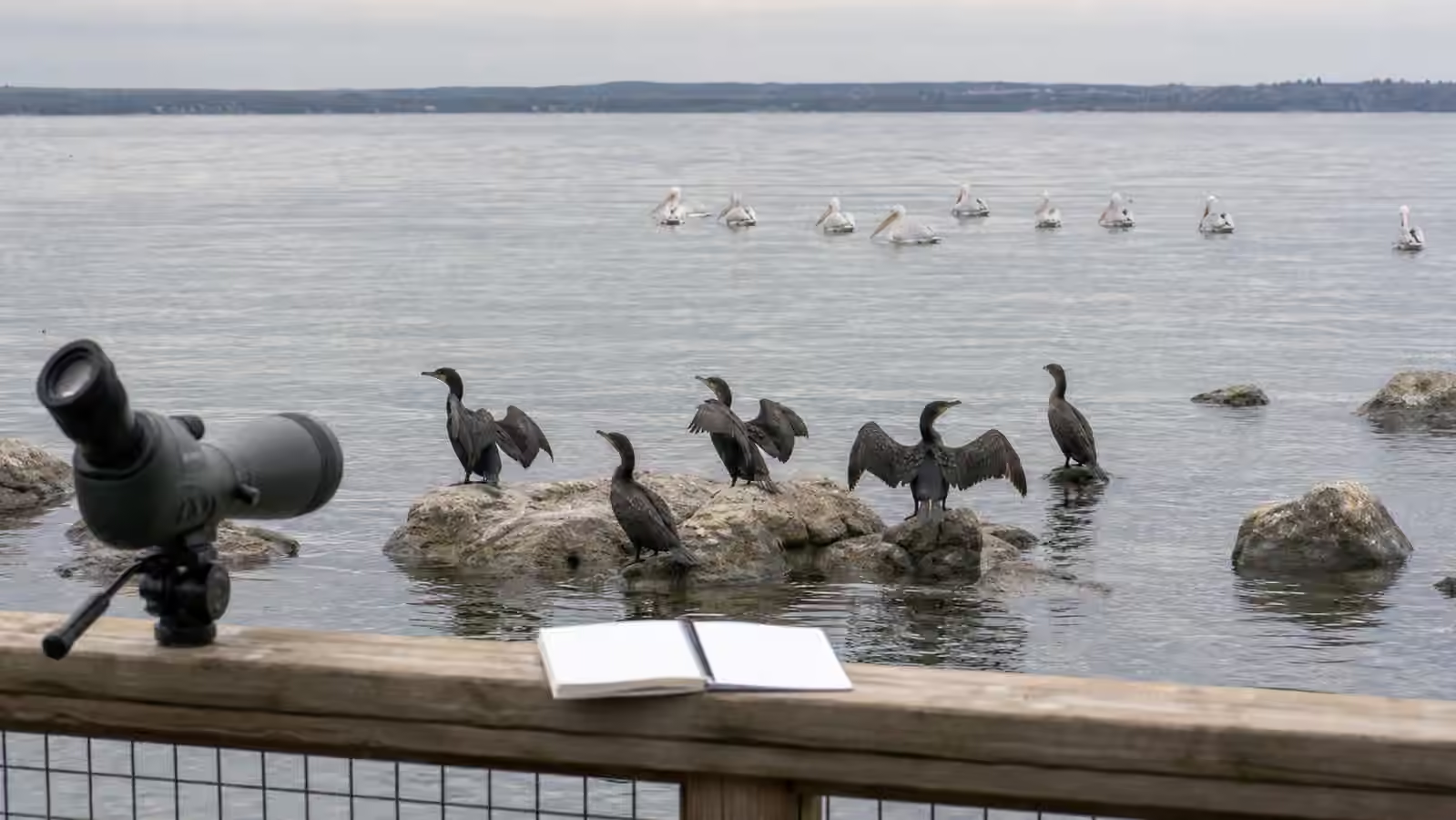
Stay on established paths, boardwalks, overlooks, roadsides, or permitted viewing areas. Let the cover work for the birds. If you have a scope, use it from distance rather than treating it as permission to approach. Spotting Scope Fieldcraft is helpful because secretive birds often require long watching from one position. Magnification is most valuable when it lets the bird keep behaving normally.
Dogs, loud conversation, sudden movement, and repeated visits to the same hidden edge can change the marsh quickly. So can photographers crowding a known bird. A responsible birder does not advertise exact sensitive spots in a way that increases pressure. Local norms vary, but the general habit is simple: protect the bird’s cover, especially during breeding season and migration stops.
Notes Matter When Views Are Partial
Secretive marsh bird notes should be comfortable with incompleteness. Write the conditions first. Early morning, light wind, water low, dense reeds, call from far side of boardwalk. Then write the evidence. Repeated clicking call from low cover. Brown bird crossed open mud for two seconds, short tail held up, bill looked short, disappeared into cattails. Tall streaked bird standing vertical at pool edge, moved only once, then flew low into reeds.
Those notes may not always produce a species name, but they preserve the encounter. Birding Checklists and Local Records is useful here because checklists should reflect evidence, not wishful thinking. If you heard a likely rail but are not certain which one, say so. If a bittern-like bird was seen too briefly for full confidence, keep the identification at the level the evidence supports.
Returning to the same marsh teaches more than one dramatic visit. Patch Birding works beautifully in wetlands because water level, vegetation height, season, time of day, and wind change what you can detect. You may learn that one bend is good for calls at dawn, one pool edge reveals feeding birds when water drops, and one reed bed goes quiet whenever people pass.
Rails and bitterns teach patience without rewarding laziness. You still need to listen hard, scan well, take notes, and understand habitat. But you also need to accept that some birds remain partly hidden. The marsh is not failing when it keeps secrets. It is showing you the kind of attention the place requires.