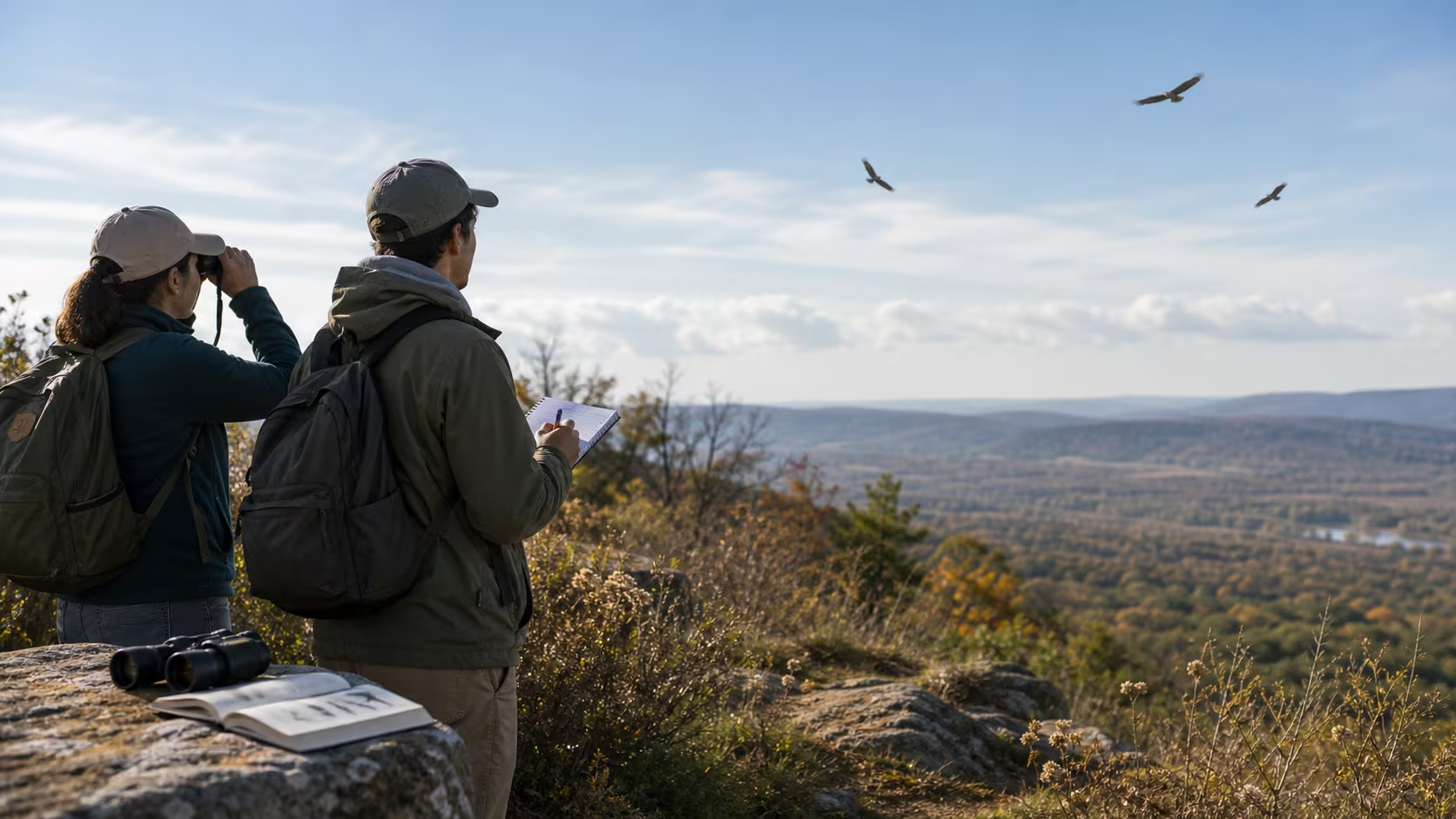
Raptors make beginners look up. A small bird can vanish into brush before you lift binoculars, but a hawk circling over a ridge gives you time to feel the question. Is it a hawk or a vulture? Why are the wings held that way? Is the tail long or short? Why does one bird flap constantly while another seems to hang on invisible air?
Raptor watching is one of the best ways to learn bird identification because it rewards patience more than speed. You do not begin with tiny feather details. You begin with shape, flight, weather, and place. The bird may be far away, but it is often doing something readable. It tilts, glides, hovers, flaps, kites, circles, dives, or rocks in the wind. The sky becomes the field guide.
The group includes hawks, eagles, falcons, kites, harriers, ospreys, vultures, and owls, though owls are usually a different kind of search. For a beginner standing in daylight with binoculars, the first raptor lessons usually come from open skies, field edges, coastlines, migration ridges, utility poles, and thermals rising over warm land.

Shape comes before name
The beginner’s temptation is to ask for the name immediately. A dark bird appears overhead and the mind wants a label. The better first question is shape. Long wings or broad wings? Long tail or short tail? Flat wings, raised wings, bent wings, pointed wings, fingered wingtips? Does the head seem large, small, or barely visible? Does the bird look compact and fast or broad and buoyant?
Vultures often give beginners a useful starting point. Many hold their wings in a shallow V and rock gently as they soar. They can look loose and buoyant, as if the air is carrying them more than they are pushing through it. Broad-winged hawks and buteos often look sturdier, with broad wings and shorter tails. Falcons tend to look pointed and purposeful, with narrower wings built for speed. Accipiters, the woodland hawks, often show shorter rounded wings and longer tails, useful for maneuvering among trees.
These are not perfect rules. Distance, angle, age, molt, light, and local species all complicate the picture. But shape gives you a beginning that color cannot always provide. A raptor overhead may be a silhouette. If you waited for color, you would learn less.
Flight style is behavior you can see
Raptors do not all move through air the same way. Some soar in circles, riding thermals. Some glide low over fields. Some perch and scan. Some hover. Some flap with quick determination. Some flap and glide in a pattern that becomes familiar after enough watching.
A red-tailed hawk over open country may circle slowly or sit on a roadside pole. A falcon may cut through the air with sharper wingbeats. A harrier may fly low over a marsh or field, rocking slightly as it searches. An osprey often works near water and may hover before plunging feet-first. An eagle can look huge, but size alone is tricky without comparison. Its long wings, slow power, and presence may be more useful than your first impression of bigness.
The important habit is to narrate what the bird is doing before naming it. “Broad wings, short tail, circling high.” “Long narrow wings, fast direct flight.” “Low over marsh, wings held slightly raised.” This turns a sighting into evidence. Even if the final identification remains uncertain, you have learned something.
Weather teaches where to look
Raptor watching is partly weather watching. Many soaring birds use rising warm air, or thermals, to gain height without spending much energy. On a sunny day, land warms, air rises, and raptors may circle upward, then glide toward the next lift. Ridges can also concentrate birds because wind pushed against a slope creates lift. Coastlines, valleys, and mountain passes can shape migration routes.
This is why hawk watches exist. People gather at known points where geography and weather concentrate migrating raptors. The birds are not coming to entertain birders. They are using the landscape. A beginner who visits a hawk watch on a good day can see more raptors in a few hours than they might stumble across in weeks of casual walks.
The opposite is also true. A cold, flat, gray morning may be quiet. Heavy rain may keep birds down. Strong wind may change routes. Midday can be better for thermal soaring than dawn, unlike many songbird walks where early morning is king. Learning raptors teaches you that “good birding time” depends on the birds you are seeking.
Perches are part of the habitat
Not every raptor is a distant speck. Many hunt from perches. Roadside poles, fence posts, dead trees, snags, light standards, and field edges can all hold birds of prey. A perched raptor gives different clues: posture, head shape, chest pattern, tail length, and habitat. But the same ethical rule applies. Stay back.
Driving slowly past a perched hawk, stopping safely at a distance, and watching from inside a car can sometimes be less disturbing than walking directly toward it. Birds often read a vehicle differently from a person on foot. But if the bird changes posture, leans away, defecates, raises wings, or flies, you were too close or too direct. The goal is not to get the closest look. The goal is to watch without making the bird spend energy because of you.
This matters especially in winter, during migration, and near nests. Raptors live on energy margins. Flushing a bird repeatedly for a photograph or a better view is poor birding. The best raptor watchers learn distance as a field mark of their own character.
Migration can feel like reading a river
A good raptor migration day has rhythm. At first the sky looks empty. Then someone finds a bird. Then three more appear in the same patch of air. They circle, rise, drift, and become small. Another group follows. People point, count, argue gently, check shapes, and lose birds in glare. The sky starts to feel like a river with invisible lanes.
Beginners at hawk watches should not be embarrassed by how much they miss. Experienced watchers miss birds too. The skill is partly knowing where to scan and partly knowing what a distant raptor looks like before it looks like a bird. A speck becomes a shape. A shape becomes a flight style. A flight style becomes a possibility. Sometimes the possibility becomes a name.
If you are new, stand near patient people and listen. You will hear language that teaches attention: “bird over the left cloud,” “kettle forming,” “falcon cutting low,” “vulture rocking,” “accipiter flap-glide.” These phrases are not just labels. They are directions for seeing.
Notes make the next bird easier
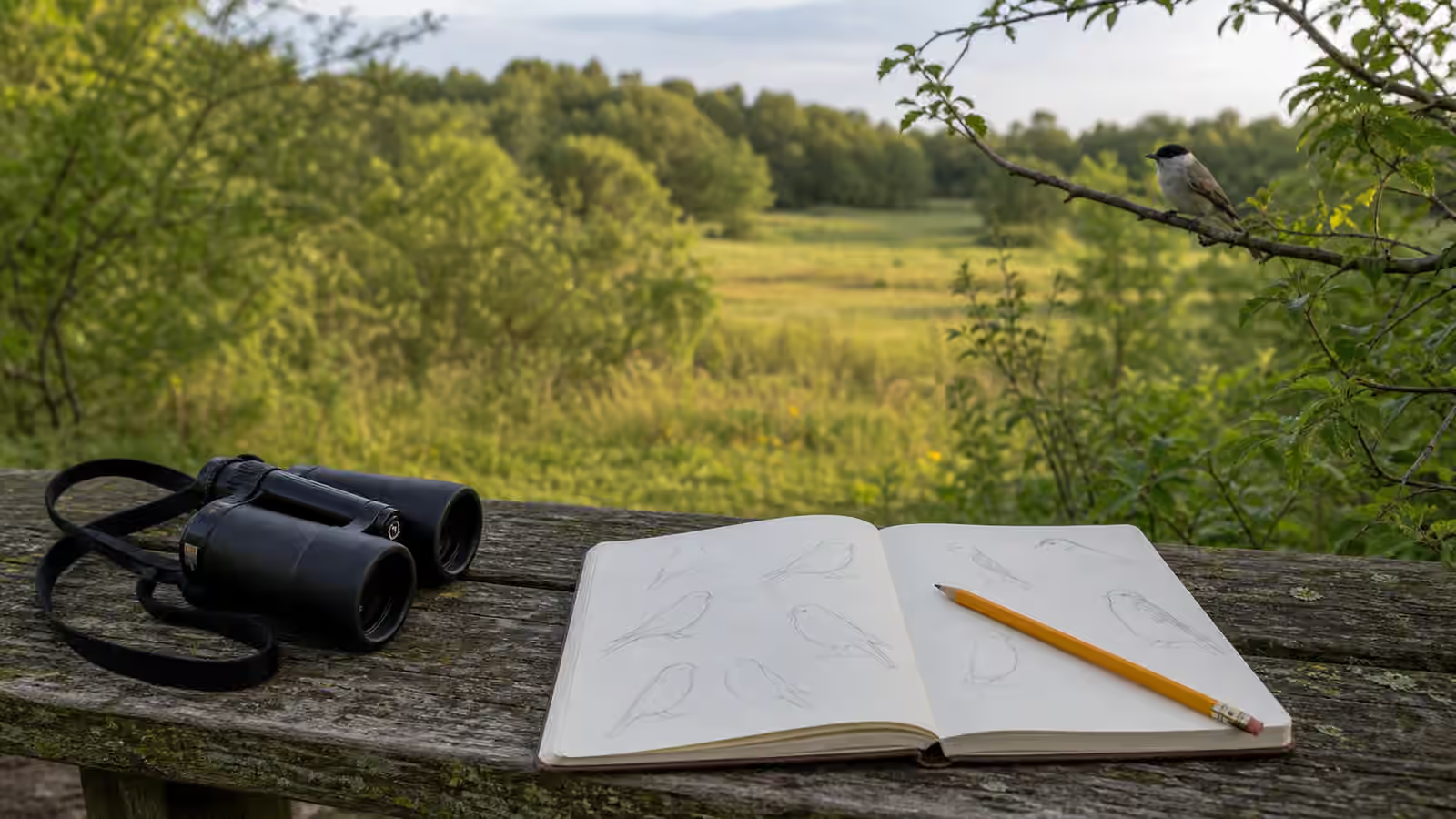
Raptor notes do not need to be elaborate. The most useful notes capture date, place, weather, habitat, flight style, shape, and your uncertainty. A note that says “large hawk” is less useful than one that says “broad-winged soaring bird over field, short tail, pale underside, slow circles, midafternoon sun.” The second note gives your future self something to compare.
Sketching can help even if you cannot draw well. A wing line, tail length, or silhouette scribble may preserve what words lose. You are not making art. You are training attention. After a few weeks, you may notice that the sky contains fewer generic hawks and more recognizable patterns.
Raptor watching rewards this kind of slow improvement. The birds remain wild and often distant. The point is not to master them quickly. The point is to become the kind of observer who can stand under a moving sky and read a little more than you could last month.
That is enough. A distant hawk tilts, catches lift, and rises until it becomes a mark in the bright air. You may not name it every time. You can still learn from the way it leaves.