Roadside birding begins with a simple fact that many beginners overlook: birds use the edges people drive past every day. Fence lines, ditches, hedgerows, telephone wires, farm ponds, bridge crossings, weedy shoulders, drainage basins, and open fields can all hold birds that are hard to see from a forest trail. A car can also make a useful blind. Some birds that would flush from a walking person may keep feeding or perching when viewed quietly from a stopped vehicle.
That usefulness comes with limits. A road is not a bird blind built for you. It is a shared piece of infrastructure with traffic, private property, working farms, pedestrians, cyclists, maintenance crews, and neighbors. Good roadside birding is built on restraint. You stop only where stopping is legal, visible, and roomy. You keep the road working as a road. You treat fences as boundaries, not invitations. You let the bird’s behavior decide whether your presence is acceptable.
This guide fits beside Grassland Birding , Raptor Watching for Beginners , and Birding Checklists and Local Records . Those guides teach open-country attention, sky watching, and honest notes. Roadside birding brings those habits to the places where access is often narrow and the best view may be from a window.
Choose the Stop Before the Bird
The first skill is not identification. It is choosing where to stop. A bird on a wire, a hawk on a pole, or a flock feeding beside a ditch can pull your attention quickly, but the decision to pull over has to come before the binoculars come up. If there is no proper shoulder, pullout, parking area, field entrance with clear permission, or other safe legal space, keep going. A missed bird is ordinary. A careless stop is not worth it.
Look for room to be fully out of the travel lane. Think about whether approaching drivers can see you in time. Avoid stopping on blind curves, hill crests, narrow bridges, soft shoulders, or places where another person would have to steer around you. If you are with someone else, let the passenger handle the first scan while the driver keeps driving. If you are alone, choose a place to turn around or park before trying to study the bird.
Once stopped, stay tidy. Do not swing doors into traffic. Do not set a scope tripod where it forces people around you. Do not stand in a lane to get a slightly better angle. If the place does not support a calm stop, it is not a good roadside birding location no matter how promising the habitat looks.
Use the Car as a Quiet Blind
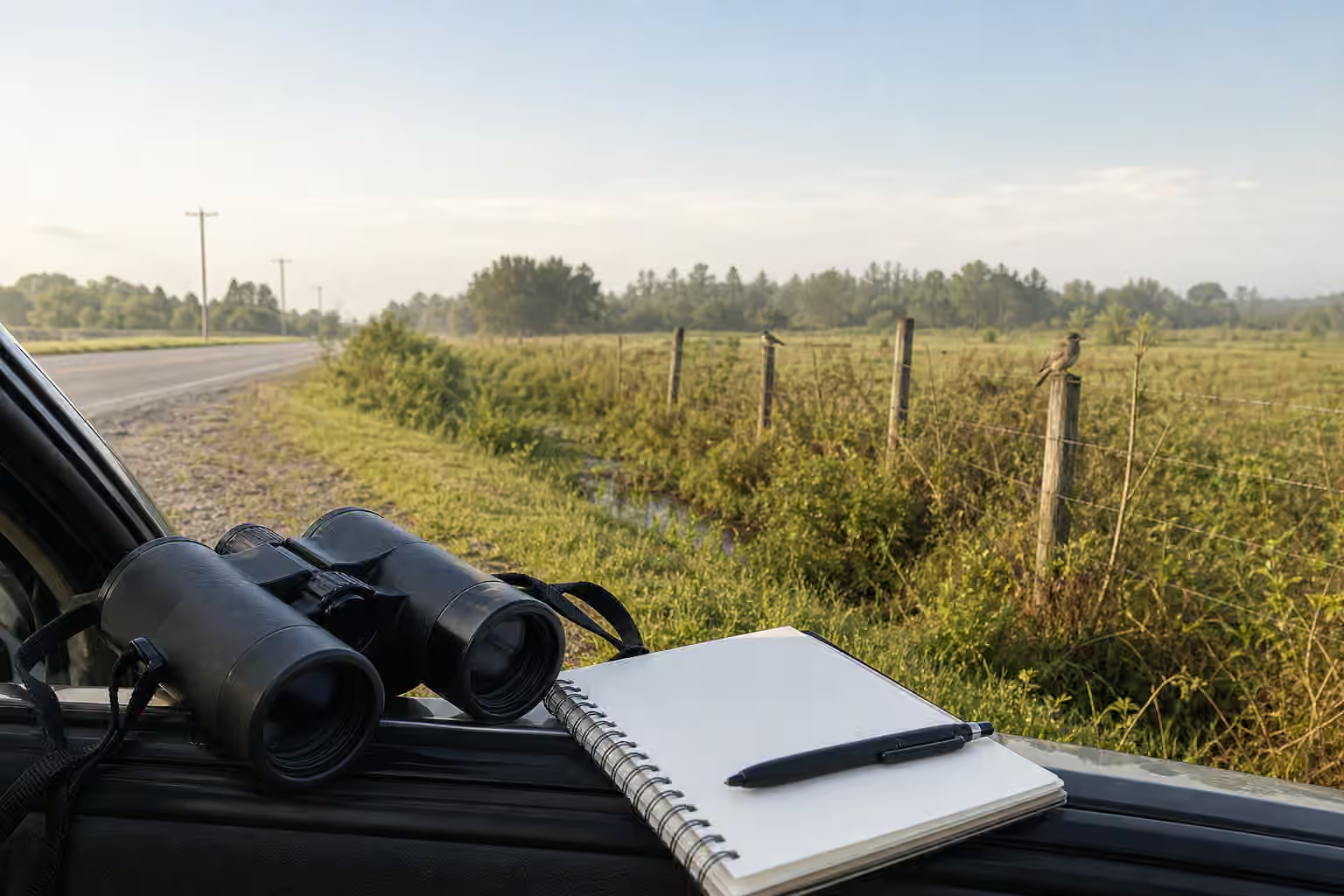
Many birds read a walking person as more direct pressure than a stopped vehicle. This is one reason car-window birding can be productive in open country. A meadowlark may stay on a fence post, a kestrel may hold a wire, ducks may remain on a farm pond, and sparrows may keep feeding along a weedy edge if the vehicle stops at a respectful distance and the occupants move slowly.
The quiet part matters. Roll down a window gently if you can. Raise binoculars without sudden gestures. Let the bird settle before trying to point a camera or scope. If you need to get out, do it as if the bird is already telling you the acceptable pace. A door opening, a person standing tall, and footsteps on gravel can change the whole scene. Often the best view is the first view from the window.
The car should not become an excuse to crowd wildlife. If a bird turns toward you, stops feeding, crouches, alarm calls, leans away, walks off, or flies to a farther perch, the distance was probably too close. Backing up is often better than edging forward. The same ethic from Reading Bird Behavior for Beginners applies here: behavior is feedback. A relaxed bird gives better information than a pressured bird leaving the roadside.
Read Fence Lines, Wires, and Posts
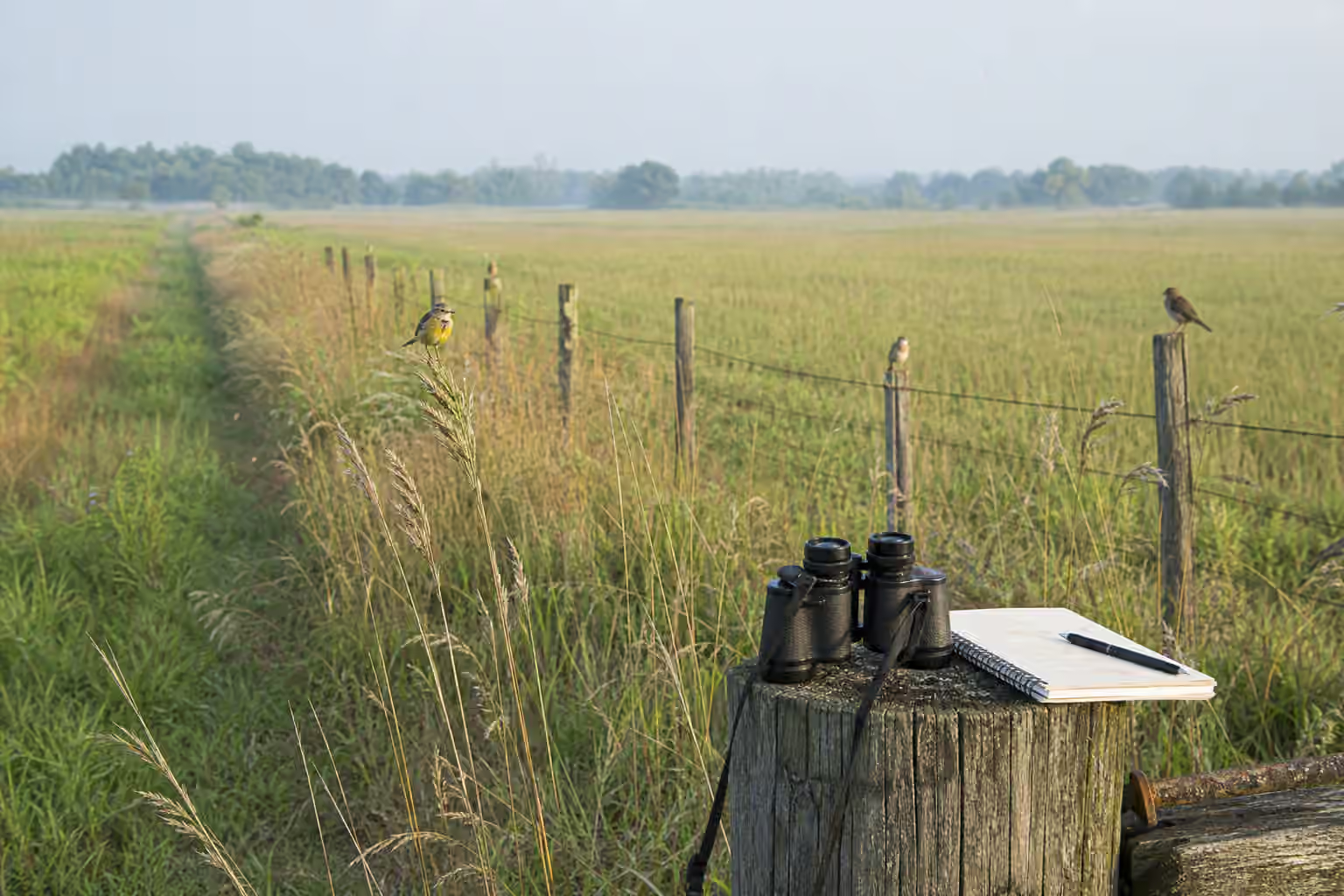
Roads through open country often create a long string of perches. Fence posts, utility lines, sign backs, shrubs, hay bales, dead branches, and gates give birds places to hunt, sing, rest, and watch. Instead of scanning randomly across a whole field, follow the perches one by one. Start near the car, then move farther down the line. Check the top of each post, the wire between posts, the shady side of shrubs, and the ground below perches where birds may drop after insects or seeds.
Perch choice tells a story. A raptor on a pole may be watching for rodents in the grass. A flycatcher may return again and again to the same wire after short flights. A bunting, sparrow, or blackbird may sing from the highest stem along a ditch. Swallows may use wires as resting lines between feeding flights. Crows, ravens, gulls, and vultures may use roadside structures in ways that reveal wind, food, or disturbance.
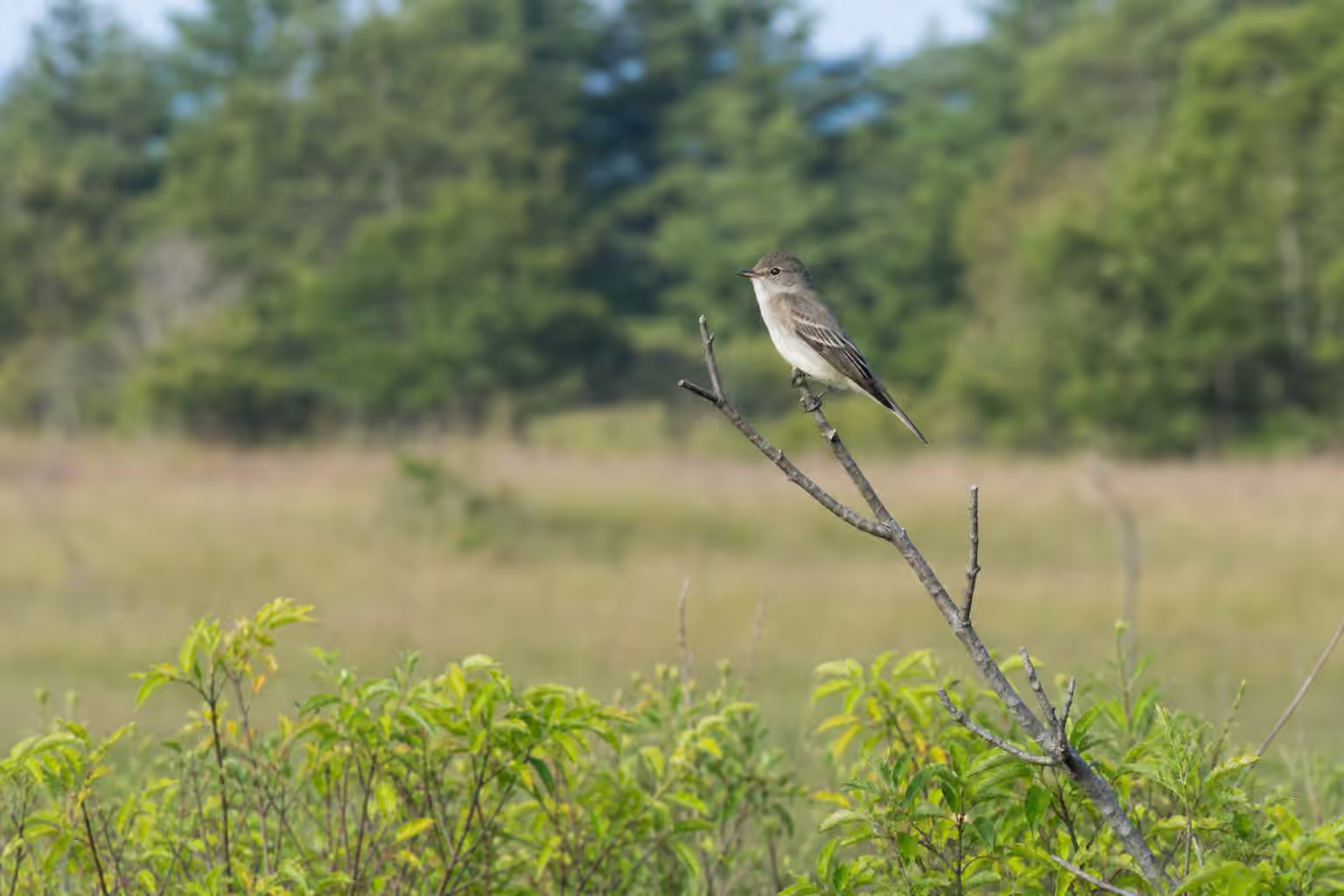
Shape still comes before color. At roadside distance, backlight and heat shimmer can make colors unreliable. Notice size, posture, tail length, bill shape, and the way the bird sits on the perch. A small upright bird on a wire is not the same problem as a bulky bird on a fence post. A hovering bird over a field gives different evidence from a bird that drops from a perch and returns. How to Identify Birds Without Guessing is especially useful on roads because distance tempts people into naming birds from one bright mark.
Ditches and Edges Hold More Than You Expect
A roadside ditch can look like nothing from a moving car. Stopped in the right place, it becomes habitat. Water, mud, seed heads, insects, reeds, grasses, berry shrubs, leaf litter, and small banks can all concentrate birds. Sparrows may vanish into grass at the first movement. Blackbirds may feed low and then rise to a wire. Herons may stand in drainage channels. Killdeer and other open-ground birds may use gravel, mud, or short grass. In migration, a weedy road edge can hold small birds that are using whatever cover and food the landscape offers.
Do not treat the ditch as public space just because it is beside a road. Boundaries and rules vary, and private land can begin closer than it appears. The field skill is to watch from the lawful stopping place you already have, not to push into the vegetation. If the view is blocked, wait for movement. Birds using dense roadside cover often reveal themselves in flashes: a stem bends, a tail flicks, a bird crosses a bare patch, or a call comes from the same clump twice.
This habit connects roadside birding with Marsh Birding and Water’s Edge Birding . A ditch, pond edge, culvert, or flooded field is a small version of the same lesson. Water changes bird behavior. Mud exposes food. Reeds hide more than they show. Edges are often more alive than the open center.
Scan the Sky Before You Leave
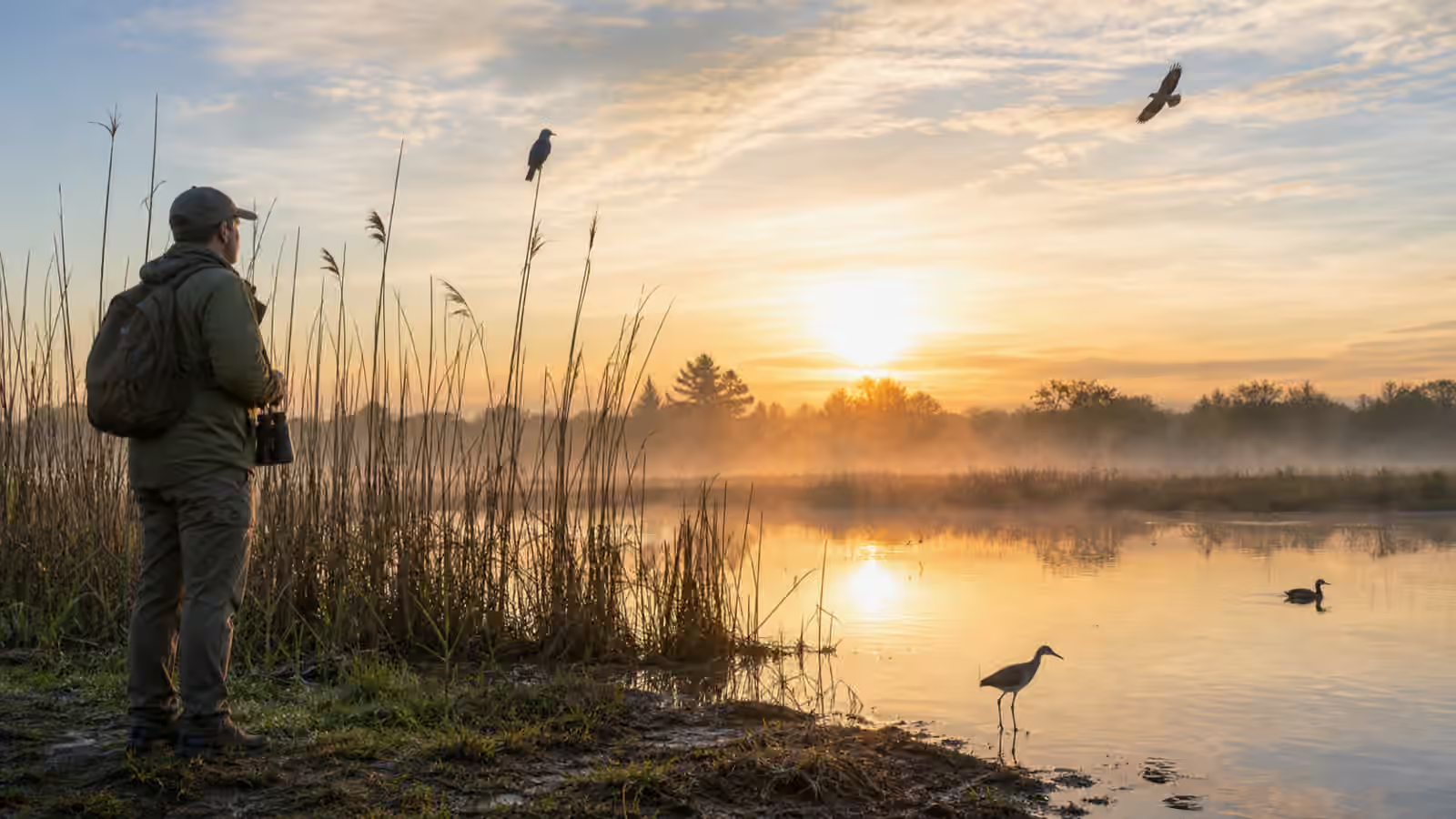
Roadside stops are good places to practice sky attention because open land gives you room to see movement. Before restarting the car, look up and around. Check the nearest tree line, then the distant horizon, then the sky above open fields. Raptors may be circling in thermals, crossing between woods, or riding wind along a ridge. Swallows may feed low over a field. Gulls or waterbirds may move between ponds. In some seasons, visible migration may pass over a road that seemed quiet at ground level.
The important thing is not to turn every speck into a claim. Distant birds deserve honest uncertainty. A hawk far away may be identifiable by shape, wing position, tail length, and flight style, or it may remain a hawk species you could not safely name. That is fine. A careful note about broad wings, circling behavior, direction of travel, height, and light is better than forcing the record.
Roadside sky watching also teaches patience with weather. Wind can push birds to lower perches or make them face one direction. Heat can create shimmer over pavement and fields. Rain can make birds tuck into shelter and then feed actively when it eases. A cold morning may concentrate birds along sunny fence lines or open water. The broader timing ideas in Where and When to Go Birding become more concrete when you can compare several roadside stops along one route.
Make Notes Without Blocking the Place
A roadside notebook needs to be short, clear, and honest. Write the place, time, habitat, distance, and what the bird was doing. “Small bird on fence” will fade quickly. “Small upright bird on third fence post beyond gravel pullout, dropped to grass twice and returned, pale underside in glare, identity uncertain” preserves much more. If the bird was on private land, your note can still describe the habitat without suggesting that someone should enter it.
Counts need the same care. Roadside flocks can be hard because birds move along wires, disappear into ditches, and lift when vehicles pass. Estimate plainly. If a flock of blackbirds rose from a field and crossed the road in waves, a rounded estimate with a note about movement is more truthful than a precise number invented afterward. If a single raptor appears twice along a short stretch, consider whether it may be the same bird moving ahead of you.
Photos from the car can help, but they should not take over the stop. A distant record photo may preserve posture, shape, or a field mark. A clearer photo made by creeping closer, blocking a road, or flushing the bird is worse fieldcraft. The point of the stop is observation, not proof at any cost.
Build a Route, Not a Chase
Roadside birding works best as a route rather than a series of sudden reactions. Choose a few reliable legal stops: a public pullout near a field, a parking area beside a pond, a wide gravel turnout overlooking a fence line, a bridge area with a safe sidewalk or lot, or a public access point near open country. Visit them in different seasons and weather. Notice which stops are active at dawn, which hold birds in winter, which produce raptors in wind, and which look promising but rarely give you good views.
This is a form of Patch Birding stretched along a road. Repetition turns scattered roadside sightings into knowledge. You may learn that one hedgerow holds sparrows after seed heads mature, that a certain pole is favored by hunting birds, that a shallow pool attracts ducks after rain, or that a line of trees becomes busy during migration. The route becomes safer too because you know where stopping works and where it does not.
Avoid chasing every bird from stop to stop. If a bird moves farther down the road, let it go unless there is another appropriate place to stop without pressure. Following too closely can turn observation into harassment, especially with raptors, owls, shorebirds, and open-country birds that already have few places to hide. A calm route gives birds room to continue their day.
Keep the Road Ordinary
The best roadside birding leaves little trace. Traffic keeps moving. Gates remain clear. Fences are respected. Birds are not pushed off perches for a closer look. Other people using the road do not have to solve a problem created by your curiosity. You leave with notes, maybe a distant photo, and a better sense of how birds use the thin line between human travel and living habitat.
Road edges can teach a beginner a great deal because they make habitat readable. A fence post becomes a hunting perch. A ditch becomes cover. A wire becomes a resting line. A field entrance becomes a viewpoint only if it can be used without blocking anyone. The road itself remains secondary. It gets you near the birds, but the birding happens when you slow down enough to read the place and disciplined enough to keep your presence small.