Seawatching asks a beginner to accept distance. Most birding teaches you to move toward detail: a branch, a field mark, a song, a flash of wing color. Big-water birding often gives you something smaller and stranger. A bird crosses the horizon like a dash. A line of dark shapes cuts low over the waves. A gull hangs in wind. A flock appears, disappears behind a swell, and reappears farther along the coast. The field guide view almost never arrives.
That is why seawatching can feel discouraging at first. You may stand beside experienced birders who seem to identify dots. They call out shearwaters, gannets, scoters, loons, alcids, jaegers, terns, or distant ducks while you are still trying to find the bird they mean. The skill looks like magic until you understand what they are really doing. They are not seeing perfect detail. They are reading shape, flight, direction, weather, season, and pattern.
Seawatching is birding by rhythm. The water moves. The light changes. Birds follow lines that are not visible at first. Wind pushes some birds closer and others farther out. A headland, inlet, sandbar, ferry route, or line of breaking waves can concentrate movement. Your job is not to conquer the whole ocean. Your job is to learn where to look and how to stay with uncertainty long enough to notice more than you did last time.
A Scope Changes the Experience
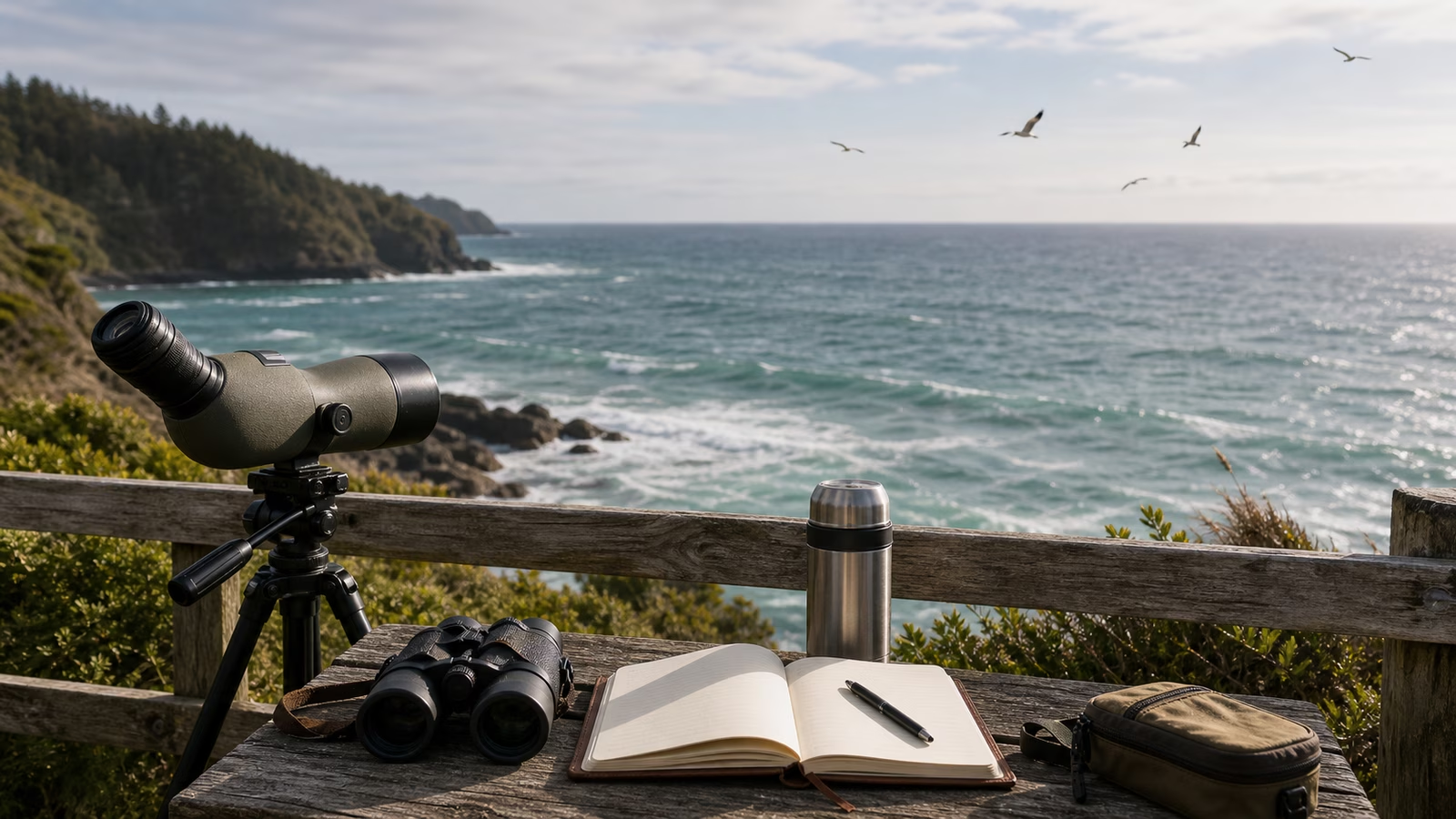
Binoculars are enough for many kinds of birding, and they are useful at the coast. They help you scan quickly, follow closer birds, and check birds passing near the overlook. But a spotting scope changes seawatching because so much of the action is far away. A scope lets you hold a patch of water, examine distant movement, and see the difference between a floating bird, a wave top, and a low-flying line of birds.
The scope does not make the ocean easy. It narrows your view. A beginner can lose birds constantly because the field is small and the birds are moving. This is normal. The trick is to use binoculars and the naked eye to find movement, then move into the scope when you have a reference point. A headland, buoy, rock, ship, cloud edge, or patch of whitewater can become the landmark that keeps everyone talking about the same piece of water.
If you do not own a scope, seawatching is still possible. Go with a group, visit public watch points, or borrow a look when someone offers. Many seawatchers are generous if you are respectful and do not monopolize equipment. Listening beside a scope is still learning. You are training your eye to understand distance, not shopping for gear as a substitute for patience.
Weather Decides What the Water Shows
Seawatching is weather watching with birds in it. Wind direction, wind strength, storms offshore, visibility, tide, season, and light all change what you can see. Some birds stay far out unless weather pushes them closer. Some move along the coast during migration. Some gather near feeding activity, current lines, fish movement, or rough water. A calm day may be beautiful and quiet. A windy day may be uncomfortable and full of movement.
The best conditions depend on place. A coast that is productive with one wind direction may be poor with another. A storm that brings birds closer in one region may make visibility impossible in another. Local knowledge matters, and it is built through repeated visits. A beginner should not expect to understand a seawatch site after one morning.
Light matters too. Glare can erase birds. Backlighting can turn everything into silhouette, which is sometimes useful and sometimes maddening. Early morning may reveal movement before heat shimmer builds. A gray day may show dark birds better than a bright glittering sea. Seawatching teaches you that the same location can be several different birding sites depending on the sky.
Shape and Flight Come Before Color
At sea, color often disappears. Distance, haze, glare, and angle turn birds into moving forms. The important questions become structural. Is the bird long-winged or compact? Does it flap steadily, glide stiffly, arc over waves, tower upward, plunge, sit low on the water, or fly in a direct line? Are the wings narrow, bowed, pointed, or broad? Is the flock tight or loose? Are the birds traveling with purpose or feeding in place?
A gannet or booby-like bird may show long wings and dramatic plunging behavior. Shearwaters may trace the shape of waves with tilting flight. Scoters and other sea ducks may move in lines, often low and direct. Loons can look heavy and purposeful. Terns may be lighter and more buoyant. Gulls vary widely and are worth learning well because they are constant companions at many coastal sites.
These impressions are not enough for every identification, but they give you a beginning. A note that says “dark birds low over water” is less useful than one that says “line of compact birds flying low and direct north, steady wingbeats, no circling, seen beyond second buoy.” The name may remain uncertain. The observation becomes stronger.
Learn One Lane at a Time
The ocean is too large to scan randomly for long. Experienced seawatchers often learn lanes. Birds may pass close to shore, beyond a line of rocks, outside a sandbar, along a rip current, or at a consistent distance from a headland. Once a lane is active, you can keep returning to it. The birds are not appearing everywhere at once. They are using the shape of the coast and the air.
Start by watching where other people point, but do not depend on them forever. Choose a visible reference and hold it for several minutes. Notice whether birds pass left to right, right to left, inland, offshore, or in circles. Notice whether closer birds behave differently from distant ones. If you keep losing everything, reduce the area. A smaller patch watched well is better than the entire horizon watched poorly.
This is a slow skill. It can feel like nothing is happening, and then a short pulse of movement changes the whole morning. Seawatching rewards the person who is still looking when the pulse arrives.
Comfort Is Part of Attention
Coastal birding can be cold, windy, bright, damp, and physically tiring. A beginner who dresses badly will identify fewer birds because discomfort eats attention. Bring layers, sun protection, water, and something warm if the season calls for it. A hat can save you from glare. Gloves can matter more than you expect if you are standing still with metal equipment. A thermos is not a personality trait; it is fieldcraft.
Safety matters too. Watch from stable ground. Respect cliffs, waves, tides, wet rocks, and traffic near roadside overlooks. Do not step into dangerous places for a slightly better angle. Seawatching already asks you to accept distance from birds. Accept distance from hazards as well.
Let Uncertainty Stay Honest
The sea produces many uncertain birds. That is not a failure. It is part of the discipline. Some birds are too far, too brief, too backlit, or too similar to name responsibly. A good seawatcher knows when to leave a bird as unidentified. Guessing too confidently teaches the wrong lesson.
Your notes should preserve uncertainty rather than hide it. Possible shearwater, not enough detail. Distant duck flock, likely scoters, direction north. Large pale plunge-diving bird, seen twice, too far for species. These notes are useful because they keep the observation connected to evidence.
Seawatching makes birding larger. The birds are not ornaments near a path. They are travelers using wind, water, migration routes, feeding areas, and weather systems. You may only see them as marks against waves, but those marks belong to lives that cross distances most people never imagine.
That is the reward. You stand at the edge of land, watch the water move, and learn to read a little more from far away.