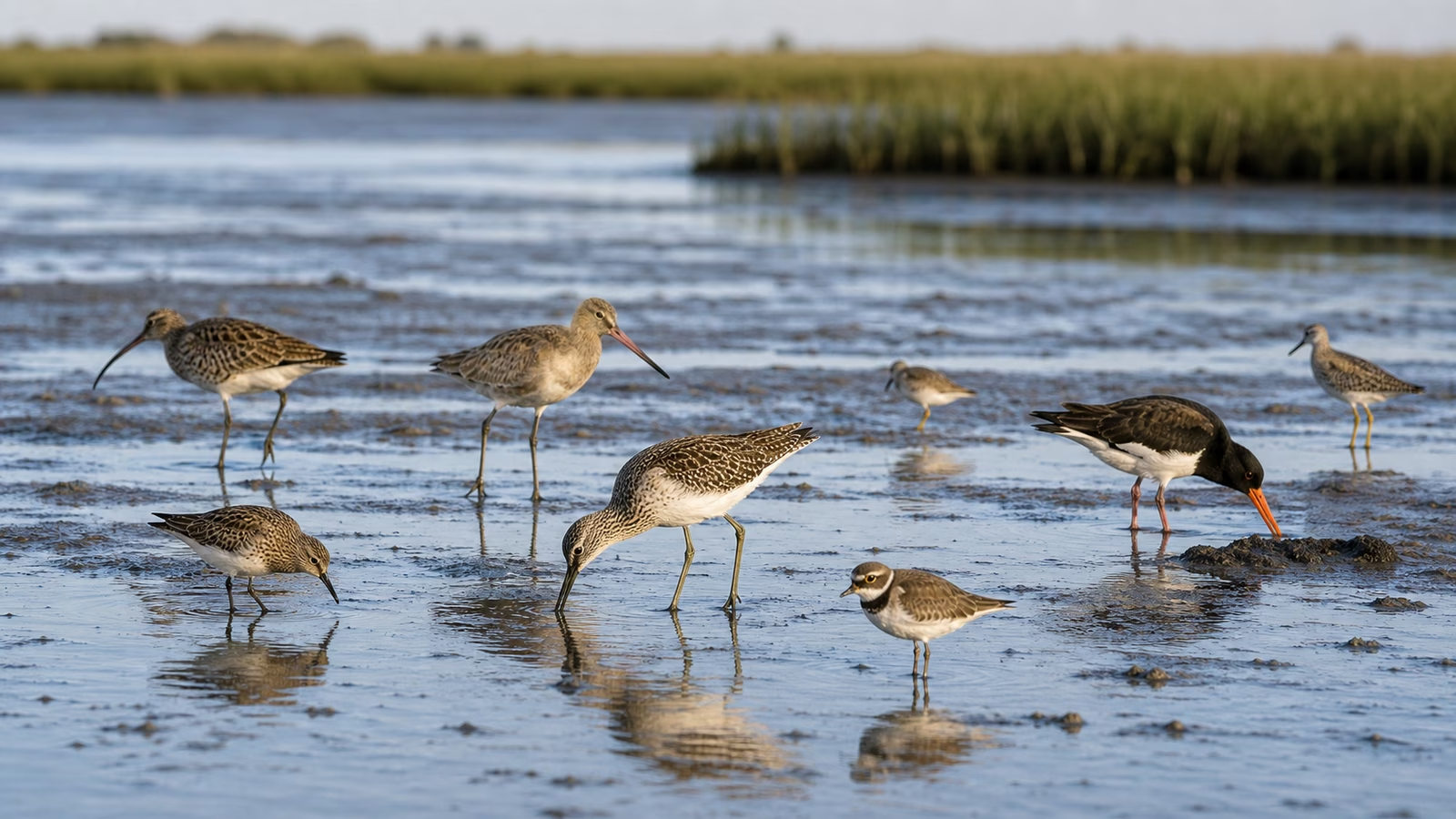
Shorebirds can make a beginner feel as if the field guide has been playing a joke. They are often small, brownish, quick, distant, and moving through mud at exactly the moment you finally get your binoculars focused. One bird has a slightly longer bill. Another has yellower legs. A third is hunched, a fourth is running, and a fifth disappears behind a ripple of heat before you have decided whether it was pale gray or just wet.
That confusion is normal. Shorebirding is not a test of instant naming. It is a practice in slowing down around birds that are built for edges: wet sand, mudflats, marsh margins, flooded fields, beaches, lake shores, and tide lines. The reward is that shorebirds teach you to watch structure and behavior before color. They make you better at birding because they do not let you get away with a casual glance.
Start with the place, not the bird
A beginner’s first mistake is to stare at the bird and ignore the place. Shorebirds are closely tied to water level, exposed mud, sandbars, invertebrates, and rest areas. The same beach or pond can be empty at one hour and alive at another. The habitat changes as the tide moves, as wind pushes water, as rain fills fields, or as a managed wetland draws down.
At the coast, tide matters because it changes where food is reachable. Low tide can expose wide feeding areas, but birds may be spread far away. A rising tide can push birds closer, but if it rises too much, the feeding flat disappears and birds move to roost. Inland, the same logic appears in miniature. A muddy pond edge after rain can be better than a full pond with no exposed margin.
Water’s Edge Birding gives the broader habitat lesson. Shorebirds sharpen it. Before you try to name anything, ask what the water is doing. Ask where the exposed feeding edge is. Ask where birds can rest without being flushed. Ask whether the place gives you a responsible viewing angle from a distance.
Shape tells the first truth
Color is tempting, but shape usually helps more. Look at body size, leg length, neck length, bill length, and overall posture. A plump bird with a short bill gives a different impression from a slim bird with long legs and a long probing bill. A bird that runs and stops like a wind-up toy feels different from one that walks slowly and sweeps its bill through the water.
Do not worry yet about perfect species names. Build rough groups in your mind. There are tiny peeps, plover-like birds with compact bodies and upright pauses, yellowlegs types with longer legs and active feeding, sandpiper shapes that probe and pick, and larger birds with curved or very long bills. These are not formal lessons so much as handles. Once you have a handle, the field guide becomes less overwhelming.
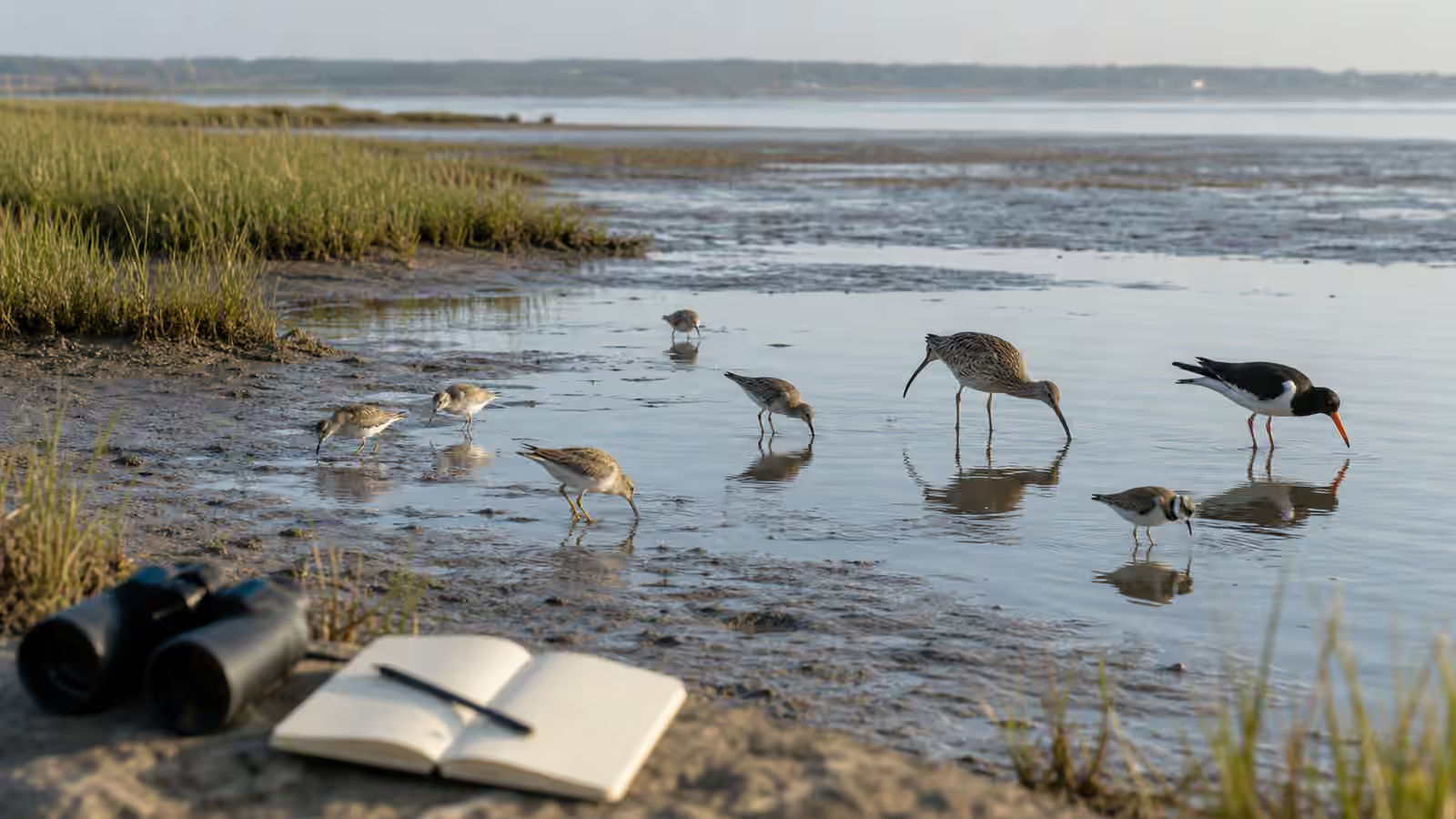
How to Identify Birds Without Guessing teaches this same habit for all birds: size, shape, behavior, habitat, and then field marks. Shorebirds reward that order. If you start by asking whether a bird’s back is warm brown or cool gray, you may miss the more important clue that its bill is too long for the species you first imagined.
Bills are tools
A shorebird’s bill is not decoration. It is a feeding tool, and the tool tells you how the bird uses the flat. Short bills pick at the surface. Longer straight bills probe into mud. Downcurved bills reach differently from slightly upturned bills. Some birds stitch along the waterline. Others jab, sweep, pause, or run after visible prey.
Watching feeding behavior turns identification from a still photograph into a scene. A bird that repeatedly probes deep in soft mud is using the habitat differently from a bird picking insects from the surface. A bird following the edge of a shallow pool is solving a different problem from a bird sprinting across open sand.
This is also why patient observation helps. A single frozen view may not show the bill well. A minute of feeding often does. The bird turns sideways, lifts its head, opens the bill, stands near another bird, or moves into better light. The beginner who waits often sees more than the beginner who tries to force an instant answer.
Comparison is your friend
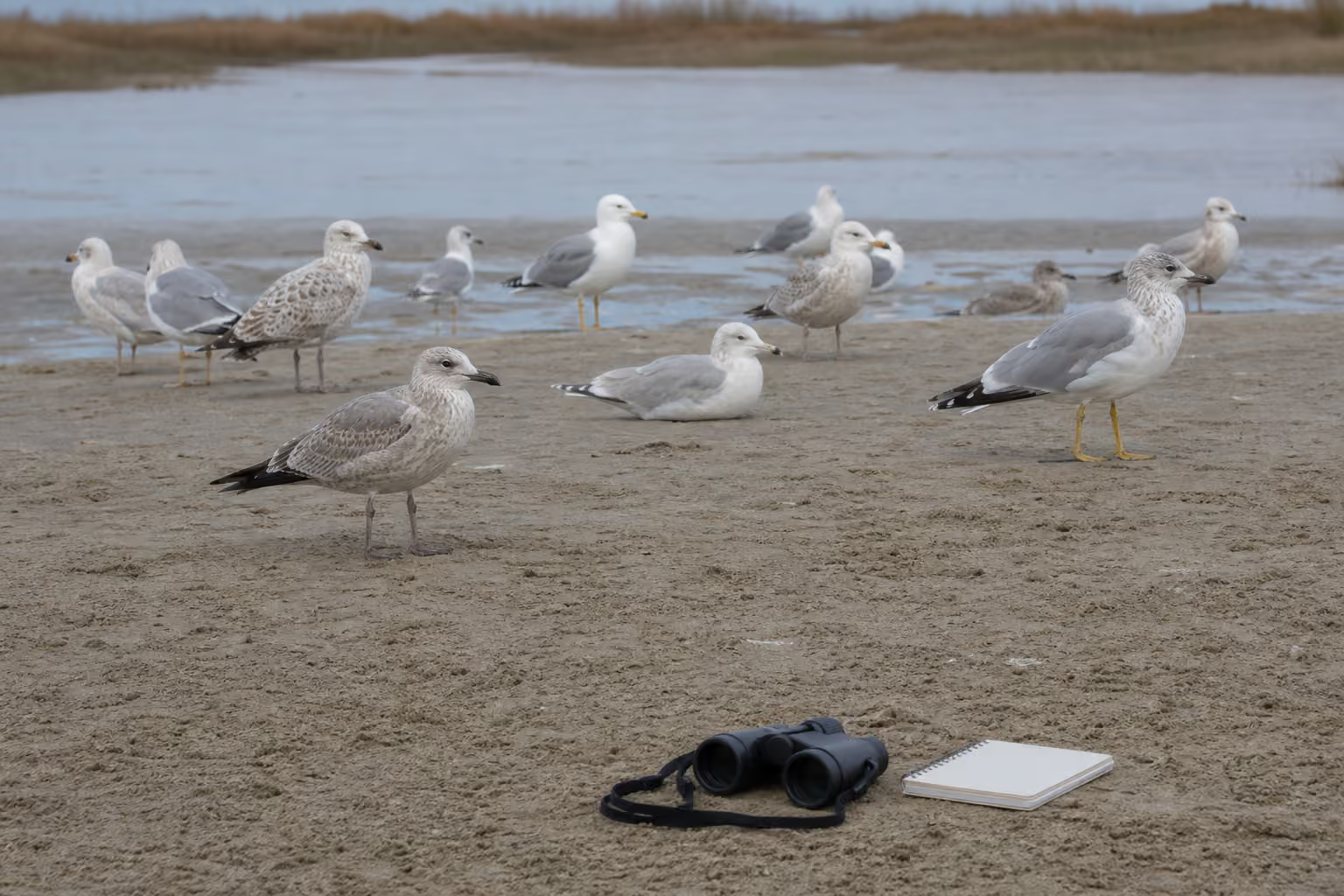
Shorebirds are easier when more than one species is present. That sounds backwards because a mixed group can feel chaotic, but comparison gives scale. A bird may look medium-sized until it stands beside a smaller sandpiper. Legs may look long until a taller bird walks behind it. A bill may seem only slightly curved until a straight-billed neighbor feeds nearby.
Use the flock as a measuring tool. Notice which birds are half the size of others. Notice which ones run and which ones walk. Notice which birds keep to the waterline and which ones feed on drier mud. Notice whether a bird looks round, stretched, upright, crouched, delicate, or heavy.
Do this without chasing the birds closer. Shorebirds often depend on limited feeding windows. Flushing them repeatedly costs energy and can disrupt the very behavior you came to watch. Birding Etiquette and Field Notes matters especially here. Good shorebirding is quiet, distant, and patient.
Notes beat memory
Shorebirds leave the scene before your confidence arrives. That is why notes matter. Write what you actually saw, not what you hope it was. Describe the bird as if you were explaining it to someone who cannot see the field guide. Was it smaller than the nearby plovers? Were the legs dark, pale, or bright? Was the bill shorter than the head, about the same, or much longer? Did it probe, pick, run, or stand?
A rough sketch can help even if you cannot draw. A line for bill length, a dot for eye placement, a hint of leg length, and a note about posture may be enough to preserve the useful detail. Photos can help too, but do not let the camera replace seeing. A blurry photo of a distant bird may confirm less than a careful note written while watching.
Over time, your notes will teach you which clues you keep missing. Maybe you forget leg color because you are staring at the bill. Maybe you never write down behavior. Maybe you identify only the obvious birds and ignore the ones that would stretch you. That is useful information. Birding improves when your future self can learn from your present uncertainty.
Seasons change the difficulty
Shorebirds can look different across seasons and ages. Breeding plumage, nonbreeding plumage, worn feathers, fresh juveniles, and molting birds all complicate the neat images in beginner guides. This is one reason shorebird identification has a reputation for difficulty.
The answer is not to memorize every plumage before you go outside. The answer is to keep expectations sane. Learn the common birds in your region first. Notice the season. Pay attention to structure and behavior. Accept that some birds will remain unidentified. A careful “small sandpiper species, not enough seen” is better birding than a confident wrong name invented to end discomfort.
Migration can make shorebirding especially rewarding because different birds pass through at different times. Migration Morning explains how weather, edges, and rest stops shape bird movement. Shorebirds add tide and mud to that story. The best morning may come when water level, season, weather, and safe viewing access all line up.
The beginner’s goal is a better question
At the end of a shorebird walk, success is not naming every bird. Success is leaving with better questions. Why were the smallest birds feeding closest to the waterline? Why did the plovers stop and start while the sandpipers probed continuously? Why did the flock lift all at once? Why did the same flat feel empty two hours later?
Those questions turn the mudflat from a confusing patch of brown birds into a place you can read. You begin to see tide, distance, bill tools, flock structure, and movement. The names come more slowly than you want at first, then faster than you expect later, because the scene has stopped being a blur.
Shorebirds make you earn them. That is part of their appeal. They ask you to stand still, keep distance, watch the edge of water, and let uncertainty remain open long enough to teach you something.