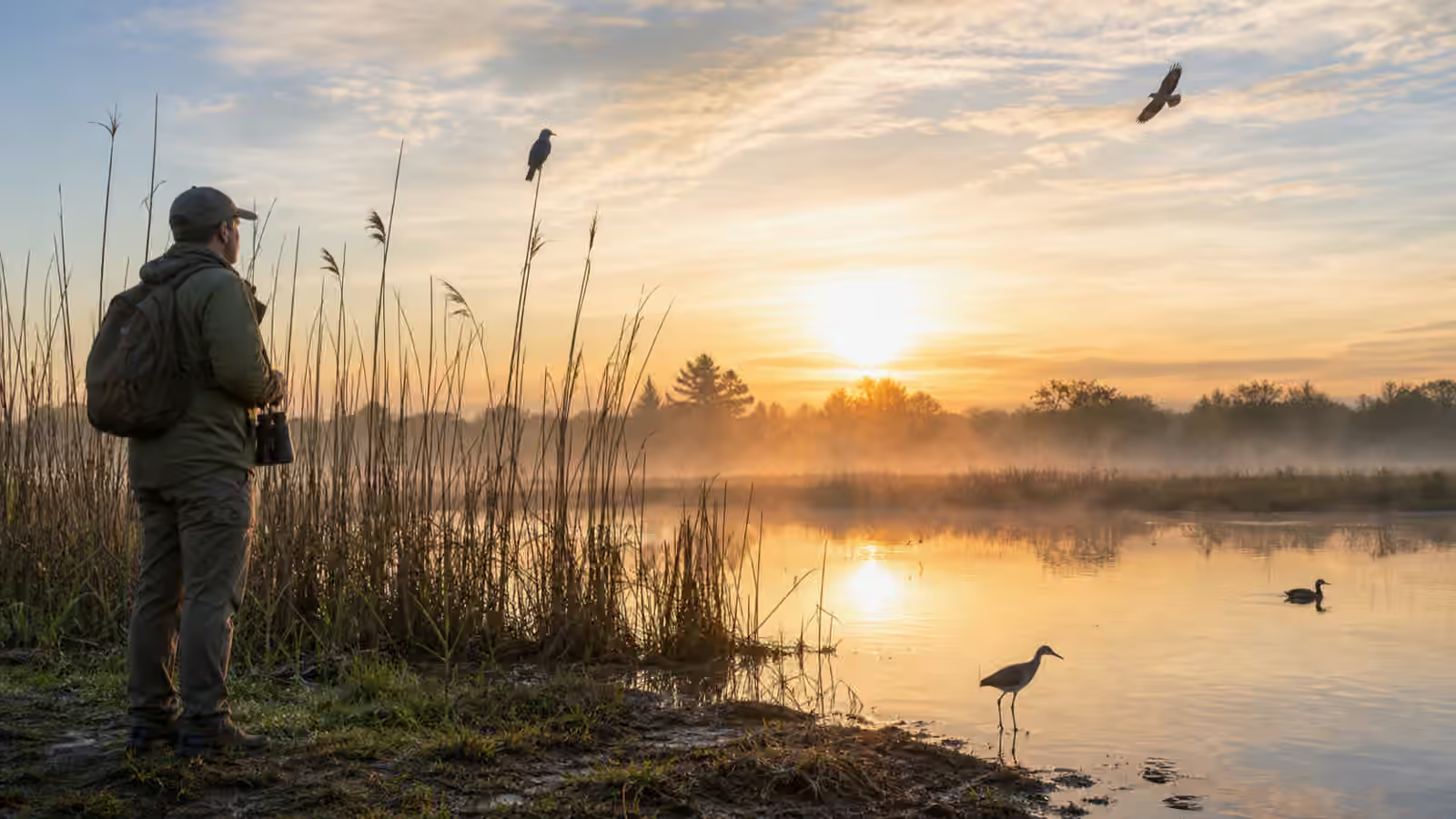
Backlight is where many bird identifications fall apart.
A bird that looked colorful in the field guide becomes a dark cutout against the morning sky. A duck turns into a floating oval. A hawk becomes a moving cross. A shorebird on wet sand loses its markings in glare. The first impulse is to wait for color, but birds do not always offer better light. They fly, dive, tuck into reeds, or keep the sun directly behind them. If you stop birding every time the light is inconvenient, you miss one of the most useful ways to learn birds: reading shape.
Silhouette birding is not a trick for experts. It is a calmer way to use clues that remain visible when color disappears. Size, proportions, posture, flight style, bill shape, neck length, tail length, wing shape, and behavior often survive bad light better than plumage does. You may not get to a species every time. That is fine. A good silhouette note can still move you from “unknown bird” to “long-legged wader,” “compact diving duck,” “woodpecker shape,” “small falcon,” or “sparrow-sized bird with a long tail.” Those partial answers are real progress.
Start With the Whole Shape
When a bird is backlit, resist the urge to search immediately for tiny marks. Begin with the whole body. Is the bird round, stretched, upright, horizontal, long-necked, flat-headed, big-billed, short-tailed, or heavy-winged? Does the body look front-heavy or tail-heavy? Does the head flow smoothly into the body, or does the neck stand out? Does the bird seem built for walking, swimming, clinging, soaring, or quick bursts through brush?
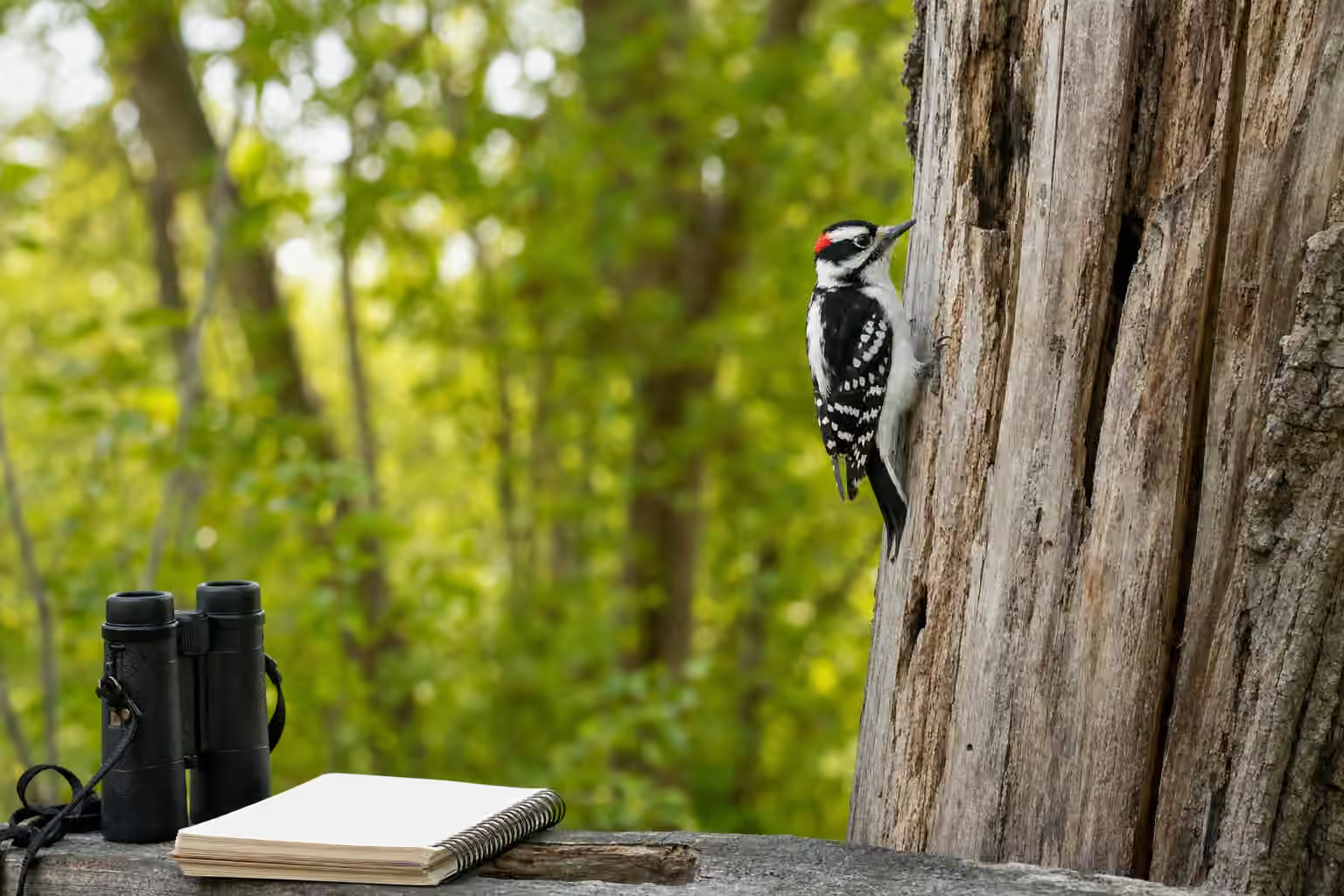
This first impression matters because shape is often the field mark you actually have. A heron standing at a pond edge may be only a dark figure, but its long legs, folded neck, dagger bill, and patient posture separate it from a duck. A woodpecker on a trunk may show no color, but its stiff tail brace and vertical posture tell a story. A kingfisher-like bird on a snag may be distant, but a large head, stocky body, and direct flight can make it stand apart from nearby swallows or blackbirds.
The guide How to Identify Birds Without Guessing uses size, shape, behavior, habitat, and markings as a practical order. In backlight, that order becomes even more important. Color is not gone forever, but it has moved to the back of the line.
Posture Is a Field Mark
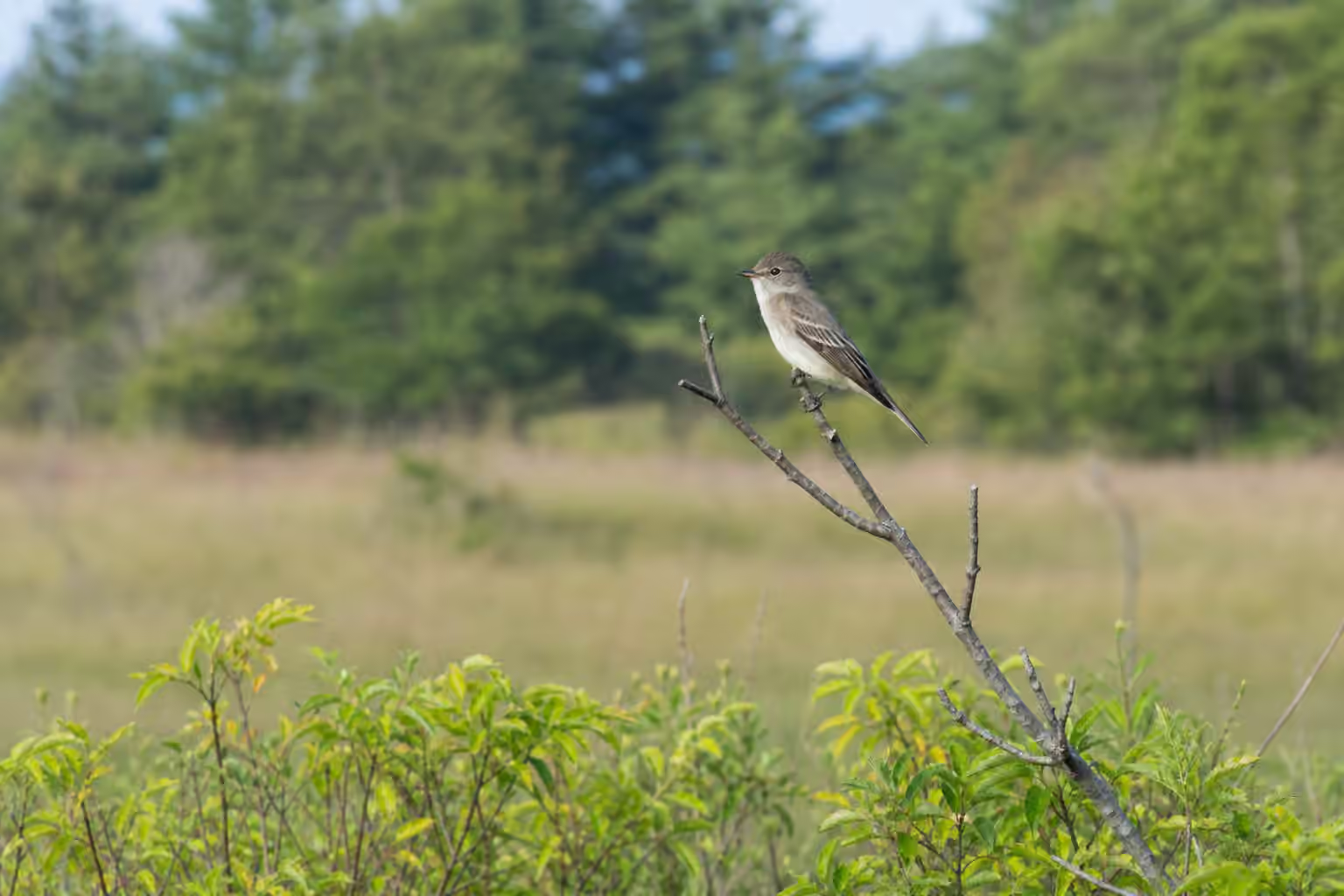
Posture gives silhouette birding much of its power. Birds hold themselves in distinctive ways because their bodies are built for different jobs. A flycatcher often sits upright on an exposed perch, then darts out and returns. A sparrow may sit lower, drop into cover, and pump or flick its tail depending on the species. A cormorant-like waterbird may stand with a long body and raised head, sometimes spreading wings. A raptor may perch like a thick-shouldered block, while a dove may seem smaller-headed and smoother.
Backlight can make all of these birds look black, but it does not erase how they occupy space. Watch before naming. Does the bird lean forward? Does it crouch? Does it stretch tall when alert? Does it keep its tail cocked, hanging, fanned, or pressed against bark? Does it bob while walking? Does it freeze between movements? The longer you watch, the less the bird is only a shape. It becomes a set of habits.
This is why a silhouette seen for ten seconds can be more informative than a bright bird glimpsed for one second. A brief flash of color may mislead, especially in harsh light. A sustained view of posture and movement can give you steadier evidence. Reading Bird Behavior for Beginners is useful here because behavior turns a dark outline into an active clue.
Wings Tell the Sky Story
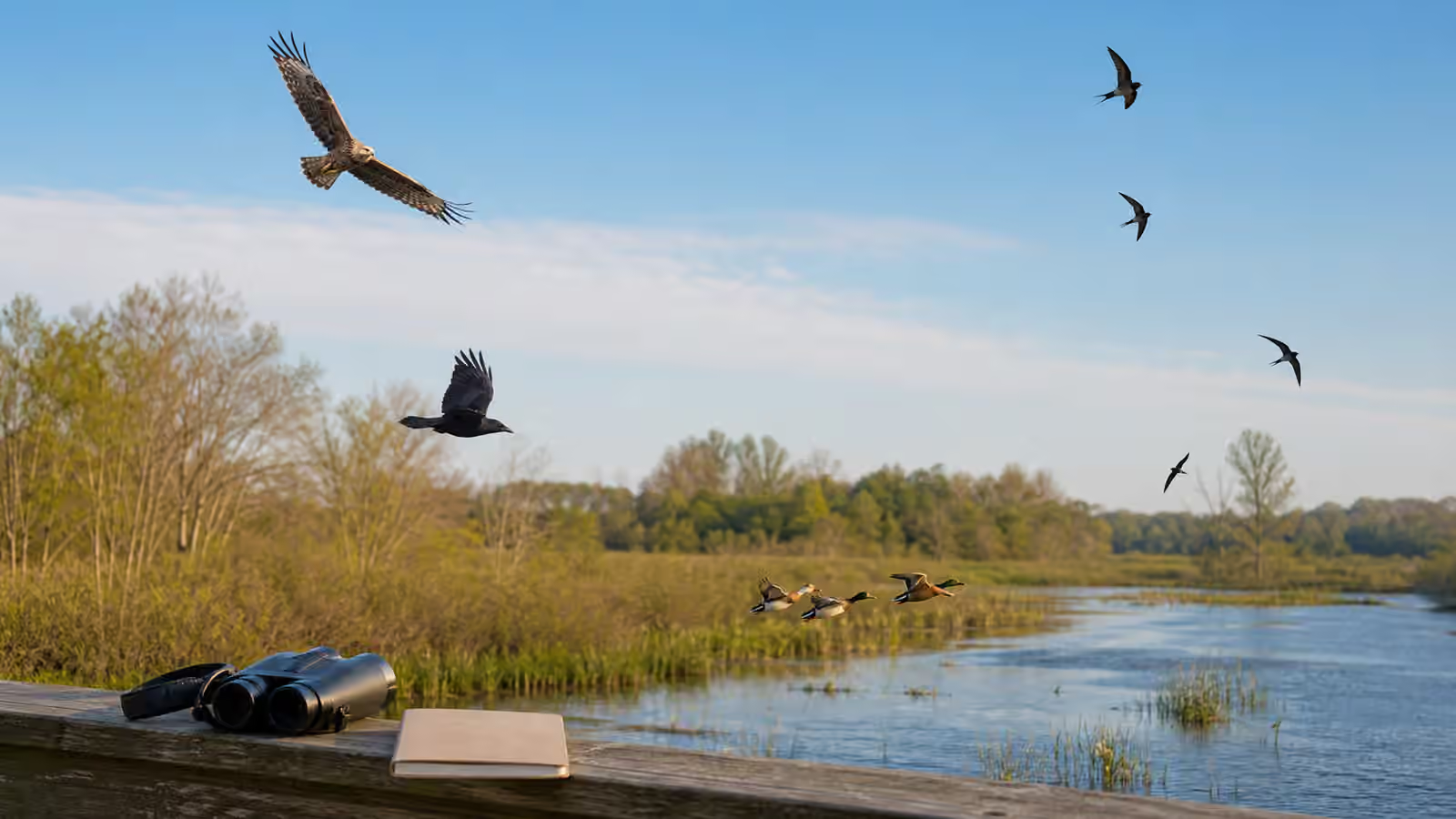
Birds in flight become lessons in geometry. A hawk with broad wings and a spread tail is different from a falcon with pointed wings and fast direct flight. Vultures, eagles, hawks, gulls, swallows, swifts, crows, geese, ducks, herons, and shorebirds all write different shapes across the sky. Even when they are too high for color, their wings and rhythm remain visible.
Start with wing shape. Are the wings long and narrow, broad and rounded, pointed, bowed, held flat, lifted in a shallow V, or kinked at the wrist? Then watch rhythm. Does the bird flap constantly, glide between bursts, soar in circles, hover, bound up and down, or fly in a steady line? A raptor migrating high overhead may not show markings, but its wing shape, tail length, and style of soaring can put you in the right family. Raptor Watching for Beginners goes deeper into that sky-reading habit.
Flocks add another layer. Geese may travel in lines or loose V shapes. Ducks often fly with fast wingbeats and compact bodies. Shorebirds may flash as a tight group, turn together, and change from dark to pale as the angle shifts. Swallows and swifts feed through the air with flexible, cutting flight. If the bird is distant, do not force a name. Describe the flight. A good note such as “small pointed-wing birds feeding low over pond, fast turns, no perching seen” is worth more than a guessed species.
Water and Glare Change the Rules
Water produces some of the hardest light in birding. Sunrise, sunset, wet mud, pale sky reflected on a pond, and waves broken by wind can all erase detail. At a water edge, shape and behavior matter before color. Does the bird sit high on the water or low? Does it tip up, dive, paddle steadily, walk along mud, probe, stalk, or stand still? Is the bill long, short, thick, thin, upturned, downcurved, or dagger-like? Are the legs long enough to lift the body above the water, or is the bird floating?
A duck-like silhouette is not one thing. Some waterfowl look bulky and high-riding. Some diving birds sit lower and seem to disappear between waves. A heron may look like a stick until it steps. A shorebird may be only a tiny dark stitch on mud, but leg length, feeding pace, flock spacing, and bill shape can narrow the puzzle. Water’s Edge Birding and Shorebirds for Beginners both help with this patient, shape-first style.
A scope can help at distance, but magnification does not fix every glare problem. It can make heat shimmer and reflected light more obvious. If the view wobbles or swims, back off and watch the bird’s general motion. Spotting Scope Fieldcraft is useful because distant birds require restraint as much as equipment. Sometimes the honest answer is a category, not a species.
Move Your Body Before You Move the Bird
When light is bad, a few steps can change everything. You may be able to shift sideways so the bird is no longer directly in front of the sun. You may lower your stance to place the bird against vegetation instead of sky, or step to a shaded side of a path where glare is less punishing. The important rule is to move yourself without pressuring the bird. Do not chase, flush, or push closer just because the light is inconvenient.
Often, patience solves what movement cannot. A bird may turn its head and reveal a bill shape. A cloud may cover the sun. A feeding bird may move from open glare into side light. A flying bird may bank and show a paler underside for a moment. Waiting also lets you collect behavior. If you spend that time describing rather than wishing for a perfect view, the bird remains useful even when it never becomes beautiful.
Weather adds its own complications. Fog, rain, low sun, and harsh wind can make birds harder to read and sometimes more interesting to watch. Weather Window Birding is a good companion because it treats imperfect weather as information rather than as failure.
Write the Shape You Actually Saw
Silhouette notes should be plain and honest. Write what the bird looked like before you decide what it was. “Crow-sized bird soaring with broad wings, slight V, long fingers at wing tips.” “Small bird upright on reed, long tail, repeated short song, dropped into marsh grass.” “Medium waterbird low on pond, dove repeatedly, thin neck visible when surfaced.” These notes preserve the evidence.
Avoid filling in color later because you think the bird “must have” had it. Backlight invites memory to decorate. If you did not see a wing bar, do not write one. If you saw only a dark bill shape, say that. This kind of discipline may feel cautious, but it makes you better faster. Your future self can compare notes, check likely species, and learn from uncertainty instead of repairing a confident guess.
Silhouette birding also makes familiar birds valuable. Watch common birds in bad light on purpose. Learn the outline of a robin on a lawn, a gull on a roof, a crow in flight, a duck on a pond, a sparrow in a hedge, a heron at dusk. The common shapes become anchors. Once those are familiar, an unfamiliar silhouette stands out sooner.
Bad light will always be part of birding. The sun will be in the wrong place. The bird will be distant. The water will shine. The sky will flatten color into darkness. Instead of treating those moments as wasted, use them as practice. Shape, posture, movement, and habitat are still there, and they often tell enough of the story to keep you learning.