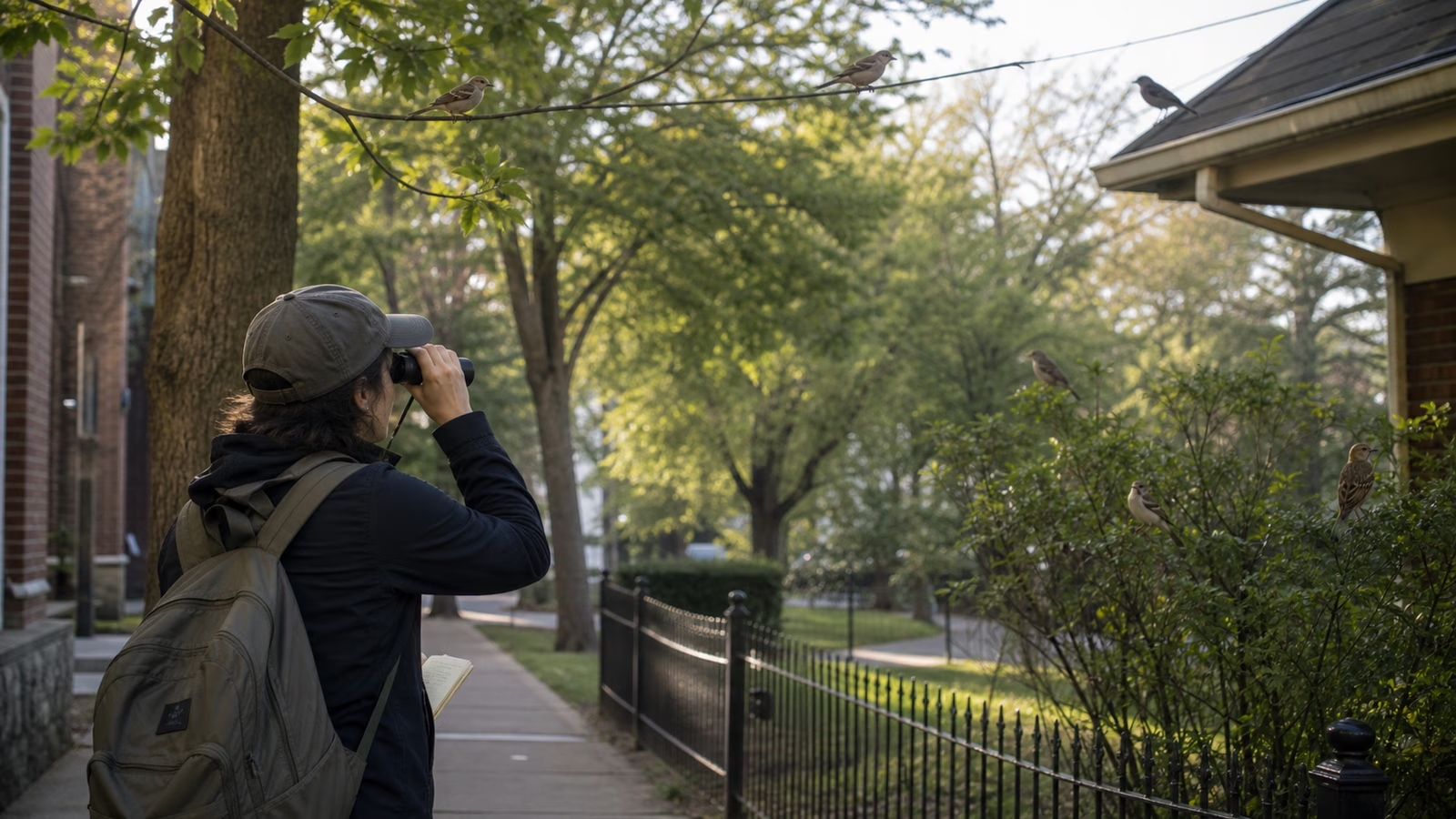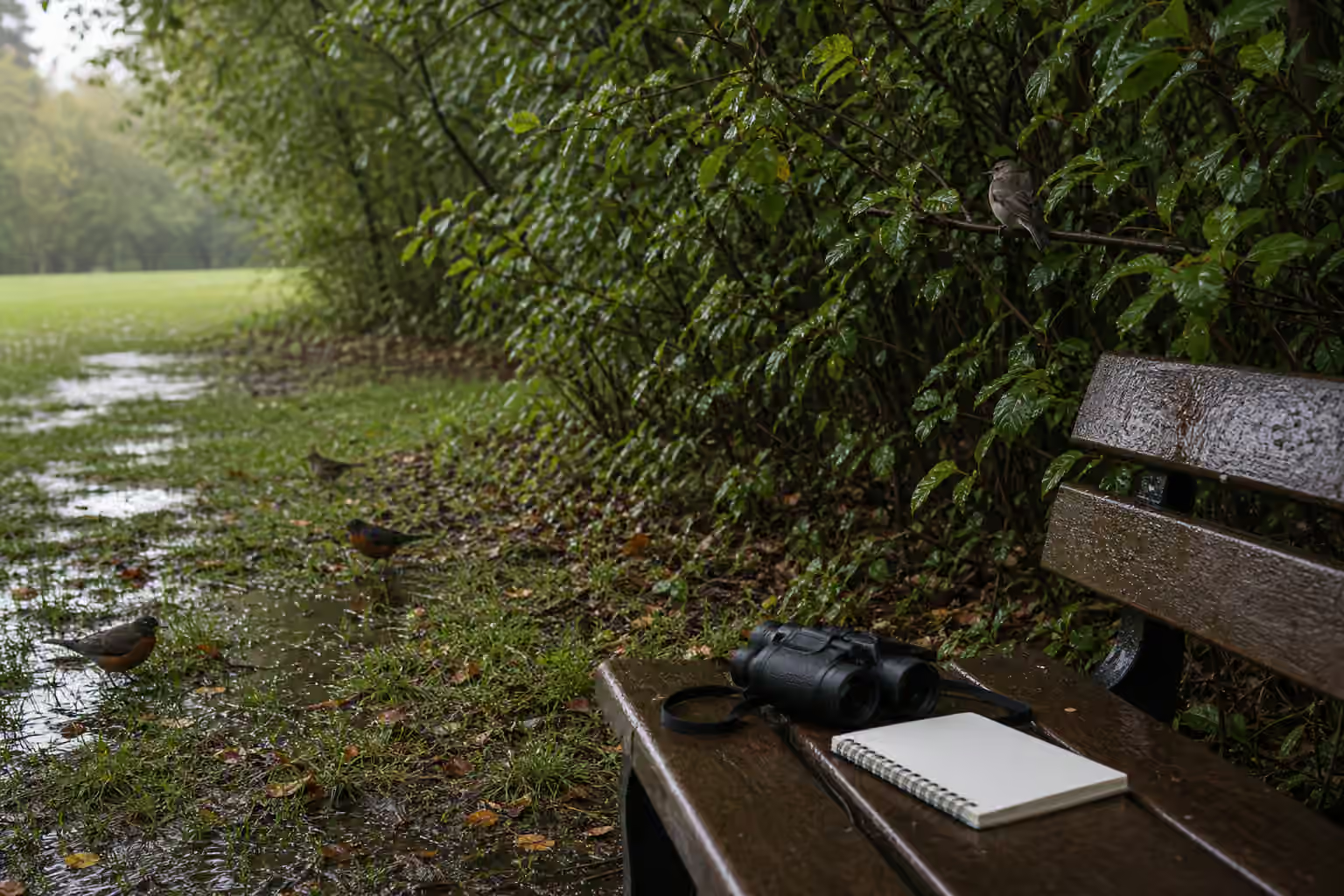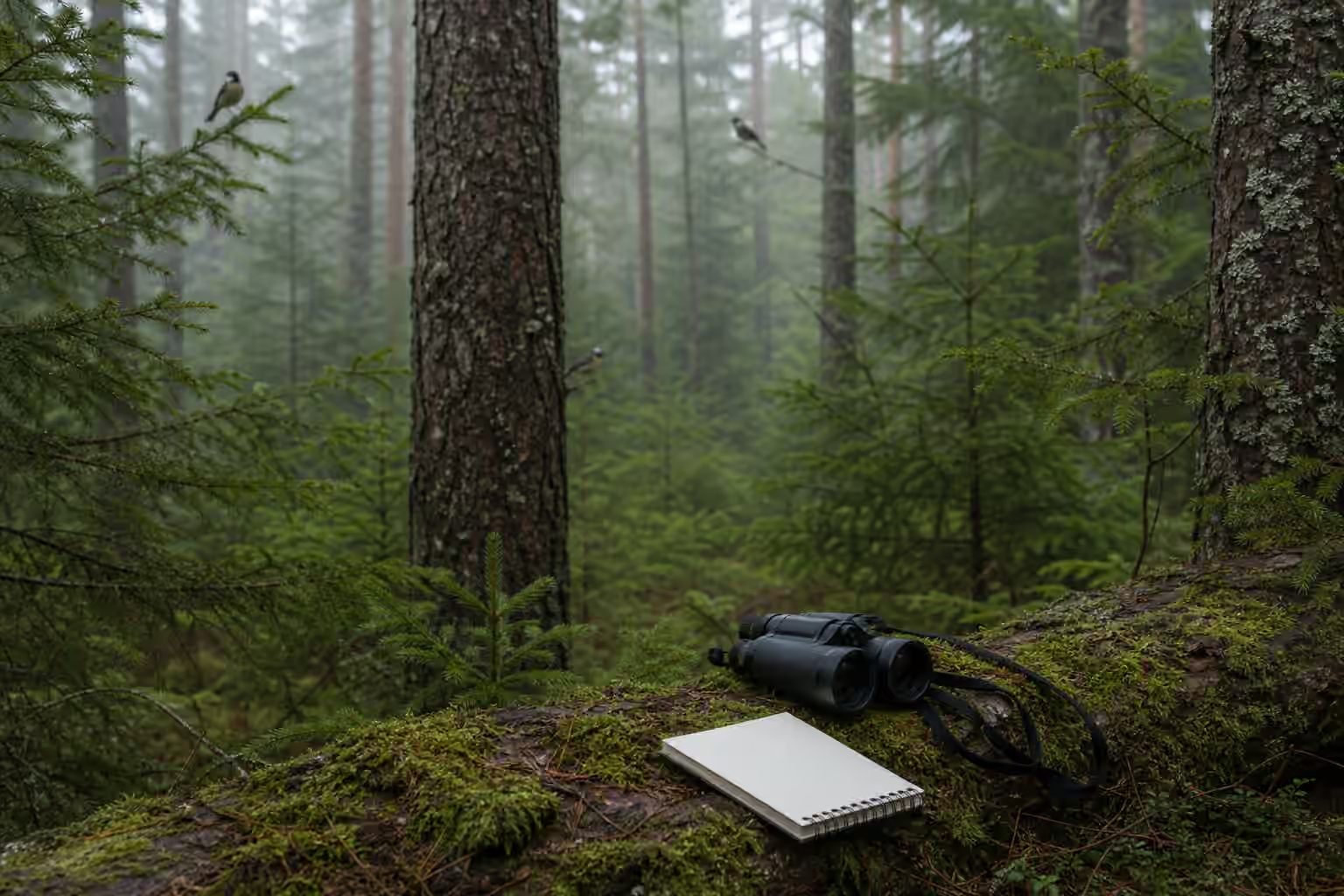
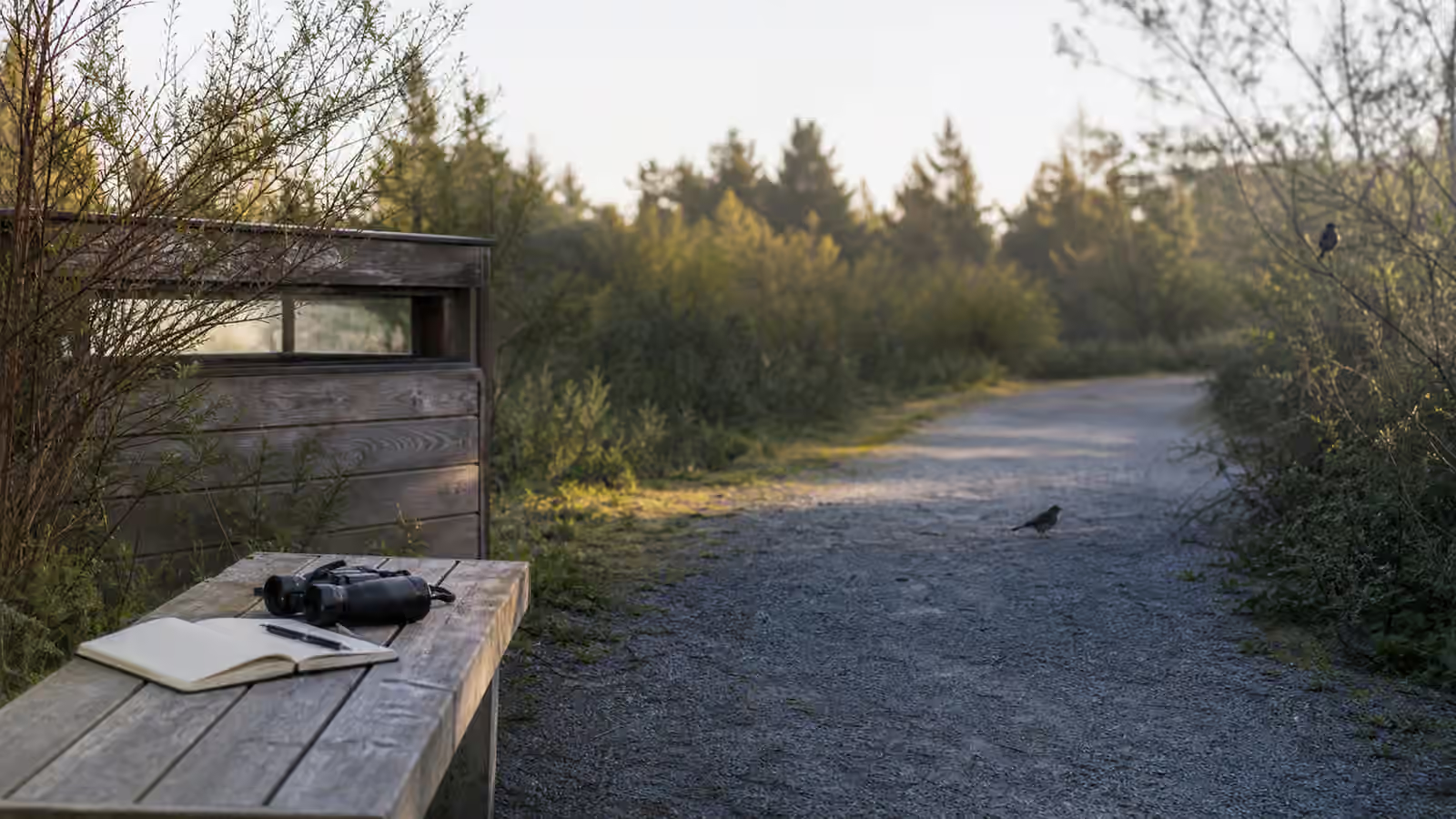
Slow birding begins with a simple decision: stop trying to prove that a walk counts because it covers ground. A bench, blind, overlook, boardwalk spur, porch rail, flat gravel loop, cemetery path, visitor-center deck, or quiet pullout can be enough for a real field session. Birds do not measure your birding by distance. They respond to food, cover, light, weather, disturbance, and time. When you stay with one small place long enough to read those conditions, the scene opens in ways a rushed route often misses.
This approach works for many reasons. It helps beginners who feel overwhelmed by fast movement. It suits birders who have limited time, limited mobility, young companions, heavy gear, or a need for reliable footing. It also suits experienced birders who know that a patient half hour at a productive edge can teach more than a restless mile. Slow birding is not a compromise version of fieldcraft. It is fieldcraft with the pace turned down until behavior, sound, and pattern become easier to see.
It connects naturally with Patch Birding , Window Birding , and Reading Bird Behavior for Beginners . All three depend on returning attention to a real place instead of treating birding as a search for the next new thing. A short loop gives you the same advantage outdoors: enough repetition to notice what changes, enough space to compare habitats, and enough restraint to keep birds doing what they came there to do.
Choose a Place That Gives Birds Choices
A good slow-birding spot is not necessarily the prettiest spot. It is a place where birds have reasons to appear. Look for edges: shrubs meeting open grass, reeds meeting water, older trees meeting young growth, a creek crossing, a hedgerow beside a path, a brush pile near taller trees, a pond cove sheltered from wind, or a flat trail where sunlight reaches one side before the other. These transitions gather food, cover, and movement lanes in one view.
Benches and blinds are useful when they face structure rather than blank scenery. A bench aimed at a wide lawn may be comfortable, but the better birding may come from a bench that lets you watch a hedge, puddle, thicket, snag, shoreline, or gap in the canopy. A blind works best when it gives birds room to use the area without every observer stepping into the open. A short loop works best when it passes through a few small habitats rather than repeating the same open view.
The principles in Where and When to Go Birding still apply. Morning light, recent rain, seasonal fruit, insect activity, exposed mud, sheltered water, and wind direction all matter. The difference is that you are not trying to chase every possible clue. You are choosing one place where several clues overlap, then letting time do some of the work.
Let the First Minutes Be Quiet
The first minutes at a slow-birding spot often feel unproductive. You arrive, birds pause, the path noise stays in your ears, and the habitat seems still. Stay with it. Settle your bag without scraping benches or railings. Lift binoculars after you have looked with your eyes. Let the small sounds separate. A chip from low cover, a wing flick in dry leaves, a distant woodpecker tap, or a swallow crossing a bright gap may be the first sign that the place is active.
This pause also keeps you from narrowing too soon. Beginners often point binoculars at the first obvious bird and miss everything around it. Before naming, map the view. Notice the nearest cover, middle distance, highest perches, open sky, water edge, path edge, and any place where birds could move without crossing open ground. A bench gives you the luxury of scanning in layers. Use it.
After a few minutes, birds that froze or shifted away may resume normal behavior. A wren-like bird may start working the tangle again. A finch may return to seed heads. A heron may step from reeds. A mixed flock may pass through the same trees you had decided were empty. Slow birding rewards that ordinary return to activity because it shows birds in context, not just as brief field marks.
Read Near, Middle, and Far
A stationary view can become richer when you divide it by distance. The near field includes the path edge, bench area, low shrubs, railings, reeds, mud, and branches close enough for careful detail. This is where small movements matter. A tail flick, leaf twitch, bill probing, or sudden shadow can reveal a bird before the whole body appears.
The middle field usually holds the strongest habitat clues. This may be the hedge line, pond edge, tree trunks, snag, meadow border, brushy corner, or canopy opening. Birds often move through this zone repeatedly because it offers both cover and visibility. Watch how they enter and leave. A bird that always drops from the same branch to the same ground patch is telling you something about food or safety.
The far field keeps the session connected to the larger place. A raptor passing over, ducks moving across water, swifts above buildings, gulls following wind, or blackbirds shifting between reedbeds can change the mood of the nearer birds. You may not identify every distant shape. That is fine. The purpose is to understand that your bench is one point inside a moving landscape.
Use Blinds and Overlooks With Restraint
A blind can make birds easier to watch, but it is not a license to crowd the window. Move slowly inside it, keep voices low, and share viewing spaces without blocking others. If the blind has narrow openings, avoid sudden lenses or hands thrust through them. Birds near blinds may be accustomed to the structure, but they still react to motion, sound, and repeated pressure.
The same restraint applies to overlooks, boardwalks, and railings. Stay on the intended surface. Do not lean into vegetation or step off-path for a cleaner angle. A slightly obstructed view is often the price of letting a place remain useful to birds. The habits in Birding Etiquette and Field Notes are especially visible at slow spots because your behavior affects the same birds for the whole session.
Photography needs the same calm. A long wait may create a lovely moment, but the goal is not to force that moment. If a bird stops feeding, watches you continuously, retreats, alarm-calls, or changes course because of your position, the better field decision is to soften your presence. Patient Bird Photography makes more sense when you have practiced simply watching without needing to close the distance.
Turn a Short Loop Into a Repeatable Route
A short loop can be more useful than a long route because it gives you comparison without fatigue or hurry. Walk it once to understand the structure. Then walk it again more slowly on another day, stopping at the same points. A bend with shrubs, a small bridge, a sunny trunk, a wet ditch, a bench facing reeds, and a patch of open sky can become your regular stations.
Repeatable stops make notes sharper. Instead of writing “small bird in woods,” you can write “small bird in low shrubs beside the bridge, tail raised, repeated dry chips.” Instead of “ducks on pond,” you can write “two diving birds beyond the left reed edge, surfacing far apart.” A short loop turns vague habitat into named places in your memory.
The route can also adapt to energy and conditions. On a windy day, you may spend more time in sheltered corners. On a hot day, shaded water may matter. After rain, muddy edges may draw feeding birds. During migration, one sunny tree may become the best station on the loop. Slow birding does not mean doing the same thing mechanically. It means knowing the place well enough to choose patiently.
Let Companions Have Different Paces
Slow birding is often more welcoming for mixed groups. A child, older relative, friend with limited stamina, photographer, sketcher, or new birder may not want the same pace. A bench or short loop gives everyone a shared base. Some people can sit. Some can scan. Some can listen. Some can walk the small circuit and return. The session still belongs together because the group is reading the same place.
This works best when the goal is clear but gentle. You are not trying to identify every bird or fill a long list. You are trying to notice what the place is doing. One person may hear a call from low cover. Another may spot a bird crossing the path. Another may notice that the pond birds moved after a dog passed on the far trail. These observations fit together, and none requires speed.
Shared slow birding also teaches courtesy. Keep optics pointed at habitat, not private spaces or people. Give other visitors room on benches and blinds. If a path is narrow, stand aside before lifting binoculars. The birds are part of a public landscape, and good birding includes being a good neighbor in that landscape.
Keep Notes That Honor the Pace
Slow sessions produce patterns if you record them. Write the place, start time, weather, light, route or station, and how long you watched. Then write observations in plain language. A useful note might describe where a bird fed, how often it returned, what layer it used, what sound it made, how it reacted to a passing raptor, or which direction a flock moved.
Do not let uncertainty disappear from the notes. “Unknown small bird, low tangle behind blind, tail cocked, repeated sharp calls” is better than a forced name. “Large dark raptor over far treeline, circling, small birds quiet for two minutes” is useful even if the species remains open. Birding Checklists and Local Records explains why context and effort matter; slow birding gives you excellent context if you take the time to write it down.
After several visits, review the notes. Which stop is active first in the morning? Which birds use the same shrub? Which water edge matters after rain? Which calls come from the same hidden place? Which station is quiet until the sun reaches it? These patterns are the real reward. They turn a modest bench or short loop into a familiar field site.
Know When to Move and When to Stay
Patience is not the same as stubbornness. If a spot is heavily disturbed, unsafe, exposed to harsh glare, blocked by maintenance, or simply less active than another nearby edge, move. The slow-birding skill is not staying forever. It is giving a place a fair reading before deciding.
When you do move, move with purpose. Shift from the bench to the next bend, from the blind to the water edge overlook, from the open path to the sheltered side, or from the near shrubs to a view of sky. Stop again. Let the new place settle. The rhythm is watch, understand, move, and watch again, not wander until a bird appears.
A good short session may end with only a few names. It may also end with a better understanding of one bird’s route through cover, one call from a hidden thicket, one feeding patch after rain, or one place to revisit in another season. That is enough. Birding grows when attention becomes repeatable, and a bench, blind, or short loop can teach that as well as any long trail.