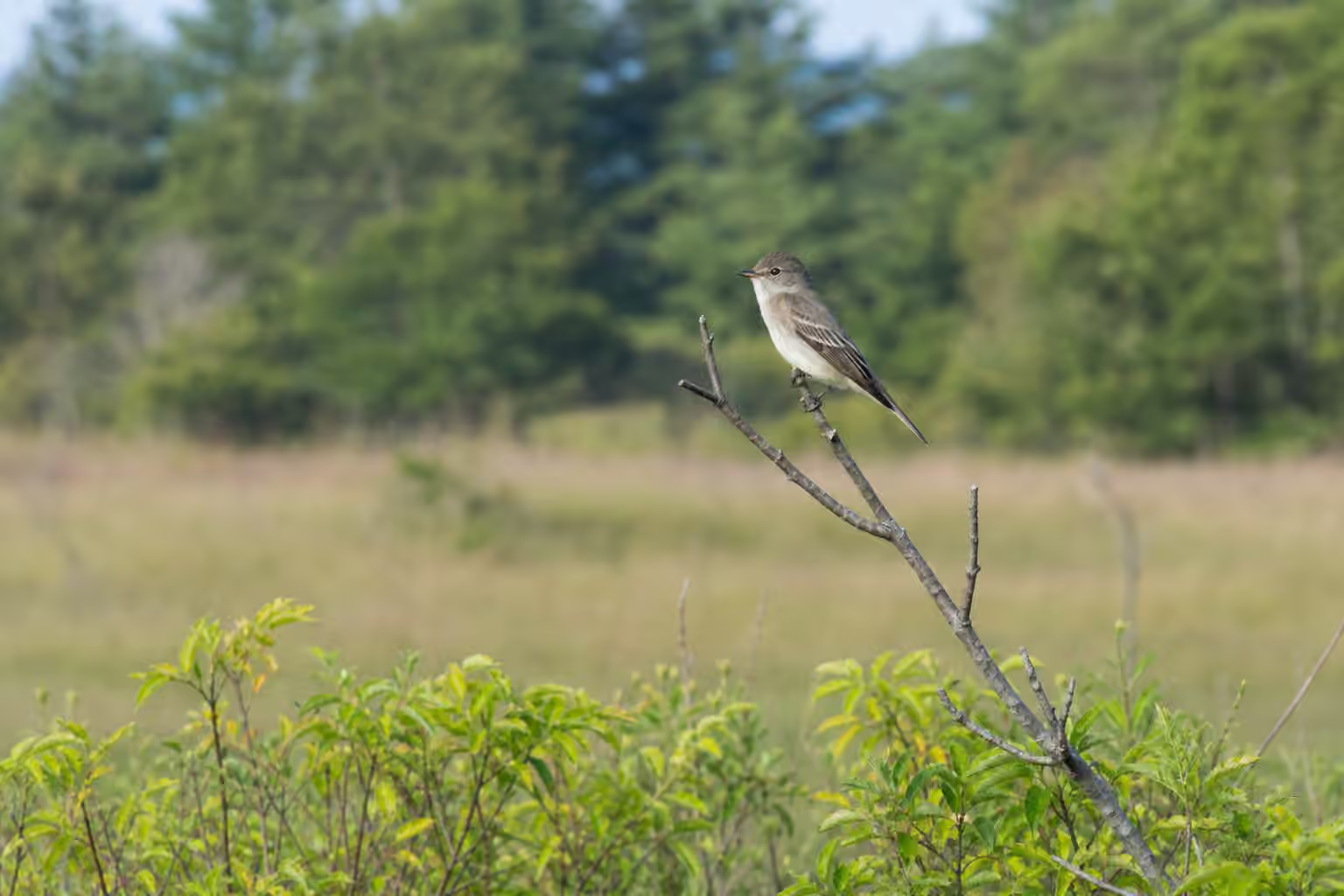
The phrase “little brown bird” sounds like defeat, but it is often the beginning of better birding. A small streaky bird in grass, brush, reeds, leaf litter, or a winter flock may not give you bright color or a clean side view. It may turn away, dive into cover, or look almost exactly like the next brown bird that appears. The temptation is to either force a name too quickly or give up entirely.
Sparrows teach a better middle path. They ask you to slow down, use several clues at once, and become comfortable with partial knowledge. The bird may be a true sparrow, a bunting, a finch, a wren, a juvenile, or another small brown bird depending on your region and season. The practical field method is the same: read the place, then the shape, then the behavior, then the marks.
This guide builds on How to Identify Birds Without Guessing and Reading Bird Behavior for Beginners . Those guides explain why structure and behavior matter before color. Sparrows are where that lesson becomes useful every few yards.

Begin With the Habitat
Many beginners look at a small brown bird and immediately open the field guide to a page full of similar faces. Before doing that, look around the bird. Habitat will not give you a final answer, but it will keep your guesses honest.
A sparrow feeding under a picnic table in a city park is using a different world from a sparrow ticking from a cattail edge, a bird scratching under woodland leaves, or a small flock rising from dry seed heads in a weedy field. Some birds prefer open ground with quick access to cover. Some stay low in dense shrubs. Some climb reeds, work brush piles, or feed along the damp edge between mud and grass. A bird that appears in a backyard hedge may be common and familiar, while a similar-looking bird in a salt marsh, desert wash, prairie, alpine meadow, or fallow field may belong to a more specialized set.
The useful habit is to name the setting in plain words before naming the bird. “Low in roadside grass near shrubs” is already a better note than “brown sparrow.” “Feeding on the open path, then diving under blackberry canes” tells you something about confidence, cover, and feeding style. “Chipping from cattails at pond edge” points you toward a different group of possibilities than “scratching under dry oak leaves.” If you keep a local route through Patch Birding , these habitat notes become more powerful because you learn which small brown birds are usual in each corner.
Shape Comes Before Pattern
Sparrows are often called hard because their plumage is subtle, but their shapes are not all the same. Some look chunky and round-headed. Some look long-tailed. Some sit upright on a weed stem. Some stay low and horizontal on the ground. Some have a heavy seed-cracking bill that changes the whole expression of the face. Others have finer bills and a slimmer body that should make you pause before calling them sparrows at all.
Start with body size compared with a familiar bird. Is it smaller than the common house sparrows or robins you know, roughly sparrow-sized, or surprisingly large and long-tailed? Then look at the bill. A deep conical bill suggests a seed-eating bird, though it will not identify the species by itself. A very thin bill, a curved bill, or a long probing bill may mean you are not looking at a sparrow in the first place.
Tail length and posture matter too. A bird with a short tail that pops up from grass may feel different from a long-tailed bird moving through brush. A bird that constantly flicks or pumps its tail is giving you behavior and shape together. A bird that perches on top of a shrub to sing may be easier to read than the same bird later hidden in stems. When the plumage feels confusing, return to the outline.
Faces Are Maps, Not Decorations
Once you have habitat and shape, the face becomes useful. Beginners often search for one dramatic mark, but sparrow faces are usually built from several quieter lines and patches. Look for an eyebrow stripe, a dark line through the eye, a pale ring around the eye, a central crown stripe, darker crown stripes, a cheek patch, a mustache mark, or a pale throat bordered by darker marks.
Do not try to remember every technical name at first. Describe the face as if you were sketching it for yourself. Was the head plain, striped, or capped? Did the bird have a strong pale eyebrow? Did the eye sit in a dark line? Was there a spot in the middle of the breast? Did the throat look clean compared with the streaked sides? These observations are less glamorous than a species name, but they are the pieces that make later comparison possible.
Light can distort these marks. A bird facing the sun may look sharply patterned. The same bird in shade may collapse into brown and gray. Feathers also change with wear, age, and season, as described in Molt and Seasonal Plumage . If a mark appears weak, do not build the whole identification on it. Wait for the bird to turn. Check whether another bird in the flock shows the same pattern. Let the face be one chapter, not the whole story.
Streaks Need Context
Streaking is one of the classic small-brown-bird clues, but it can become a trap when treated too simply. A bird may have fine streaks, broad streaks, blurry streaks, sharp dark streaks, streaks only on the sides, a streaked back but plain breast, or a central breast spot where streaks gather. Juvenile birds can be streakier than adults. Worn feathers can soften contrast. A fluffed bird can hide or exaggerate marks.
Instead of writing “streaked,” add where the streaks were. The breast was heavily streaked. The sides were streaked but the center of the belly looked pale. The back had bold dark lines. The head looked striped but the underparts were plain. These small distinctions keep your note from becoming a dead end.
Color still has a role, but it should be precise. Warm reddish wings, a gray face, a buffy eyebrow, a white throat, a yellowish spot before the eye, or a rusty crown can all matter. What does not help much is the word brown by itself. Brown is the background. Your job is to find the pattern inside it.
Behavior Separates Similar Birds
Small brown birds are often easiest to understand when they move. Watch how the bird feeds. Does it scratch both feet backward in leaf litter, hop under shrubs, cling briefly to stems, pick seeds from a grass head, drop from a perch to the ground, or stay hidden and call from cover? Does it feed alone, in a loose flock, in pairs, or among other species?
Some sparrows seem almost mouse-like as they move low through grass. Others pop up to a fence, sing from an exposed stem, then disappear again. A bird in a winter flock may feed quietly until one alarm note sends the group into a hedge. A bird during breeding season may carry food, defend a small territory, or sing from the same perch each morning. These behaviors will not always give you a name, but they narrow the question and make the encounter memorable.
This is where Birding by Ear helps even if you cannot identify songs yet. Many little brown birds reveal themselves first by a chip, buzz, trill, thin seep, dry rattle, or repeated phrase from cover. Write the sound in ordinary language and note where it came from. A sound low in marsh reeds suggests a different search image from a dry chip in a brush pile.
Season Changes the Cast
The same field can hold different small brown birds across the year. Spring may bring singing males and territory lines. Summer may add juveniles that look softer, streakier, shorter-tailed, or clumsier than the adults you expected. Fall can bring migrants in duller plumage, mixed flocks, and birds feeding quietly before moving on. Winter may concentrate sparrows around seed heads, brush piles, hedges, wet edges, and sunny sheltered corners.
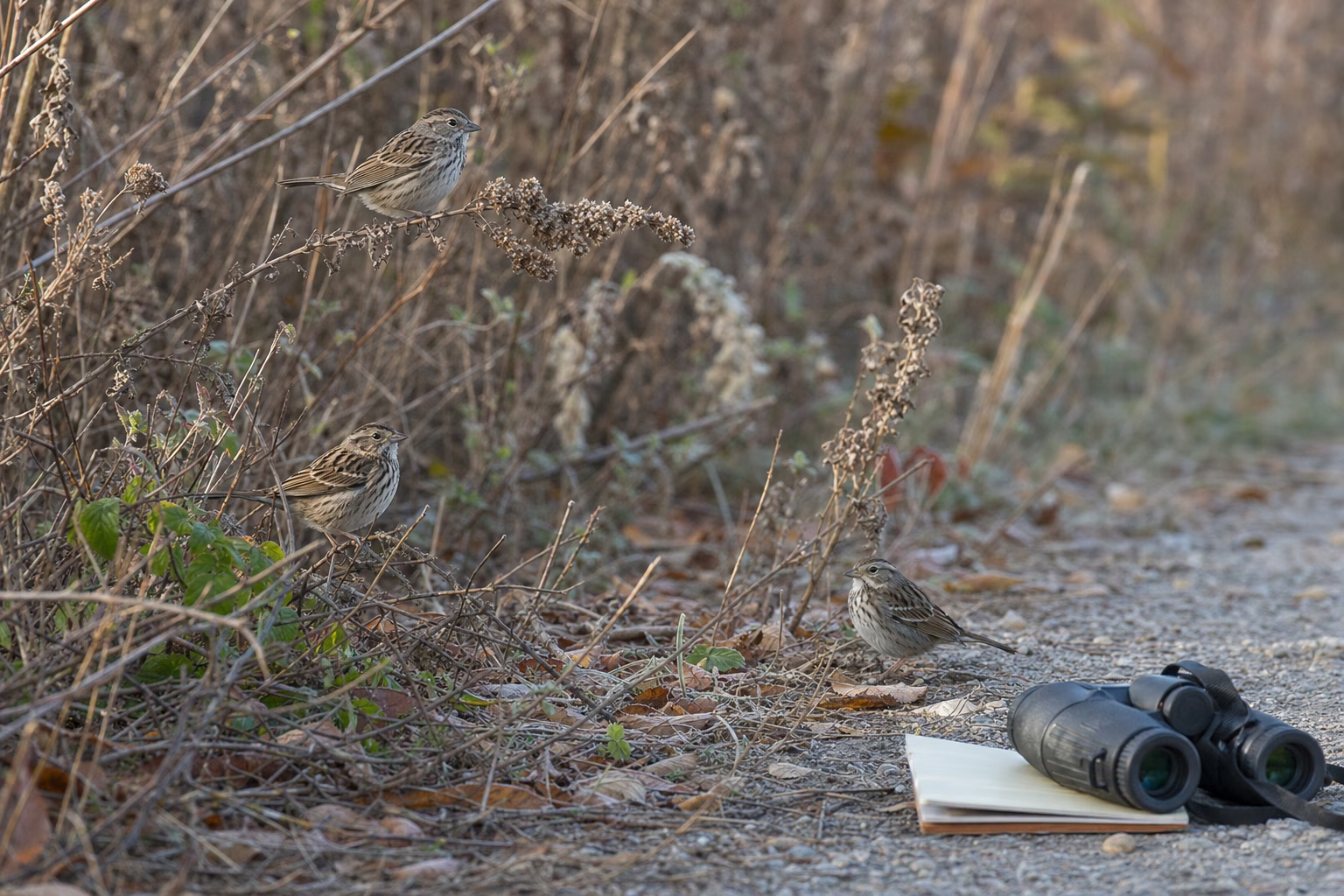
Winter Birding is especially good practice for sparrows because the season often strips the scene down to food and cover. A weedy ditch, unmowed edge, community garden, prairie remnant, marsh border, or backyard shrub line may suddenly become important. Birds may flush before you notice them, then drop back into cover a short distance away. Instead of chasing, stand still and watch where they reappear. Their preferred escape routes are part of the identification story.
Season also teaches humility. A sparrow that seems obvious in breeding plumage may look quieter later. A young bird may not match the adult plate. A brief migrant may appear in a place where you do not normally see it. Treat the calendar as context, not a shortcut. It should make you ask better questions rather than force a quick answer.
Make Notes That Can Survive Uncertainty
The best sparrow notes are honest enough to remain useful after the bird is gone. A note that says “sparrow?” may be emotionally accurate, but it does not leave much to study. A better note might say that a sparrow-sized bird was feeding low in dry grass beside a brush pile, had a chunky bill, warm brown streaked back, pale eyebrow, streaked breast with a clearer belly, and a sharp chip call. That note may still end with a question mark, but it gives your future self evidence.
Draw if it helps. The drawing can be ugly. A simple face pattern, tail length, or breast-streak sketch can preserve relationships that words lose. If you take a photograph, use it as a record, not a license to crowd the bird. The restraint from Patient Bird Photography applies strongly to flocks feeding in cover, especially in cold weather or during migration.
When you return home, compare your note with a field guide or trusted local resource. Look first at the species expected in that habitat and season. Then compare structure, face, streaking, and behavior. If the answer remains uncertain, let it remain uncertain. A clean “sparrow species, not identified” with good notes teaches more than a confident wrong name built from one rushed glance.
Let Common Sparrows Become Teachers
The way through little brown birds is not memorizing every similar species at once. It is learning a few common local birds deeply. Watch the sparrows that use your yard, park, field edge, marsh, campus, trail, or roadside. Learn their normal posture, flock size, feeding height, call notes, favorite cover, and seasonal changes. Once a common bird becomes familiar, the next bird that is not quite the same becomes easier to notice.
Backyard and neighborhood birding are useful here. A brushy corner, native seed heads, leaf litter, or a hedge with nearby open ground can create repeated views without turning the outing into a chase. Backyard Bird Habitat is not only about attracting birds. It is also about creating a place where ordinary behavior can be watched carefully from a respectful distance.
Sparrows reward this kind of attention because they are not trying to impress you. They feed, hide, chip, sing, shuffle through stems, vanish into grass, and return when the path quiets. At first they may look like variations on brown. After enough patient looks, the field begins to sort itself into shapes, faces, habits, and seasons. The little brown bird stops being a problem to solve immediately and becomes a reason to look better.