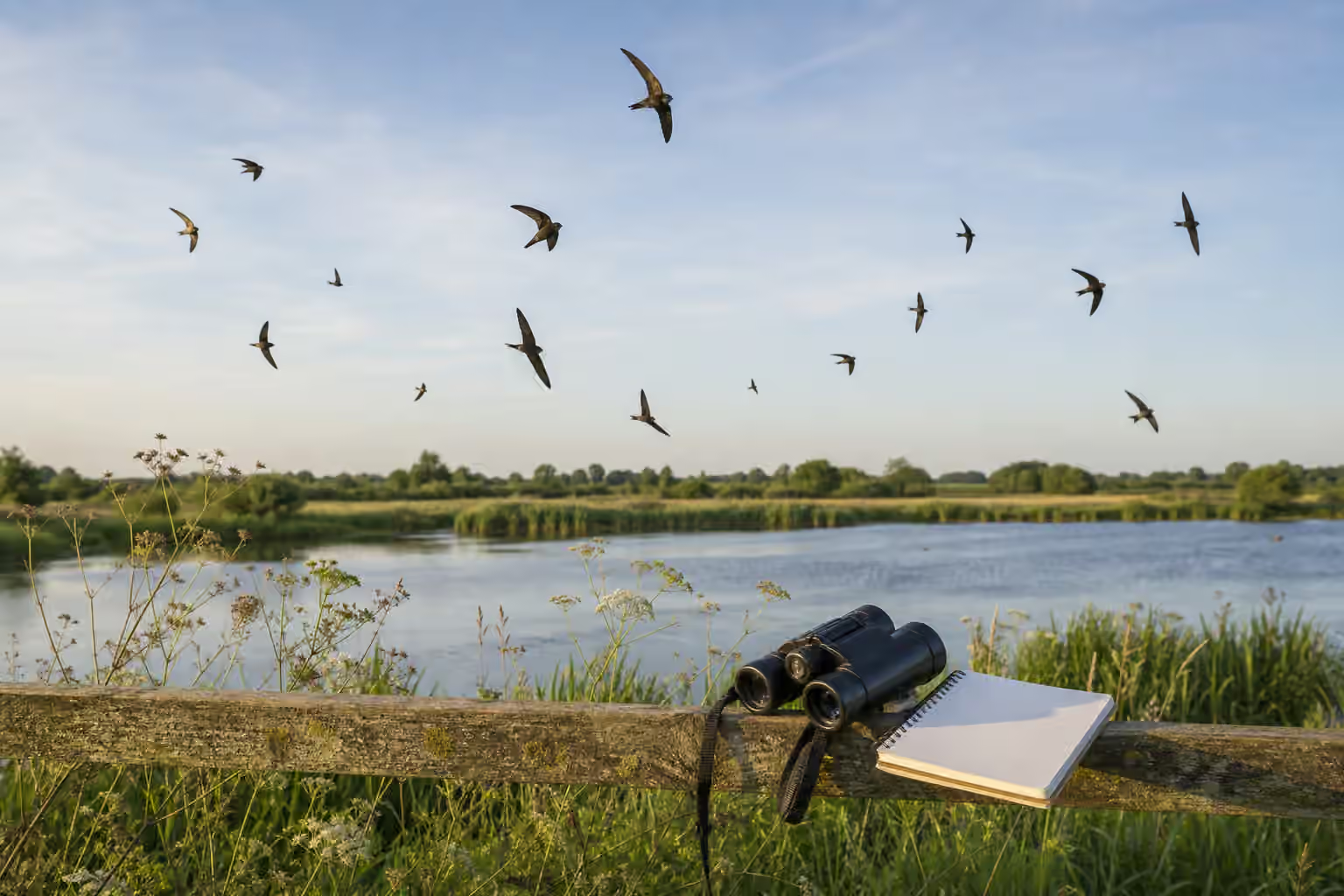
Swallows, swifts, and martins can make a beginner feel late to every clue. They are overhead, then behind you, then low over water, then gone behind trees. The wings are long, the body is small, the light is wrong, and the bird never pauses long enough to look like a picture in a guide. By the time you raise binoculars, the shape has already banked away.
The way into these birds is to stop expecting perched-bird views. Aerial insectivores are built around movement. They feed, travel, display, gather, and sometimes drink in the air. Their field marks are not only colors and patches. They are wing shape, tail shape, flight rhythm, height, flock behavior, weather, feeding surface, and the way a bird turns. This guide builds on How to Identify Birds Without Guessing by moving the same identification order into open air.
Watch the Whole Airspace First
Before following one bird, read the airspace. Are birds high above a field, low over a pond, skimming a river, circling a barn, crossing a city street, feeding around lights at dusk, or streaming past a headland? Height and place are not background details. They are part of the observation.
Open water often concentrates insects and gives low-flying birds a surface to work. Meadows, marshes, farm edges, bridges, cliffs, buildings, tree lines, and open sky can all shape flight paths. Water’s Edge Birding and Grassland Birding both help here because aerial birds often stitch habitats together. A swallow may feed above a pond, perch on a wire over a field, and vanish toward buildings in a single minute.
Use your eyes before binoculars. Binoculars magnify the bird, but they also narrow the view. If you do not know the flight path, you may chase empty sky. Watch for repeated routes. Some birds circle the same patch of insects. Some skim one edge of water again and again. Some pass through in a directional stream. Once you understand the pattern, binoculars become much easier.
Shape Comes Before Color
Color is often the least reliable clue for fast birds. A glossy back can look black, blue, brown, or colorless depending on angle. A pale underside can flash and vanish. Shadows under the wing can create false marks. Shape lasts longer.
Look at the length and curve of the wings. Swallows often show long pointed wings but may look more flexible and buoyant than swifts. Swifts can appear sickle-winged, with a compact body and rapid, scything flight, though local species vary. Martins are part of the swallow family, but many birders think of them as larger, broader, or more communal around nesting sites where they occur. The exact names depend on region, but the habit is the same: build a shape impression before grabbing for color.
Tail shape matters too. Is the tail forked, squared, notched, short, long, or hard to see? Does the bird twist enough to reveal the tail repeatedly, or does it slice through the air so fast that the tail barely registers? One clean view of tail shape can narrow a question, but do not invent it from a blur. If you did not see the tail, write that you did not see it.
Flight Style Is a Field Mark
Flight style can feel vague until you name the pieces. Does the bird flap continuously, glide often, bank sharply, flutter low, sail high, or snap through turns? Does it feed in smooth loops, quick zigzags, broad circles, or straight lines? Does it return to the same wire or nest area, or does it stay airborne the whole time?
A swallow feeding low over water may look graceful and looping. Another species may fly with quicker wingbeats and sudden turns. A swift may seem almost never to perch in your view, slicing overhead in groups and calling as it passes. A martin colony may create a steady traffic of birds around cavities, boxes, cliffs, bridges, or buildings, depending on the species and place. You do not need to solve every identification immediately. You need to turn “fast bird” into a set of visible habits.
This is where repeated watching matters. Spend five minutes with one group instead of following every bird that crosses the sky. The rhythm will become clearer. You may see that the lowest birds are feeding over a sheltered edge, while higher birds are moving through. You may notice that one larger bird flies differently from the smaller ones. The air stops being random when you let the birds draw their routes long enough.
Weather Moves the Insects
Aerial insectivores follow food, and flying insects respond to weather. Warmth, wind, rain, pressure changes, cloud cover, and evening light can all change where birds feed. After rain, insects may rise from grass or water edges. On windy days, birds may work sheltered sides of hedges, banks, buildings, or reedbeds. In cool or damp weather, birds may feed lower where insects are concentrated. On warm calm days, some birds may feed high enough that binoculars barely help.
Weather Window Birding gives the broader field habit of matching bird activity to conditions. With swallows and swifts, weather can be the whole explanation for a sudden gathering. A pond that seemed empty yesterday may hold dozens of feeding birds today because insects are available in a narrow layer above the surface. A city block may become active at dusk because insects collect around warm walls or lights. A meadow edge may go quiet when wind scours the open side.
Notice weather in your notes. “Swallows low over pond in light rain” is more useful than “many swallows.” It tells you why the birds may have been visible and where to look next time under similar conditions.
Perches and Nest Sites Add Context
Not every aerial bird stays in the air forever. Swallows and martins often perch on wires, fences, reeds, bridge rails, roofs, dead branches, or exposed stems. A perched view may give color, throat pattern, tail shape, or size comparison that flight withholds. It may also show social behavior: preening, calling, jostling, feeding young, gathering before movement, or returning to nest areas.
Use perches gently. A nesting site is not an invitation to crowd closer. Birds using bridges, barns, banks, cliffs, porches, boxes, or building crevices may be raising young or guarding a site. Nest Season Birding applies here even when the birds are fast and common. Watch from a distance where adults keep moving naturally. If birds alarm, circle tightly, hesitate to enter, or repeatedly divert from a site, give them more room.
Perches also help with comparison. If several birds line up on a wire, look at size, tail, posture, and wing length beyond the tail. A bird in the hand of the air is hard to measure. A bird beside another bird becomes easier.
Sound Can Point Before Sight
Swallows and swifts often announce themselves with chatter, twittering, sharp calls, or high notes that carry overhead. The exact sounds vary by species and region, but the listening habit is transferable. A call from open sky asks for a different search than a chip from a shrub. A repeated chatter around a bridge or roofline may point to active birds before you see them.
Birding by Ear recommends listening for shape, rhythm, place, and repetition before forcing names. That works well here. Is the sound a loose chatter from birds circling low, a sharp call from fast birds high overhead, or a busy noise around a nesting structure? Does the sound move quickly across the sky or stay centered over one place?
When you hear them first, resist spinning in circles with binoculars up. Find the direction with your ears and eyes, then lift the binoculars only after you catch movement. Aerial birding is often a dance between wide attention and brief magnified checks.
Make Honest Notes From Motion
Fast birds encourage vague notes because everything happens quickly. Push against that by writing one or two clear observations instead of a finished name. Long pointed wings, shallow forked tail, low looping flight over pond, several birds returning to wire. Small dark swift-like birds high overhead, rapid scything flight, calling, no perched view. Larger swallow-type bird around bridge, pale underside seen briefly, entered underside structure once, distance moderate.
Those notes may not settle the identification, but they preserve the evidence. They also show what was missing. If you never saw the rump, throat, tail, or upperparts well, say so. Birding Checklists and Local Records is clear that uncertainty is not a flaw. It is part of an honest record.
Photos can be difficult with aerial birds. A blurred image may still confirm wing shape or tail length, but it can also distort the bird. Use photos as supporting evidence, not as a replacement for watching the flight. The flight itself is the field mark you came to learn.
Let the Air Stay Alive
The reward of aerial birding is not only identification. It is learning to see the sky as habitat. Insects rise over water. Wind pushes food to edges. Birds sort themselves by height, speed, and route. A quiet afternoon suddenly fills with movement, then empties again. A species you once saw only as a dash becomes recognizable by its way of turning.
Some birds will remain unnamed, especially when they are distant, backlit, or mixed with similar species. That is acceptable. The better goal is to leave with stronger questions. Which birds were low and which were high? Which used wires? Which seemed to stay near water? Which moved straight through? Which calls belonged to the group? Which weather conditions brought them down?
Swallows, swifts, and martins ask you to bird in motion. Stand where the air is active, keep the whole scene in view, and let repeated flight paths teach your eyes. The names will come more easily after the sky has stopped looking empty between blurs.