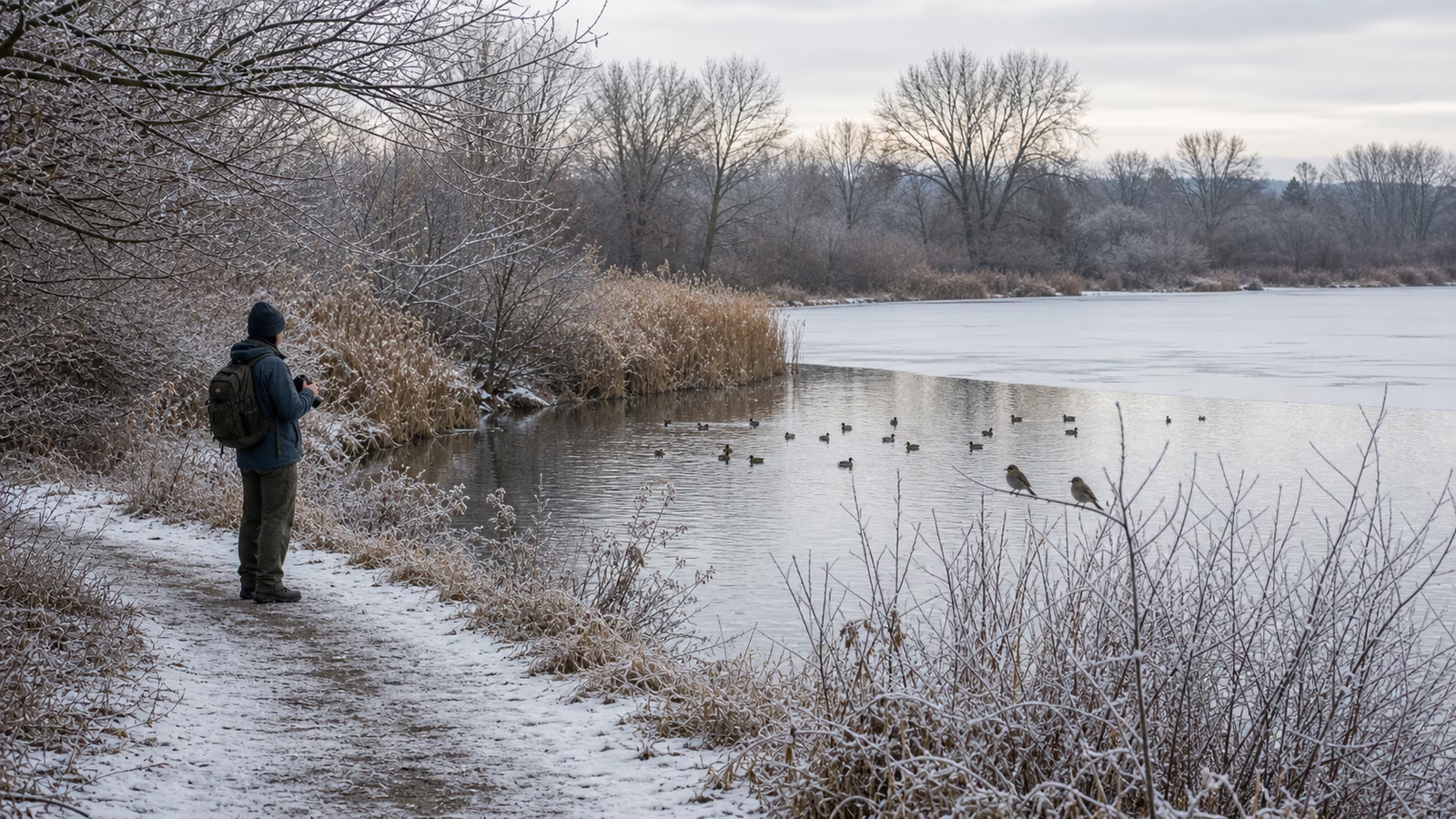
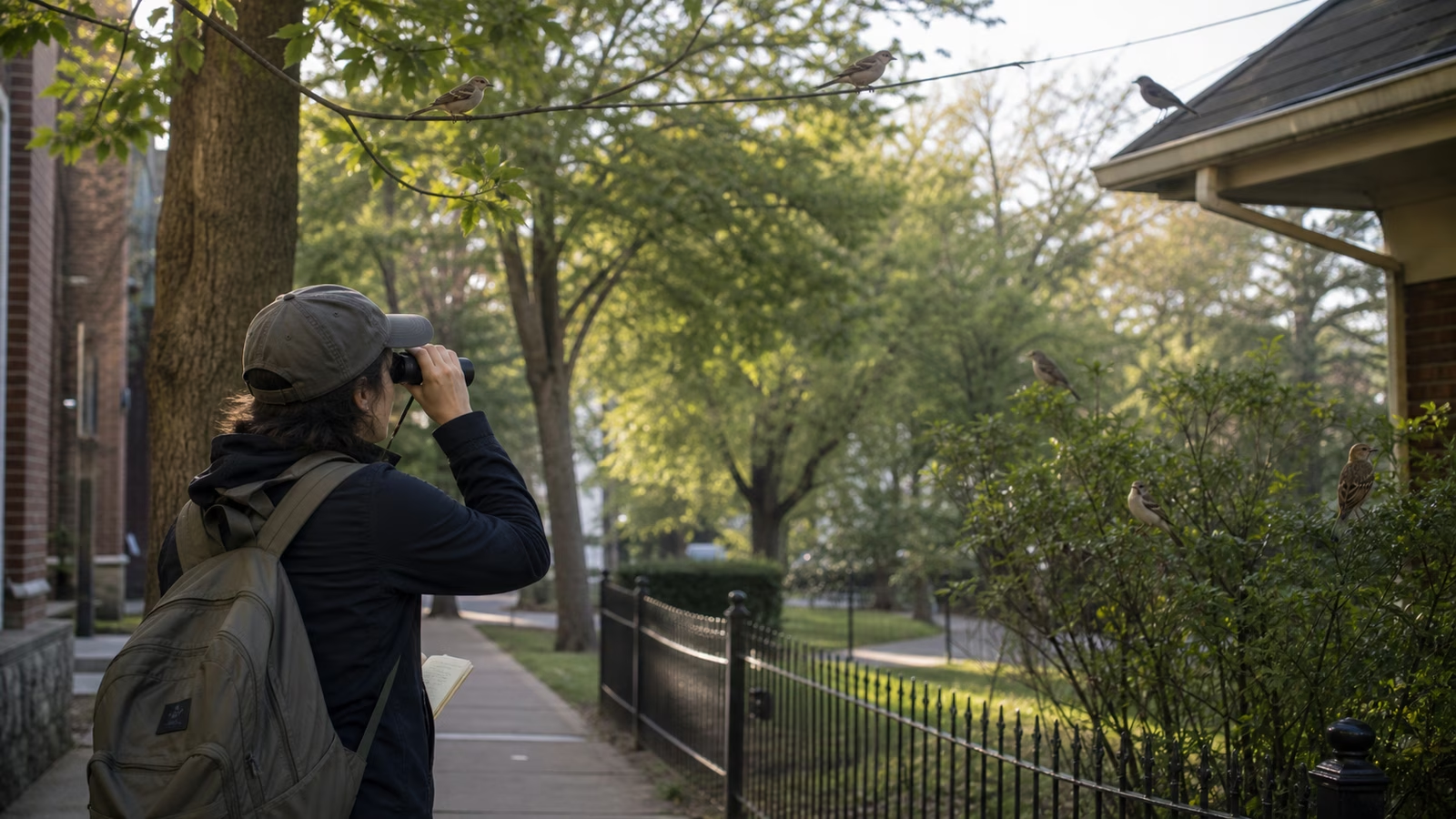
The first challenge in urban birding is believing that the place deserves attention. A city block can look too paved, too loud, too ordinary, or too familiar to count as habitat. Then a small bird drops from a plane tree to a curbside puddle, a swift cuts between buildings, a hawk passes above the traffic, or a sparrow vanishes into a hedge beside a bus stop. The city has not become wild for a moment. It has been usable by birds all along.
Urban birding asks for the same calm attention as any other birding, but the clues are arranged differently. Instead of a forest edge, you may have a row of street trees, a schoolyard fence, a roofline, a drainage channel, a cemetery wall, an alley with weeds, a pocket park, or the planted strip outside an apartment building. Birds use these places for food, cover, height, warmth, water, and safe movement. Once you learn to read those needs, the city stops looking like a blank map.
Start with the small green seams
The best city birding often begins at seams, not at landmarks. A seam is any place where one kind of urban space meets another. A sidewalk meets a hedge. A parking lot meets a row of trees. A roof edge meets open sky. A canal meets reeds. A courtyard meets shrubs and window ledges. These edges concentrate choices in a tight space, which is why birds often use them.
On a first walk, resist the urge to cover distance. Choose a block with mature trees, a small park entrance, a community garden fence, or a planted median, then slow down. Look at the ground under benches and shrubs, the middle branches, the tops of trees, the wires, the gutters, and the open sky between buildings. Urban birds may feed low and perch high within a few seconds. If you only search at eye level, you miss much of the city.
This is the same habitat logic described in Where and When to Go Birding , compressed into smaller spaces. Food, water, shelter, and movement still matter. The difference is that a single block may contain all four in fragments.
Let buildings become part of the habitat
Buildings are not just background. They create ledges, shadows, heat, shelter from wind, nesting cavities, perches, and hunting lines. Roof edges can be lookout posts. Tall walls can funnel air and insects. Eaves can offer shelter. Glass towers can reflect sky in confusing ways. Old stone, brick, vents, signs without readable interest, balconies, and gutters can all shape where birds land or avoid landing.
Watch rooflines with patience. A bird perched there may look like a bump until it turns its head. Swifts, swallows, gulls, crows, raptors, and many smaller birds use the open air above buildings, but they do not all move the same way. Some glide steadily. Some flicker and twist after insects. Some travel in loose lines. Some circle over warm surfaces. Shape, wingbeat, and behavior matter more than a perfect color view when the bird is high or backlit.
This is where the method from How to Identify Birds Without Guessing becomes especially useful. In the city, light is often awkward and views are brief. Start with size, shape, flight style, posture, and behavior. A dark bird on a roof is not just a dark bird. It may be compact or long-tailed, upright or hunched, alone or part of a group, scanning below or simply resting.
Listen through the noise
Urban sound can make birding by ear feel unfair. Traffic, construction, voices, air conditioners, and sirens can flatten the soundscape. Still, birds often use the city in repeating patterns, and repetition is a gift. The same singer may choose the same antenna each morning. The same alarm calls may come from the same hedge when a cat passes. The same flock may gather in the same tree before moving to feed.
Do not try to hear everything. Find one sound and place it. Is it coming from the top of a tree, a shrub, a roof, an alley, or open sky? Is it a chip, whistle, chatter, rattle, trill, or harsh call? Does it repeat at even intervals, or does it burst out when something moves nearby? You do not need the name immediately. A sound tied to a location and behavior is already useful.
The habits in Birding by Ear work well in cities because they begin with place. A noisy street may still have quiet pockets. Early morning, courtyards, cemeteries, riverside paths, school grounds before arrival, and side streets after rain can all lower the background enough for voices to separate. Even when the noise remains, you can learn which calls cut through it.
Read human routines without staring at people
Birds often respond to the city’s daily rhythm. A plaza may be good before foot traffic builds. A park lawn may fill with feeding birds after sprinklers run or after rain softens the soil. A market street may attract scavengers after closing. A quiet schoolyard tree may be busy on weekends. A roof garden may become active when wind drops. These patterns are not random, and they are not only about birds. They are about how people, maintenance, water, food scraps, pets, vehicles, and light shape the available space.
Keep your attention respectful. Urban birding happens close to homes, workplaces, schools, and private courtyards. Use binoculars carefully so people do not feel watched. Do not aim optics into windows or private spaces. Stay on public paths and observe posted rules. The distance and courtesy principles in Birding Etiquette and Field Notes matter even more when the birding area is shared with people who are not there for birds.
The same restraint helps the birds. A city bird may seem tolerant because it does not flee immediately, but tolerance is not an invitation to crowd it. If a bird stops feeding, moves away, alarm-calls, or keeps tracking your movement, give it more room. Binoculars let a small patch of street habitat remain usable.
Notice water in plain forms
Urban water is often modest. It may be a pond in a park, a canal behind apartments, a drainage basin, a fountain edge, a river wall, a low spot after rain, or a puddle along a curb. Birds notice it anyway. Water can bring drinking, bathing, insects, mud, exposed edges, and cover. A shallow puddle may attract birds for a few minutes after a storm, while a canal may hold regular routes for herons, ducks, swallows, kingfishers, gulls, or blackbirds depending on region and season.
Approach city water the same way you would approach a pond or shoreline. Stop before the edge, scan near to far, and look for small movements along mud, reeds, rocks, railings, and overhanging branches. The field habits in Water’s Edge Birding apply even when the water is squeezed between roads and buildings. A narrow channel can still be a travel corridor. A wet sports field can still draw feeding birds. A rain garden can still hold insects and cover.
City water also changes quickly. After heavy rain, low lawns and drainage swales may become temporary feeding sites. During dry stretches, a reliable fountain, seep, or shaded puddle may become more important. Write those details down. Over time, you will know which wet places are decorative and which ones birds actually use.
Make a short urban route
A good urban route does not need to be scenic. It needs repeatable habitat. Start with a path you can walk safely and legally without thinking too much about logistics. A useful route might connect a street with mature trees, a small park, a planted courtyard visible from a public path, a drainage ditch, a school fence with shrubs, and a roofline with open sky. The route can be short enough to walk before work or after dinner.
Walk it the same way several times. Begin with your eyes before lifting binoculars. Stop at the same corners. Scan the same tree crowns. Check the same roof edges. Listen from the same bench. Notice which places are active only in the morning, which become useful after rain, which are too disturbed at certain hours, and which birds appear in the same sequence. This is patch birding in miniature, and Patch Birding gives the broader habit a name: repeat visits turn ordinary places into places you can read.
The value of a repeated city route is not a long species list every time. The value is that changes become visible. One week the plane trees hold only familiar residents. Another week migrants move through them at dawn. One winter morning the open lawn is quiet, but the berrying shrub is busy. One summer evening the sky over a warm roof fills with insect hunters. A visiting rarity is exciting, but the deeper skill is knowing what is normal enough that the unusual stands out.
Keep notes that capture the city
Urban field notes should include the usual details, but they also benefit from city-specific context. Write the date, time, weather, and birds if you know them. Then add the part of the city the bird was using. Was it feeding under cafe tables, calling from a street tree, perched on a chimney, moving along a canal, hunting over a parking lot, bathing in a puddle, sheltering in ivy, or crossing between two pocket parks? That setting may explain more than color alone.
Behavior is especially helpful in built places. A small bird on a wire may be flycatching from a perch. A group moving through shrubs may be feeding together. A bird carrying food near a building edge may be using a nest site, which means you should keep distance and avoid drawing attention to the spot. A raptor circling over a block may be using warm rising air. These notes teach you how birds make a city work for them.
If you use a phone app for lists or identification, do not let it erase the observation. A short note such as “small brown bird, low hedge outside station, repeated sharp chips, tail cocked, disappeared into dense leaves” is worth keeping even if you cannot name the bird. The city rewards practical memory. Next time you pass that hedge, you will listen differently.
Let ordinary birds teach the hard skills
Urban birding is full of common birds, and that is a strength. Familiar birds let you study behavior without the pressure of rarity. Watch how a bird chooses a perch before crossing a street. Notice how a flock keeps spacing while feeding on a lawn. Compare how different species use the same tree. See which birds tolerate passing people and which retreat early. Study flight silhouettes against buildings where the background is clean.
These observations build transferable skill. A common bird in a city can teach posture, bill shape, flock movement, alarm behavior, feeding style, and seasonal change. Later, when you meet an unfamiliar bird in a wetland or forest, the same habits will be there. You will look before naming. You will connect the bird to habitat. You will notice behavior before color. You will accept uncertainty when the view is too brief.
Urban birding also keeps birding close to daily life. You can practice for ten minutes on a lunch walk, from a bus stop, beside an apartment entrance, or along the same two blocks you already travel. The point is not to pretend the city is untouched nature. It is to notice the lives moving through it. A tree pit, roof edge, canal wall, hedge, and bright slice of sky can become enough to begin.