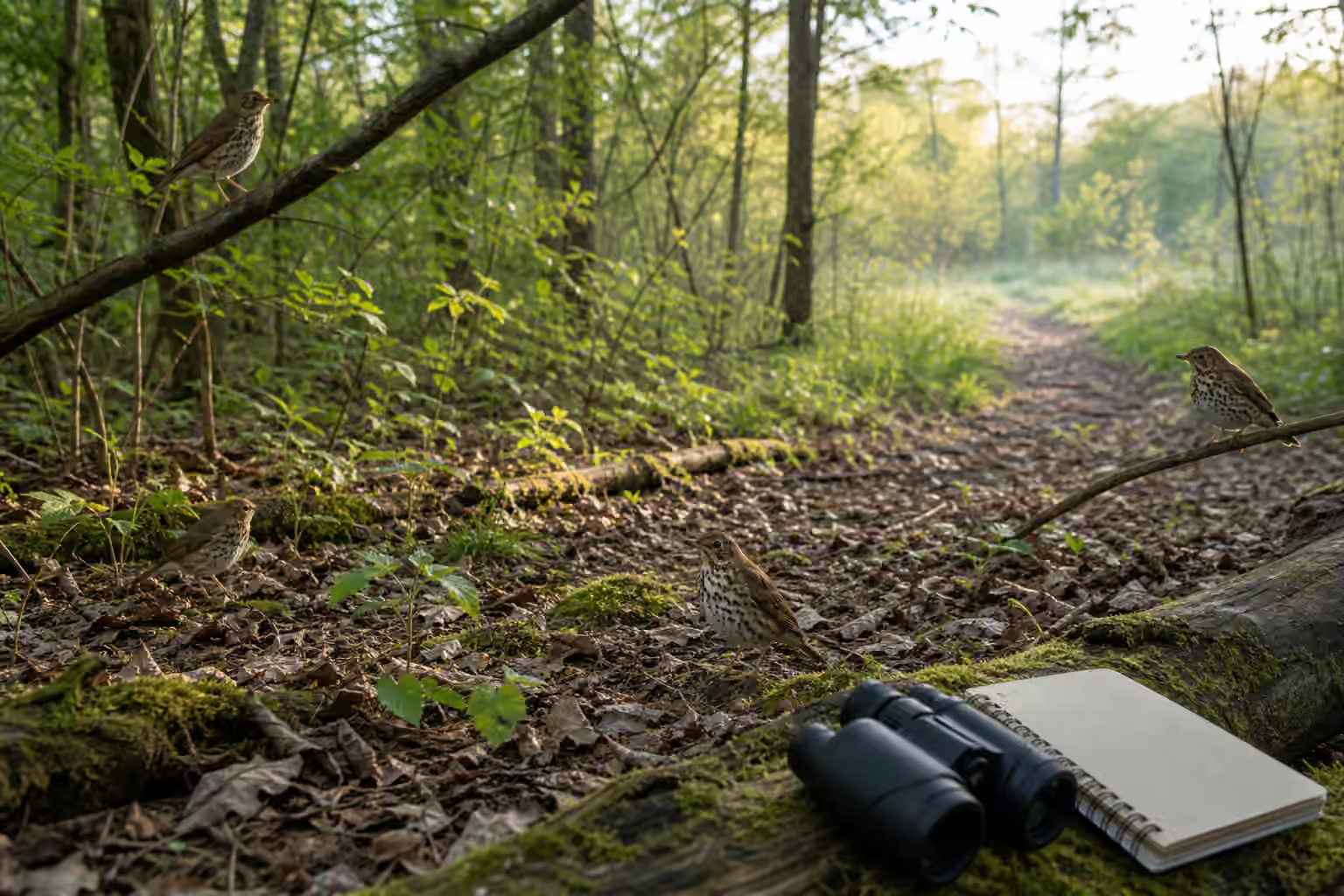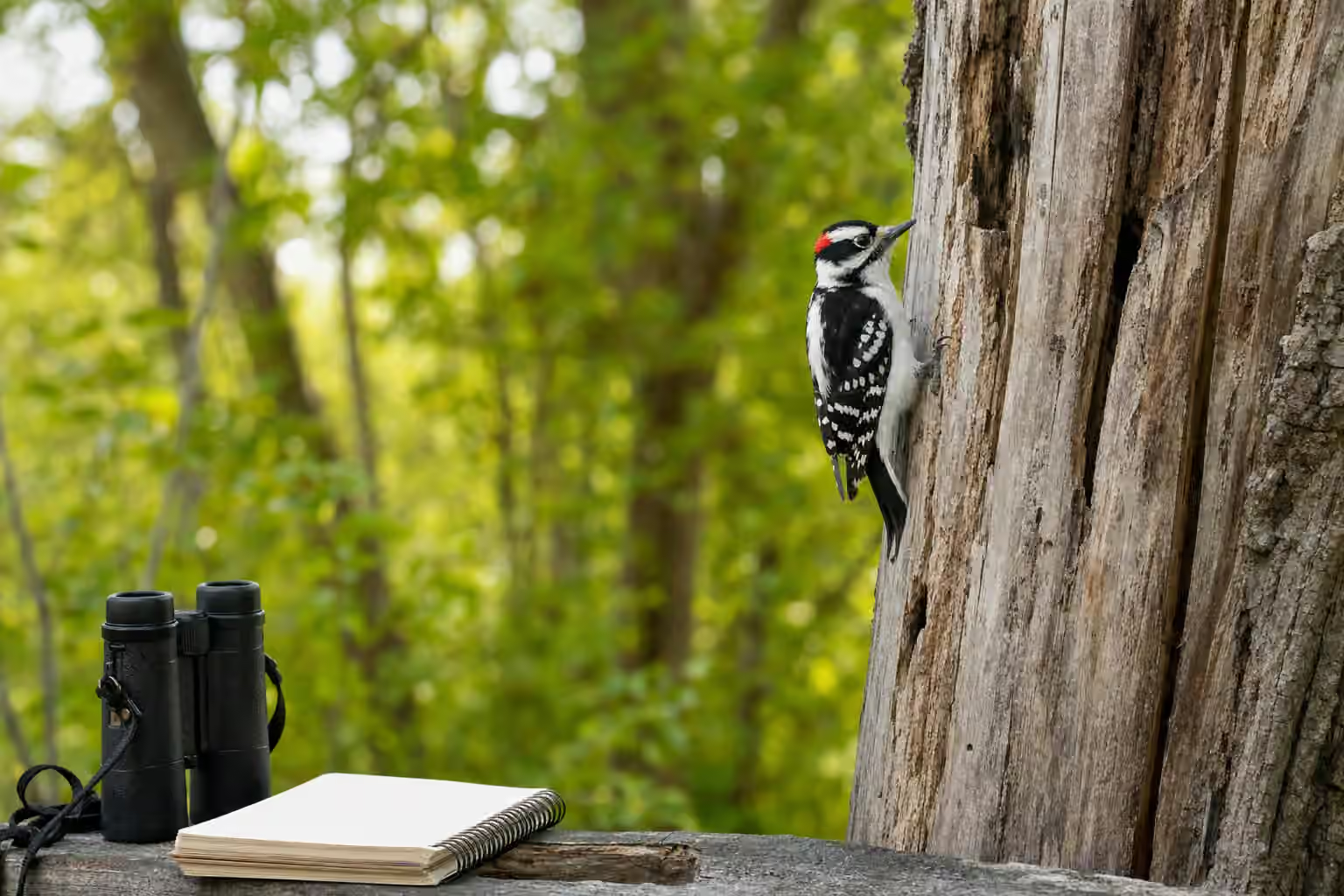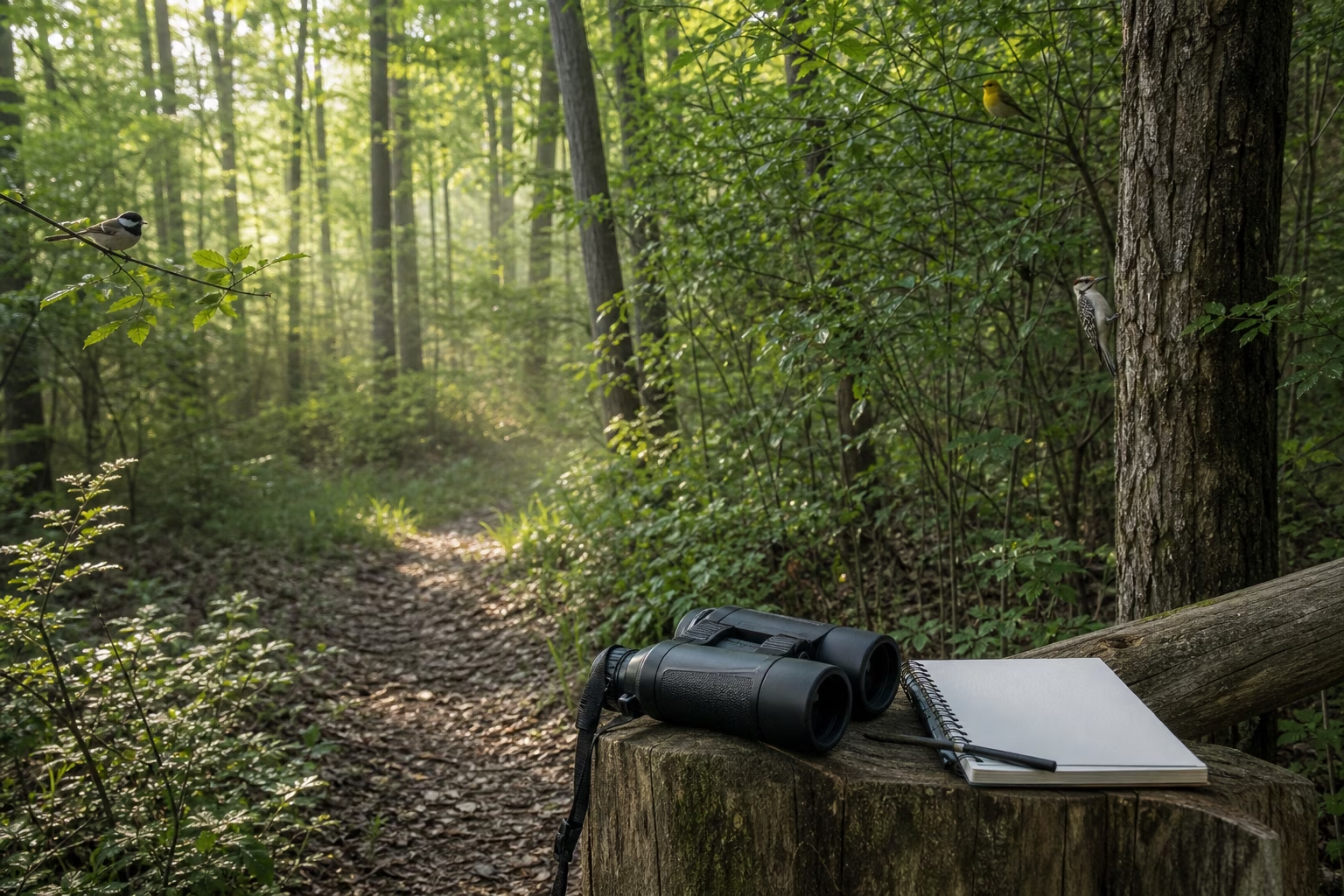
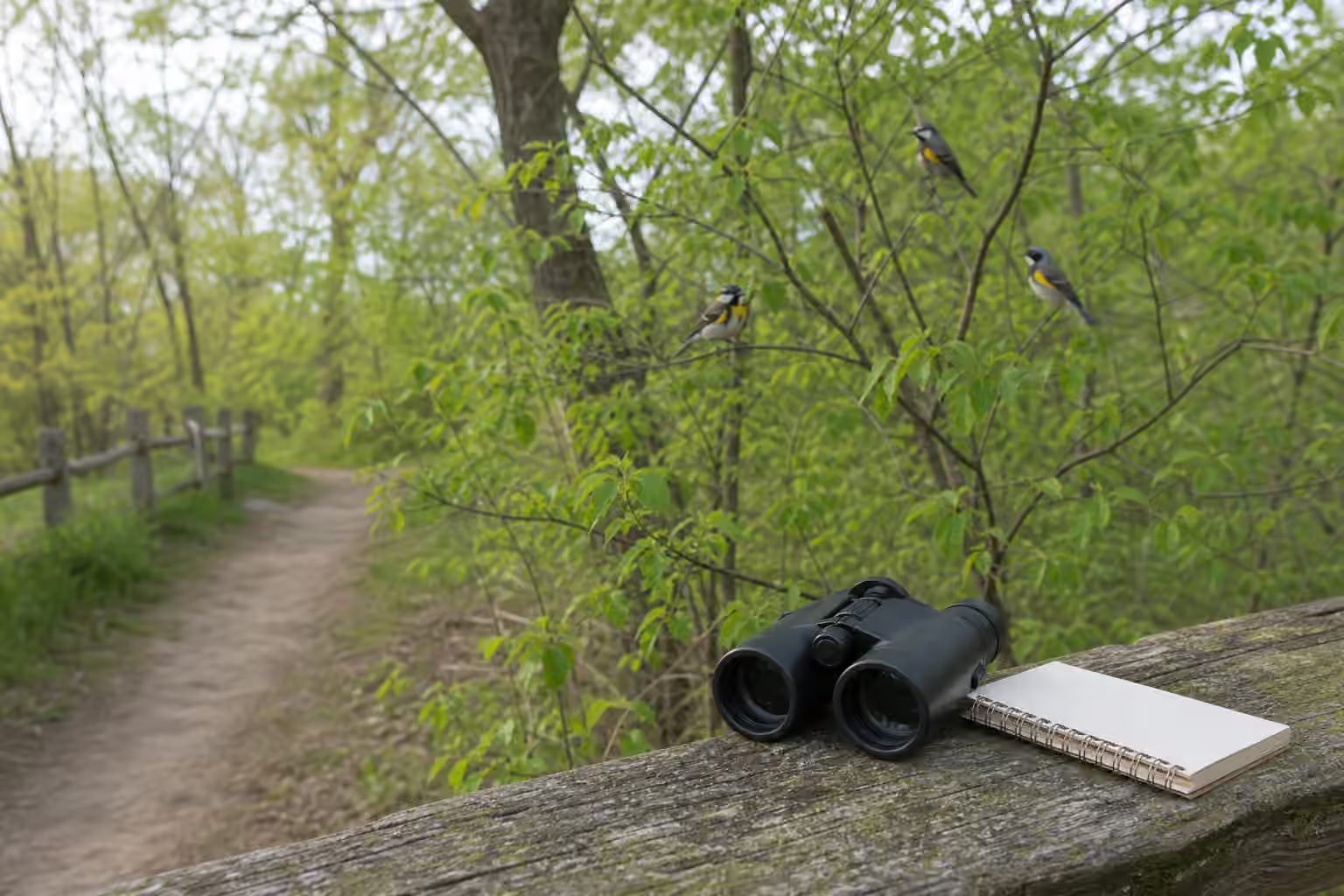
Warblers can make a beginner feel late to the conversation. One appears as a flicker in leaves, shows a yellow throat or pale wing bar, turns into a silhouette, and vanishes before the field guide is open. Someone nearby may say the name with easy confidence. You may still be trying to find the branch where the bird had been.
That frustration is common because warblers rarely behave like teaching diagrams. Many are small, active songbirds that feed in foliage, migrate through quickly, change appearance with age and season, and give partial views more often than perfect ones. The way through them is not to memorize every plate at once. It is to learn how warblers use a place, how they move, what kind of clues survive bad light, and when an honest uncertain note is better than a forced name.
This guide builds on How to Identify Birds Without Guessing , Woodland Birding , and Migration Morning . Those pieces teach the larger habits. Warblers are where those habits become small, quick, and useful.
Start With the Tree, Not the Name
When a warbler appears, the first useful question is not always which species it is. Ask what part of the habitat it is using. Is it high in a sunlit canopy, low in a willow thicket, along a creek edge, in flowering shrubs, at the outer tips of branches, or deep against the trunk? A bird moving through fresh oak leaves is giving a different clue from one working reeds, pine needles, wet woodland edges, or roadside tangles.
Habitat will not identify every bird, but it prevents random guessing. During migration, warblers may turn up in surprisingly ordinary places: a city park tree, a cemetery edge, a backyard shrub, a line of trees beside a parking lot, or a small patch of greenery after a night of movement. Even then, they are not scattered without reason. They are looking for insects, shelter, water, and safe pauses. A flowering tree full of small insects can hold more interest than a dramatic viewpoint. A sheltered edge after rain may be better than the center of a clean lawn.
Before you chase the bird through your binoculars, take one breath and name the setting in plain language. A note that says “small active bird feeding in outer maple leaves near pond after overnight rain” already contains useful evidence. It also gives your future self a way to compare the sighting with other mornings.
Watch How It Feeds
Warblers are often easier to understand as verbs than as colors. Some move steadily through leaves, picking tiny insects from surfaces. Some pause, look, and dart. Some hang briefly under leaf clusters. Some flare the tail or flick the wings. Some feed low and close to cover, while others seem to live in the top third of the tree. A few may make short flights after insects and return to foliage, though that habit can overlap with other small songbirds.
Watch the rhythm. Is the bird frantic, deliberate, creeping, hovering, or pausing between moves? Does it stay on the outside of the tree where sunlight catches it, or does it work the shaded interior? Does it feed alone, with another warbler, or inside a mixed flock with chickadees, vireos, kinglets, or other small birds? The behavior may not give you a species immediately, but it narrows the problem and makes the view memorable.
This is the same principle in Reading Bird Behavior for Beginners , only compressed into seconds. A warbler that never stops moving still leaves a trail of clues: height, pace, posture, feeding surface, and the way it changes branches. Color can fail in shade. Movement often remains.
Let Shape Carry More Weight Than Color
Warblers are colorful in reputation, but many field views are not colorful at all. A bright bird against the sun becomes dark. A yellow bird inside green leaves can look strangely muted. A fall bird may be much duller than a spring bird. A wet or worn bird may not match the clean picture you expected.
Shape holds up better. Notice whether the bird looks compact or long, round-headed or flat-headed, short-tailed or noticeably tailed. Look at the bill if you can. Warblers usually have fine insect-eating bills, not heavy seed-cracking bills. Compare the bird with nearby chickadees, sparrows, or vireos if they are present. Vireos often look a little slower and heavier in the same leaves, while kinglets may seem even tinier and more restless. These comparisons are imperfect, but they keep you from turning every small leaf bird into the first warbler in the guide.
Wing bars, eye rings, eyebrow stripes, throat color, tail patches, streaking, and face patterns all matter when you can see them. The mistake is building the entire identification from one flash. A yellow rump, a dark throat, a plain face, a strong eye ring, or a streaked side can be important, but it should fit the bird’s shape, behavior, habitat, and season. If the one bright mark is all you saw, write it down without pretending you saw the rest.
Use Sound Without Expecting Instant Mastery
Warbler songs can be beautiful, thin, buzzy, sweet, rising, falling, repeated, or easily swallowed by other sounds. Learning them all at once is a good way to make every walk feel like a test. A better start is to connect one sound to one place and one visible bird whenever possible.
Stand still when you hear a repeated phrase. Ask whether it comes from the canopy, shrub layer, edge, or a specific tree. Watch for movement near the source. If you see the bird, stay with it until sound and body belong together in your memory. If you cannot see it, describe the sound in ordinary words. “Thin rising song from high leaves above creek” is more useful than a blank frustration. The listening habits in Birding by Ear work especially well with warblers because repeated songs can act like little location beacons.
Calls are just as valuable as songs, especially during migration and fall. A short chip from a shrub may be the only clue that a bird is present. Do not worry if you cannot name it. Mark the height, habitat, and behavior that followed. Over time, the common local voices become anchors, and the less familiar sounds start to stand apart.
Spring and Fall Teach Different Lessons
Spring warblers often get the attention because many males are brighter and singing. Leaves may still be opening, which gives cleaner views. A bird may hold a territory or pause long enough to repeat a song. Spring can feel generous, but it can also move fast. A warm morning after migration conditions may fill one edge with birds, then leave it quiet the next day.
Fall warblers can feel harder because many birds are quieter, duller, younger, or wearing plumage that does not match the bright images beginners remember. That does not make fall worse. It changes the lesson. Fall asks you to look harder at structure, wing bars, undertail patterns, feeding height, flock movement, and habitat. Molt and Seasonal Plumage is worth reading before you decide that a dull warbler must be rare or impossible.
Both seasons reward repeated local watching. If you keep a patch, as described in Patch Birding , you begin to learn which corners collect leaf movement after rain, which trees attract insects, and which edges produce the first chips on migration mornings. The best warbler spot may be humble: one willow by water, one flowering tree, one shaded path bend, one line of oaks that catches morning sun.
Handle Partial Views Honestly
Most beginner warbler encounters are partial. You may see a side of the face but not the wing. You may see yellow below but not the tail. You may hear a song and glimpse only movement. You may photograph a blur that proves a small bird existed and little more. This is not failure. It is the normal material of birding.
Write notes that preserve what actually happened. A strong note might say that a small fine-billed bird fed high in outer leaves, moved constantly, had a yellow throat, olive back, pale wing bars, and gave no sound during a cloudy May morning. That note may still end with a question mark. It is far better than a confident name with no evidence behind it.
If you take photographs, let them support observation rather than replace it. Warblers tempt people to chase because the bird is always almost visible. The restraint in Patient Bird Photography matters here. Stay on paths where appropriate, avoid crowding a feeding bird, and accept distant record shots. A migrant trying to feed through a tree is already busy.
Practice on the Common Ones
The way into warblers is through the common species in your own region. Learn the birds you are likely to meet first, not the entire family at once. Watch where they feed, how high they stay, how often they flick or pause, what their songs sound like, and how they look in poor light. A common warbler seen ten times teaches more than a rare one glimpsed for three seconds in a crowd.
Return to the same tree after a good morning. Check it in different light. Notice whether insects are active, whether leaves are dense, whether the edge is sheltered from wind, and whether other small birds are present. Warbler birding improves when the place becomes familiar enough that a new movement stands out.
Warblers will still vanish. They will still hide behind the one leaf that matters. They will still turn a field mark away from you at the exact wrong moment. That is part of their instruction. They train you to read motion, tolerate uncertainty, and build identifications from several small clues instead of one bright flash. When the name finally settles, it means more because you have learned the bird as a living thing in leaves, not only as a picture on a page.