Woodland birding can feel oddly empty when you begin. A pond gives you open water to scan. A beach gives you a line of shorebirds, gulls, and waves. A city park gives you rooflines, lawns, and obvious perches. A forest gives you leaves, trunks, shade, and sounds that seem to come from everywhere at once.
That first impression is misleading. Woods are full of structure. The trick is learning to read that structure before you expect perfect views. Birds divide a woodland by height, light, bark, leaves, openings, dead wood, water, fruit, insects, and safe cover. Some work high in the canopy. Some stay in shrubs. Some creep along trunks. Some feed on the ground and vanish into leaf litter. The forest is not a wall of green. It is a stack of small working rooms.
This guide builds on How to Identify Birds Without Guessing and Reading Bird Behavior for Beginners . In woods, color is often the least reliable clue. Light filters through leaves, a bird turns into shadow, and a bright mark disappears behind a twig. Shape, movement, feeding level, voice, and habitat become the steadier evidence.
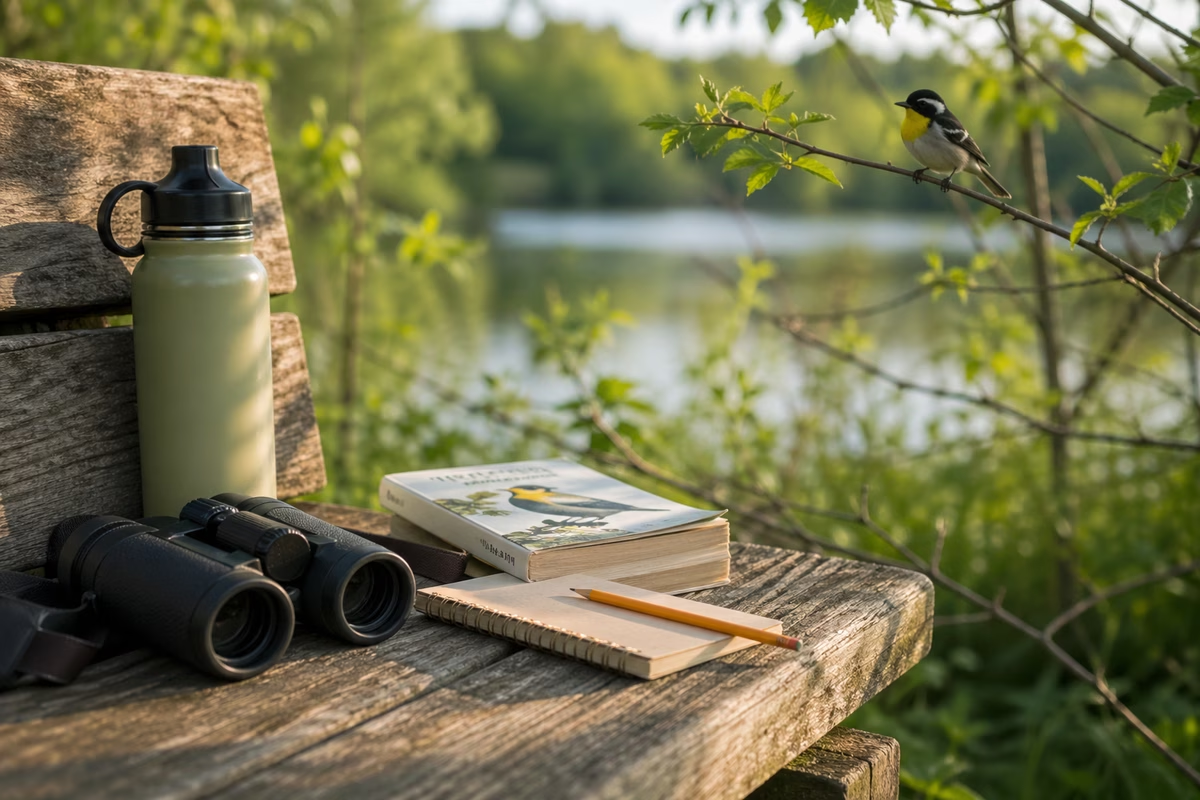
Let the Woods Settle
The first woodland habit is to stop sooner than you think. A beginner often walks into a forest, hears a few chips, sees nothing, and keeps moving. That pace makes sense for hiking. It is hard on birding.
Pause near the entrance, a bend in the trail, a small opening, a creek crossing, or a place where older trees meet younger growth. Stand still for two minutes before raising binoculars. Let the loudest sounds separate from the background. Notice where the light reaches the ground and where the understory thickens. Watch for leaves that move differently from the wind. A bird is often first visible as a small contradiction: one twig bouncing after the rest have stopped, one leaf cluster shivering in still air, one dark shape crossing a gap.
This is not passivity. It is fieldcraft. A quiet birder gives woodland birds time to resume ordinary behavior. The chickadee that froze when you arrived may start feeding again. A woodpecker may return to tapping. A thrush may step onto the trail edge and then slip back into cover. The longer you stand, the more the forest becomes legible.
Read the Vertical Layers
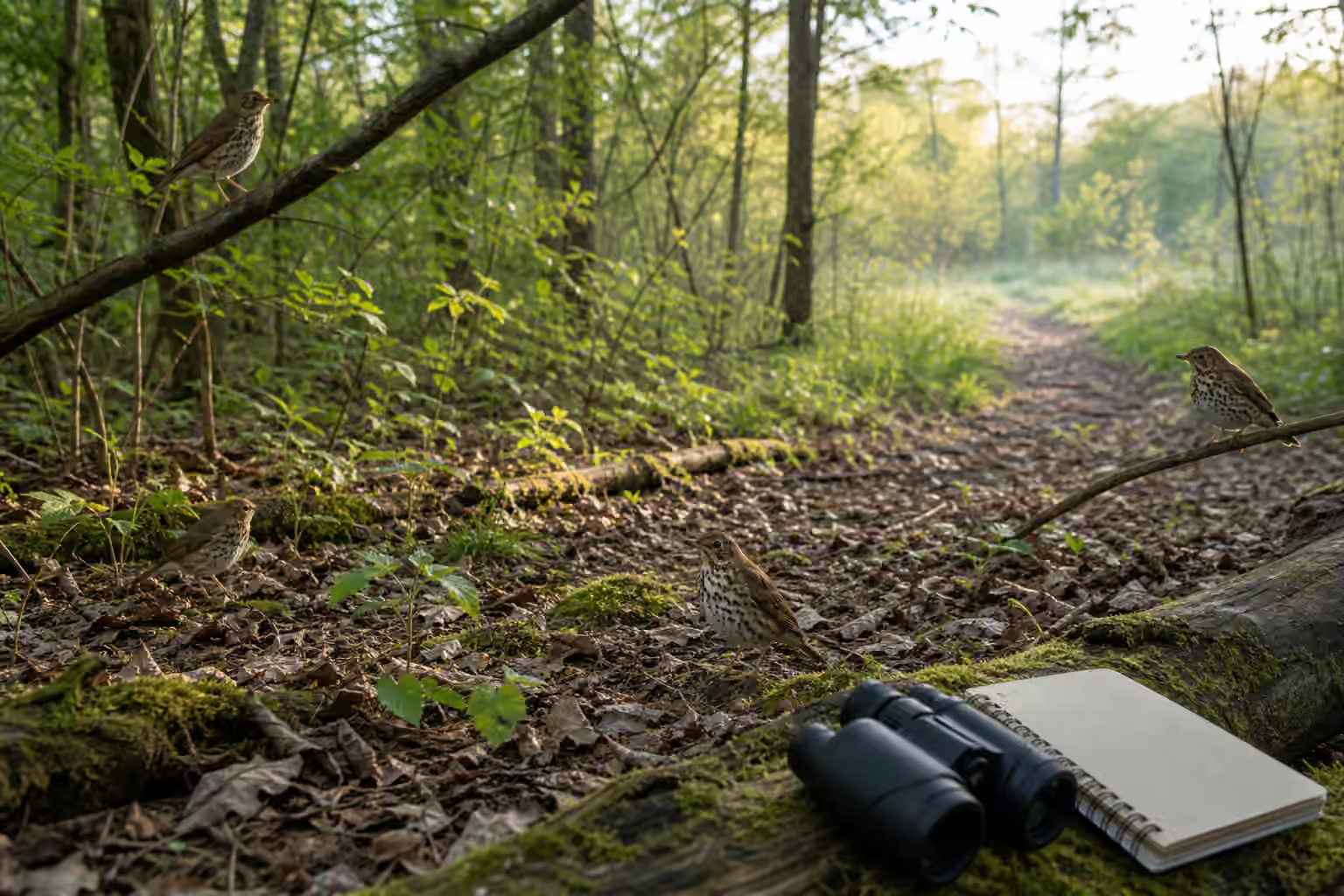
Woodland birds often make more sense when you place them in a layer before trying to name them. The ground layer includes leaf litter, fallen logs, roots, damp hollows, and the edges of trails. Birds here may walk, hop, scratch, toss leaves, or run low between shadows. Thrushes, towhees, sparrows, wrens, blackbirds, robins, and quail-like birds in some regions can all use this lower world, though the exact cast changes by place.
Above that is the shrub and sapling layer. This is where many quick, nervous birds appear and disappear. They may flick tails, give sharp chip calls, feed on berries, or move through tangles just above eye level. A bird in this layer can be hard to see, but its behavior is often clear. Does it stay hidden and call? Does it pop to the edge of a branch, grab food, and retreat? Does it climb stems or hop between horizontal twigs?
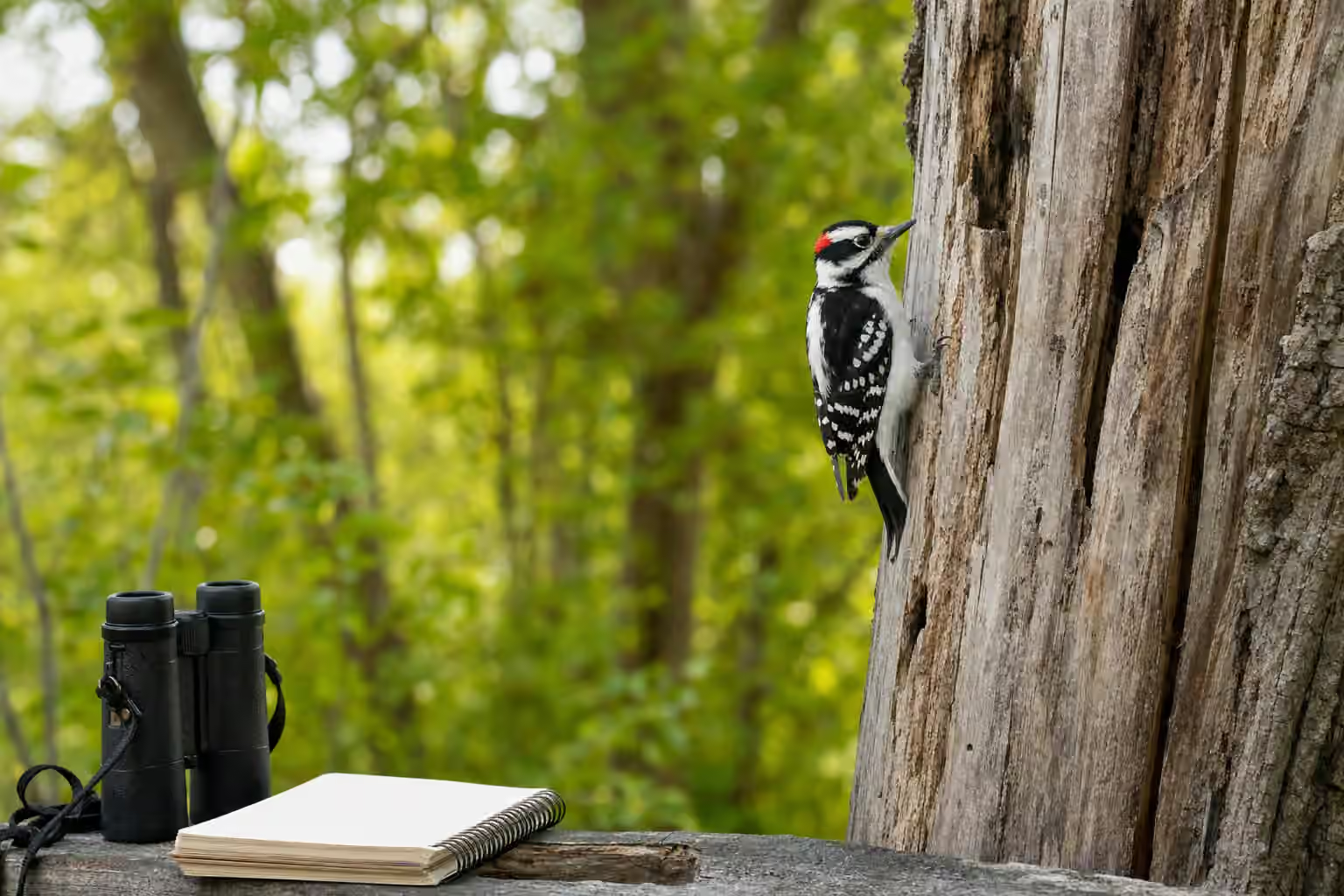
The trunk and branch layer belongs to birds that use bark as a surface, not only as scenery. Woodpeckers brace with stiff tails, nuthatches can move headfirst down trunks, creepers may spiral upward, and some small birds inspect bark crevices while moving with mixed flocks. Watching how a bird uses the trunk is often more useful than chasing a color patch.
The canopy is the most difficult layer because it is high, backlit, and crowded with leaves. Warblers, vireos, tanagers, flycatchers, orioles, finches, and many other birds may feed there depending on region and season. Beginners often lose patience with canopy birds because the view is fragmented. Instead of trying to hold the whole bird, hold one fact at a time: size, tail length, bill shape, wing bars, feeding pace, song, or the height where it spends most of its time.
Follow Light Gaps
A forest path is not evenly lit. Small openings, fallen trees, creek edges, trail bends, and canopy gaps bring sun to insects, flowers, fruit, and fresh leaves. Birds often work these light gaps because food is easier to find there and because movement becomes visible.
Stand where you can watch the edge of a bright patch without standing inside it. Scan from the ground up, then back down. A bird may enter the opening for only a second before returning to shade. When it does, your job is not to see everything. Notice what it was doing. A flycatcher may sit upright on an exposed perch and sally out after insects. A warbler may move constantly through leaf tips. A vireo may feed more slowly, pausing as if inspecting each cluster. A woodpecker may ignore the leaves and work the dead limb beside them.
Light gaps also help with sound. If a song comes from a bright edge, you have a better chance of connecting the voice to a visible bird. This is where Birding by Ear becomes practical. You do not need to memorize every song at once. You need to connect one repeated voice to one place in the woodland, then watch long enough to see who owns it.
Use Sound as a Map
In woods, sound often arrives before sight. A chip from low brush, a trill from the canopy, a drum from a trunk, and a thin call from overhead are not just noises. They are location clues.
Try listening in height. Ask whether the sound comes from the ground, shrub layer, middle branches, high canopy, or sky above the trees. Then listen for distance. Is it beside the path, across a hollow, behind you, or moving with a flock? Finally, listen for repetition. A bird that sings from the same perch several times may be easier to find than a bird that gives one alarm note and disappears.
Do not rush toward every sound. In thick woods, walking directly at a call may push the bird deeper into cover. It can be better to angle slightly, stop at a gap, and let the sound continue. If you cannot see the bird, write a plain note. “High thin song from canopy above creek, repeated every ten seconds, no visual” is useful. It gives you a memory to compare next time.
Watch Mixed Flocks Without Panic
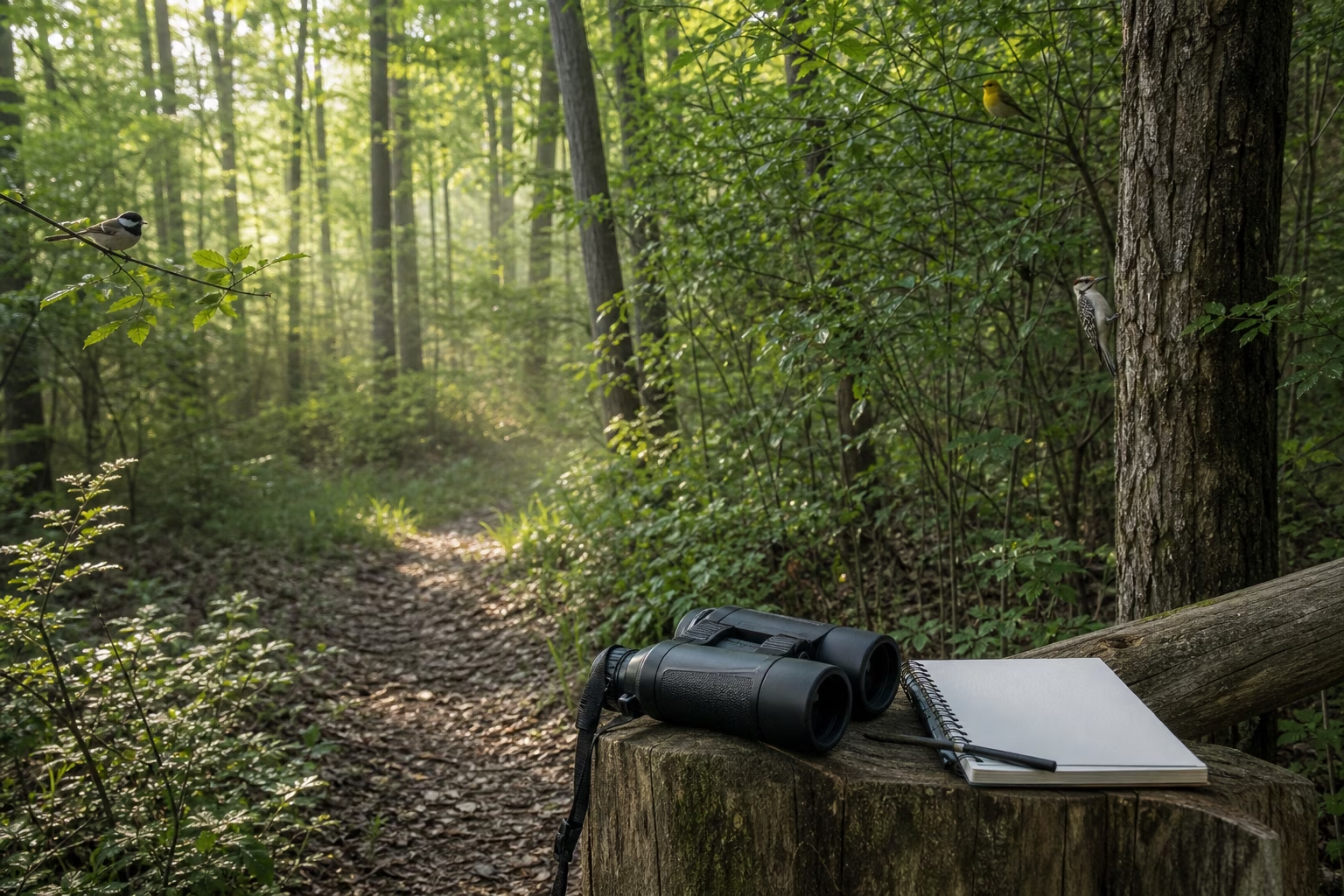
One of the best woodland experiences is also one of the most confusing: a mixed flock moving through. At first the woods are quiet. Then small birds seem to arrive from several directions. A woodpecker taps, chickadees call, something creeps along a trunk, two birds flick through leaves, and a few more cross the path behind you. A minute later the flock has moved on.
The beginner mistake is trying to identify every bird in the wave. Choose one bird and stay with it. If that bird disappears, choose the next visible bird, but do not spin in circles after every call. Mixed flocks are easier when you treat them as a moving neighborhood. Different species use different parts of the same trees. One bird searches twig tips, another checks bark, another hangs under leaves, another stays slightly behind the group. The flock teaches structure even when it does not give perfect names.
These moments also reward restraint. A flock that is feeding through winter woods or migration cover is busy. Stay on the trail, move slowly, and let the birds pass through the area rather than cutting ahead to intercept them. The habits in Birding Etiquette and Field Notes matter just as much under trees as they do on a shoreline.
Do Not Ignore Dead Wood and Messy Places
A tidy-looking forest is not always the richest part of a walk. Dead limbs, snags, fallen logs, brushy edges, leaf litter, vine tangles, and damp hollows can hold insects, cavities, seeds, fungi, and shelter. Birds read these places carefully.
A standing dead tree may host woodpeckers, nuthatches, creepers, owls, flycatchers, or cavity-nesting birds depending on season and region. A fallen log may attract birds searching for invertebrates. Leaf litter can hide ground-feeding birds that seem to appear only when they move. A brush pile may look like clutter to a person and safety to a wren.
The lesson is not to leave trails or pry into hidden places. It is to look at woodland mess as habitat. If a place offers food and cover, give it time. A quiet tangle watched from a respectful distance may reveal more than a clean stretch of path.
Make a Repeatable Woodland Route
Woods become easier when you visit the same route more than once. Choose a loop, trail segment, creek crossing, ridge path, cemetery grove, or park woodlot you can repeat. Walk it at a similar pace and notice where birds tend to appear. One bend may be good for thrushes after rain. One sunny opening may pull in insects. One dead tree may be active every morning. One dense corner may hold sparrows in winter and warblers during migration.
This is close to Patch Birding , but with special attention to height and light. On each visit, write down the layer, not only the bird. “Small bird feeding high in oak leaves” is better than “unknown bird.” “Woodpecker on dead trunk beside trail bridge” is better than “woodpecker somewhere.” Over time, those notes teach you how birds use the same forest in different weather and seasons.
Season changes woodland birding sharply. Spring can be loud and leafy, with songs, migrants, territories, and quick movement. Summer may be quieter but full of family groups, worn feathers, and feeding behavior. Fall can bring subtle migrants and mixed flocks. Winter may open the view by removing leaves, making trunks, flock movement, and food sources easier to read. The same path does not repeat itself. That is why returning matters.
Leave With One Honest Observation
A good woodland walk does not require a long list. It may give you one clear bird, one uncertain song, one mixed flock you barely understood, and one place worth checking again. That is enough.
The woods teach patience because they do not hand over clean views on command. They ask you to read layers, wait at openings, follow sound carefully, and accept partial evidence. A bird that remains unnamed can still teach you how it moved, where it fed, how high it stayed, and what part of the forest mattered to it.
That kind of observation carries into every other kind of birding. Once you learn to see a forest as layers rather than background, a pond edge, city block, marsh, winter hedgerow, or migration morning becomes easier to read too. The habit is the same: slow down, notice the place, watch what the bird is already doing, and let the name come after the evidence.