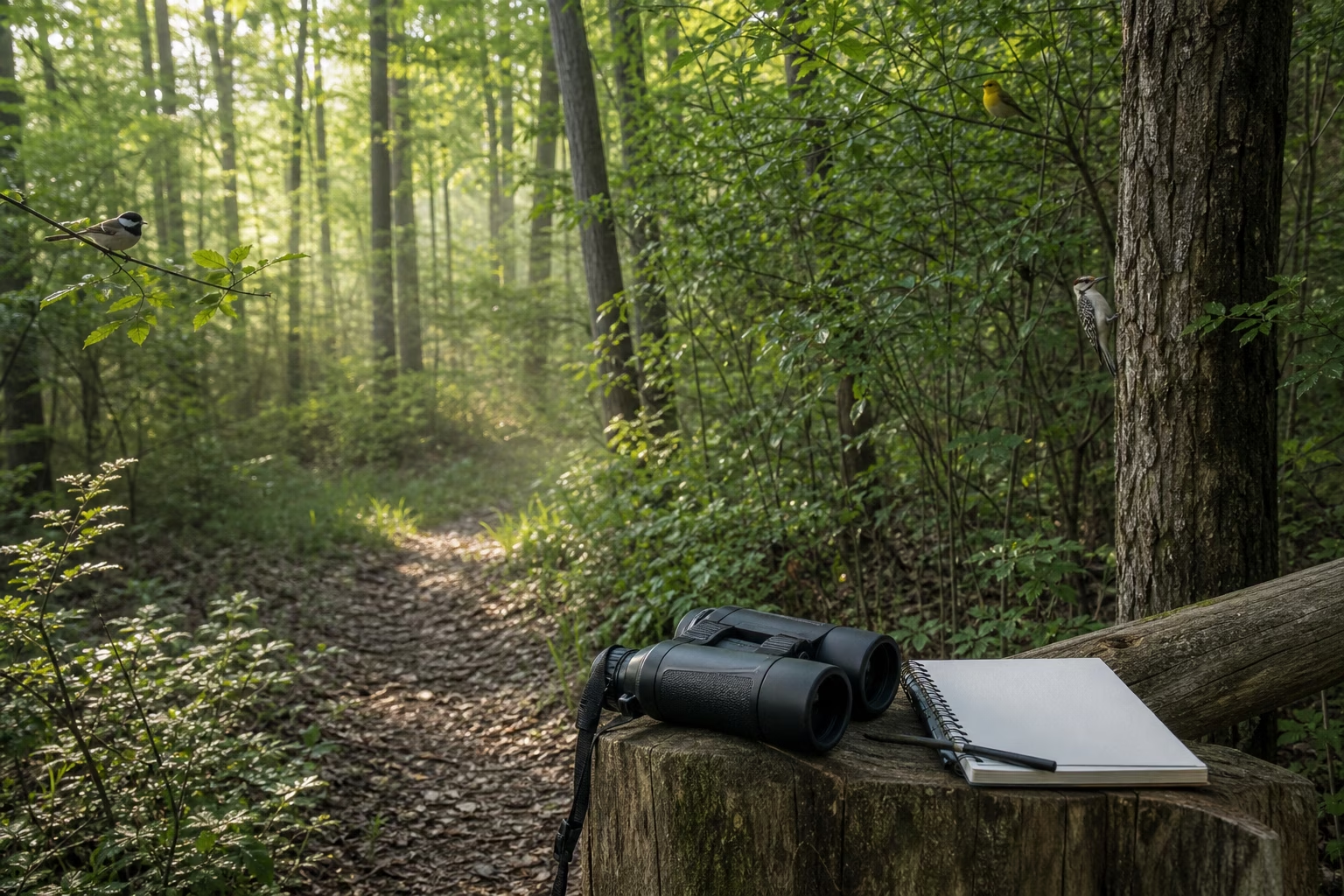
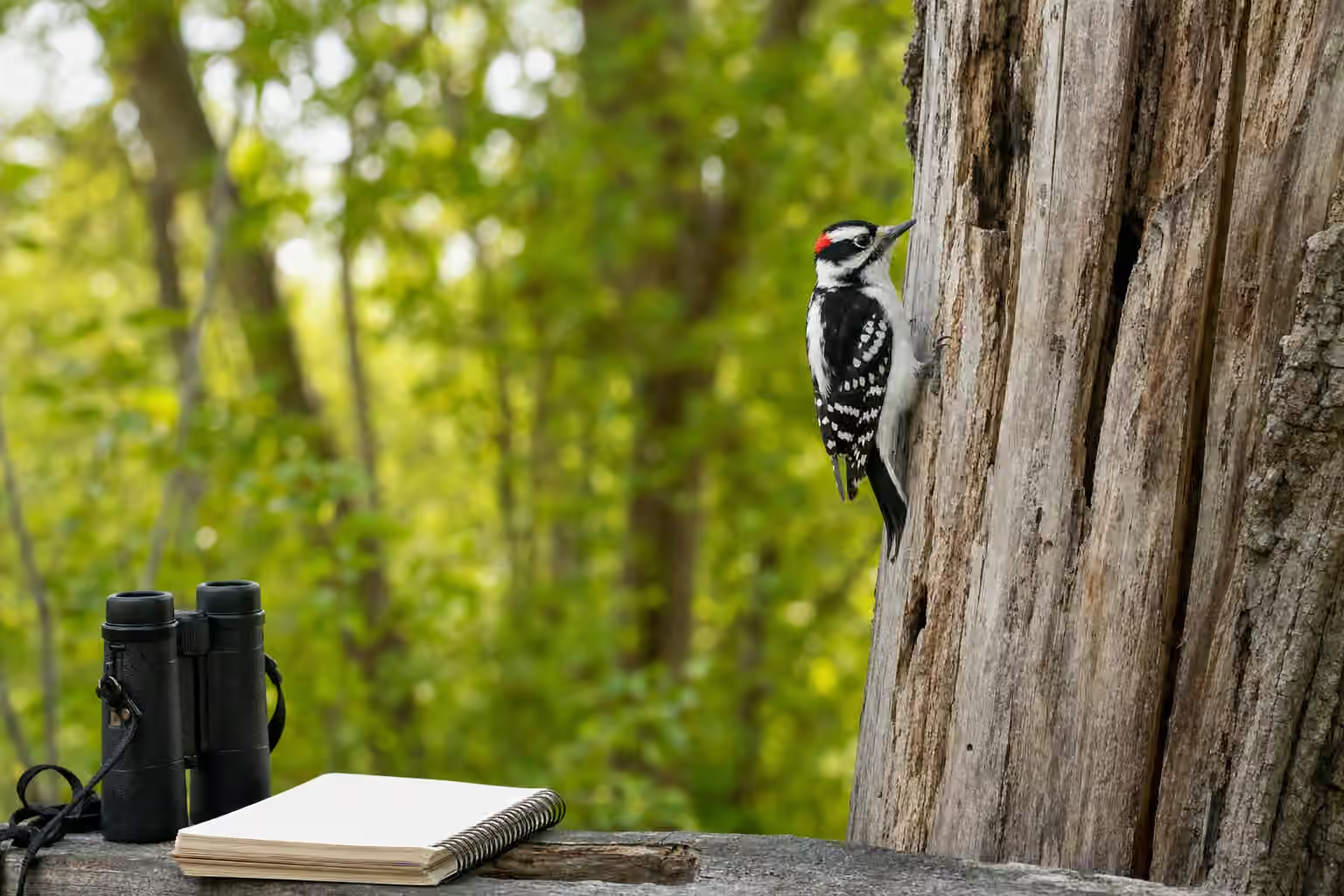
Woodpeckers are generous teachers because they often announce the kind of bird they are before you know the species. A small bird that lands sideways on a trunk, props itself with a stiff tail, hammers at bark, and then hitches upward is already giving you more than color. It is showing you a body built for wood.
That does not mean woodpeckers are always easy. A quick black-and-white shape can vanish around the back of a trunk. A distant drum can bounce through trees until the direction feels uncertain. Similar species may differ by bill length, face pattern, size, voice, or only the details you did not see. The way through them is the same method used in How to Identify Birds Without Guessing : start with structure and behavior, then let field marks finish the work when they are available.
This guide also pairs naturally with Woodland Birding , because woodpeckers make the trunk layer visible. They remind you that a forest is not only leaves and song. Bark, dead limbs, loose wood, sap wells, old cavities, insects, and resonant branches are all part of the birding landscape.
Start With the Surface
When you see a possible woodpecker, look first at the surface it is using. Is the bird on the main trunk, a dead limb, a fence post, a utility pole, a fallen log, the underside of a branch, or a thin twig? The surface tells you what kind of work the bird may be doing. A woodpecker searching rough bark is reading crevices. One chiseling dead wood may be reaching larvae or opening softened material. One moving around a small branch may be gleaning, probing, or shifting position to reach a safer angle.
This surface-first habit keeps you from treating every trunk bird the same. Nuthatches often move headfirst down bark. Creepers may spiral upward and blend into the trunk. Chickadees, titmice, warblers, and other small birds can inspect bark briefly while feeding with mixed flocks. A woodpecker usually looks more anchored. It braces, leans, hammers, pauses, and hitches. Even when the view is partly hidden, the relationship between body and bark can be clear.
The tree itself matters too. Dead wood is not wasted space to birds. A standing snag, broken limb, old orchard tree, burned trunk, weathered post, or rough-barked shade tree can hold insects, cavities, sap flow, and drum surfaces. In a tidy park, the most interesting birding spot may be the half-dead tree that looks unimpressive from a distance. In a mature woodland, a quiet snag beside the path may be more useful to woodpeckers than the greenest canopy above it.
Watch the Body Mechanics
Woodpeckers have a way of making gravity look negotiable. They cling to vertical surfaces with strong feet, use the tail as a brace, and drive the bill with short controlled blows. A beginner does not need to know every anatomical term to use those clues. Watch the posture. The body often sits upright against the trunk, the tail pressed down, the head moving in compact bursts. Between bursts, the bird may freeze, listen, shift sideways, or hitch upward.
Compare that with other bark birds. A nuthatch can look almost acrobatic as it moves downward or sideways with less dependence on the tail. A creeper is smaller and usually creeps upward in a careful line before flying down to start again. A woodpecker tends to look like it is using the tree as both wall and workbench. It may move around to the far side when you approach, not because it has vanished, but because the trunk gives cover.
If the bird slips out of sight, resist the urge to circle tightly around the tree. Step back and watch the likely exit points. Many woodpeckers move in a rough upward path, then fly to another trunk or branch. Some cross open spaces with an undulating flight, rising and falling in a rhythm that can help you keep track of them after they leave the bark. A bird lost on one trunk may reappear on the next dead limb if you wait.
Drumming Is a Field Mark
Woodpecker sounds are not all the same. Feeding taps can be irregular, exploratory, and local, as the bird probes bark or chips into wood. Drumming is more like a signal. It is often a rapid burst on a resonant surface, repeated from a chosen spot. The bird may drum on a dead limb, hollow trunk, metal cap, sign, gutter, or another surface that carries sound well. The goal is communication, not simply food.
This distinction matters because drumming can help you find the bird and sometimes narrow the identification. Listen for length, speed, rhythm, and repetition. Is the drum a short tight roll, a longer burst, a slow uneven series, or a strong repeated knock? Does it come from high in a dead tree, low in a wooded edge, or from a human structure near open ground? The sound may travel in confusing ways, so use it as a direction clue rather than a promise.
Birding by Ear teaches the useful habit of describing sound before naming it. That works well here. A note that says “short rapid drum from dead limb above creek, repeated every half minute” is much better than “woodpecker sound.” If you later see the bird, the sound and body can lock together in memory. If you never see it, the note still preserves something real.
Calls deserve attention too. Many woodpeckers give sharp calls, rattles, nasal notes, squeaks, or loud repeated sounds that carry through woods and neighborhoods. A call from a trunk layer has different meaning from a songbird high in leaves or a sparrow hidden in grass. You do not need instant mastery. You need to notice that woodpeckers have voices as well as bills.
Read Habitat Without Making It Too Neat
Woodpeckers live in more places than beginners expect. Some are woodland birds. Some use parks, orchards, yards, desert washes, burned forests, riparian strips, wooded neighborhoods, palm trunks, utility poles, open country with scattered trees, or marsh edges with dead snags. The exact species change by region, but the questions are steady. Where is there wood to search? Where are insects, sap, fruit, nuts, or cavities? Where is there a surface that can be drilled, climbed, or drummed?
Habitat helps most when you keep it specific. “On a dead pine at the edge of a sunny clearing” is better than “in forest.” “Small woodpecker on shade tree in city park, moving between low limbs” is better than “urban bird.” “Large woodpecker calling from tall snags along wet woodland” is better than “woodpecker in woods.” The local cast becomes clearer when habitat notes have texture.
This is also where woodpeckers teach respect for messy places. Dead limbs, loose bark, old cavities, and decaying trunks can look like neglect to people and like opportunity to birds. On public land and in yards, safety decisions about dead trees belong to land managers or homeowners, but as a birder you can still learn to see the value. A snag may hold insects today, a nest cavity in spring, and a roost later. After a woodpecker excavates or abandons a cavity, other birds and mammals may use it too.
Use Field Marks in the Right Order
Once you know you are watching a woodpecker, field marks become more useful. Start with size. Is it tiny and delicate, small but sturdy, crow-sized, or somewhere in between? Size can be deceptive on a lone tree, so compare with familiar birds, bark scale, branches, or nearby trunks when possible. Then look at bill length and strength. In some similar pairs, one bird has a bill that looks short and neat, while another has a longer, heavier bill that changes the whole profile.
Head pattern matters, but do not grab the first red patch and stop thinking. Many woodpeckers show red, yellow, black, white, brown, barred, spotted, or striped areas depending on species, sex, age, and region. Notice where the color is placed. Is it on the crown, nape, throat, cheek, belly, or under the tail? Is the face plain, striped, masked, or strongly patterned? Does the back show white patches, bars, spots, or a solid dark field? Are the underparts plain, streaked, barred, or washed with color?
Use color as part of the whole observation, not as a shortcut. A red mark seen for half a second may be real, but it may not be enough. Light on bark can be harsh. A bird turned away can hide the mark that matters. A juvenile may look different from an adult. The guide on Molt and Seasonal Plumage is useful here because woodpeckers, like other birds, do not always present a clean field-guide pose.
Be Careful Around Cavities
Woodpeckers make breeding season especially interesting because they may drum more often, excavate cavities, carry food, or visit the same tree repeatedly. Those behaviors are fascinating, but they require restraint. A cavity is not an invitation to approach, tap the tree, peer inside, clear vegetation, or wait too close for the perfect view.
The habits in Nest Season Birding apply strongly to woodpeckers. Watch from a distance where the adult continues normal behavior. If a bird pauses with food, circles, calls sharply, refuses to enter a cavity, or shifts around the far side of the trunk because of your position, step away. You have already learned enough to know the bird needs space.
You can still observe a great deal without finding the exact cavity. A bird excavating chips from a dead limb teaches you about wood condition. A pair exchanging calls around a territory teaches you how sound maps a place. A woodpecker carrying food into the same general grove tells you that the habitat is doing more than providing perches. Let the hidden parts stay hidden.
Practice on Common Birds First
The best way to learn woodpeckers is to watch the common local species repeatedly. A neighborhood tree, cemetery, park edge, creek corridor, orchard row, or winter feeding flock can give better lessons than a one-time rarity. Familiar birds teach normal posture, flight, calls, drumming surfaces, feeding height, and reactions to people. Once those habits become familiar, a different woodpecker stands out sooner.
Winter can be especially helpful because bare branches expose trunks and limbs. A woodpecker that would have been hidden behind leaves in summer may become easy to follow from tree to tree. Mixed flocks can also pull your attention to bark. Chickadees may call, nuthatches may work downward, a creeper may slip along the trunk, and then a woodpecker arrives with a heavier presence. Reading Bird Behavior for Beginners is a good companion for those moments because the name is only one part of what the flock is showing.
Backyards and local patches can help too, especially when they include mature trees, native plantings where appropriate, brushy cover, or dead limbs that can safely remain. If you use feeders, keep them clean and watch from far enough away that birds behave normally. The better lesson is not that woodpeckers come to one food source. It is that repeated views let you compare posture, size, and sound in a relaxed setting. Backyard Bird Habitat gives a broader way to think about home spaces as habitat rather than display stages.
Write the Work, Not Just the Name
A useful woodpecker note should preserve what the bird was doing. Write the surface, height, behavior, sound, size, pattern, and habitat in ordinary language. A note might remember a small black-and-white woodpecker hitching up the shaded side of a dead limb, giving a short call, with a small red mark at the back of the head. Another might describe a large dark woodpecker with a bright head, loud calls, and heavy blows on a rotting trunk near wet woods. Even if the species remains uncertain, the encounter stays useful.
This kind of note also protects you from overconfidence. If all you saw was a flash around a trunk, say that. If the bird never called, say that. If the bill length was not visible, do not invent it later. References and apps are most helpful when you bring them honest evidence. Field Guides and Bird Apps can help you compare likely options, but the comparison is only as strong as the observation you recorded.
Woodpeckers reward birders who learn to see trees as active places. A trunk is not background. A dead limb is not empty. A drum is not random noise. A bird braced against bark is telling you how it makes a living. Start there, with the surface, the posture, the sound, and the habitat. The species name will come more often when the whole scene has already made sense.