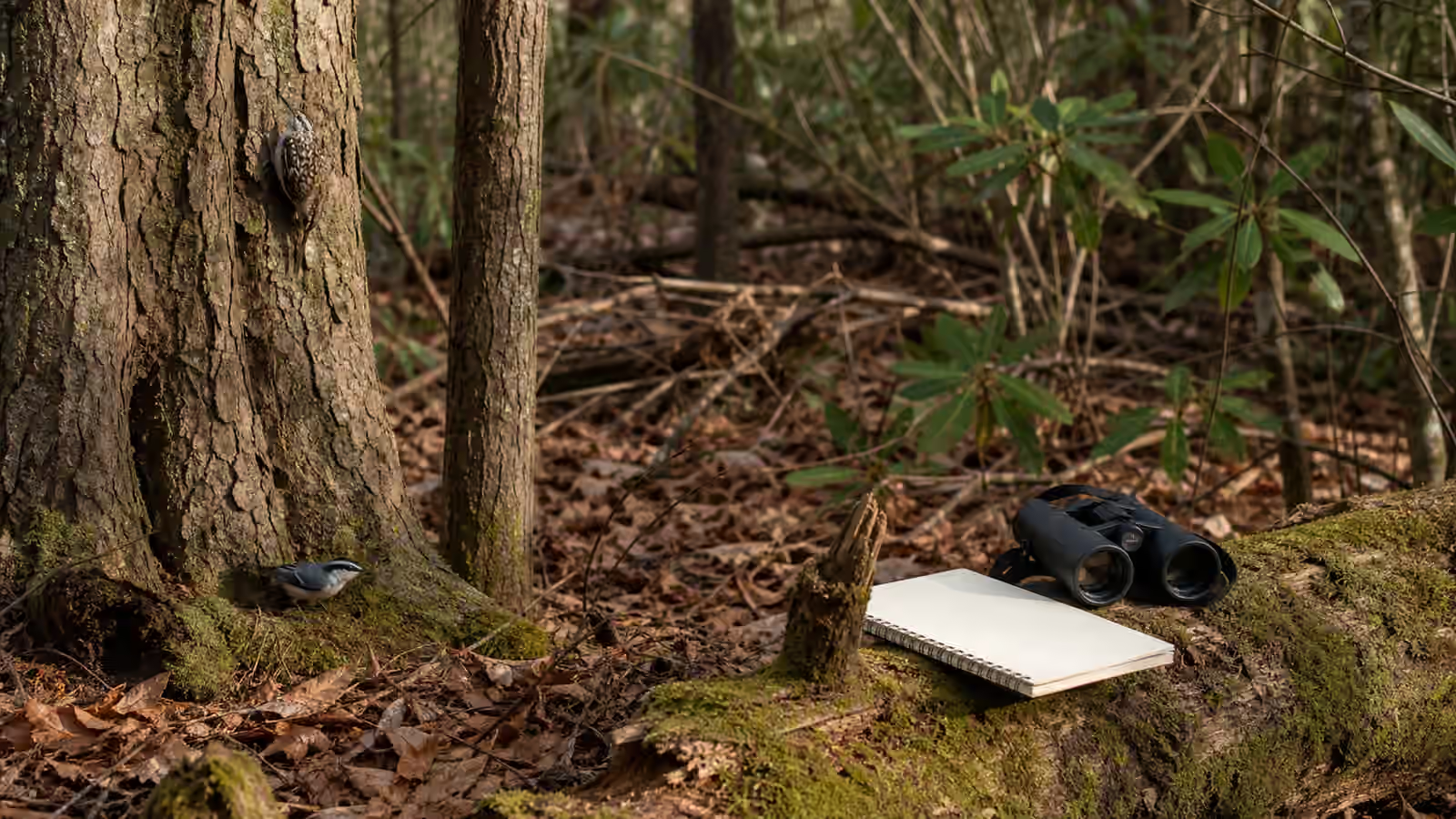
Some small birds announce themselves by refusing to behave like the small birds you expected. One vanishes into low cover and scolds from a place you cannot see. Another walks down a tree trunk headfirst as if gravity has changed its mind. Another creeps upward along bark, disappears around the far side, and makes the tree itself seem alive. Wrens, nuthatches, creepers, and their local equivalents teach beginners to watch movement before color.
This guide sits naturally after Woodland Birding , Woodpeckers for Beginners , and Mixed Flocks Birding . Those guides teach the larger setting: layers, trunks, flocks, and feeding surfaces. The birds here make those ideas vivid because they are often small, quick, partly hidden, and strongly tied to a particular way of moving through habitat.
The exact species differ by region. Some places have several wrens; some have nuthatches or treecreepers; some have similar bark-foraging or low-cover birds with different names. The beginner method travels well even when the local list changes. Ask where the bird is, how it moves, what surface it uses, what its tail does, how it sounds, and whether it stays alone or moves with other birds.
Begin With the Surface
The first useful question is not “What color was it?” The first question is “What was it using?” A wren often works low cover, brush, reeds, roots, stone walls, log piles, garden tangles, or dense understory. A nuthatch often treats trunks and large limbs as feeding surfaces, moving up, down, sideways, and around with compact confidence. A creeper usually works bark in a quieter upward pattern, often beginning low on a trunk and spiraling or hitching higher before flying down to start again.
Surface is not a perfect identification, but it gives the observation shape. A tiny bird in leaf litter, a tiny bird on a vertical trunk, and a tiny bird at canopy twig tips are not the same kind of problem. Place the bird before naming it. The habits from How to Identify Birds Without Guessing become very practical here because a few seconds of behavior may be more reliable than a blurred glimpse of brown, gray, white, or buff.
Watch the bird’s relationship to cover. Does it dart into a tangle and call from inside? Does it expose itself on bark, trusting the trunk as both food source and escape route? Does it freeze against bark until it almost disappears? Does it cross open air freely or only in short hops between safe surfaces? These choices reveal more than a field mark seen badly.
Learn the Tail Language
Small birds use their tails in different ways, and these differences are visible even when the rest of the bird is not. Many wrens carry the tail cocked, flick it, jerk it, or use it as part of a restless low-cover posture. A bird in a thicket with a raised tail, loud voice, and quick vanishing acts deserves attention before you call it a generic small brown bird.
Nuthatches have a different feel. They look compact, often short-tailed, and strong against bark. Their movement can seem deliberate even when quick. Because they can move headfirst down trunks, they often break the beginner’s expectation that bark birds only climb upward. A nuthatch may pause sideways on a limb, probe a crevice, then swing around the far side of the trunk and reappear lower than expected.
Creepers can seem quieter and more slender, with the tail sometimes bracing against bark as they move upward. The motion is often the clue: a tiny bird pressed close to a trunk, creeping up in short steps, blending with bark, then flying down to another trunk or lower starting point. If you see that pattern, write it down immediately. The bird may not give you a clean face view.
Listen for Hidden Birds
Wrens especially remind birders that volume and visibility do not always match. A small hidden bird can produce a startlingly loud song or a sharp scolding call from a brush pile, reedbed, hedge, creek bank, or root tangle. Beginners often hear the voice, search the obvious branch, and miss the low cover where the bird is actually moving.
The method from Birding by Ear helps. Place the sound before naming it. Is it low, high, inside cover, on a trunk, moving with a flock, or fixed in one small territory? Is the sound a musical phrase, a dry chatter, a nasal call, a sharp chip, or a thin note? You do not need expert vocabulary. Plain description tied to place is enough to make the next encounter easier.
Nuthatches and creepers can be vocal too, often with calls that help you find them in mixed flocks or woodland edges. A repeated nasal note from bark, a thin call moving through trunks, or a small contact call among chickadee-like birds can tell you where to look. Sound is not a shortcut around observation. It is a way to aim observation at the right layer.
Watch Bark as Habitat
Tree bark is not a flat background. It has ridges, flakes, cracks, holes, loose plates, moss, lichen, sap wells, insect hiding places, and sheltered seams. Birds that use bark are reading all of that texture. If you treat the trunk as scenery, you miss the work.
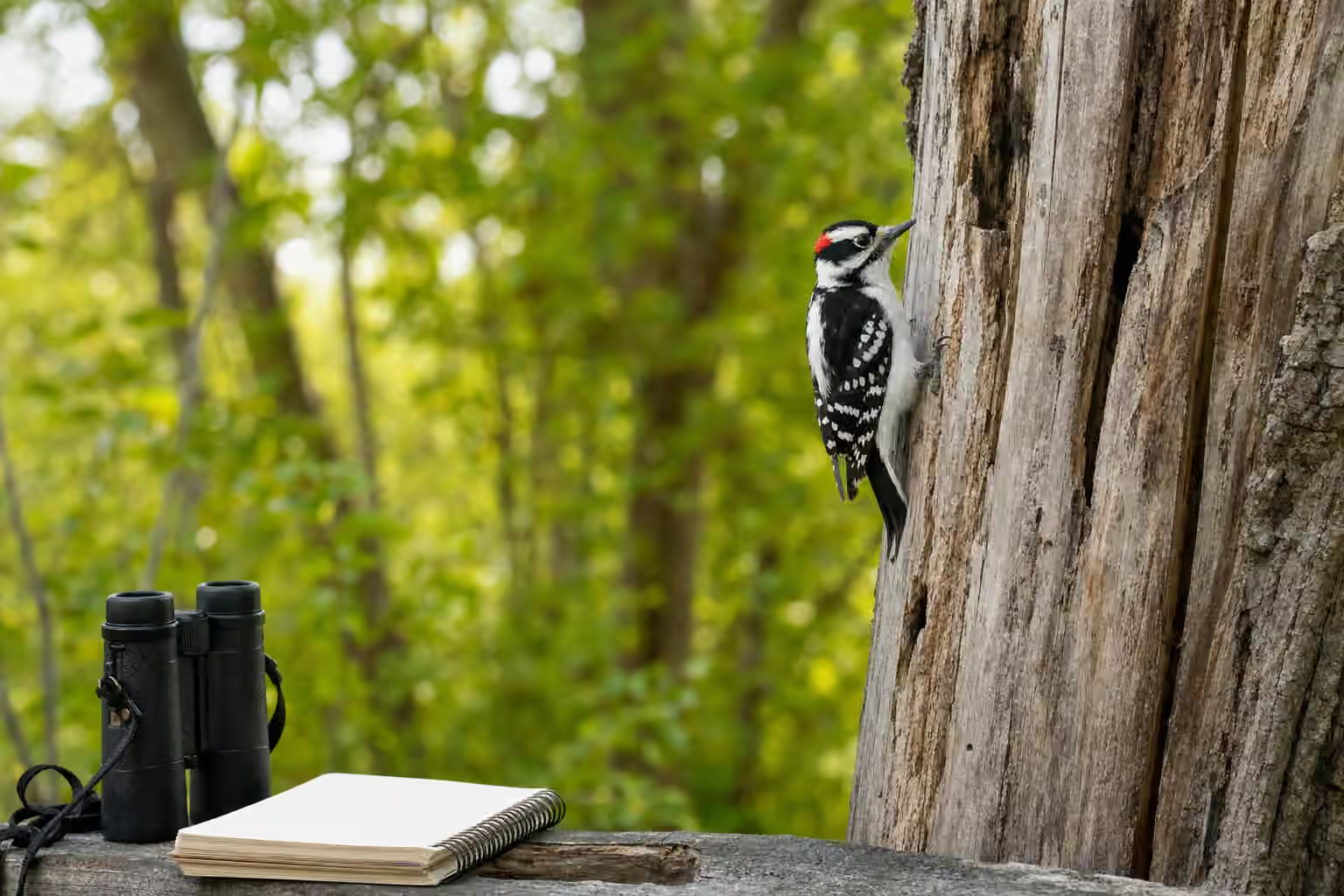
Stand still beside a wooded edge, older park tree, orchard row, riparian grove, or snag-rich trail and watch the trunks before you see birds. Notice which trees have rough bark, dead limbs, cavities, peeling plates, or vines. Woodpeckers may announce these surfaces loudly, but nuthatches, creepers, and other small birds often use them more quietly. Woodpeckers for Beginners is useful because it teaches the same respect for trunks, only with larger and more obvious birds.
When a small bird appears on bark, do not chase it with your whole body. Keep your eyes on the trunk and anticipate its route. It may go around the far side and reappear higher. It may drop down to another tree. It may freeze against the bark and become nearly invisible. Often the best move is no move at all. Let the bird’s pattern bring it back into view.
Give Low Cover Its Due
Low cover can look messy to people and essential to birds. Brush piles, vine tangles, fallen branches, root masses, reeds, hedges, blackberry canes, leaf litter, stone walls, and dense native shrubs can hold food and safety. Wrens and many similar small birds use these places because they offer insects, spiders, shelter, song posts, and quick escape routes.
Beginners often avoid looking into tangles because the view is difficult. Slow down and watch the edges. A hidden bird may come to a branch tip for one second, cross a gap, flick its tail at the mouth of the tangle, or move the leaves from inside. The goal is not to peer aggressively into nests or private cover. The goal is to let the tangle reveal ordinary movement from a respectful distance.
This habit also improves backyard and urban birding. The small hedge beside an apartment path, the brushy corner of a park, the wild strip along a creek, and the vine-covered fence may hold more life than the clean lawn beside them. Urban Birding and Backyard Bird Habitat both make more sense when you value cover instead of only open views.
Follow Mixed Flocks Carefully
Nuthatches and creepers often appear with mixed flocks, especially in wooded habitats and colder seasons in many regions. A flock may include chickadee-like birds, titmice, woodpeckers, kinglets, warblers, or other small species depending on location. The flock moves like a loose working party. Some birds inspect twigs, some bark, some leaves, some trunks, and some stay near the edges.
When a flock arrives, do not try to identify everything. Choose the bark users first if that is your goal. Scan trunks and larger limbs while the more obvious birds call around you. A nuthatch may be the one moving down a trunk. A creeper may be the tiny shape starting low and climbing quietly. A wren may not be in the flock at all but may call from cover as the flock passes.
Mixed Flocks Birding explains why these moments can feel chaotic. The trick is to treat the flock as structure, not noise. Each bird is using a part of the habitat. Once you see which surfaces are being worked, the confusion becomes information.
Keep Notes on Movement, Not Just Marks
Field notes for these birds should capture motion. Write “low tangle, tail cocked, loud scolding call, crossed path at ground level” instead of only “small brown bird.” Write “compact bird moved headfirst down trunk, probed bark, gave nasal calls” instead of only “gray bird on tree.” Write “tiny bark-colored bird climbed upward along trunk, flew down to base of next tree, no clear face view” instead of forcing a name from a partial glimpse.
Sketches can help because they preserve posture. A tiny drawing of a cocked tail, a bird pressed to bark, or a headfirst trunk pose can hold the observation better than a color word. Note height, surface, direction of movement, and sound. If you take a photograph, use it as a supplement, not as a reason to crowd the bird or leave the trail.
Uncertain notes are welcome. These birds often give partial views, and partial evidence is still evidence. Over time, the repeated patterns become familiar. You begin to recognize the wren-like restlessness in low cover, the nuthatch’s bark confidence, and the creeper’s quiet upward route before you have named every species in your region.
Return to the Same Trees and Tangles
The best way to learn these birds is to revisit real places. Choose a woodland edge, park grove, creek path, cemetery trees, old orchard, backyard hedge, or short trail with rough-barked trunks and low cover. Watch it in different light and seasons. Some days the bark is quiet. Some days a mixed flock passes. Some days a hidden voice turns the whole tangle into a puzzle.
Repeated visits teach what field guides cannot show by themselves. You learn which trunks attract bark foragers after rain, which brushy corner holds scolding calls, which dead limb draws woodpeckers and smaller birds, which low hedge becomes active in winter, and which sounds belong to birds you rarely see well. This is Patch Birding at a fine scale.
The reward is not only identification. It is learning to see habitat in smaller pieces. A trunk stops being a brown column. A brush pile stops being clutter. A tiny bird stops being only a blur. It becomes a moving clue tied to bark, cover, voice, and route. Once you learn that kind of attention, many hard birds become less mysterious, even when they still refuse to sit in the open.